DWC troubleshooting

Root Problems in DWC

Root problems in DWC usually mean the roots are losing oxygen, running too warm, sitting in a reservoir that stopped feeling clean, or reacting to a routine that no longer makes sense. In a compact grow, that often shows up as slower water use, an off smell, stalled momentum, or roots that look stressed instead of active. The first move is not a panic additive. It is a calm reservoir inspection.

DWC gets a reputation for being unforgiving, but the sharper truth is that roots stop forgiving guesswork. They answer fast. In a small-space grow, that speed is useful when the room stays readable and expensive when the grower starts improvising.

Most common cause Oxygen, temperature, cleanliness, or reservoir consistency drifted before the canopy made it obvious.
Most common mistake Treating any darker root color like disaster without checking smell, texture, water use, and recent changes together.
Best first move Inspect the reservoir, confirm the pattern, and change one cause at a time instead of stacking rescue ideas.
What it means

Root problems in DWC are really root-environment problems.

When growers search for root problems in DWC, they are usually asking whether the reservoir is still supporting the plant or quietly slowing it down. The issue is rarely just color by itself. It is the combination of root appearance, smell, water use, pH behavior, and top-growth response. Healthy DWC roots do not need to look theatrical. They need to look structured, smell clean, and behave like they are still feeding the plant normally.

That is why not every darker root is automatically a collapse. Some roots pick up nutrient staining or cosmetic discoloration without losing function. What matters more is whether the roots feel matted, slick, sour-smelling, or disconnected from the plant's normal rhythm. If the reservoir has stopped making sense, go back through DWC for beginners before inventing a bigger diagnosis than the system has actually earned.

A cleaner question is this: are the roots still doing their job, or are they only still present? Growers can waste days arguing about the word "rot" while the more useful clues are already available. The plant may be drinking less, the smell may have changed, or the reservoir may be drifting in a way that no longer matches its recent baseline. If you need to reset the method before naming the problem, use what is DWC as the short definition and return to this page once the diagnosis is specific again.

Memorable line

Roots can start losing the argument before the leaves know how to explain it.

  • Look for patterns, not one scary detail.
  • Smell and texture matter as much as color.
  • Water behavior is part of the diagnosis.
Why it matters in a compact grow

Small spaces expose root trouble faster because the reservoir has less slack.

In a compact cannabis grow, the root zone, canopy, and cabinet climate sit close together. If the water gets warmer, if the air path gets heavier, or if the routine gets messy, the roots feel it quickly. That is why root trouble in a small-space DWC setup can show up before the room looks dramatic. The reservoir is smaller, the enclosure is tighter, and the feedback loop is shorter.

This is also why a compact system can be an advantage when it is run well. A tidy cabinet makes it easier to notice when the reservoir stopped feeling clean or when the plant is suddenly drinking differently. Use the daily cannabis grow checklist if you need a calmer routine, and compare the bigger room story with why growth is slow in a compact setup if the roots are only part of a larger slowdown.

Compact rooms also make it easier to confuse room trouble with root trouble. A warm enclosure, a crowded canopy, or heavy humidity can make the reservoir look like the villain when the room itself stopped clearing heat and moisture. That is why this page belongs beside humidity problems in a grow cabinet and how to lower humidity in a small grow tent. If the room is heavy, the roots may only be reporting it first.

Diagnosis layer

The same root problem usually wears a recognizable pattern.

Split diagram contrasting brown decayed root-rot roots on the left with a dense white fibrous healthy root ball on the right.
Healthy roots are bright white and stringy; root rot turns them brown, soft, and slimy with a sour smell.
What you notice What it often means First check
Roots look darker, but still smell clean and hold structure Possible staining or early drift rather than a full root-zone failure. Check recent nutrients, water temperature, and whether plant behavior changed with the color.
Roots look matted, slick, or smell wrong The reservoir may be too warm, under-oxygenated, or no longer clean enough to trust. Inspect air delivery, temperature trend, cleanliness, and whether the root mass is still moving water normally.
Water use suddenly slows and top growth stalls The roots may still be present, but they are no longer feeding efficiently. Review the reservoir pattern, then compare the slowdown with DWC vs soil for small cannabis grows if the method itself has become a question.
pH and EC behavior stopped feeling readable The system lost its stable baseline, so the roots are now living inside a noisy routine. Pause stacked corrections and re-establish one controlled routine before calling it a special case.
Severity ladder

Root rot rarely arrives all at once — find the stage you are actually at.

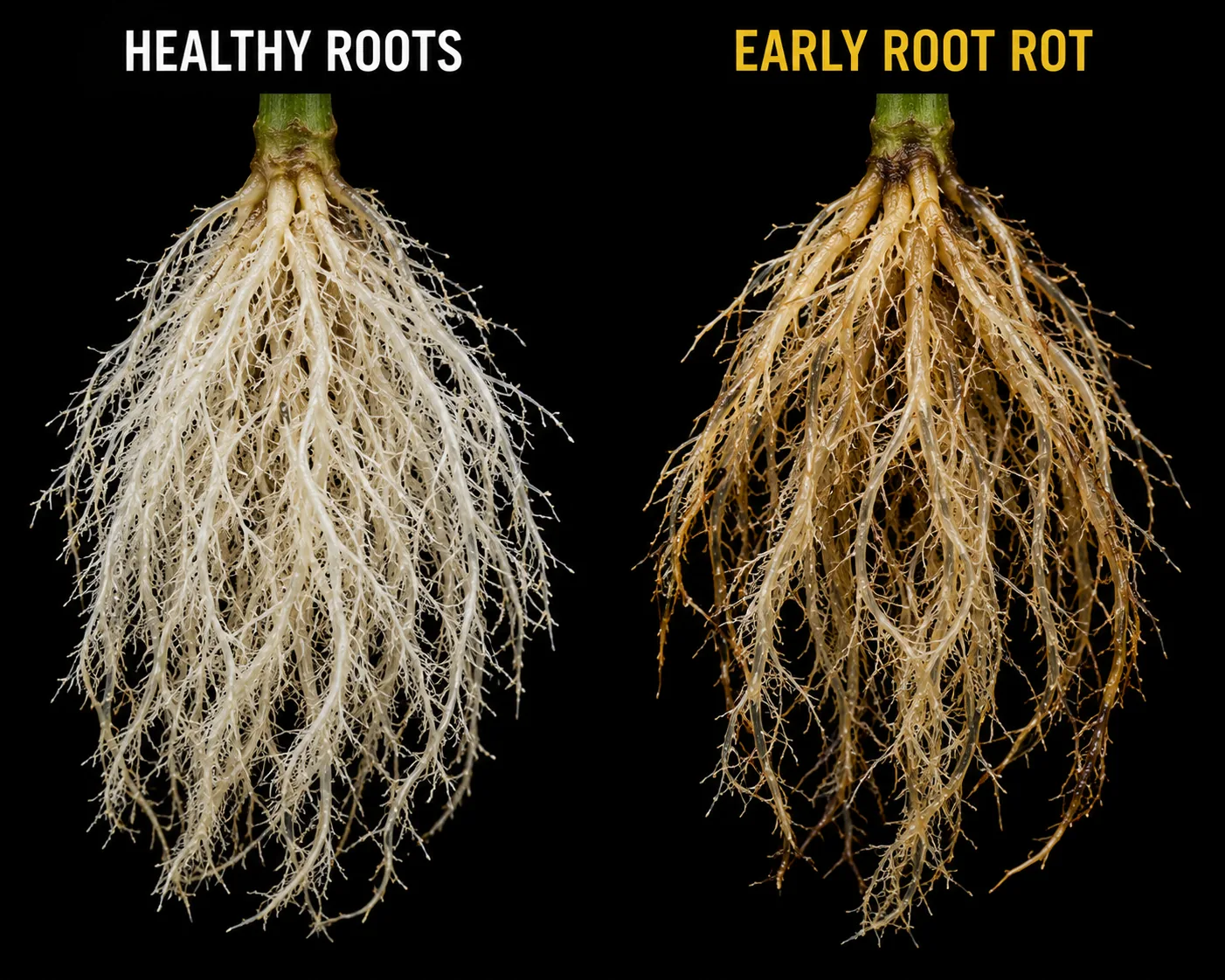
The fix depends on how far it has gone. Early rot can be reversed by cooling and re-oxygenating the reservoir; severe rot usually means stripping the root mass back and sterilizing the system. Locate your plant on the ladder before you decide how hard to react.

Two cannabis root balls side by side, bright white healthy roots left and faintly tan early-rot roots right, on black.
Early: the first tan tinge and slight sliminess on roots that should be bright white.
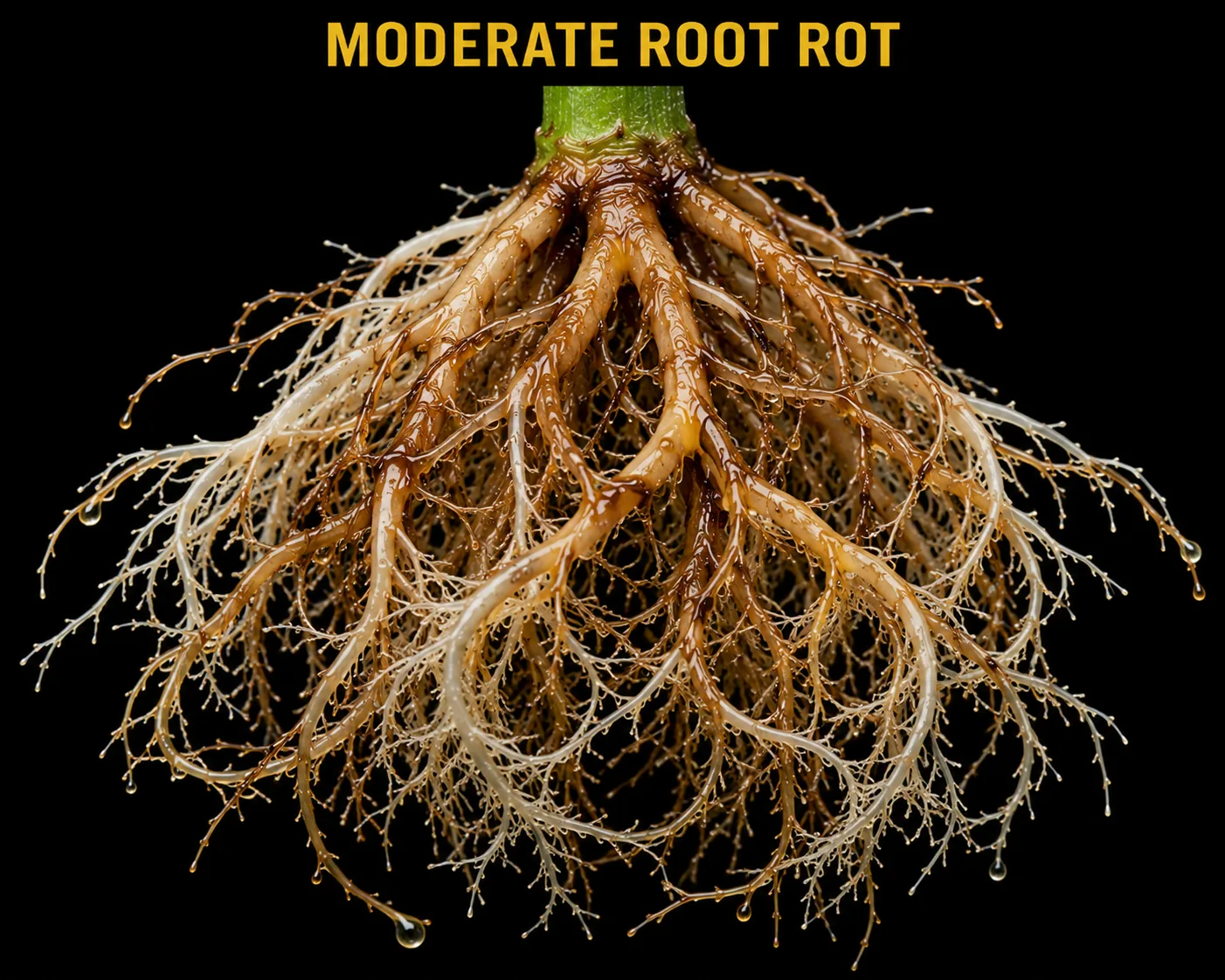
Single cannabis root mass labeled moderate root rot, brown slimy inner roots with a glossy wet coating fading to white tips.
Moderate: browning and sliminess spread through the root mass, with a sour smell setting in.
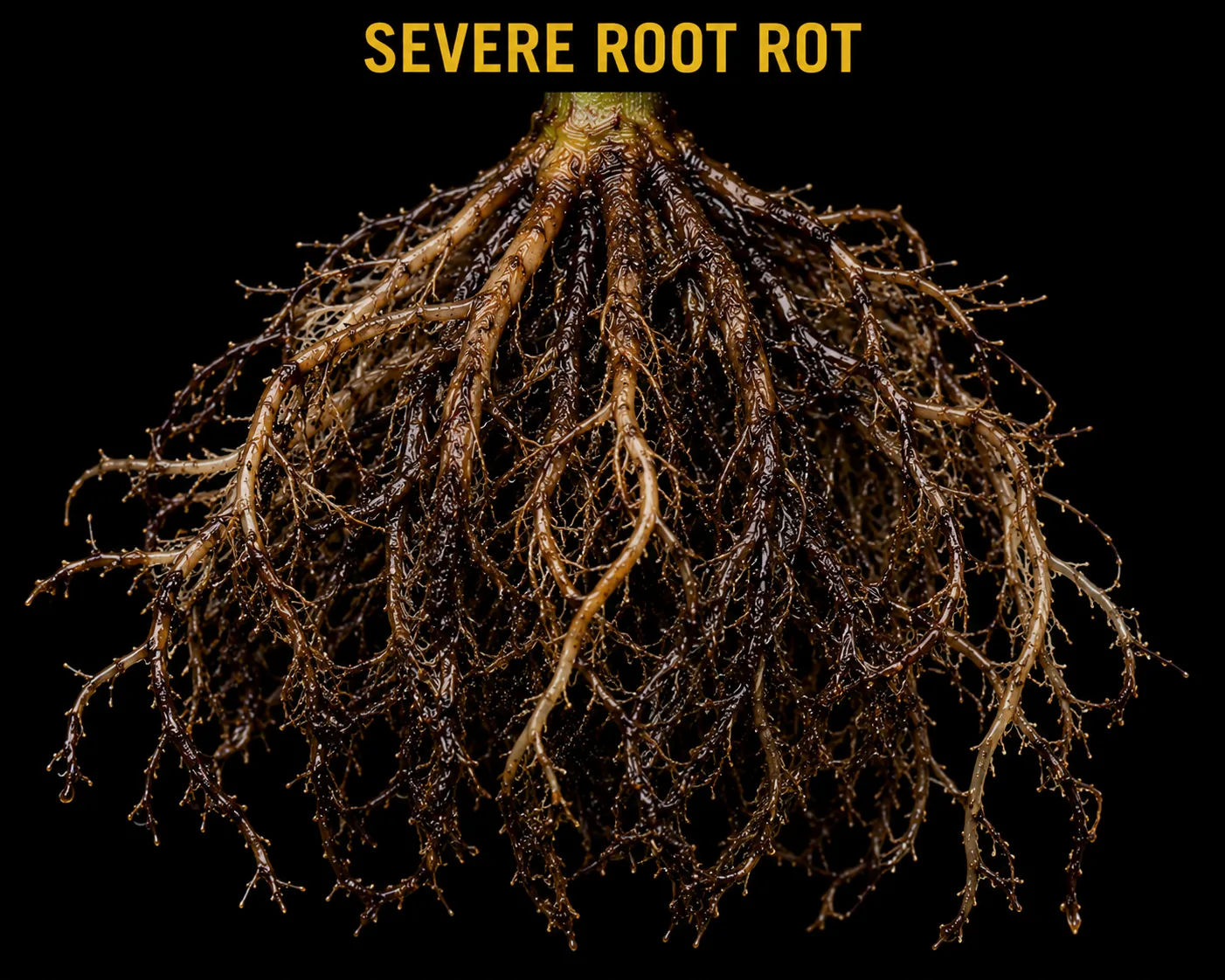
Cannabis root ball labeled severe root rot, nearly all strands dark brown and collapsed with only a few pale tips left.
Severe: roots are brown, soft, and disintegrating, the reservoir smells foul, and the plant wilts.
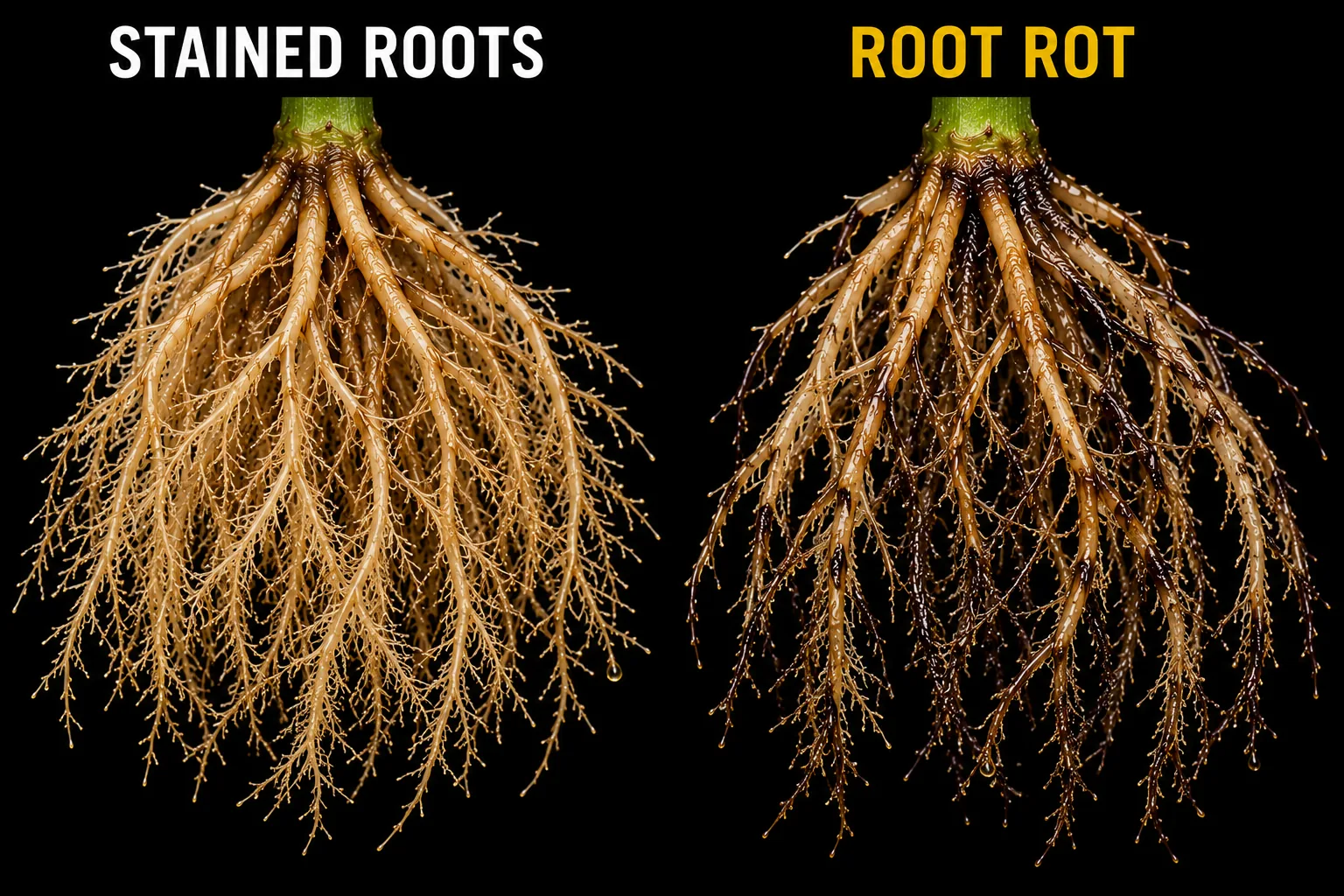
Two root balls compared, evenly tan stained roots left and roots streaked with dark brown rot right, both labeled on black.
Before you panic: not every brown root is rot. Nutrient staining is firm and odorless; root rot is soft, slimy, and sour.

Most apparent deficiencies that follow root trouble are really lockout from a struggling root zone — see cannabis nutrient deficiencies before you adjust the feed.

The look-alikes

Not every problem in the reservoir is root rot.

"Slime in the reservoir" gets called root rot by reflex, but three other things wear a similar coat — and each has a different fix. Start from the healthy anchor, then read the color, the location, and whether there is a bug. Green slime on the light-exposed surfaces is algae, not rot. A tan-brown slippery film on roots that are still structured is biofilm — the pre-rot warning. Small insects with white waxy specks on the roots are root aphids, not slime at all. Brown, soft, sour and collapsing is the actual root rot on the ladder above.

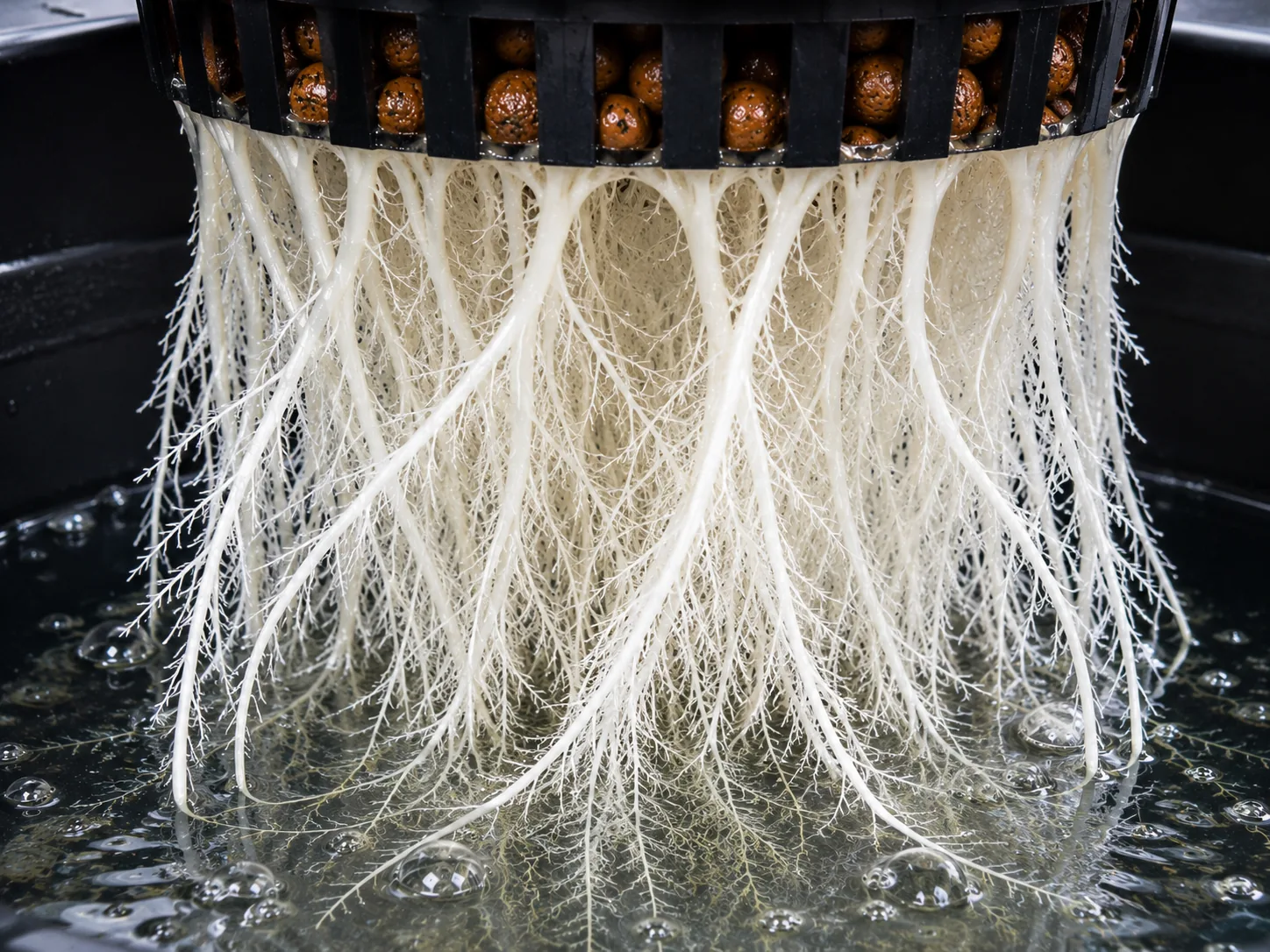
Brilliant white cannabis roots cascading from a clay-pebble net pot into clear bubbling reservoir water in macro close-up.
The healthy anchor: brilliant white, stringy, dense roots in clear water — this is what every other root image is judged against.
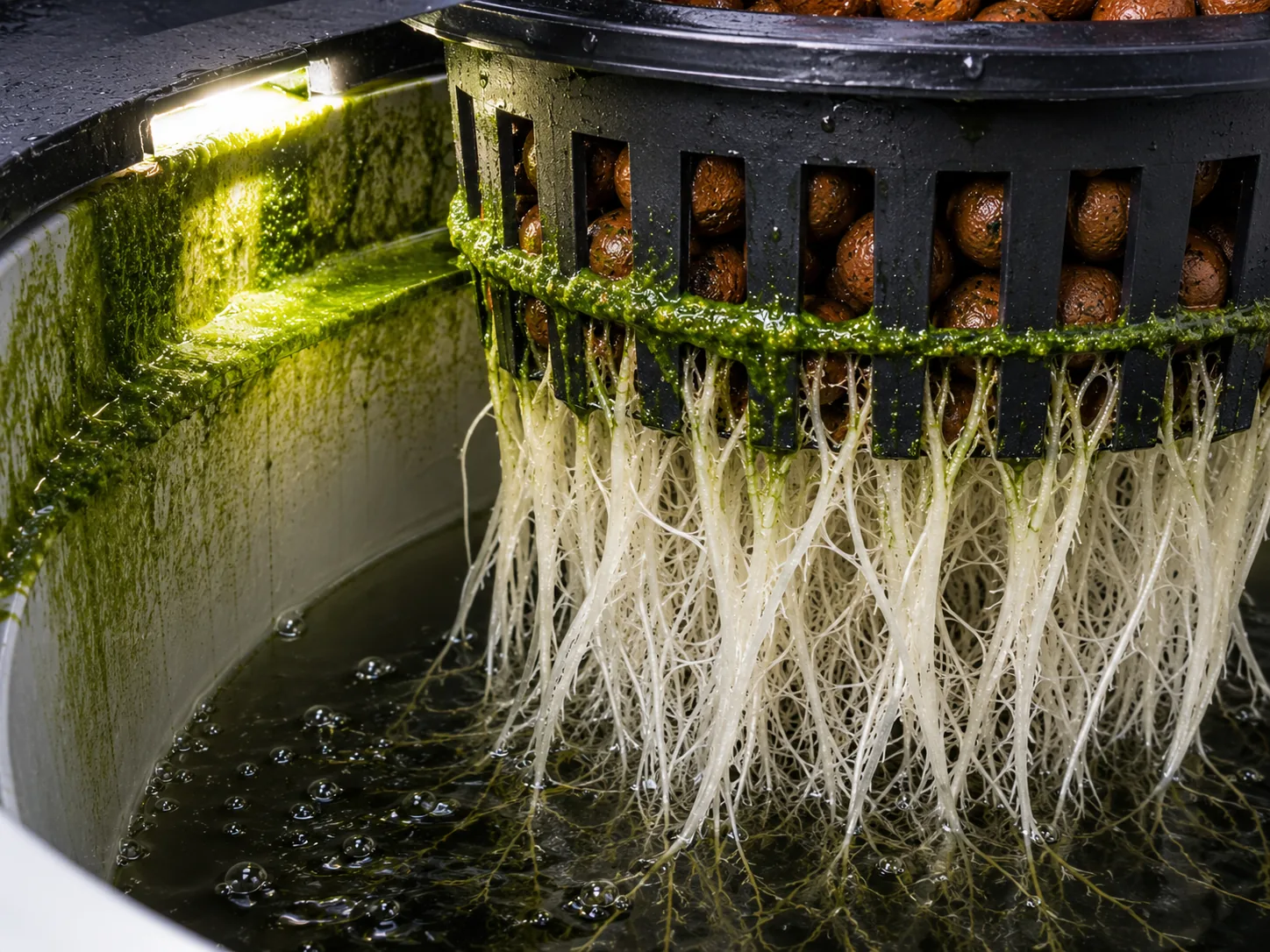
Bright green algae slime coating a net-pot rim and reservoir wall exposed to light while white roots hang below.
Green slime on the light-exposed rim and walls where light reached the water — algae, not the brown anaerobic slime of root rot. Block out the light.
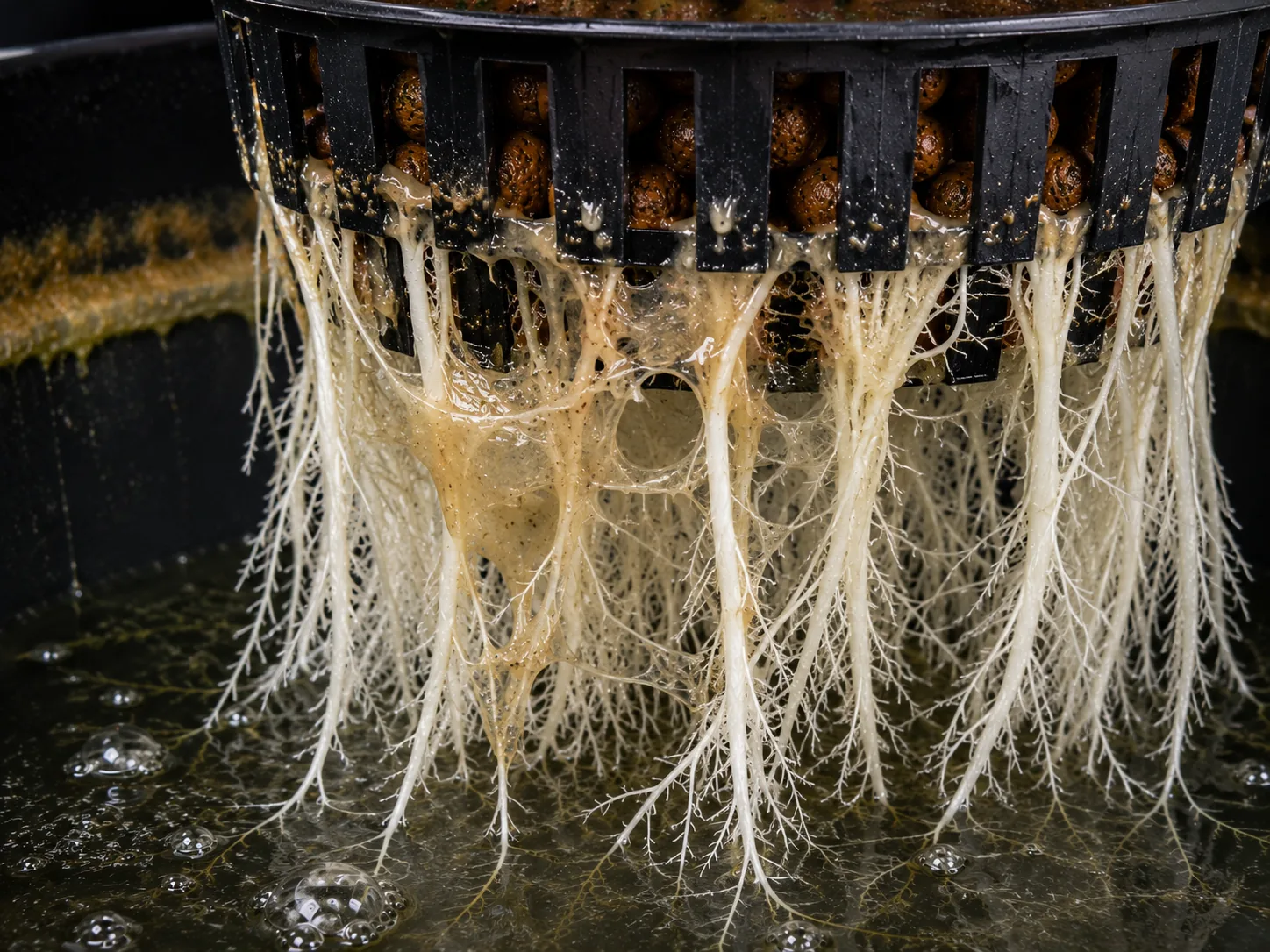
Translucent tan biofilm webbing draped between still-white cannabis roots hanging from a clay-pebble net pot.
A slippery tan-brown film on roots that are still structured — biofilm, the pre-rot early warning. Catch it here, before the collapse of real rot.
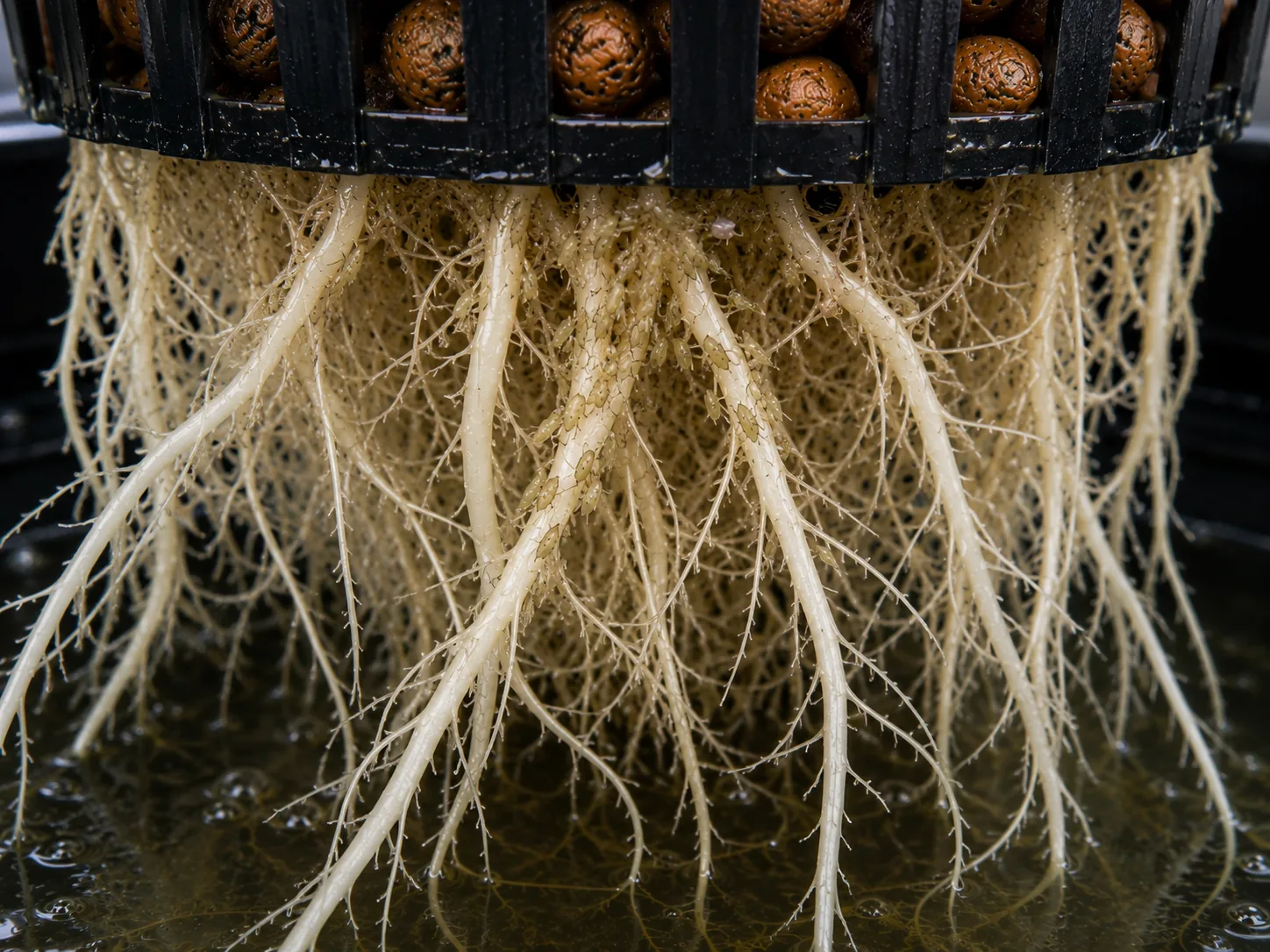
Pale cannabis roots below a net pot dotted with clustered small insects and white waxy specks of a root aphid infestation.
Small insects on the roots with telltale white waxy residue — root aphids, not slime at all. A pest problem, not a reservoir chemistry one.
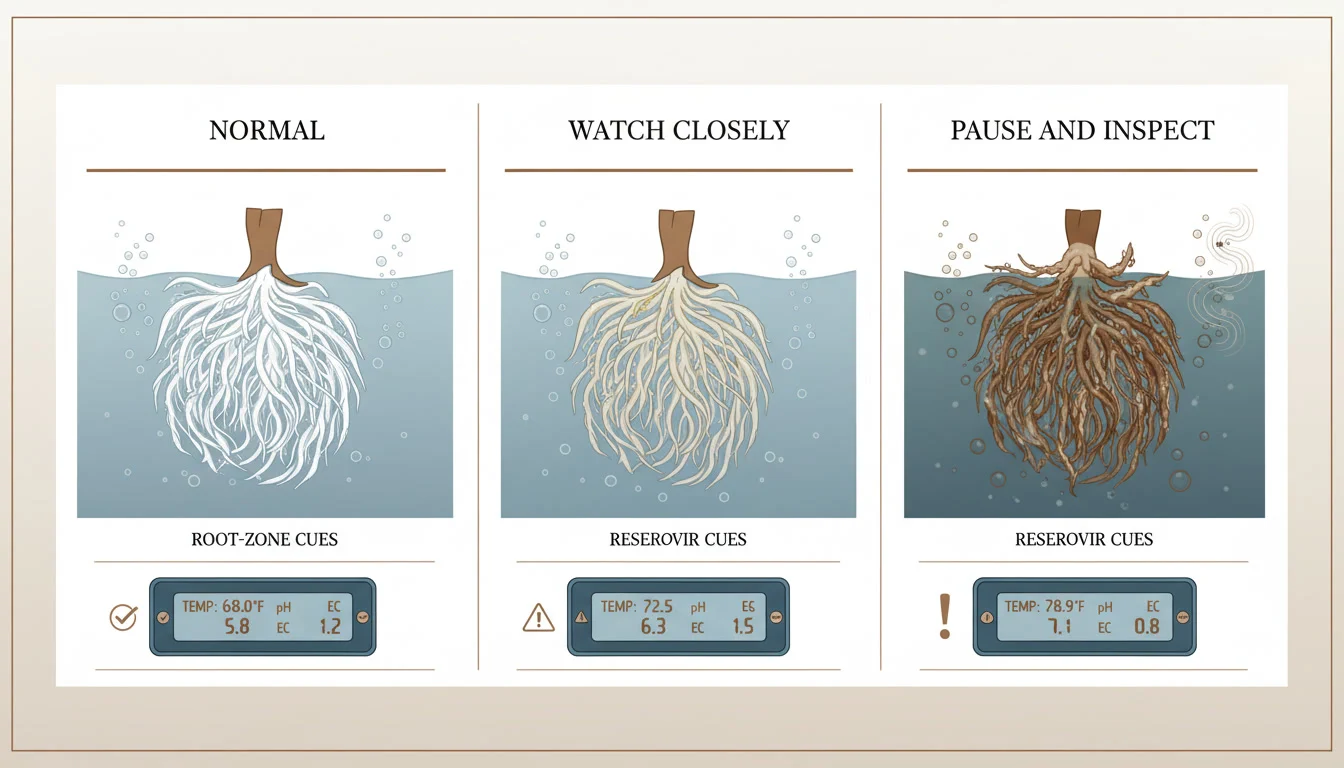
Three-panel board of DWC roots, white normal, tan watch-closely, and brown inspect-now, each with reservoir meter readouts.
Use the difference between healthy, drifting, and inspect-now roots as a guide to slow down and read the system, not to panic on sight.
Where DWC or VGrow fits

A contained cabinet is useful because root trouble should become easier to catch, not easier to hide.

The ColaXpress flagship path keeps pointing readers back to the VGrow DWC guide because a compact cabinet plus a readable reservoir can make troubleshooting cleaner. The room is contained. The reservoir is accessible. The plant does not have as many places to disguise what the root zone is doing.

That does not mean every compact DWC run will stay effortless. It means the system can be honest sooner, which is exactly what you want when the goal is readable flower and a controlled finish. The philosophy behind that is closer to craft cannabis cultivation than to gadget collecting. The cabinet only helps if the reservoir stays legible.

The practical value is not product worship. It is access. If the enclosure lets you check water level, smell, root mass, and service points without turning maintenance into a whole event, you are much less likely to ignore small changes until they become expensive. That is the same discipline behind the compact grow setup checklist: if basic access, airflow, and service order are sloppy, the reservoir eventually pays for it.

Common mistake

The biggest mistake is diagnosing the roots by fear instead of by pattern.

  • Assuming any color change means the run is collapsing.
  • Adding multiple rescue products before confirming oxygen, temperature, or cleanliness drift.
  • Ignoring smell and water-use changes because the roots still look passable in a quick glance.
  • Letting the canopy outgrow the cabinet, then blaming every slowdown on the reservoir alone.
  • Restarting the entire method after one rough week instead of learning what the room was saying.

Another trap is using "root rot" as a catchall label too early. That phrase can shut down thinking instead of improving it. If the evidence only shows a warmer reservoir, some staining, and slightly slower drinking, the right move is still diagnosis, not theatrical language. Name the pattern first. Then decide whether the pattern points to oxygen loss, temperature drift, cleanliness drift, or a larger room issue that is landing on the roots.

Risk filter

If the root zone is noisy, make the next step smaller.

Root problems get more expensive when the correction is bigger than the evidence. In a compact grow, a calmer move usually teaches more: inspect, note the pattern, restore a stable routine, then see whether the plant answers. That gives the next decision more truth and less theater.

Practical takeaway

Use a short sequence, not a rescue fantasy.

The goal is not to become fearless about root trouble. The goal is to become methodical enough that a bad signal does not instantly turn into a stack of random fixes. In a compact DWC grow, calm sequencing protects both the reservoir and the rest of the crop.

01 Inspect the reservoir honestly

Check smell, root structure, water use, and whether the reading pattern still feels coherent.

02 Check the root environment

Look at oxygen delivery, water temperature, cleanliness, and whether the cabinet itself is trapping more stress than the plan admitted.

04 Protect the whole workflow

Root recovery matters because the compact grow still has to make it through structure, harvest, and finish with composure, not just survive the week.

Reference diagrams

Visual guides for reading a DWC root zone.

Illustrated DWC reference board pairing white, tan, and brown root stages with their temperature, pH, and EC meter readings.
Warning signs in sequence: smell and water-use changes usually arrive before visual root damage becomes obvious.
FAQ

Questions growers ask when DWC roots start looking wrong.

Are darker roots always a serious DWC problem?

Not always. Some darker color can come from staining or a reservoir that is still functioning normally. What matters more is the full pattern: smell, texture, water use, pH behavior, and whether the plant is still moving with confidence.

What usually shows up first when root problems start?

Often it is not dramatic leaf damage first. It is a smaller pattern change: slower drinking, a reservoir that smells off, root texture that looks less clean, or momentum that dropped without a good room-level explanation.

Can a compact cabinet make root problems worse?

It can make them show up faster because the environment is tighter and the reservoir has less slack. That is the risk. The advantage is that a compact cabinet can also make the problem easier to catch early if the setup stays clean and readable.

Can room problems create root symptoms in DWC?

Yes. Heat, stale air, crowding, and persistent humidity can push the reservoir into a less stable pattern or make root-zone stress show up sooner. DWC troubleshooting works best when you compare the reservoir with the enclosure at the same time instead of pretending they are separate worlds.

Should you abandon DWC after one bad reservoir?

Usually no. One rough run often teaches more about routine, room fit, or reservoir discipline than it proves about the whole method. Switch methods only after the workflow itself no longer fits what you can manage calmly.