Cannabis Nutrient Deficiencies: Read the Leaf, Find the Cause
Most feeding panics start with one discolored leaf and a guess. They do not have to. A nutrient deficiency writes its cause onto the plant in a readable pattern — which leaves go first, where the yellowing sits, whether the edges or the veins are affected. Learn to read that pattern and you stop reacting to symptoms and start fixing causes.
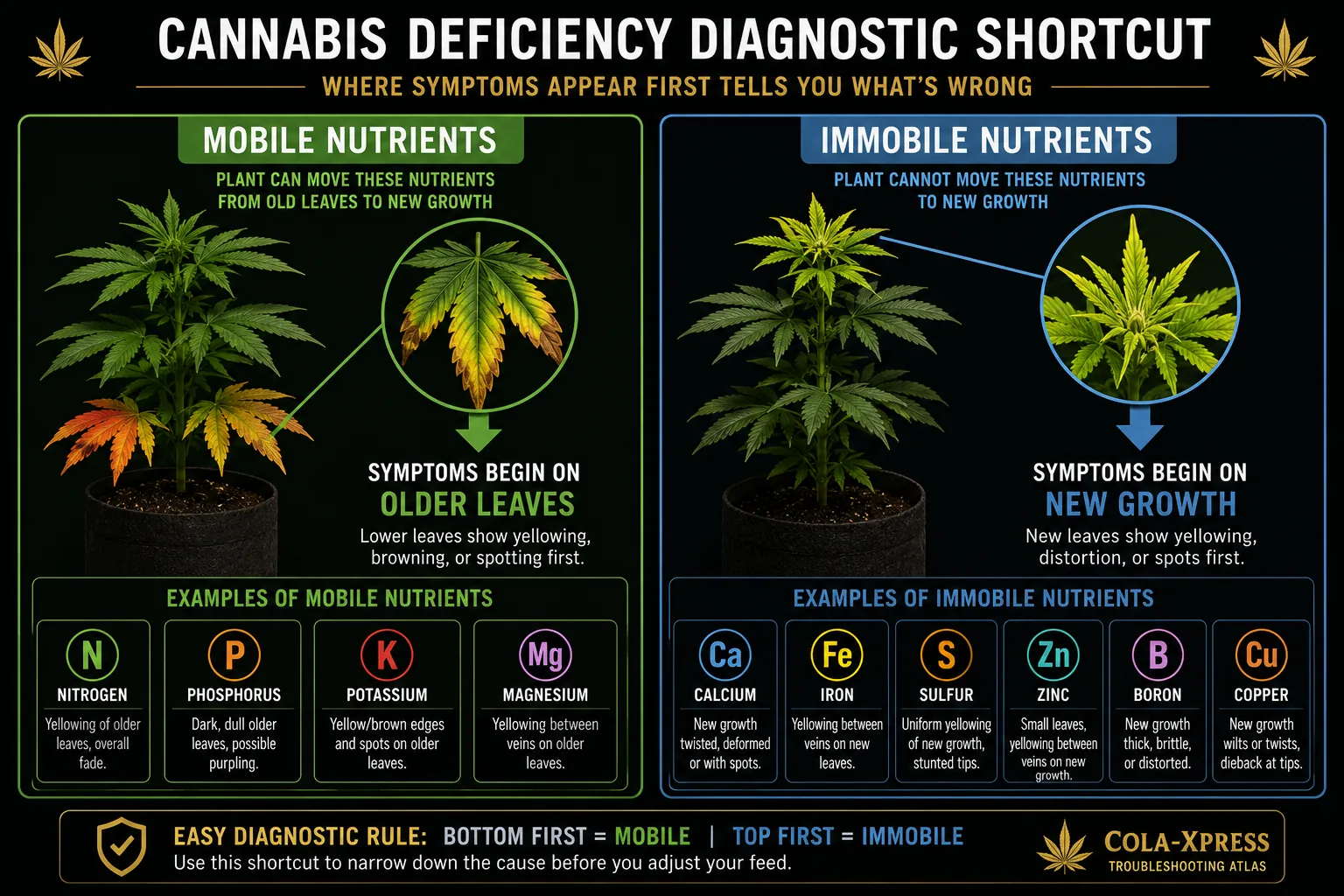
The single most useful question: did the problem start on the old, lower leaves or the new, upper growth? That one split sorts most deficiencies before you touch the bottle.
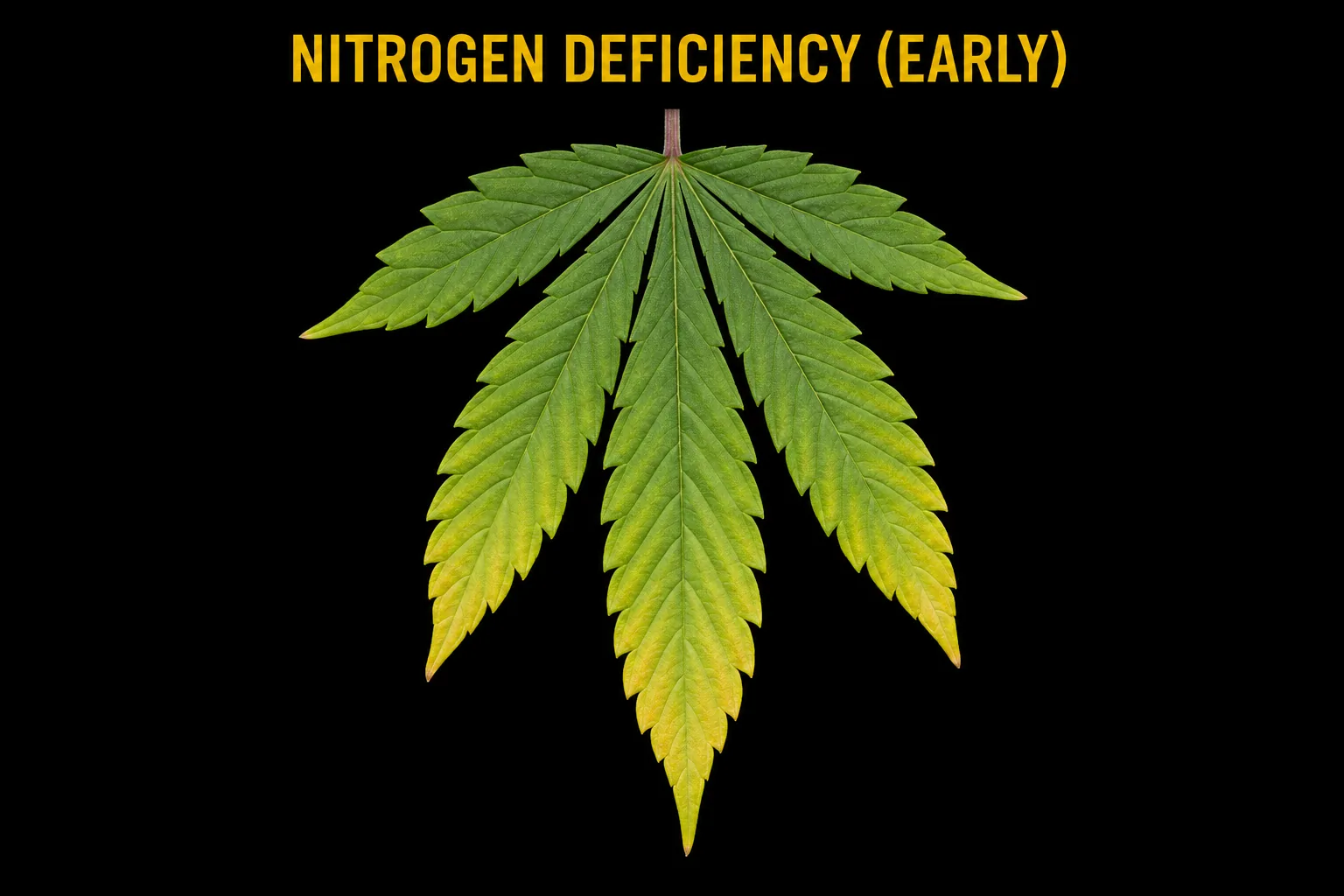
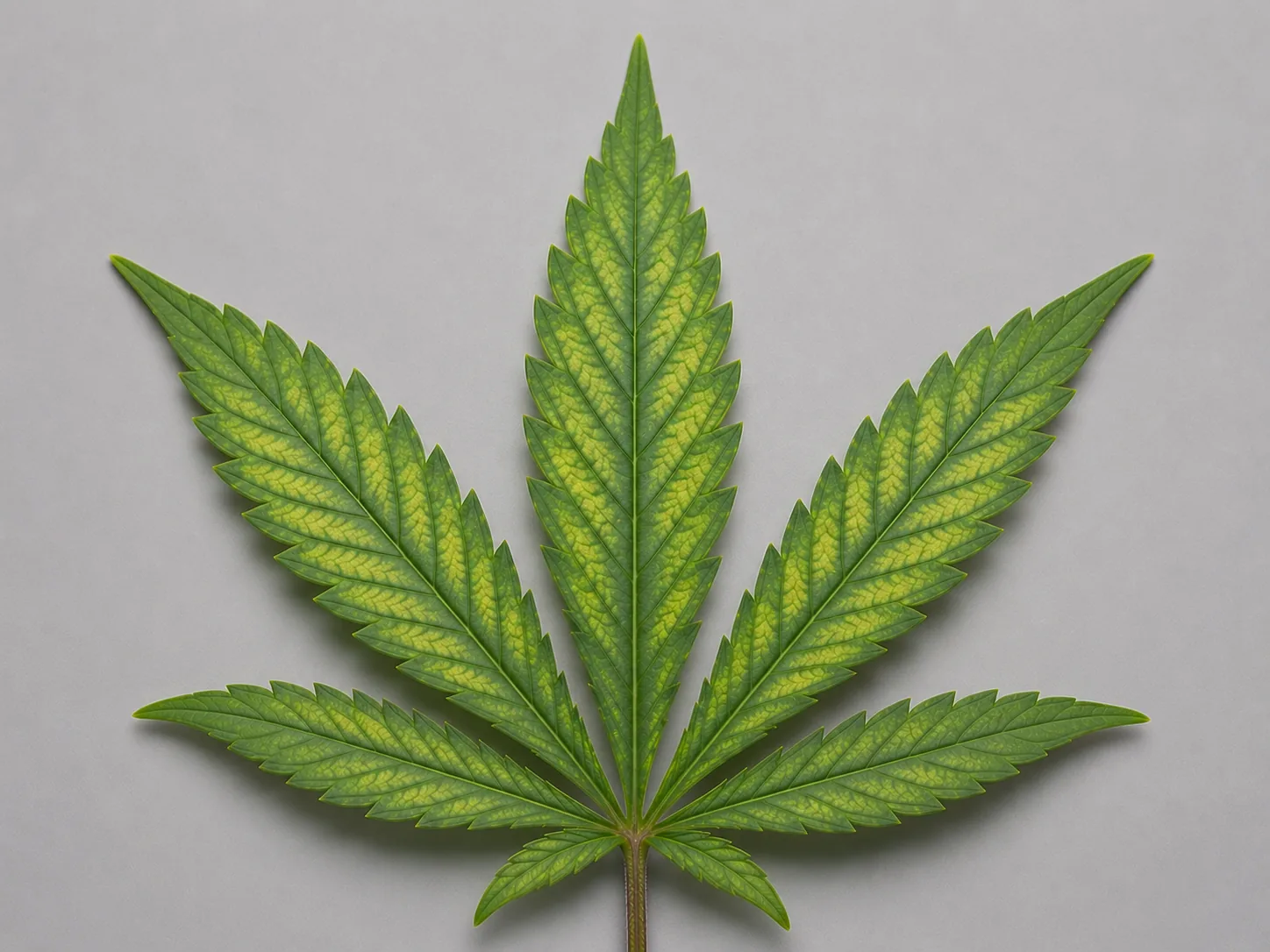
Nitrogen deficiency, early to severe.
Nitrogen is mobile, so a short plant pulls it out of its oldest leaves to feed new growth. That is why nitrogen deficiency always starts at the bottom and climbs. Caught early it is a trivial fix; left alone it strips the lower canopy. Use the progression below to locate where your plant actually is — the correction depends on the stage, not just the color.
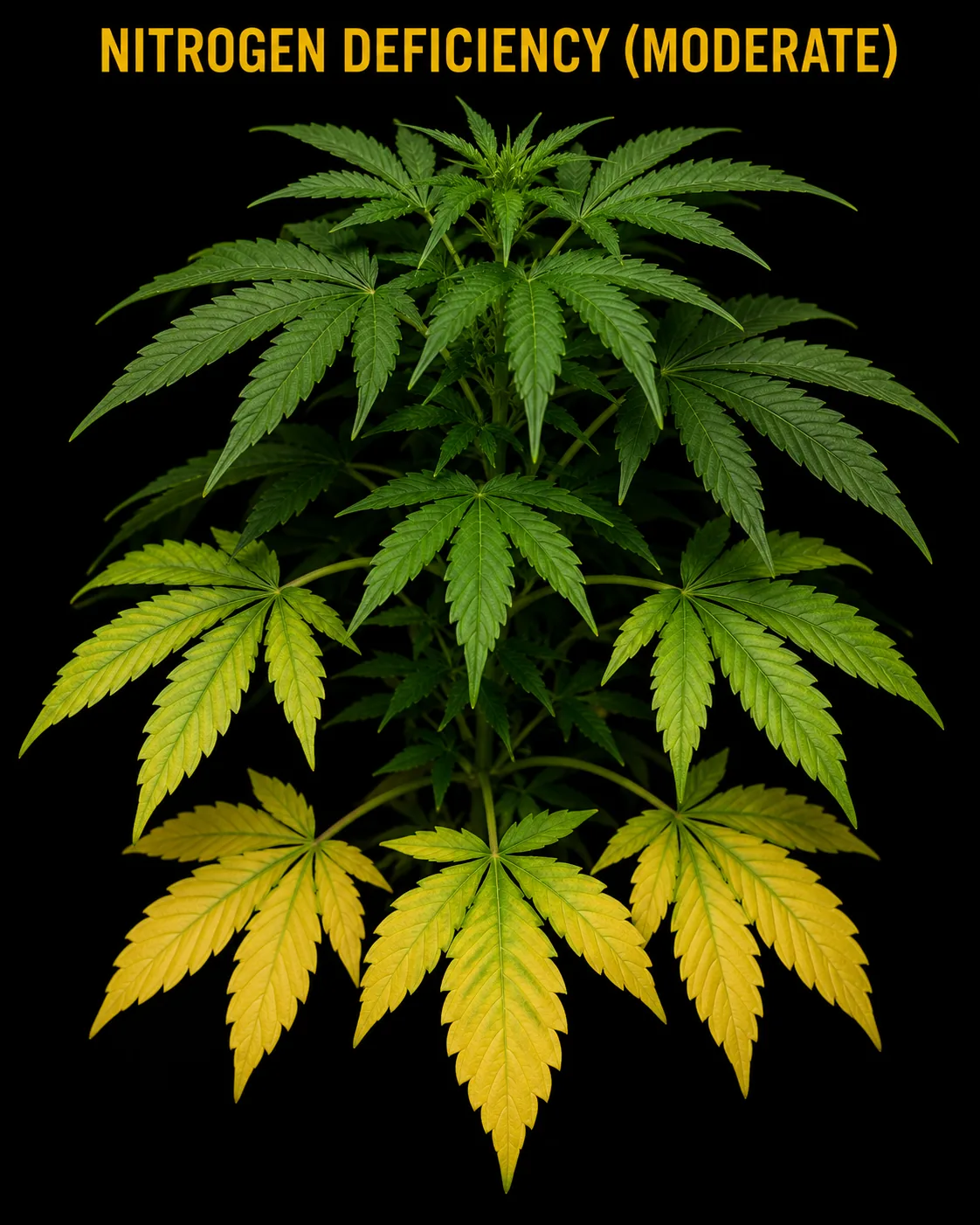
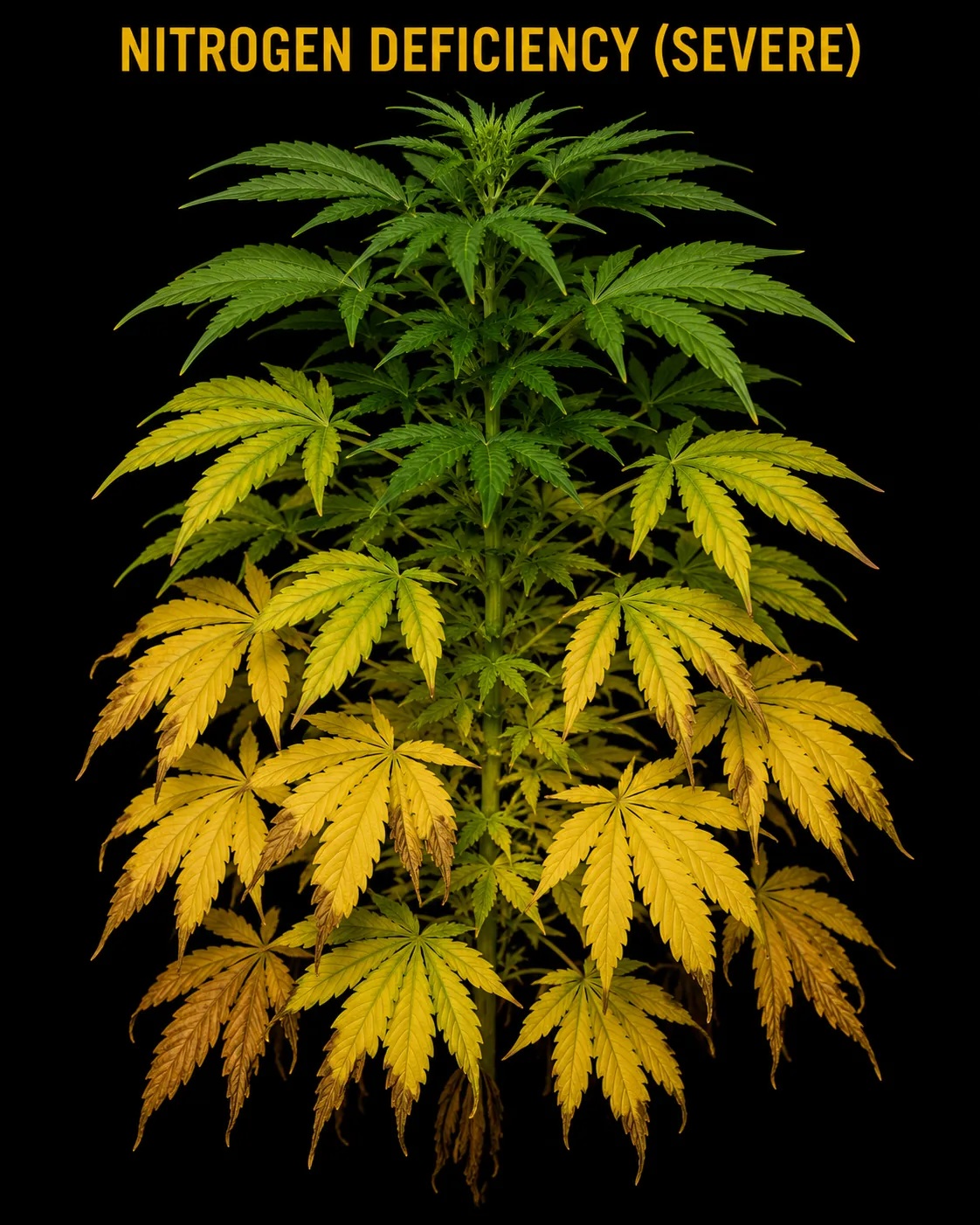
One caveat that saves a lot of overfeeding: a little fade late in flower is normal and even desirable as the plant uses up its reserves. Read nitrogen loss against the calendar — early veg, fix it; last two weeks, often leave it.
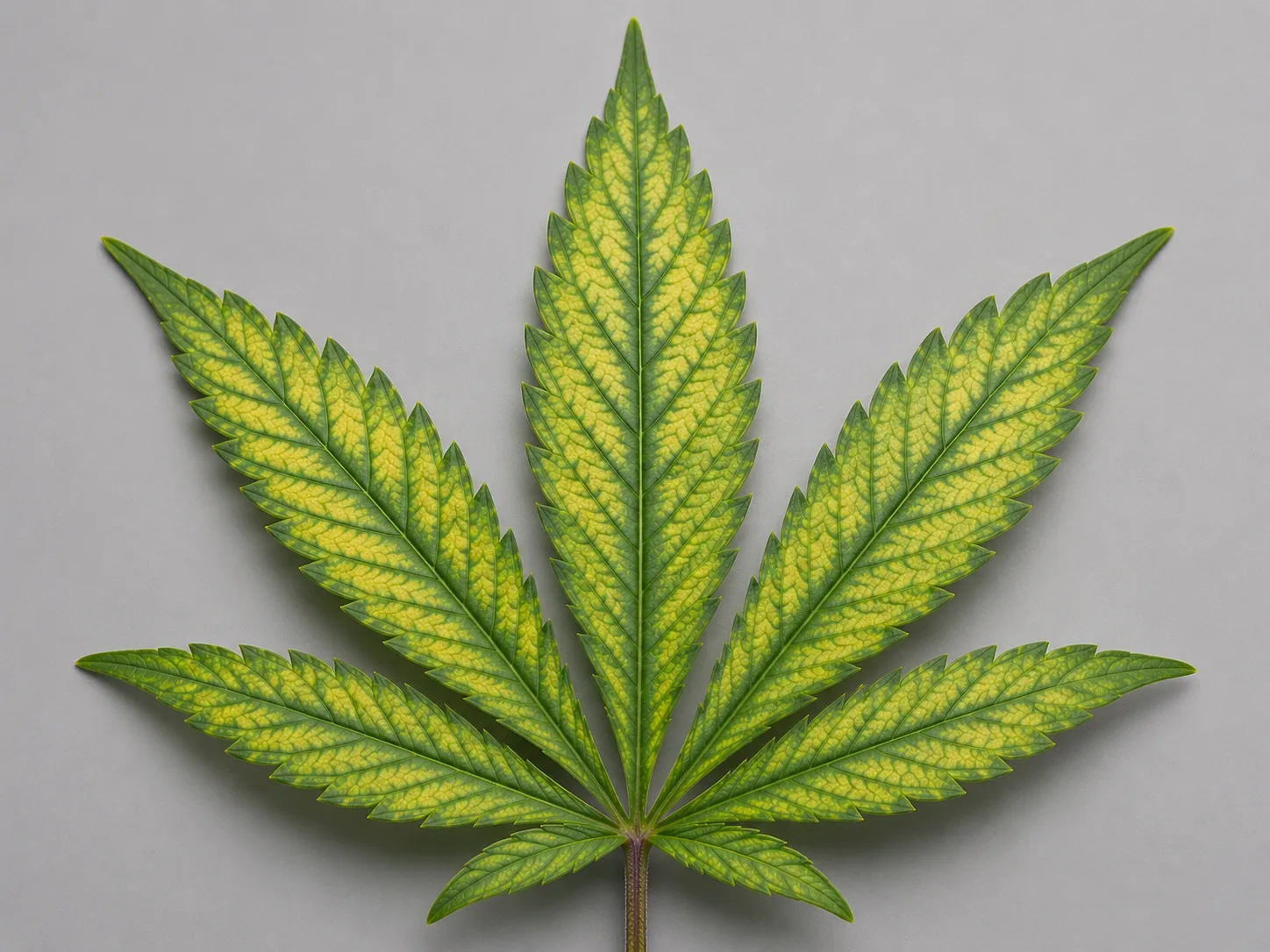
Magnesium deficiency — yellow between the veins.
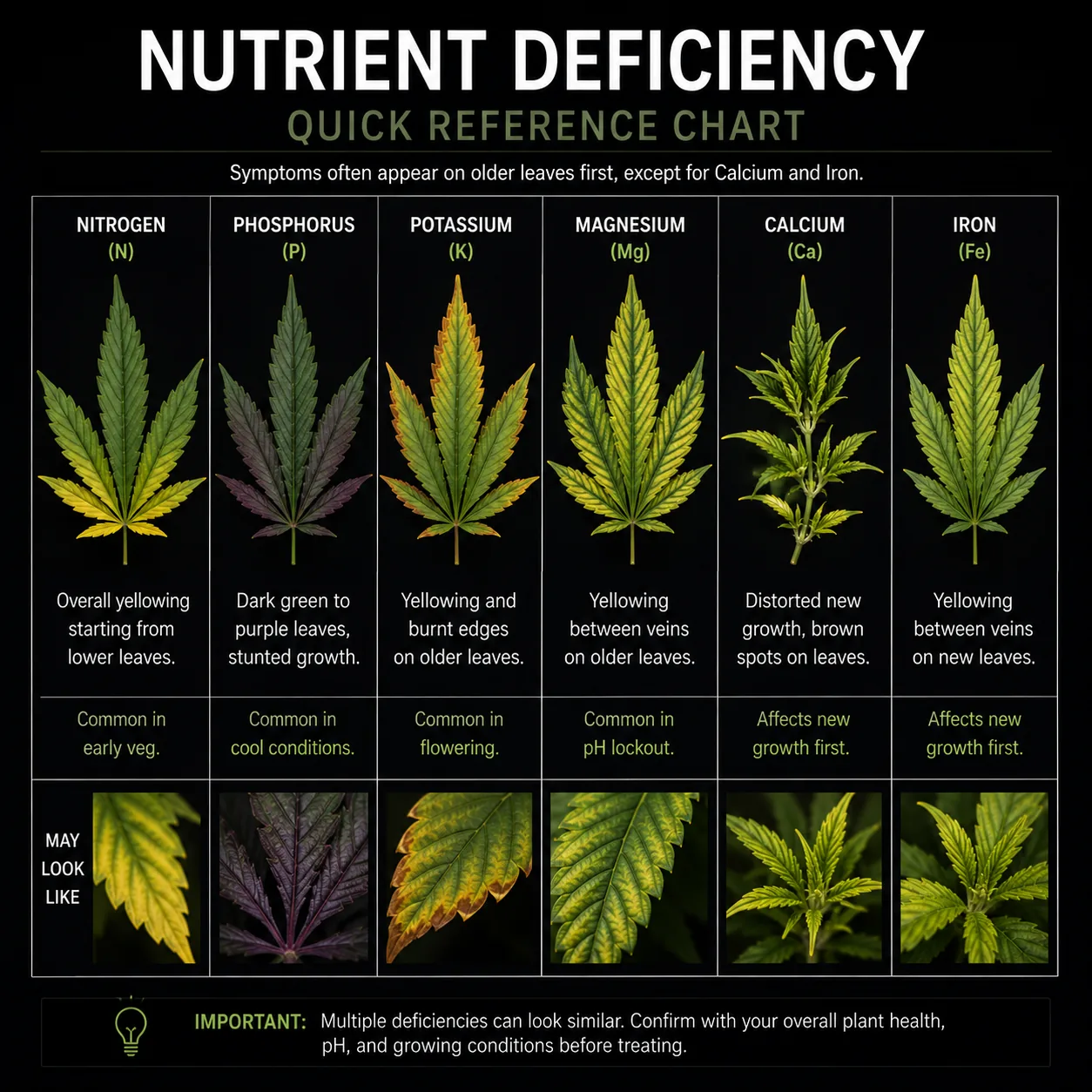
Magnesium is the one most often mistaken for nitrogen, and the tell is simple: nitrogen fades the whole leaf, magnesium yellows the tissue between the veins while the veins themselves stay green. Like nitrogen it is mobile, so it shows on the older, lower leaves first.
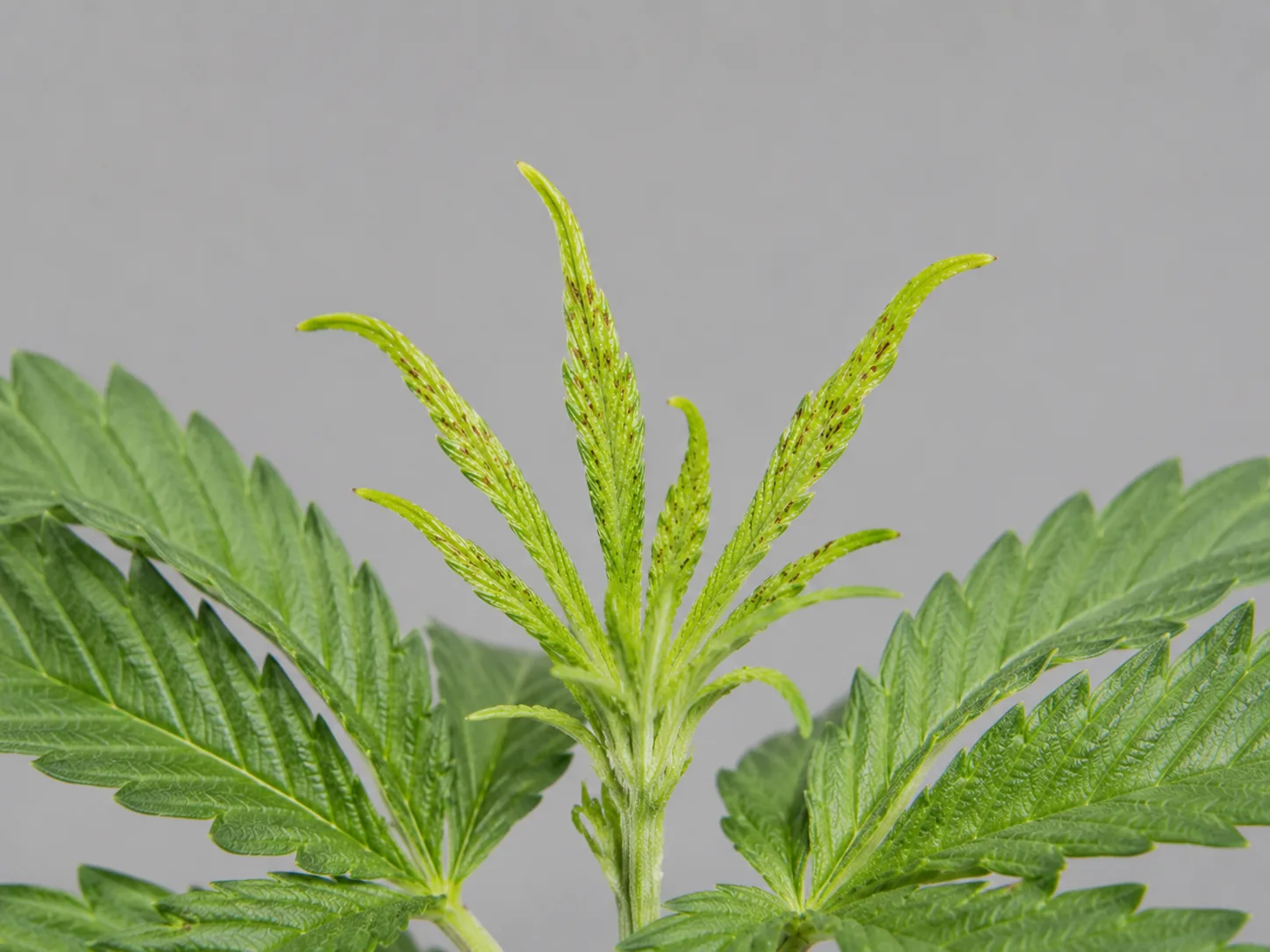
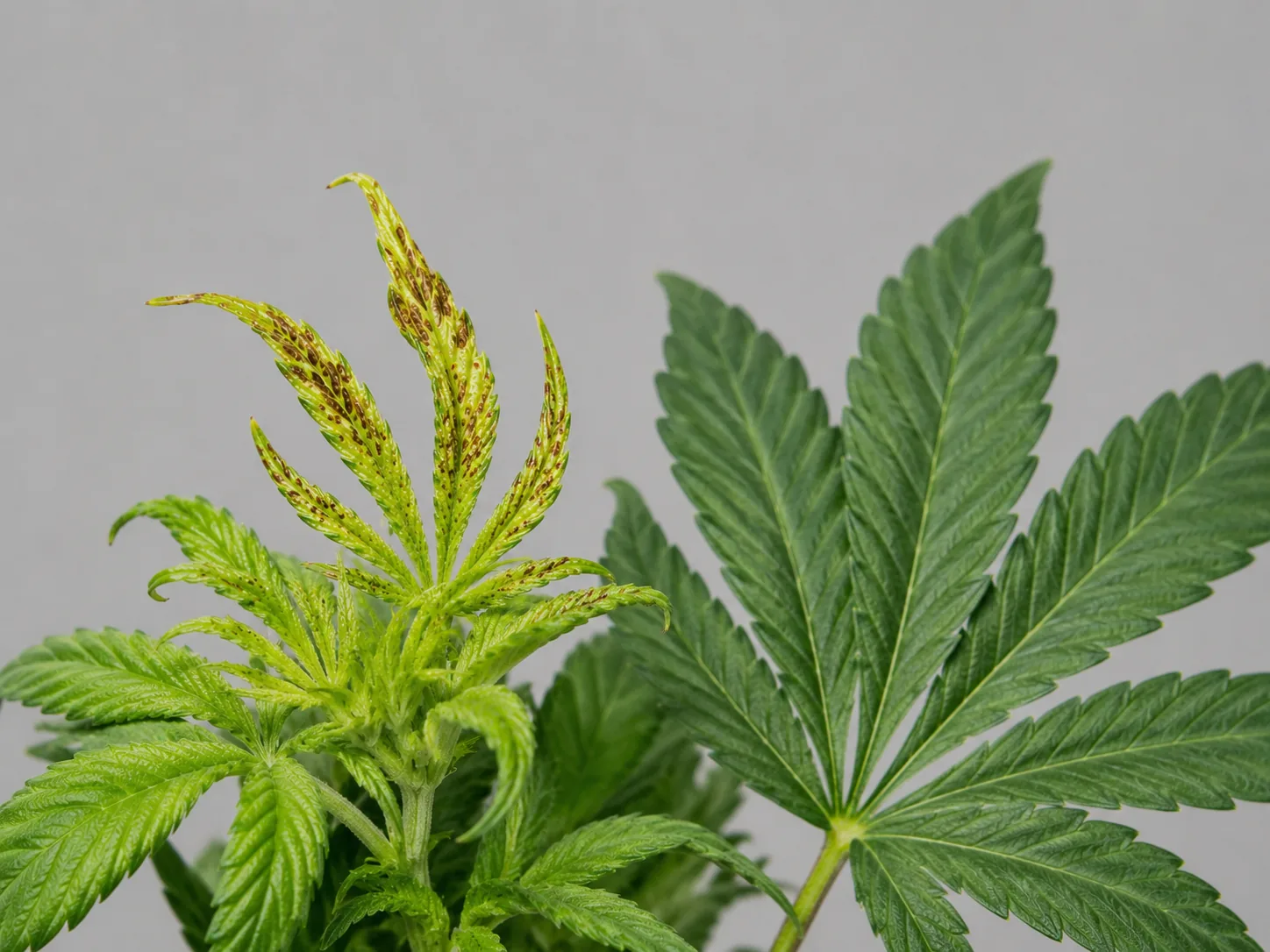
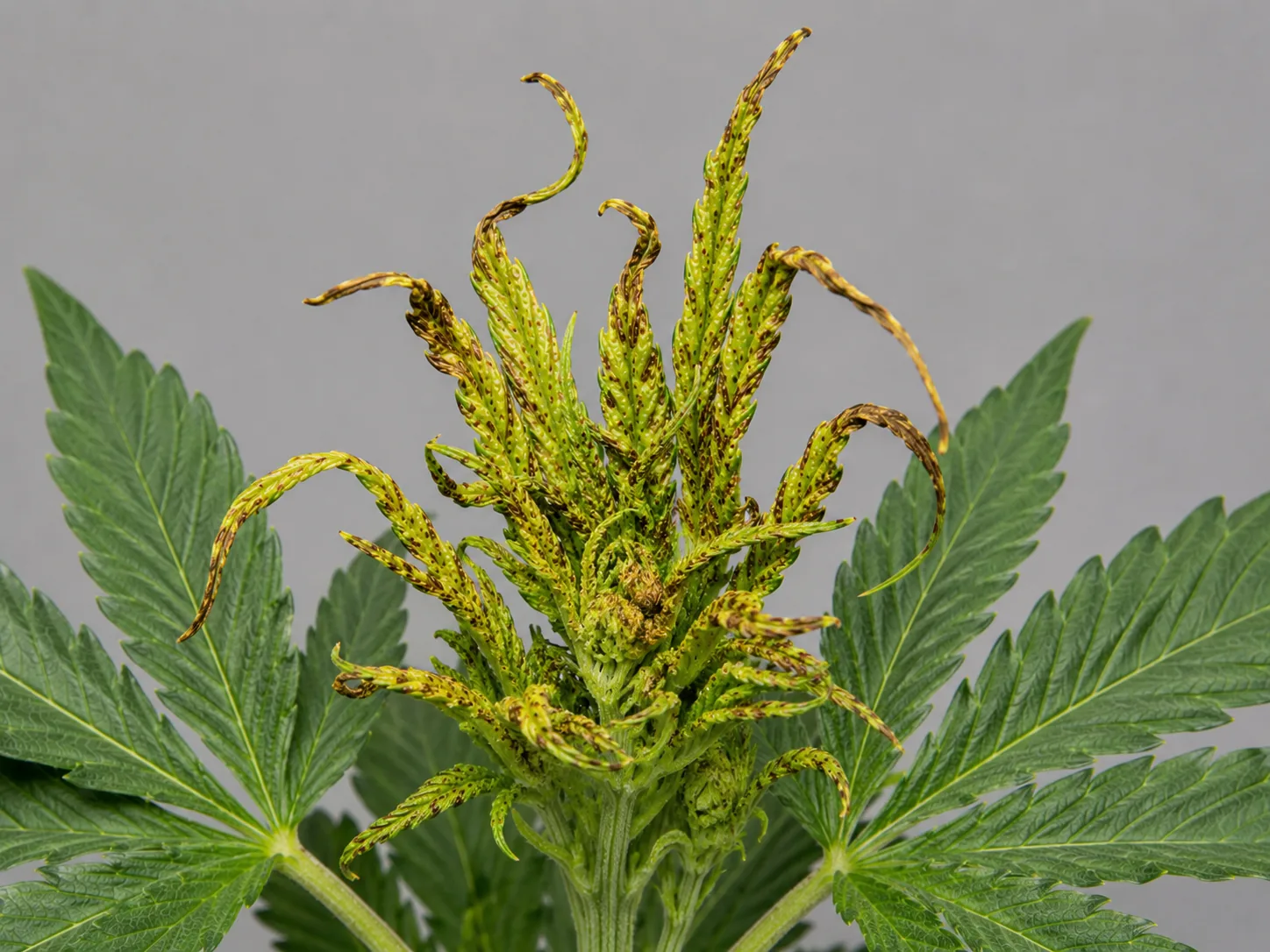
Calcium deficiency — spots and twisting on new leaves.
Calcium is immobile, so unlike magnesium and potassium it strikes the new, upper growth, not the old lower leaves. Look for irregular brown spots together with hooked, twisted young leaves — the "where on the plant" signal is what separates it from the mobile deficiencies.
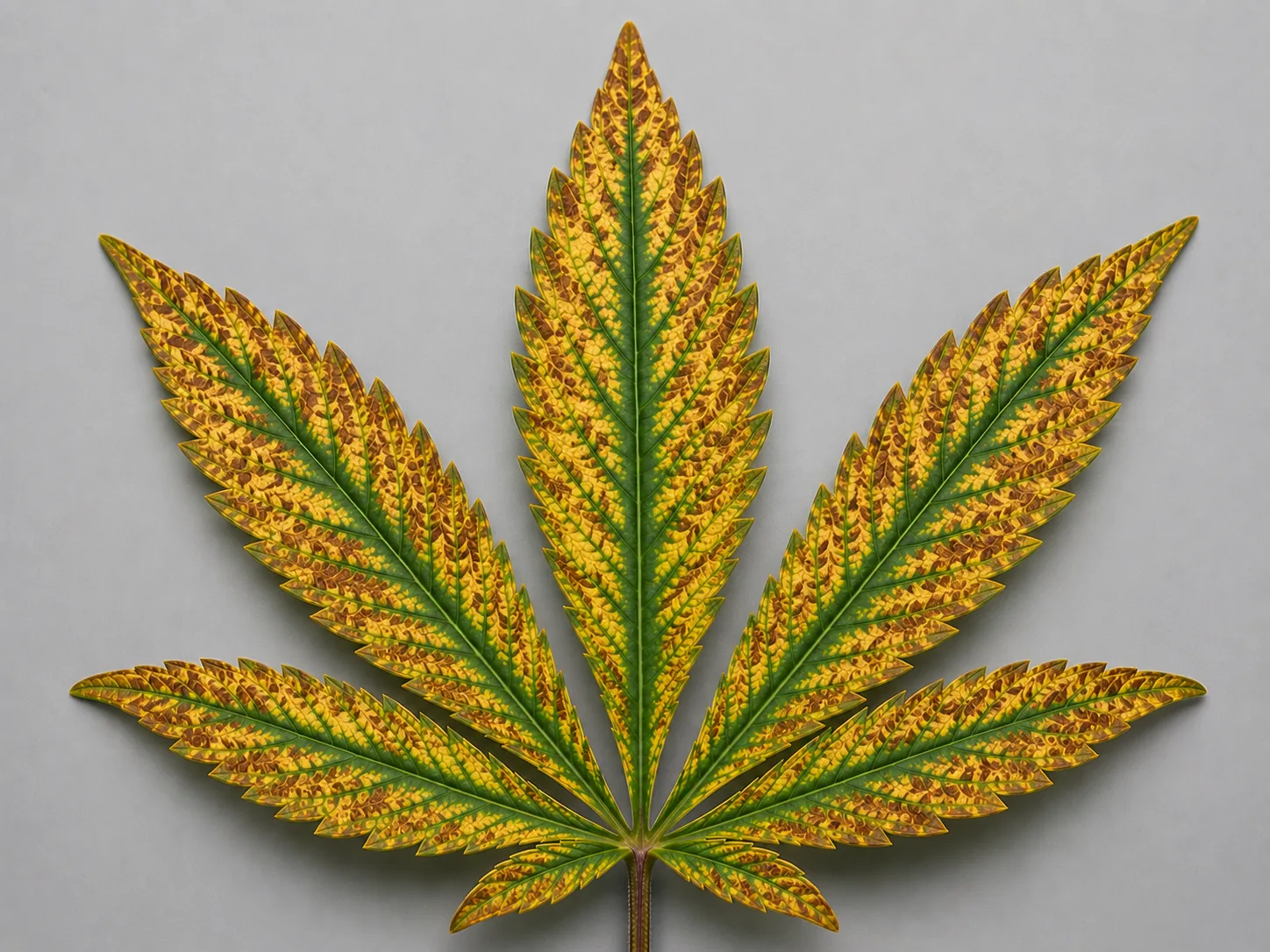
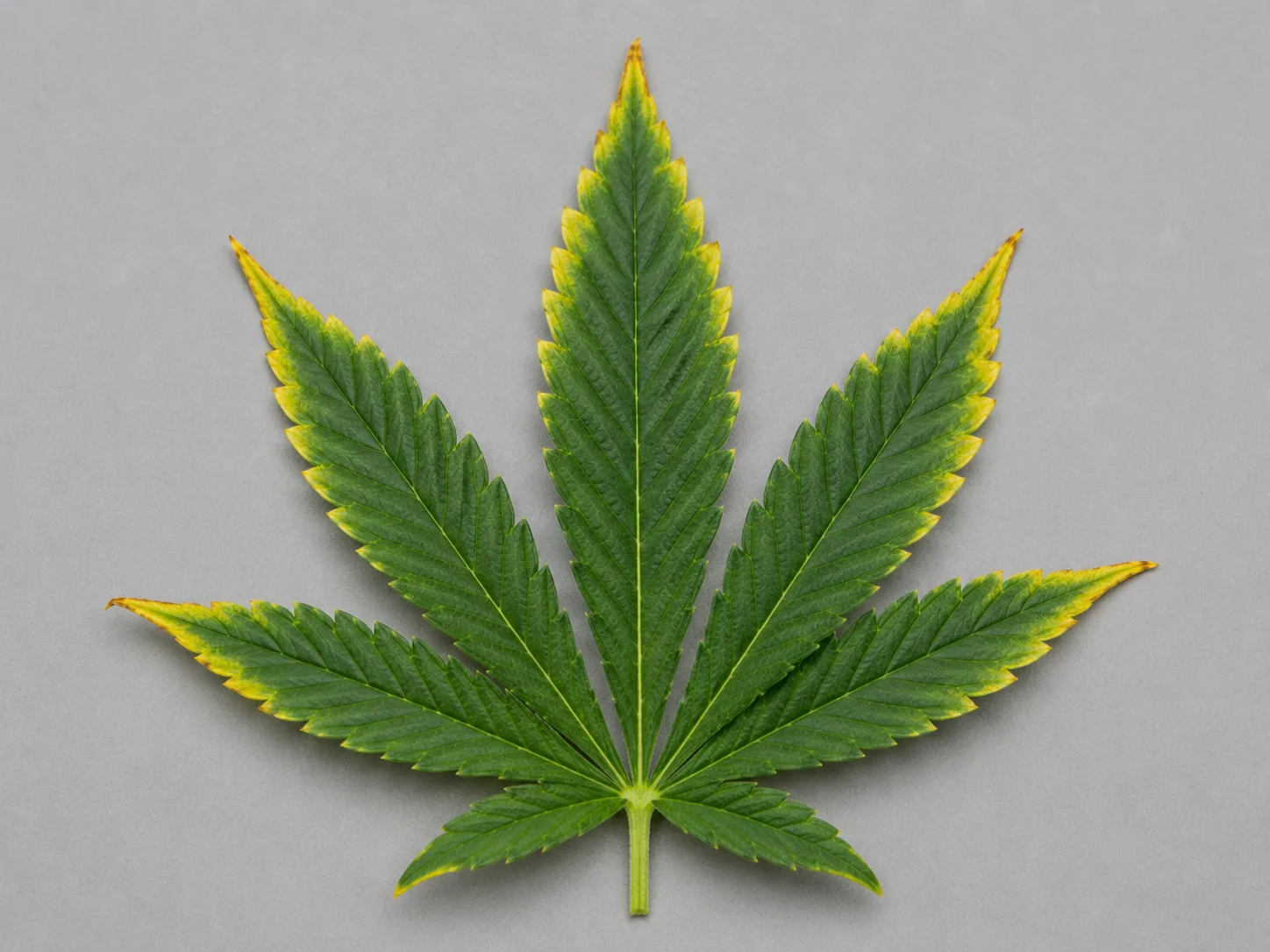
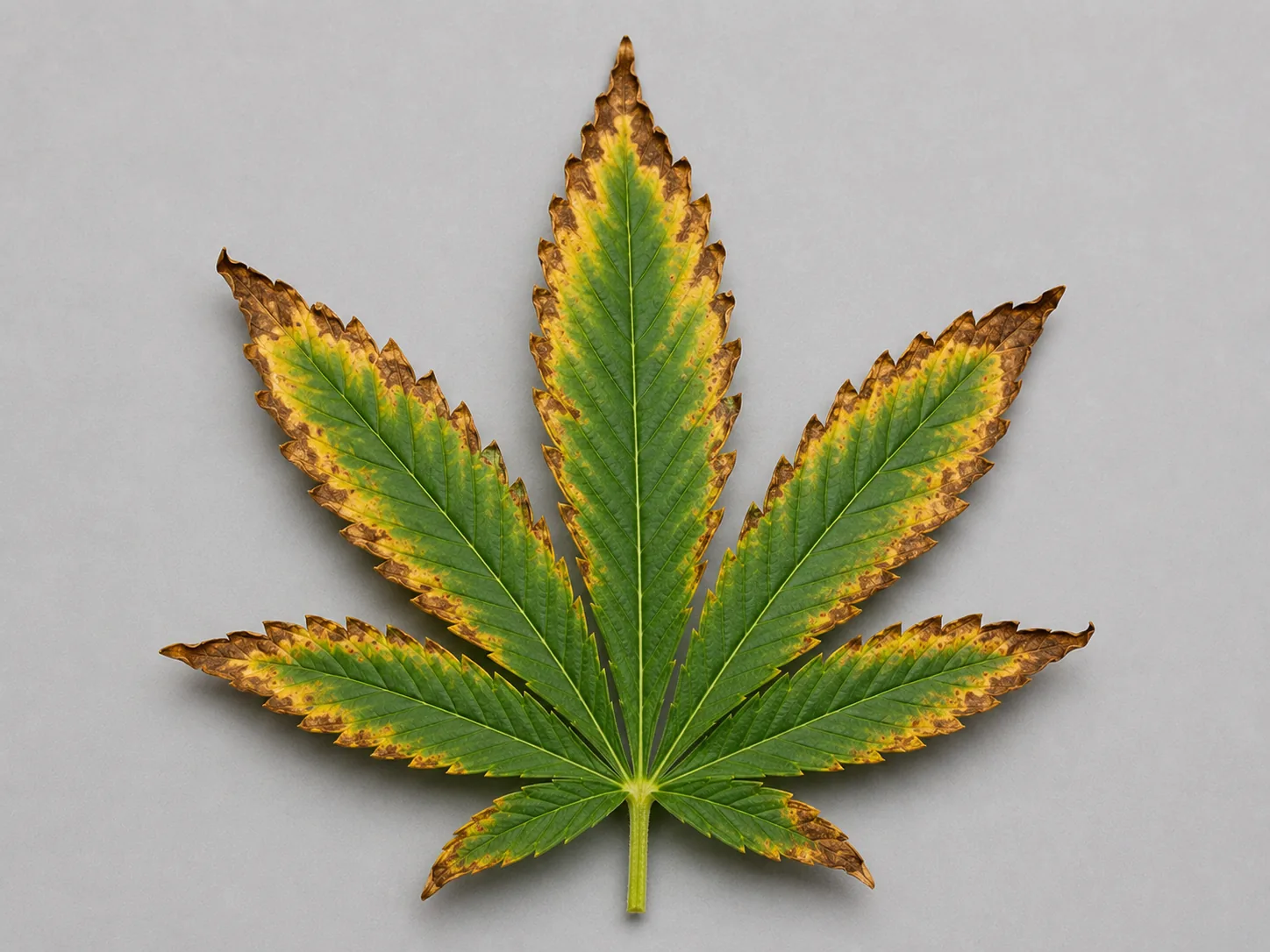
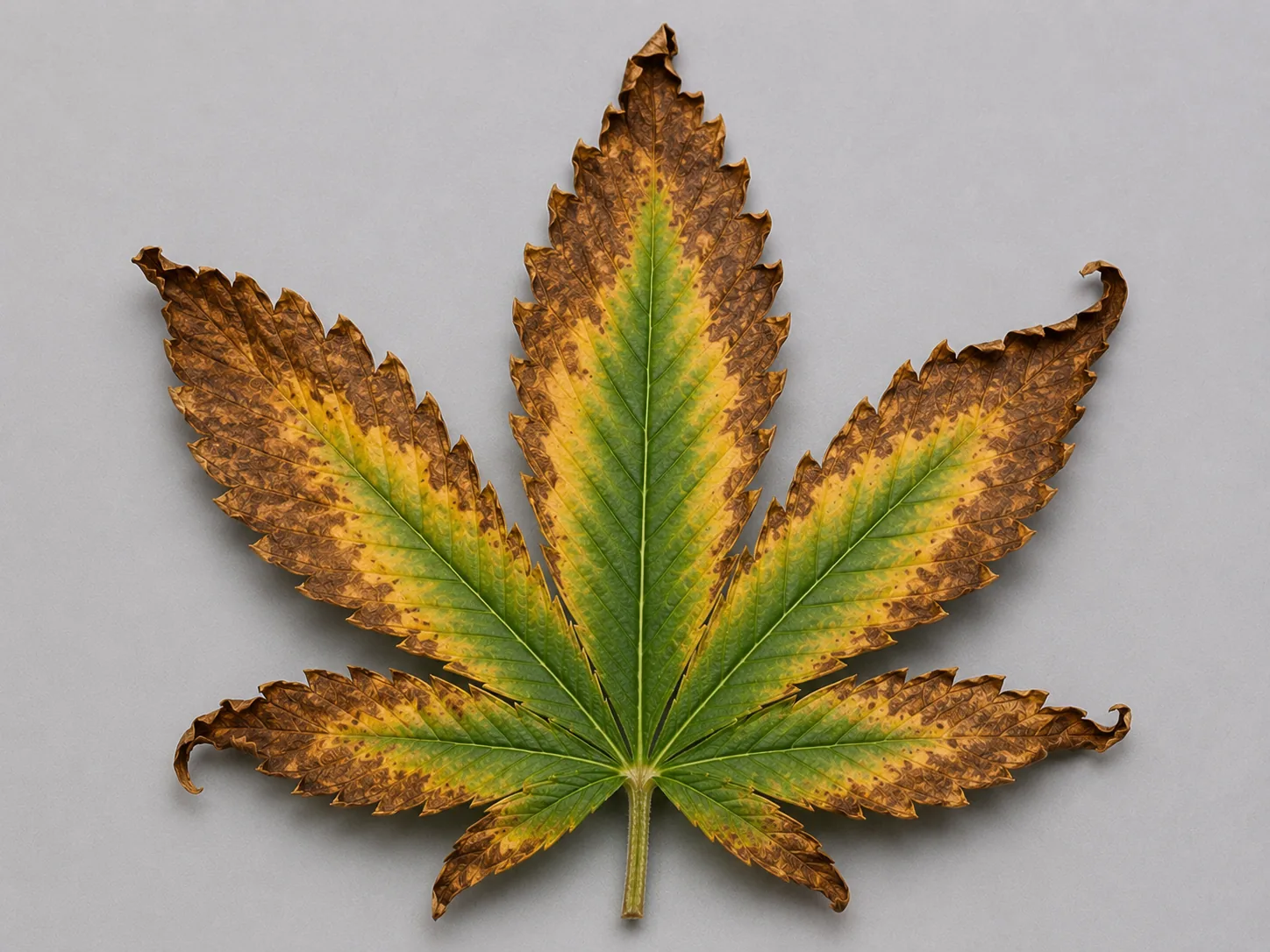
Potassium deficiency — burnt margins, green center.
Potassium is the mirror image of magnesium: also mobile and lower-leaf-first, but the damage begins at the margins and tips and works inward, while the interior and veins stay green. Magnesium attacks between the veins; potassium attacks the edges.
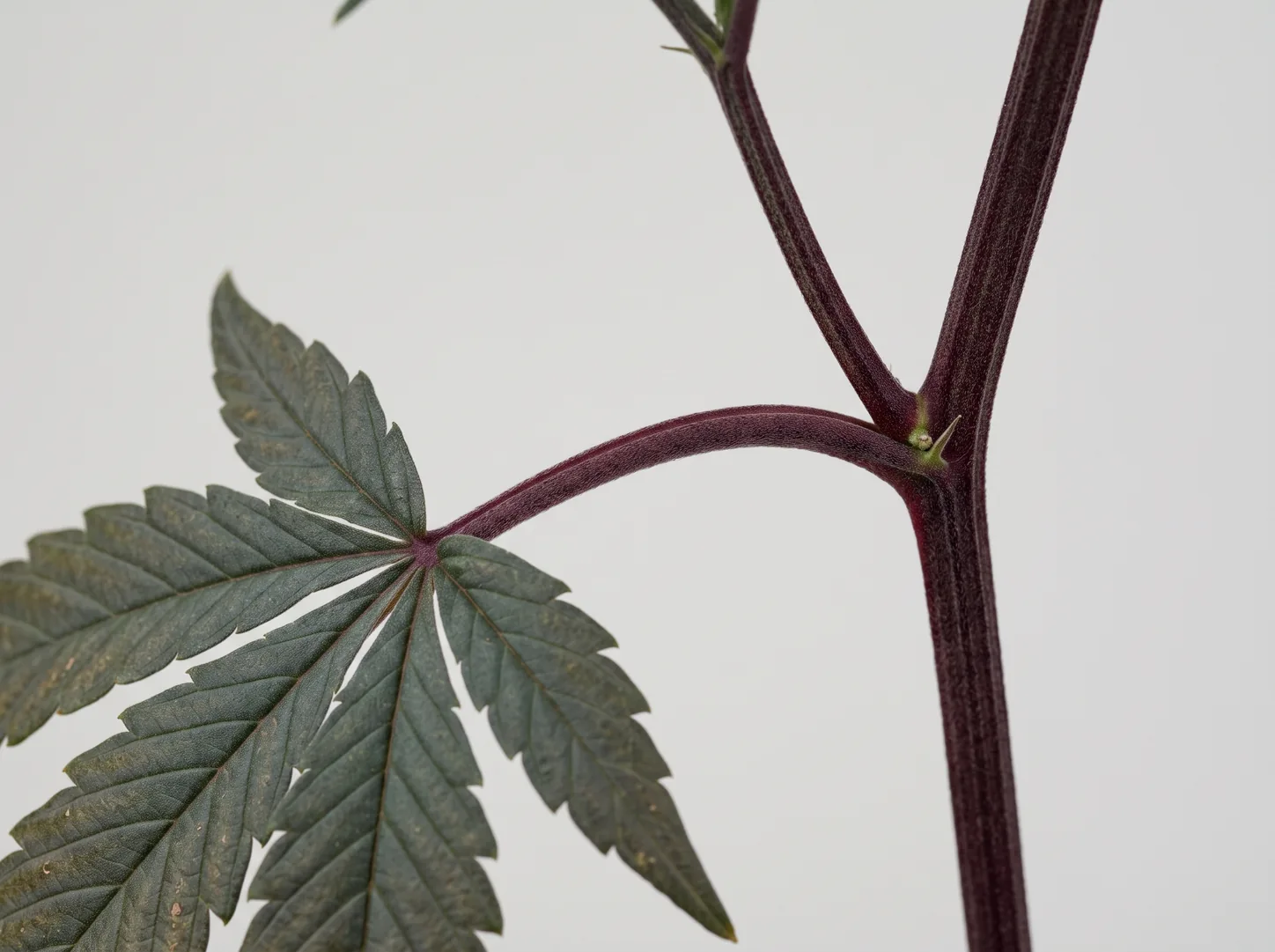
Phosphorus deficiency — dark, dull leaves and purple stems.
Phosphorus is mobile and shows on older growth, but instead of yellowing it turns leaves dark, dull and blue-green with red-purple petioles, later developing bronze blotches. Purple alone is unreliable — cold and genetics also purple a plant — so read the dark, sluggish leaf state alongside the stem color.
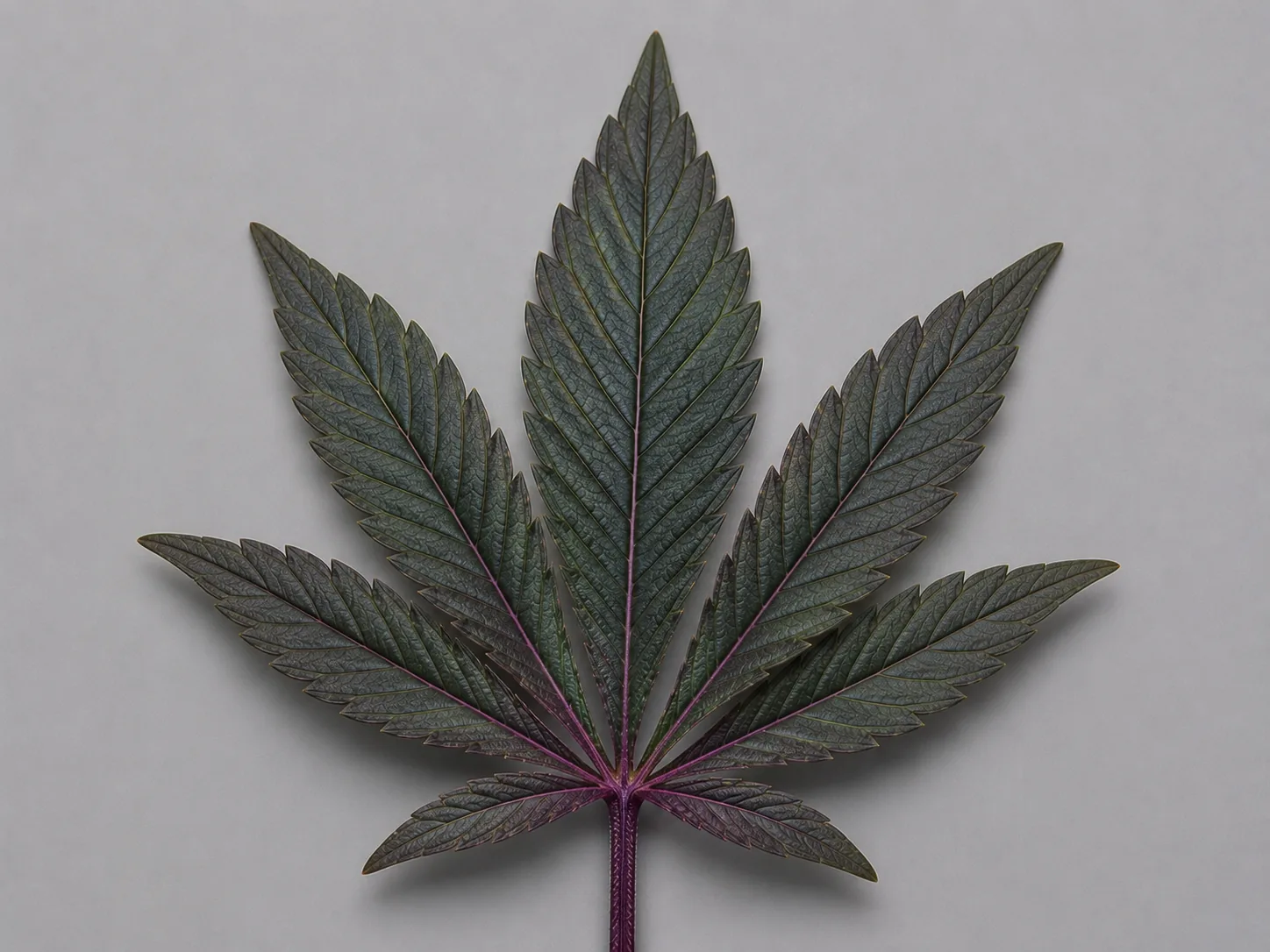
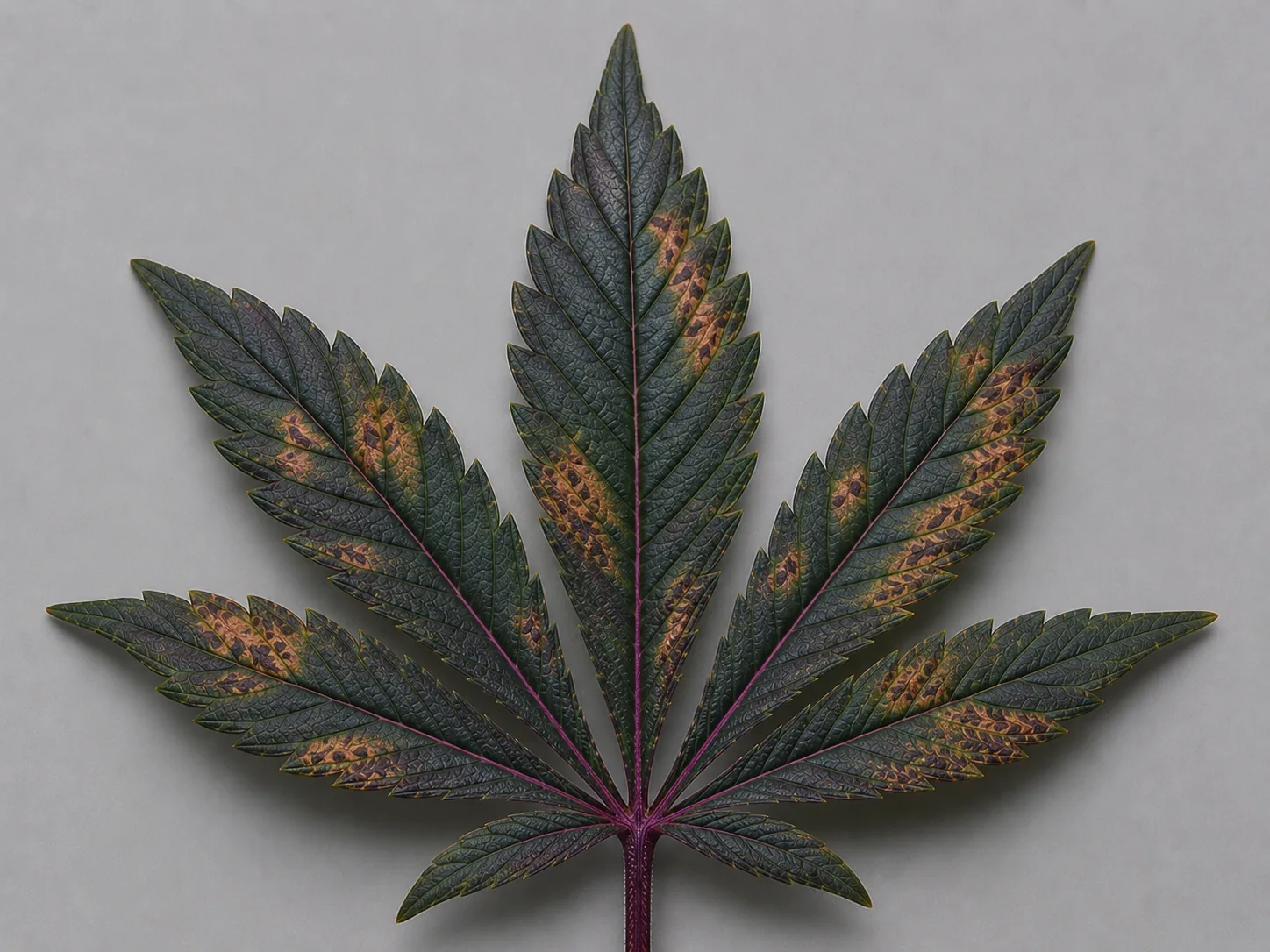
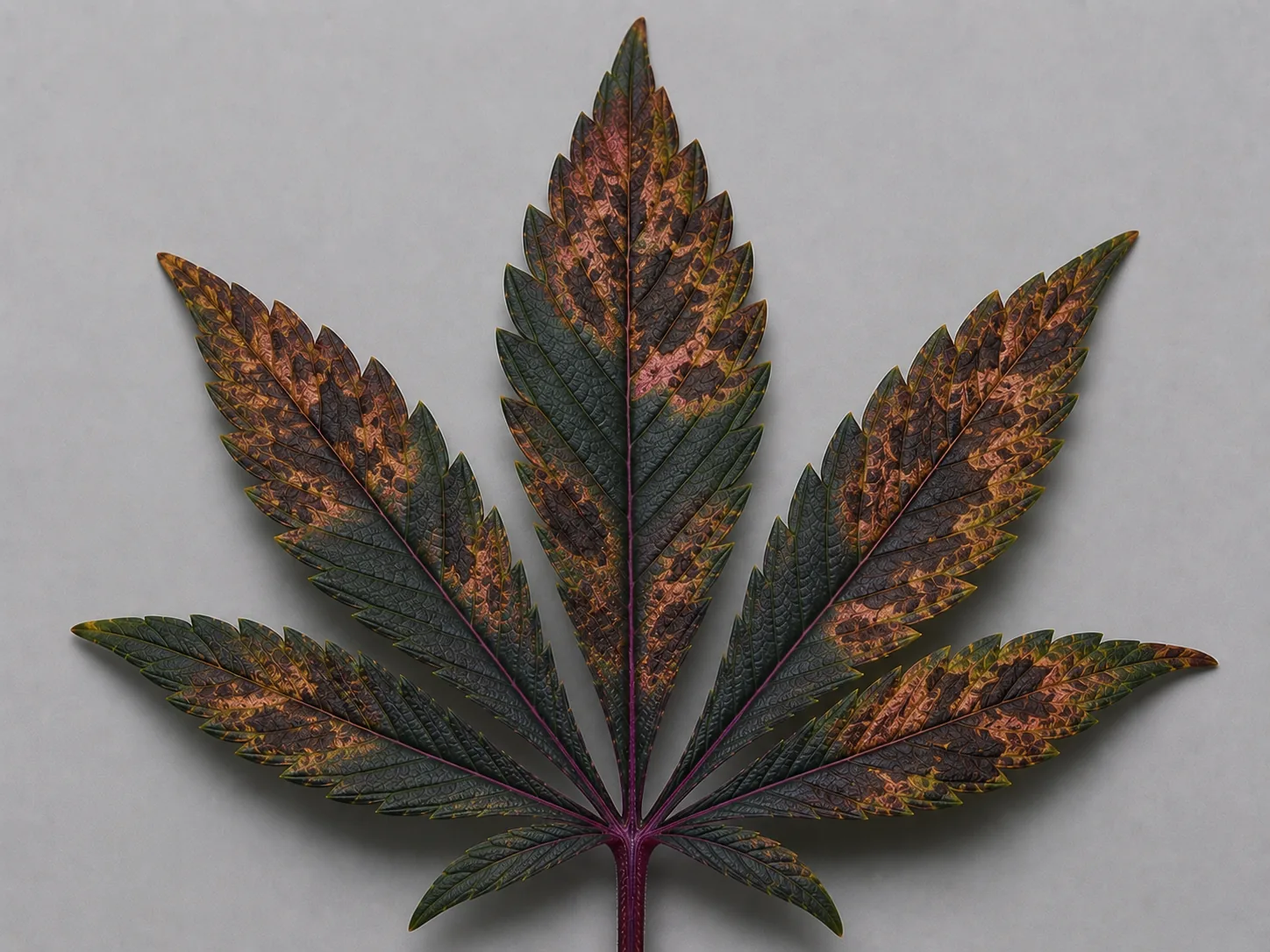
The stem tells the same story: phosphorus turns the stems and petioles deep red-purple, but crucially the attached leaves go dark, dull and sluggish with it. That leaf state is the whole difference — purple stems on a vigorous green plant are cold or genetics, not a feeding problem.
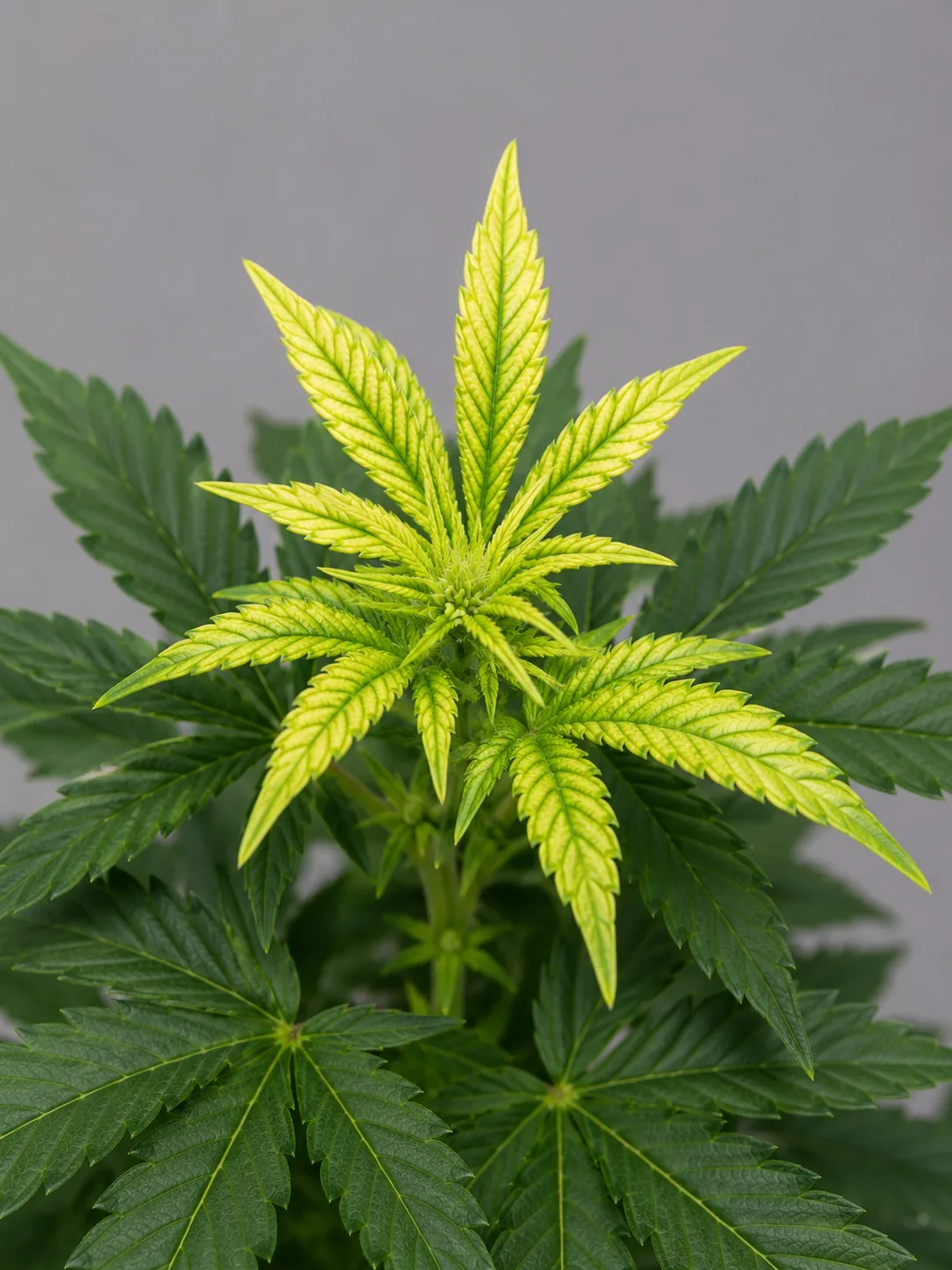
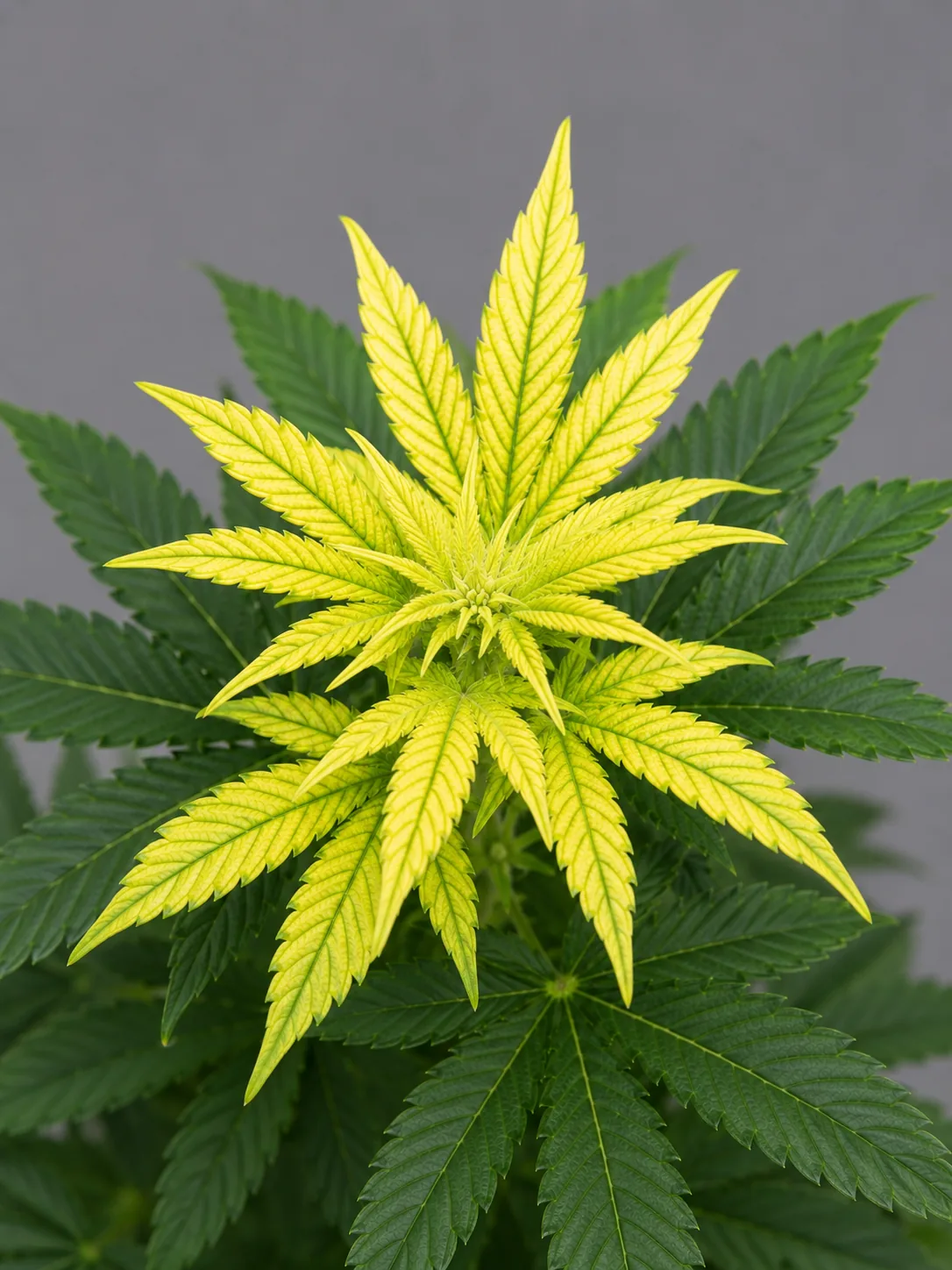
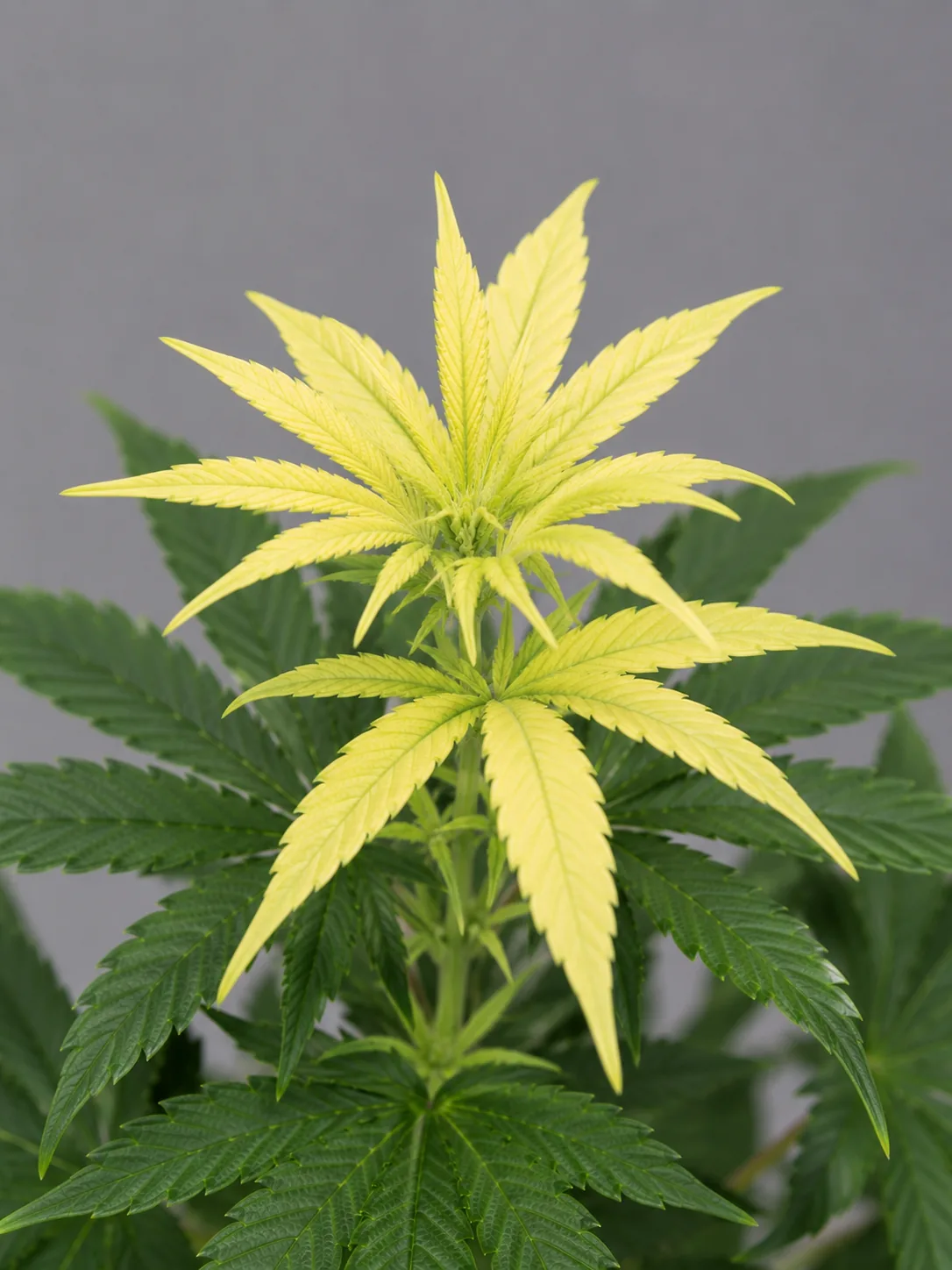
When the new growth yellows: iron and sulfur.
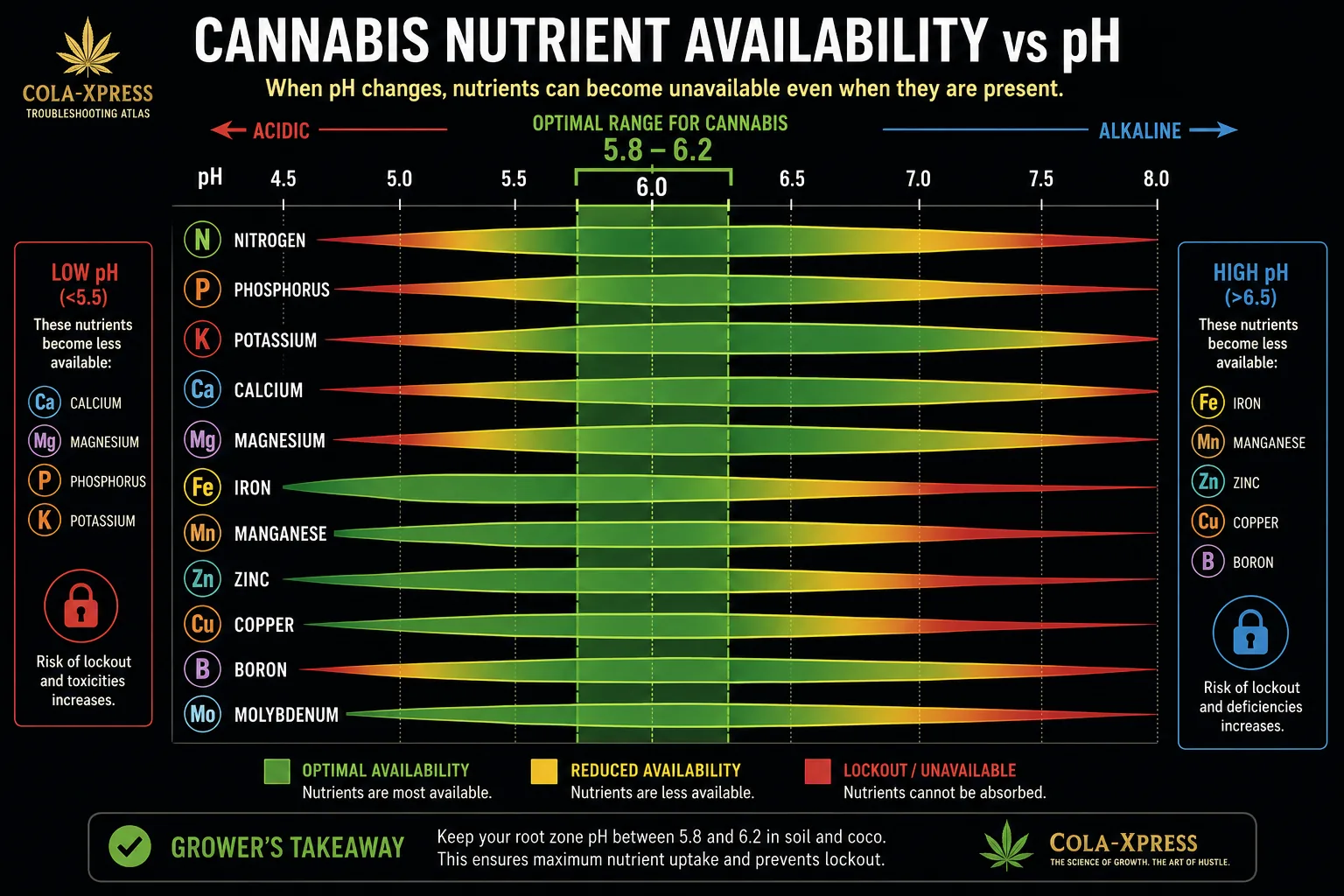
Magnesium yellows between the veins of old leaves; iron does the same thing but on the new top growth with the veins staying green, and sulfur turns new growth uniformly pale, veins included. Location and the vein pattern tell the three apart — and iron is usually a pH-lockout symptom, not a missing nutrient.
Overfeeding: nitrogen toxicity and nutrient burn.
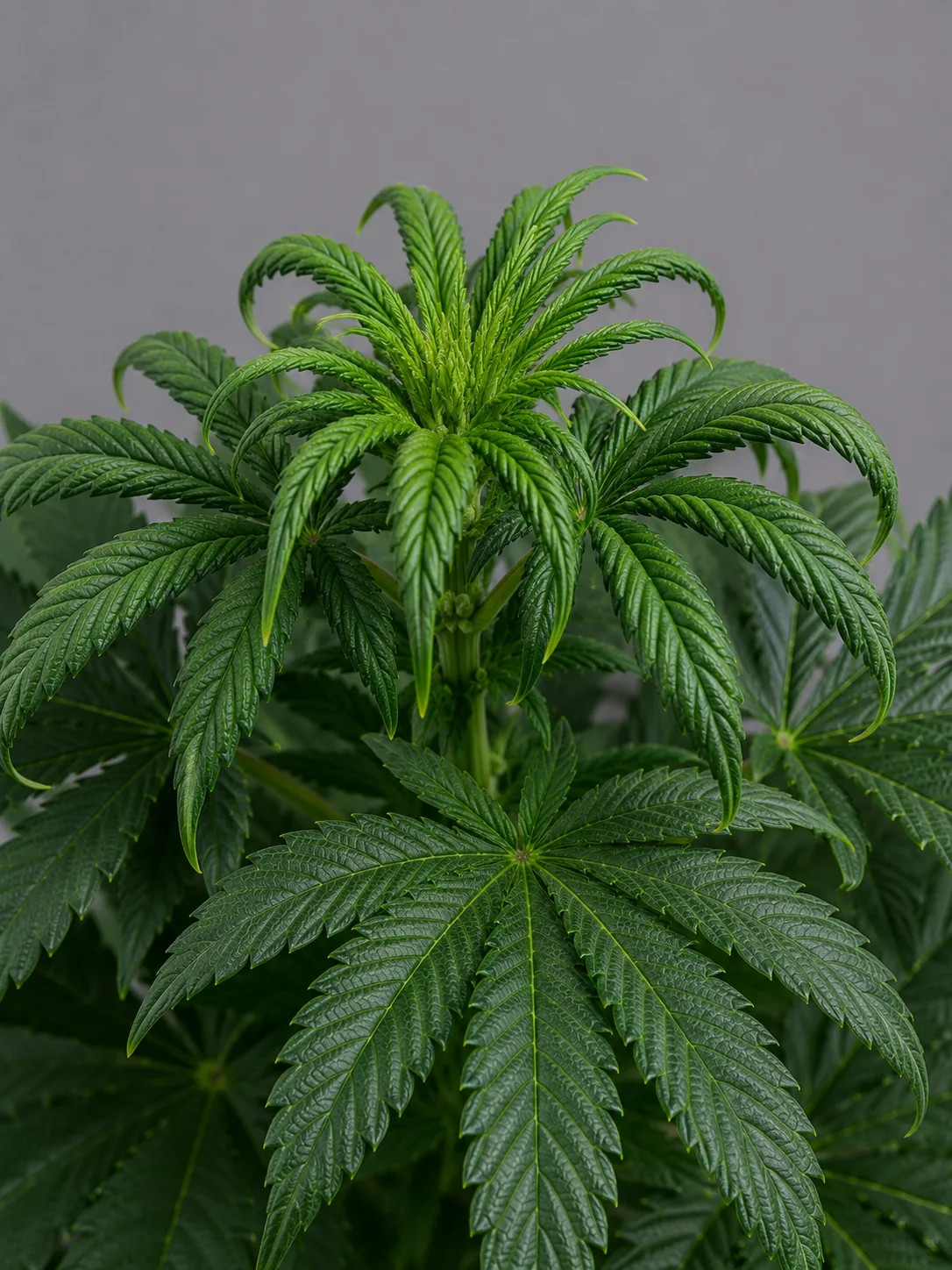
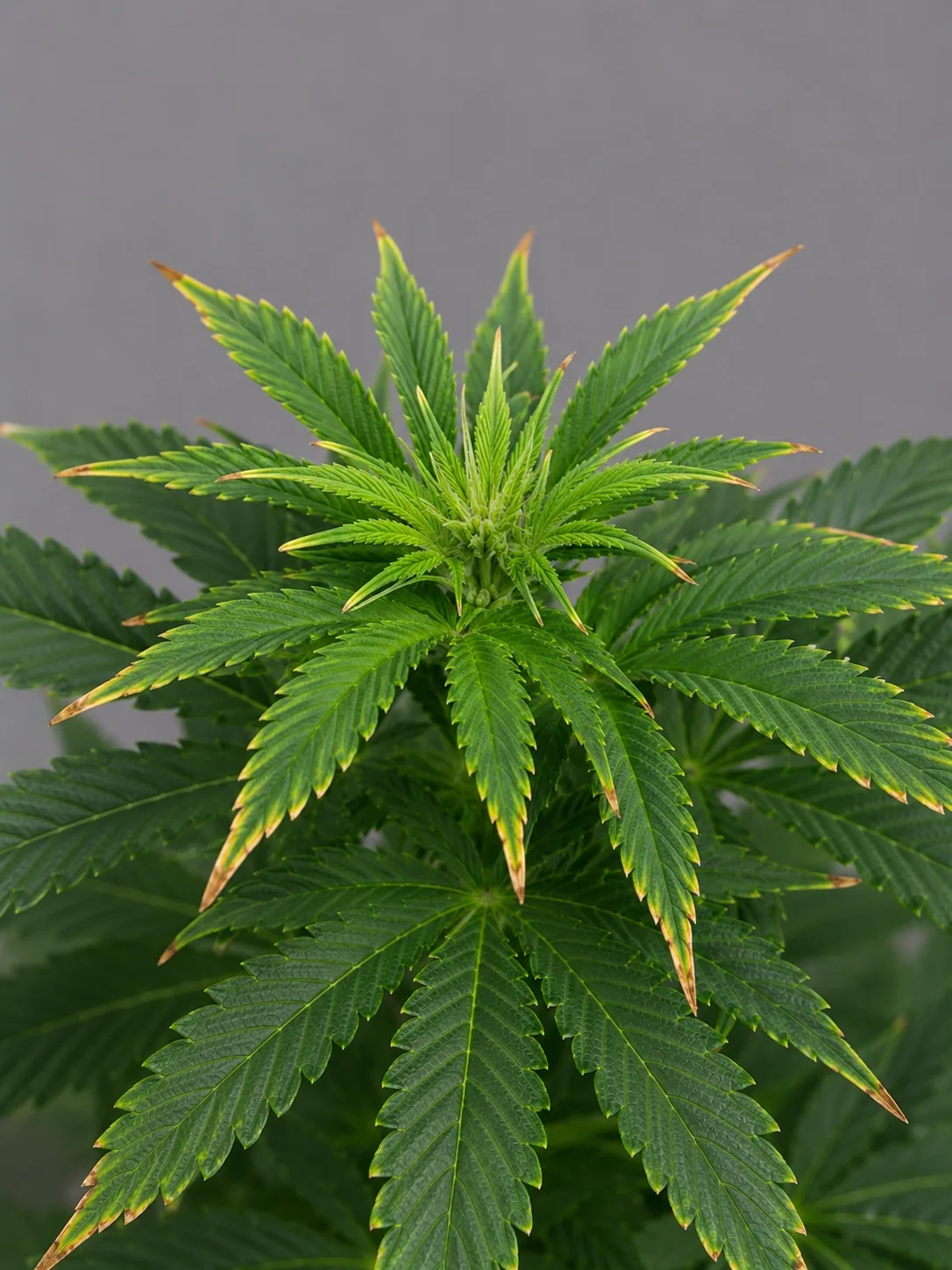
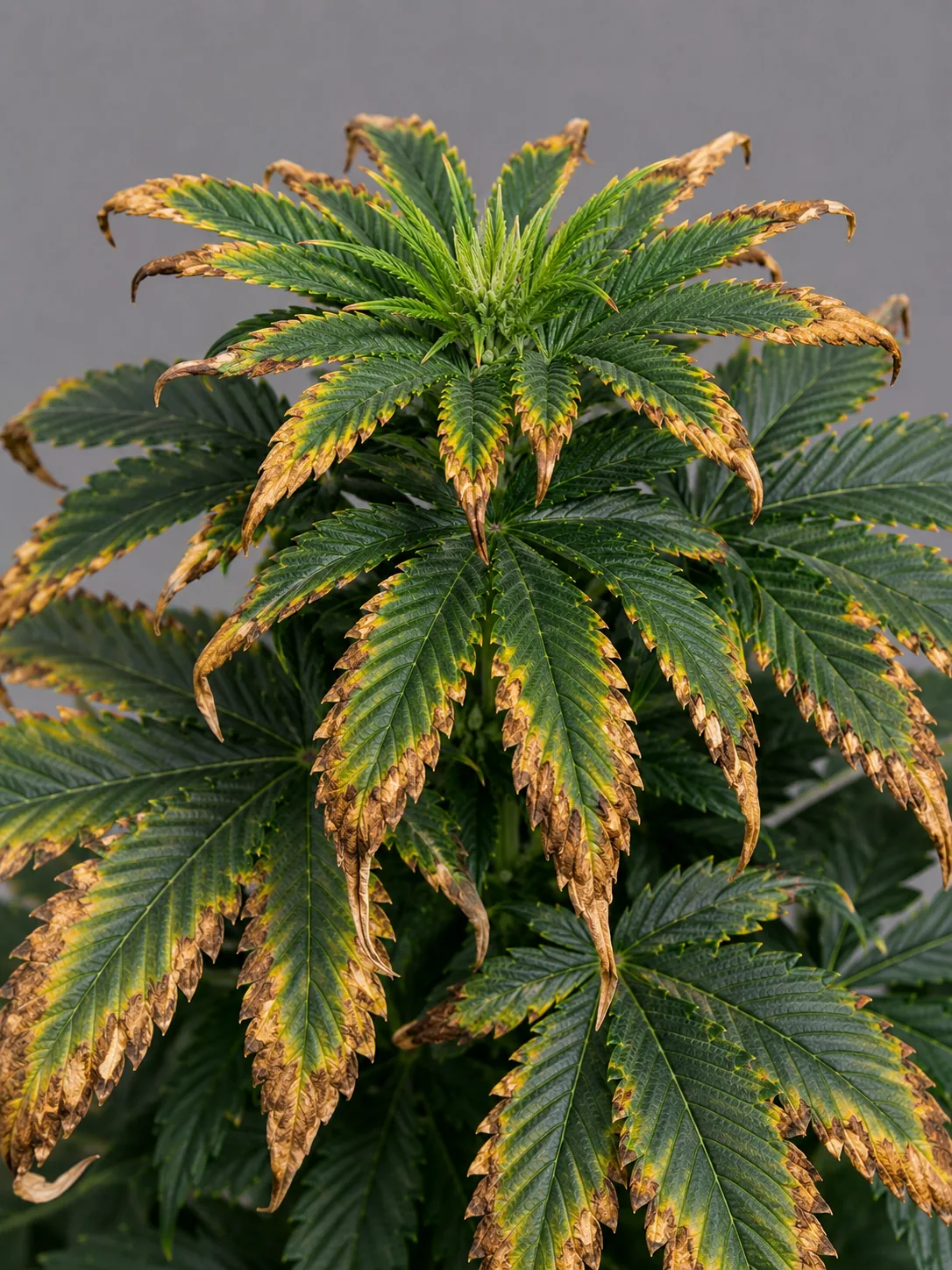
Not every problem is a shortage. Nitrogen toxicity makes leaves dark, glossy and claw downward; nutrient burn crisps the very leaf tips of an otherwise healthy green leaf. Both say back off the feed — and both are routinely misread (the claw as heat, the tip burn as potassium).
pH lockout — when several deficiencies appear at once.
If multiple conflicting symptoms show up together and fast, stop adding nutrients. That pattern is pH lockout: the nutrients are present but the root-zone pH has drifted out of the range the plant can absorb. Fix the pH and the "deficiencies" resolve. And the fastest split of all — old leaves first vs new growth first — halves your options before you diagnose anything else.
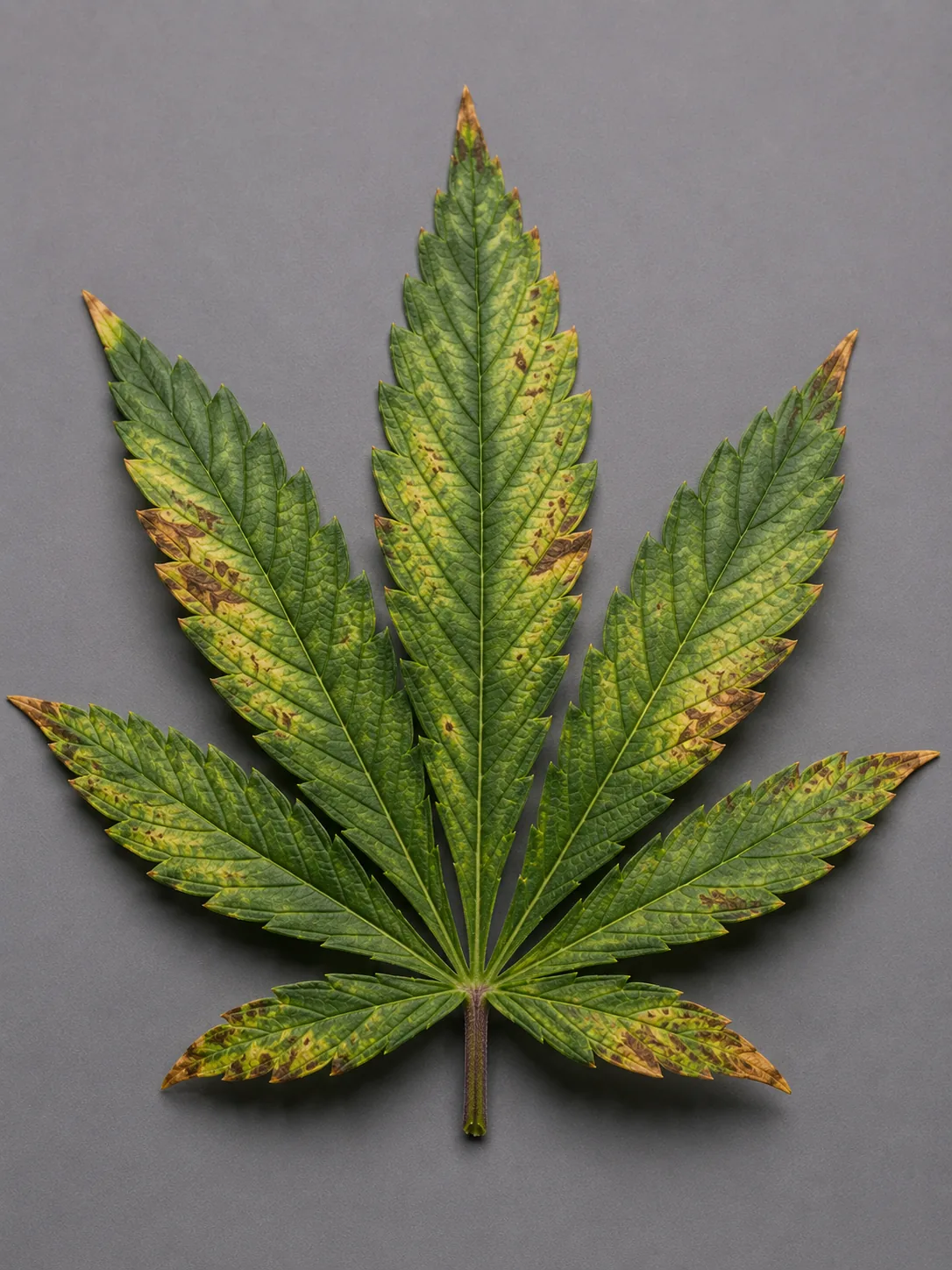
When brown spots are a disease, not a feeding problem.
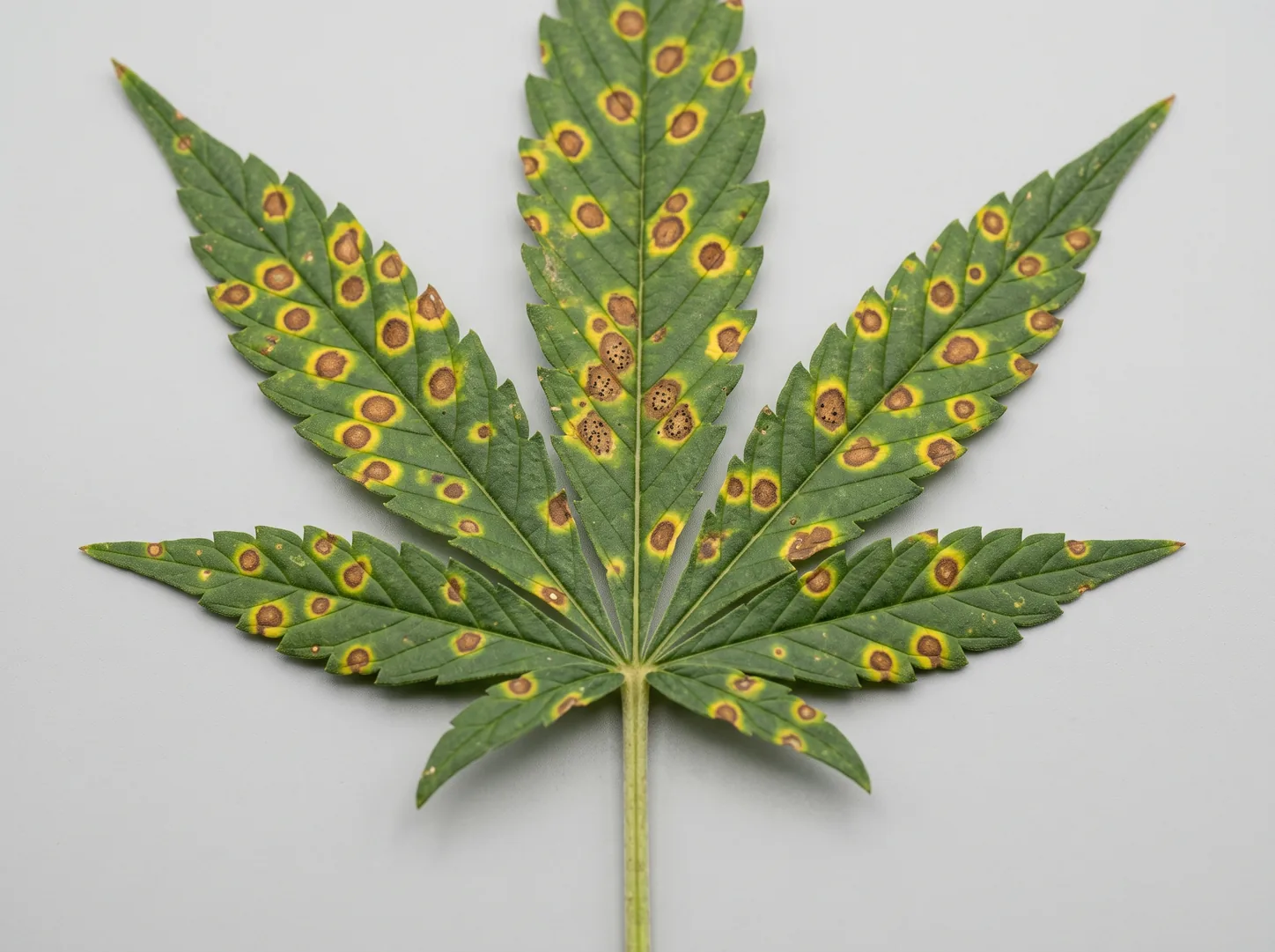
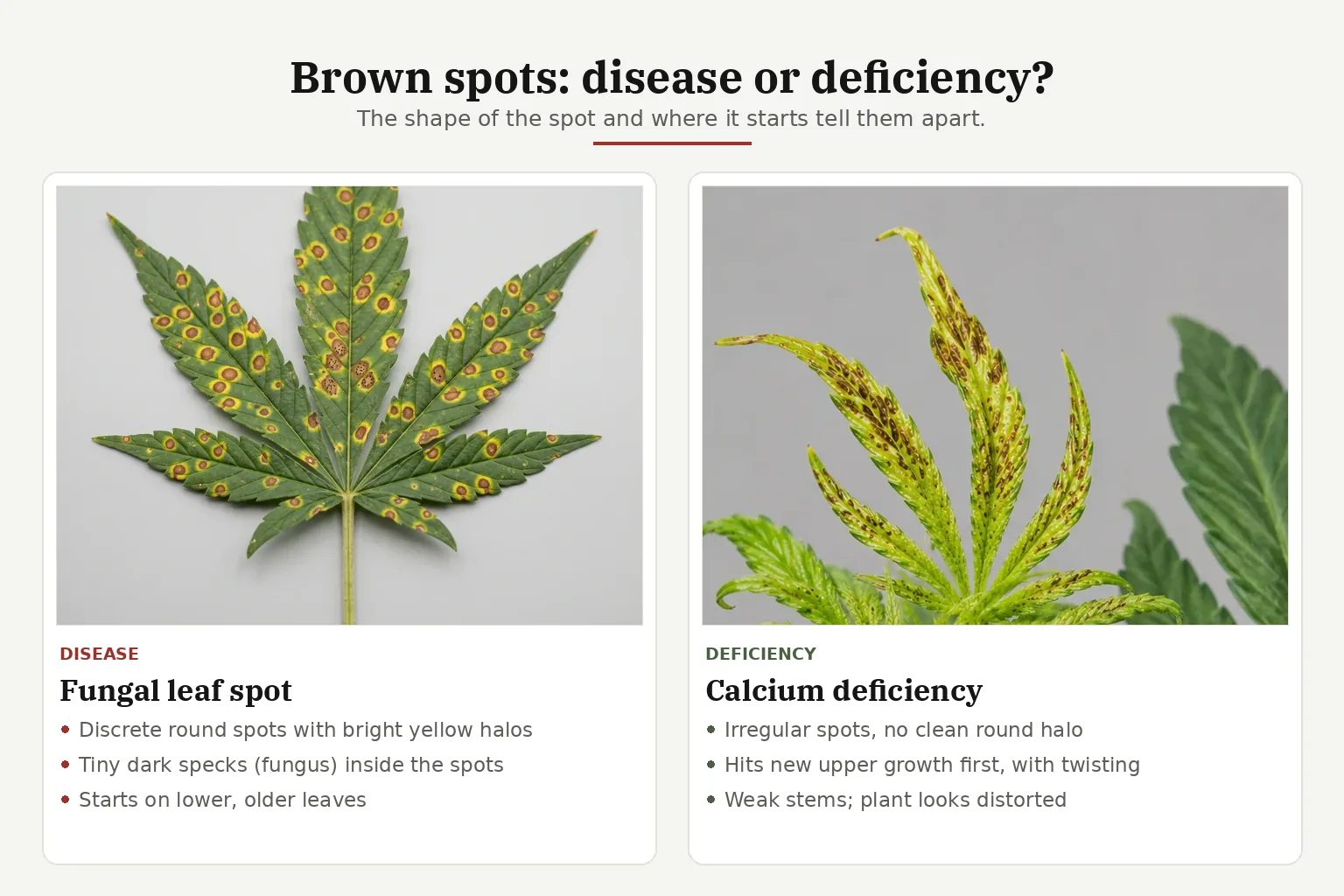
Not every spotted leaf is hungry. Leaf septoria — a fungus — throws discrete round brown spots ringed by bright yellow halos, and if you look closely the older spots carry tiny dark specks at their centres (the fungal fruiting bodies). It starts on the lower, inner-canopy leaves where humidity sits, and the plant stays otherwise vigorous. That round-spot-with-halo pattern on lower leaves is the tell that separates it from a calcium deficiency, whose spots are irregular, land on new growth, and come with twisting and weak stems.
Side by side, the fork is quick: round spots with clean halos on lower leaves point to the fungus; irregular spots on twisting new growth point to calcium.
Two symptoms, every cause side by side.
Most panic starts with one of two words — yellow or spots. These boards line up every cause for each so you can match your plant to the right column, then read that section above.
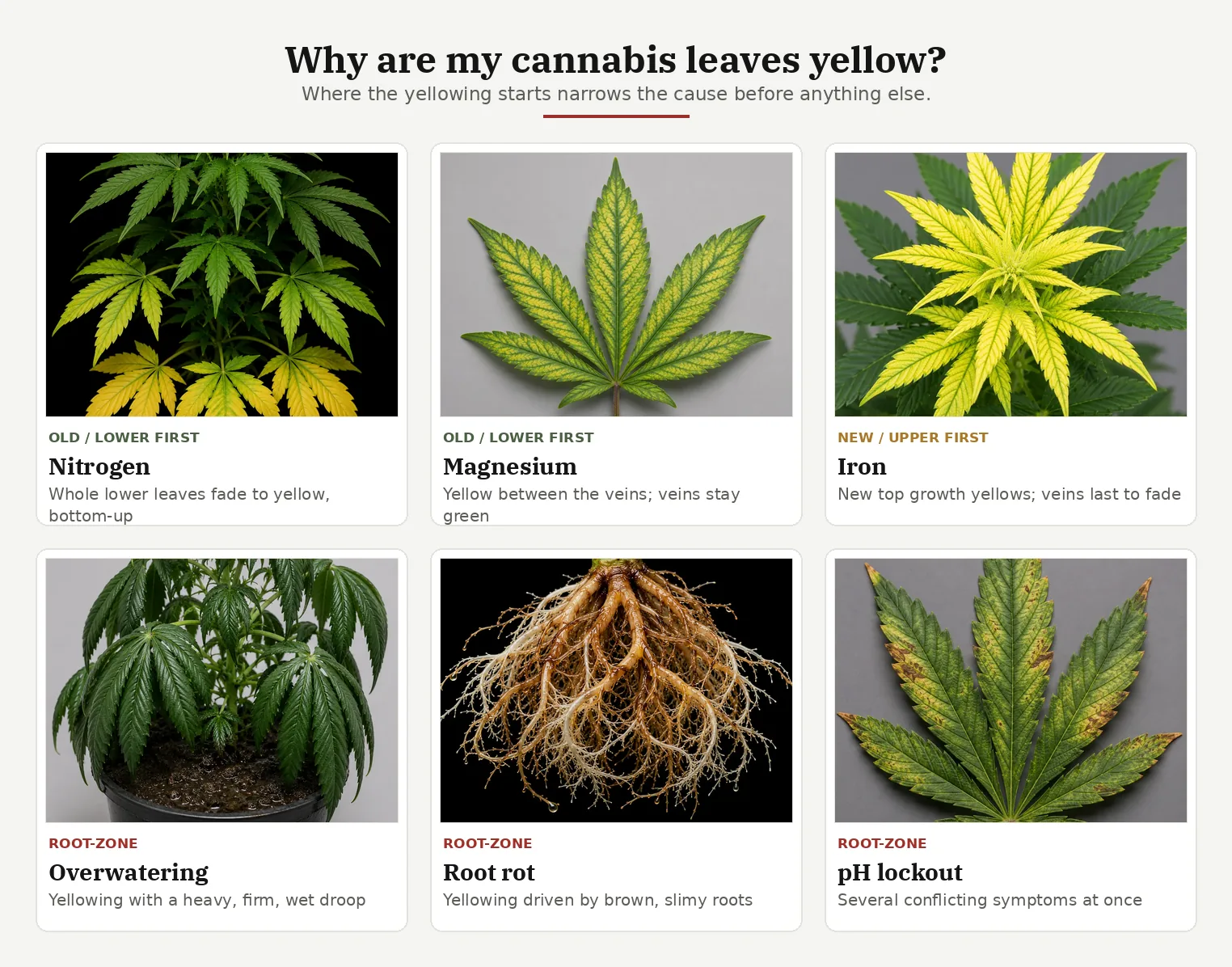
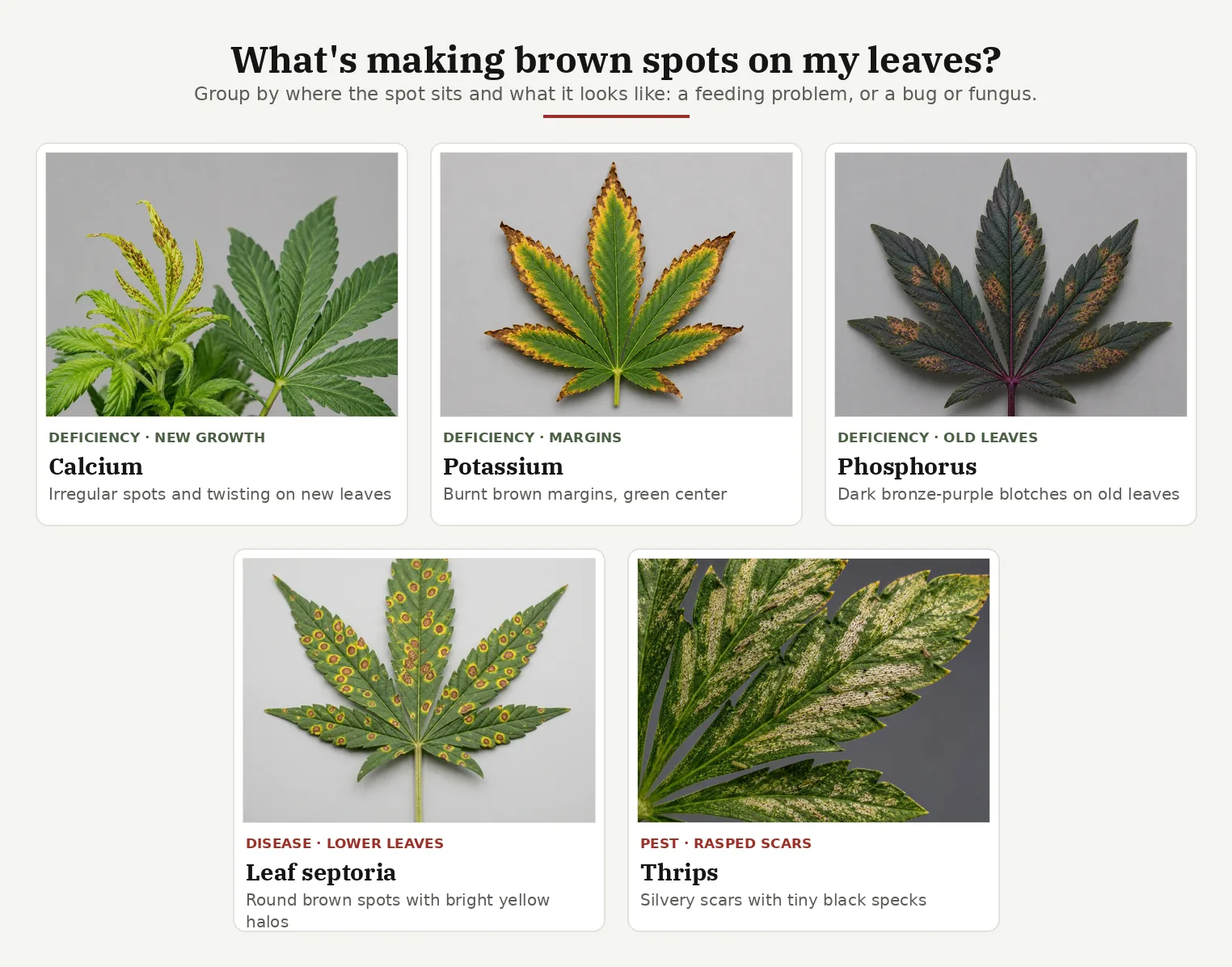
Where the symptom starts tells you what to suspect.
| What you see | Where it starts | Most likely cause |
|---|---|---|
| Even yellowing, whole leaf | Old, lower leaves | Nitrogen deficiency |
| Yellow between green veins | Old, lower-to-mid leaves | Magnesium deficiency |
| Brown spots and burnt edges | Mid leaves | Potassium or calcium |
| Yellow new growth, green veins | New, upper leaves | Iron (often pH lockout) |
| Many symptoms at once, fast | Anywhere | pH lockout, not a single nutrient |
If several symptoms appear together and spread quickly, stop adding nutrients. That pattern is almost always pH lockout — the nutrients are present but the root zone pH has drifted out of the range the plant can absorb. Fix the pH and the "deficiencies" resolve on their own. In hydro, that conversation starts at the reservoir; see root problems in DWC.
Cannabis nutrient deficiency questions
How do I tell a nutrient deficiency from nutrient burn?
Look at where it starts and what it does to the tips. Deficiencies usually fade or discolor whole leaves from the inside; nutrient burn browns and curls the very tips of healthy green leaves, often on the upper canopy where feeding is strongest. Burn means back off; deficiency usually means feed or fix pH.
Should I check pH before adding nutrients?
Almost always. Most apparent deficiencies are really pH lockout — the nutrient is in the reservoir or soil but cannot be absorbed at the current pH. Adding more nutrient to a locked-out plant makes things worse. Confirm pH is in range first, then decide if anything is actually missing.
Is some yellowing normal late in flower?
Yes. As harvest approaches, the plant draws down stored nitrogen and the lower leaves fade. A gentle fade in the final weeks is expected and is not a problem to chase. Aggressive yellowing early in the cycle is the version worth correcting.