Nutrient deficiencies
Yellowing, spotting, and discoloration mapped to nitrogen, magnesium, calcium, potassium, phosphorus, iron, sulfur, and pH lockout — with early/moderate/severe macros for each.
Something's wrong with your plant and you need an answer now. Start with what you can see — yellow leaves, brown spots, white powder, drooping, mold — and let the picture take you to the cause. Each guide below pairs real diagnostic photography with the one signal that separates a problem from its look-alike, so you fix the right thing the first time.
The fastest split in all of diagnosis: did it start on the old, lower leaves or the new, upper growth? That one question halves your options before you touch anything.
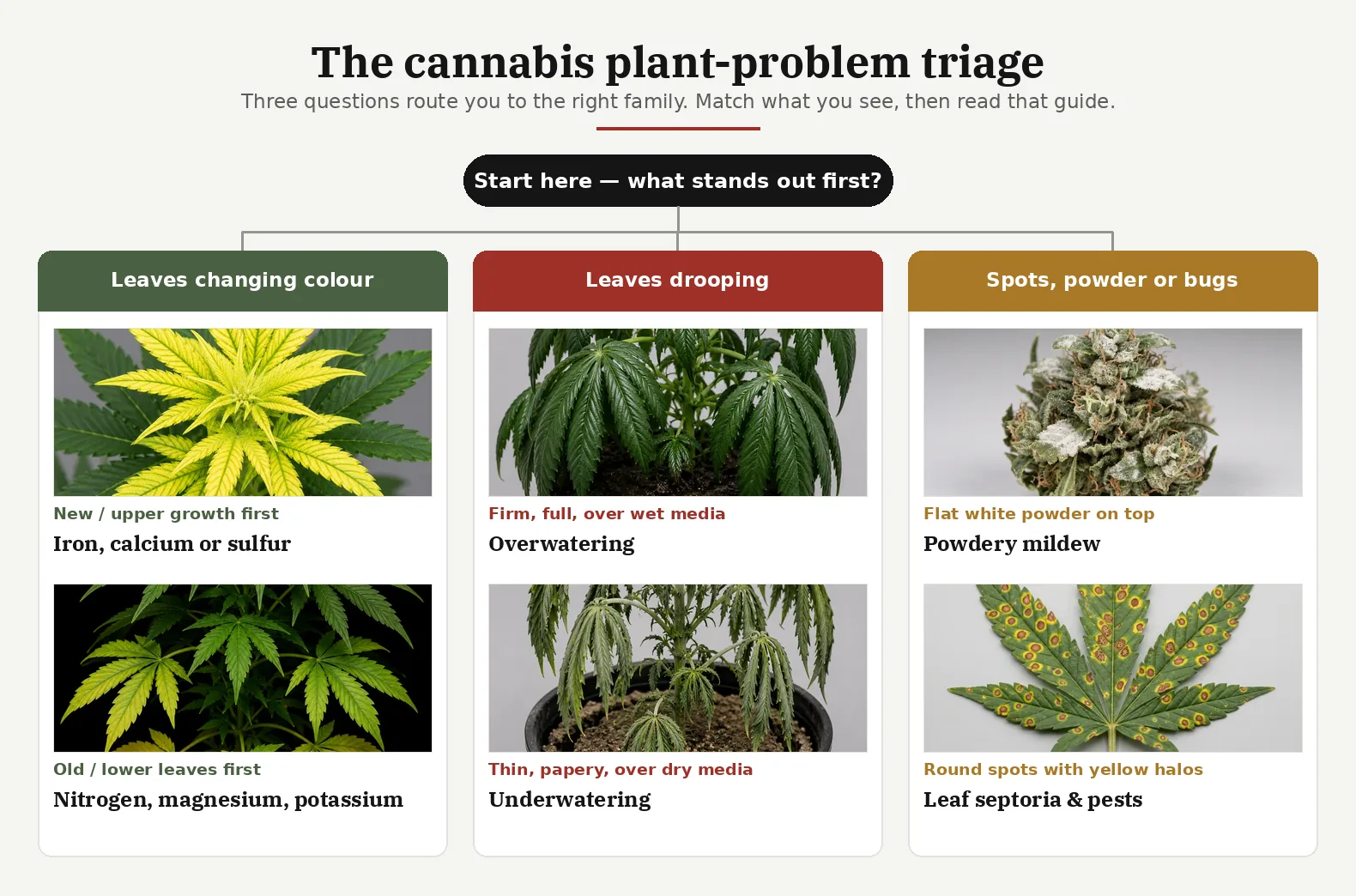
Three questions get you to the right family fast: is a colour changing, is the plant drooping, or are there spots, powder or bugs? Match the cue, then open that guide below.
Yellowing, spotting, and discoloration mapped to nitrogen, magnesium, calcium, potassium, phosphorus, iron, sulfur, and pH lockout — with early/moderate/severe macros for each.
Spot botrytis and powdery mildew early — how rot hollows a cola from the inside, what mildew looks like as it spreads, and which flower to discard.
Read the bug off the leaf — thrips silver scarring versus spider-mite stippling, with early, moderate, and severe thrips macros and the texture tests that name each pest.
Heat, light, cold, wind, and water read off the plant by direction and location — overwatering versus underwatering droop, light burn on the tops, cold purpling, and wind burn.
Healthy white roots versus brown, slimy root rot — the severity ladder, and how to tell harmless staining from real rot before you panic.
Over- versus under-watering (firm droop versus papery wilt) and the other reasons a compact grow loses pace.
When the cabinet keeps turning heavy or wet — the environmental drift behind mold, slow growth, and stress symptoms.
The errors that show up again and again in compact runs — and what the plant actually looks like when each one happens.
Every symptom macro lives in the Troubleshooting gallery — a consistent, labeled set built so you can match your plant to the picture in seconds rather than guess.