Troubleshooting
Bud Rot & Mold: Spotting Botrytis and Powdery Mildew
These are the two failures that can ruin a finished crop in the last weeks, and both are won or lost on early recognition. Bud rot (botrytis) attacks from inside the cola, so by the time the outside looks wrong, a lot is already gone. Powdery mildew works on the surface, spreading as a white dust you can catch while it is still cosmetic. This is a safety page: learn the early signatures, and know which flower to discard.
The rule with both: dense canopy plus humid, stagnant air is the trigger. Airflow and humidity control prevent far more than any spray cures.
Watch the lessons
Bud rot, taught on real colas in under two minutes.
Two ColaXpress films cover this page's most urgent skill — the single-leaf warning that exposes rot early, and the full investigation of how a perfect-looking room still lost a cola from the inside.
The Room Looked Perfect — Then One Leaf Exposed Bud Rot
Bud rot (botrytis)
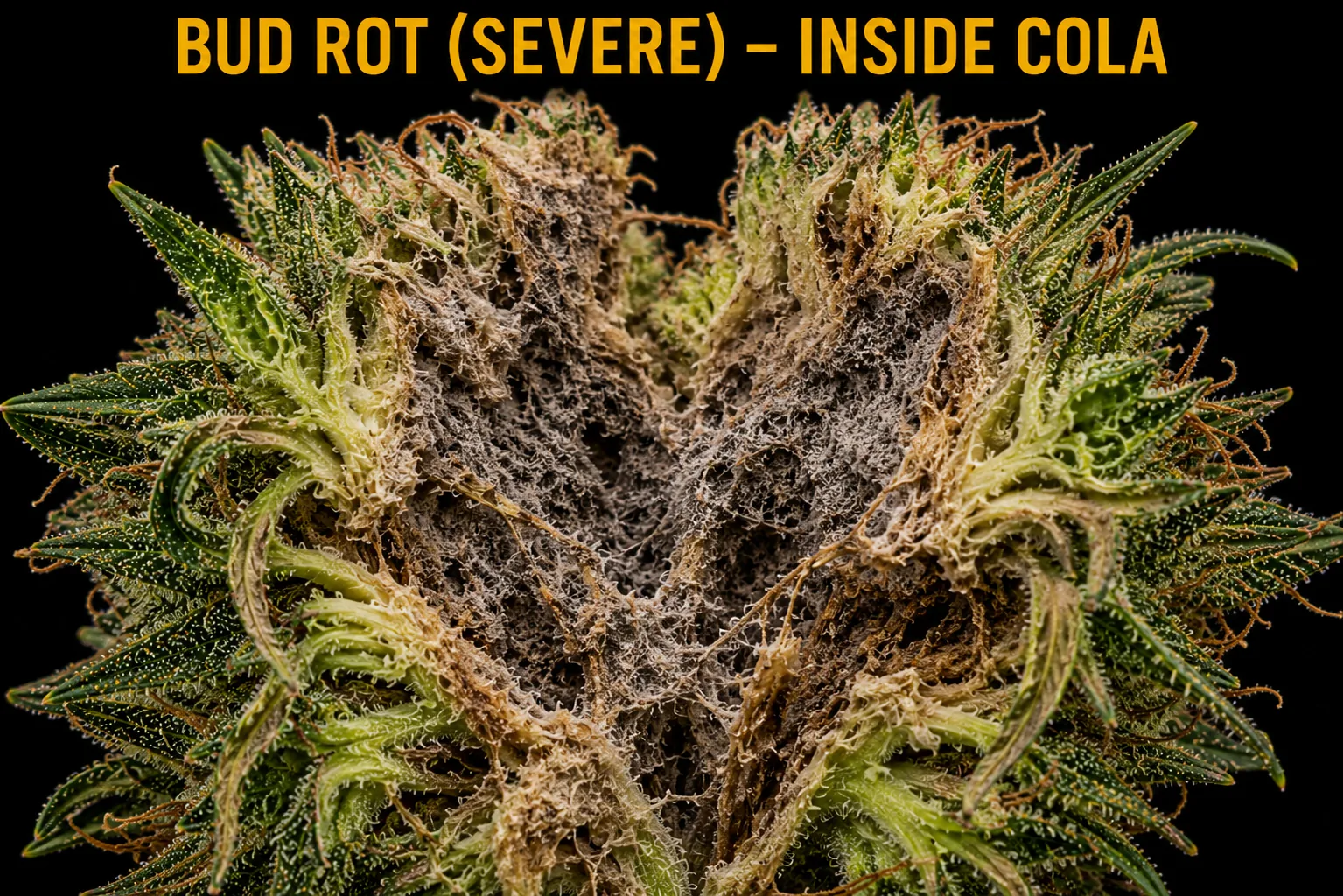
Rots colas from the inside out — grey-brown, cottony decay hidden under a healthy surface.
Powdery mildew
Spreads on the surface as a white, flour-like dust that wipes off but returns fast.
The shared trigger
Dense buds, high humidity, and still air. Open the canopy and move the air.
Bud rot
Botrytis hollows a cola from the inside.
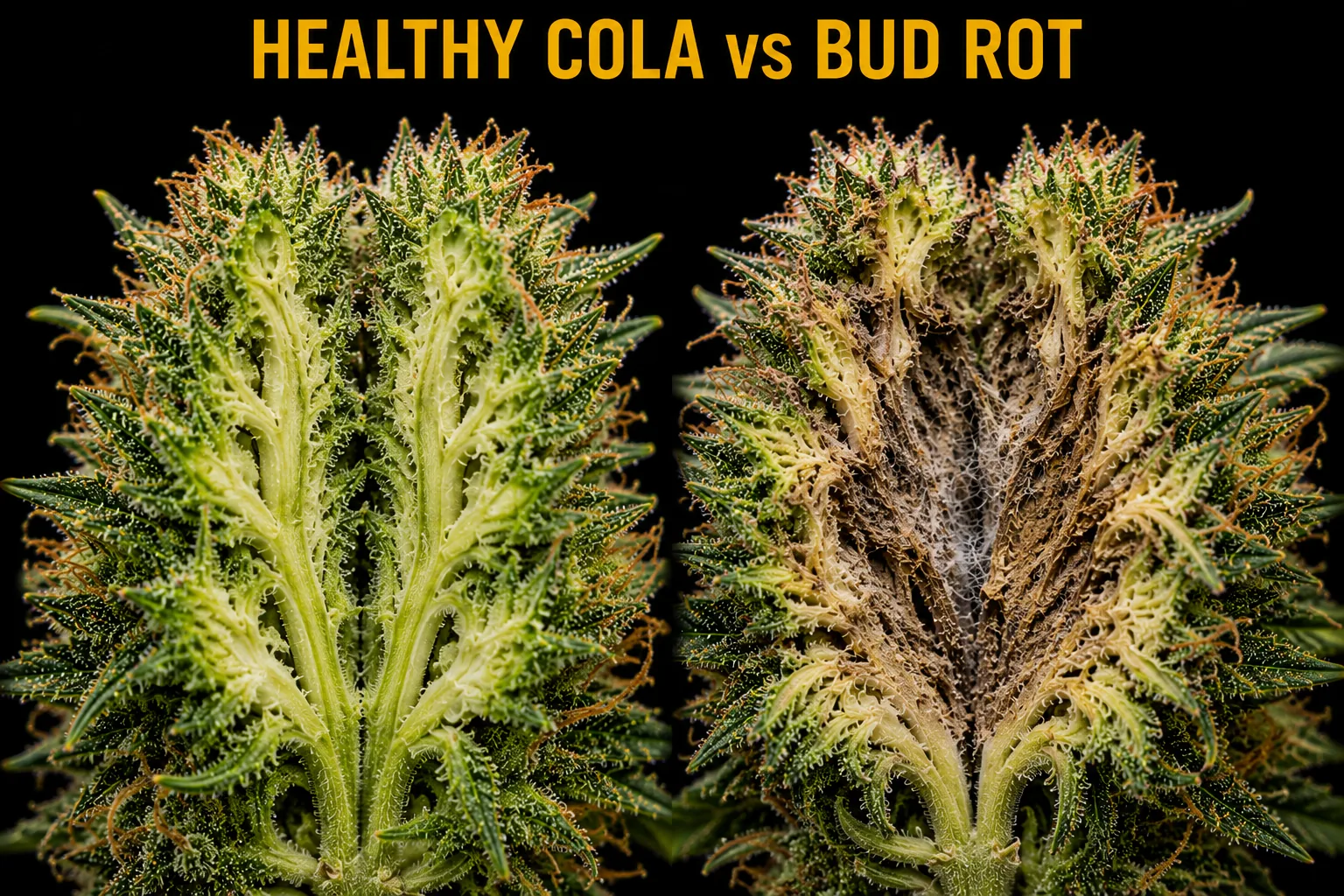
A healthy cola is firm, bright, and resin-coated. Bud rot turns the core grey-brown and cottony while the outside can still look fine — which is why you have to open suspect buds, not just glance at them. The comparison below is the recognition you want burned in.
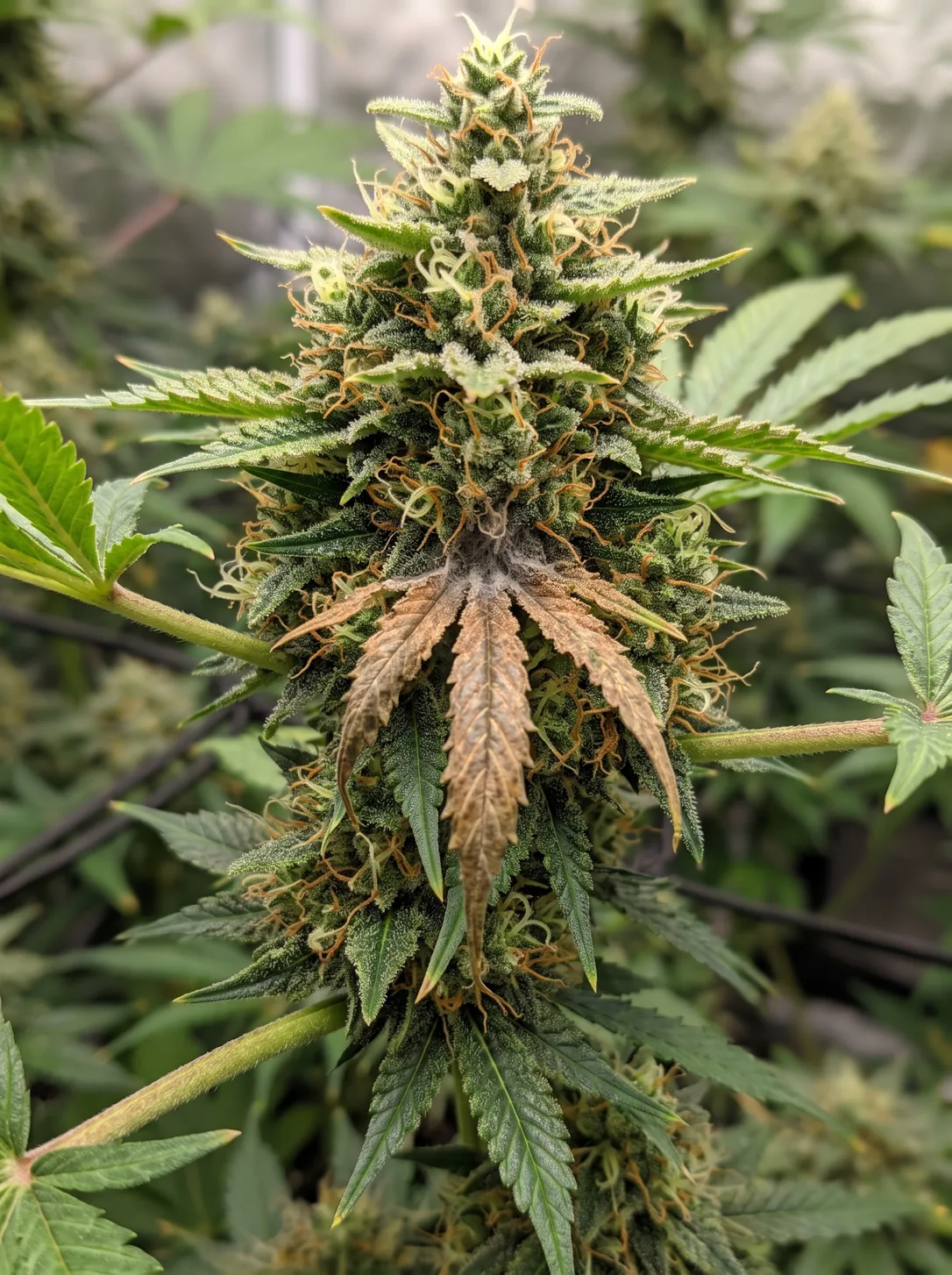
On the living plant you almost never see the rot first — you see its flag: a single inner sugar leaf mid-cola that wilts and browns for no obvious reason while the rest of the bud looks healthy. That flag leaf sits directly over grey mould starting at the bud core beneath it. Pull it and open the bud.
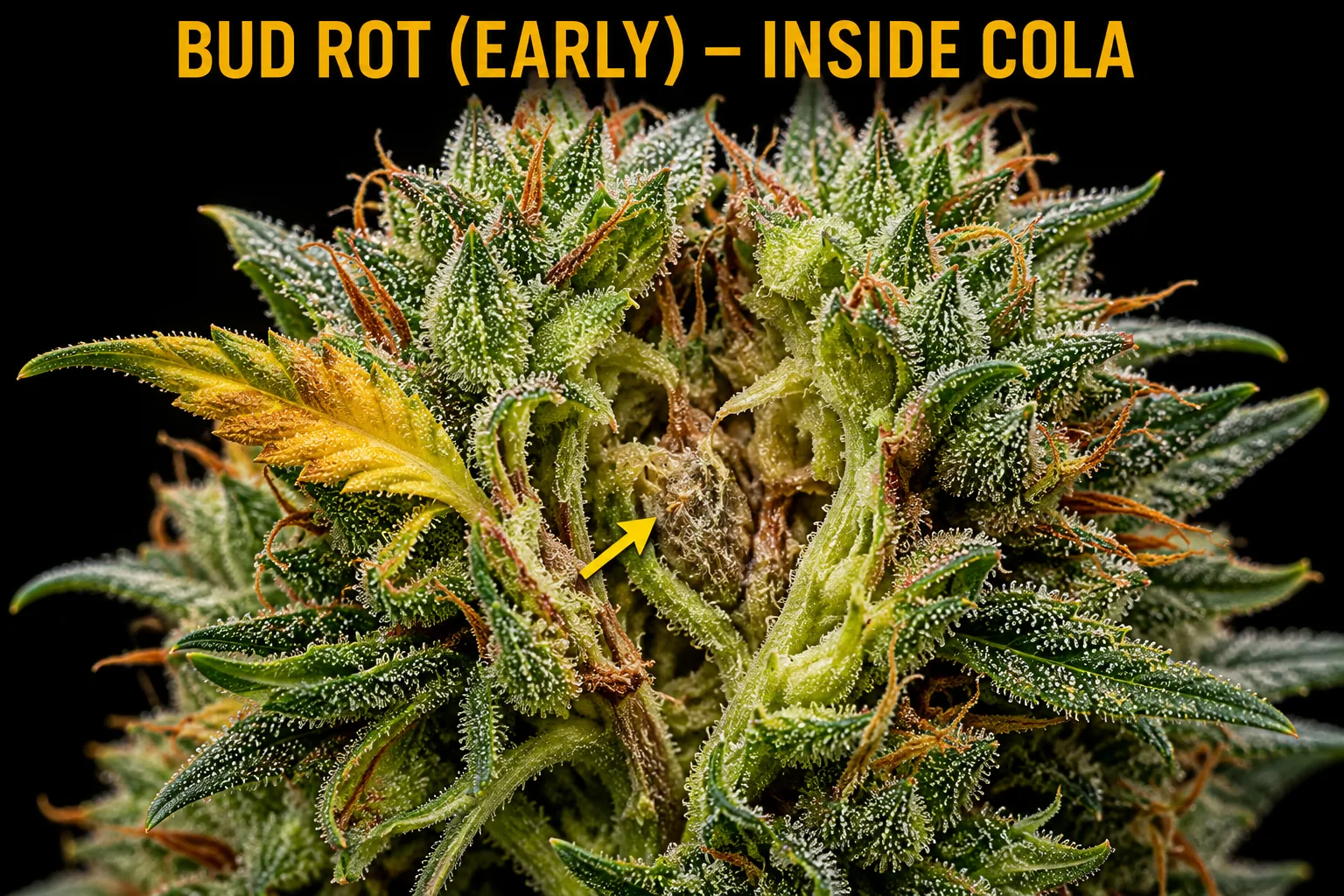
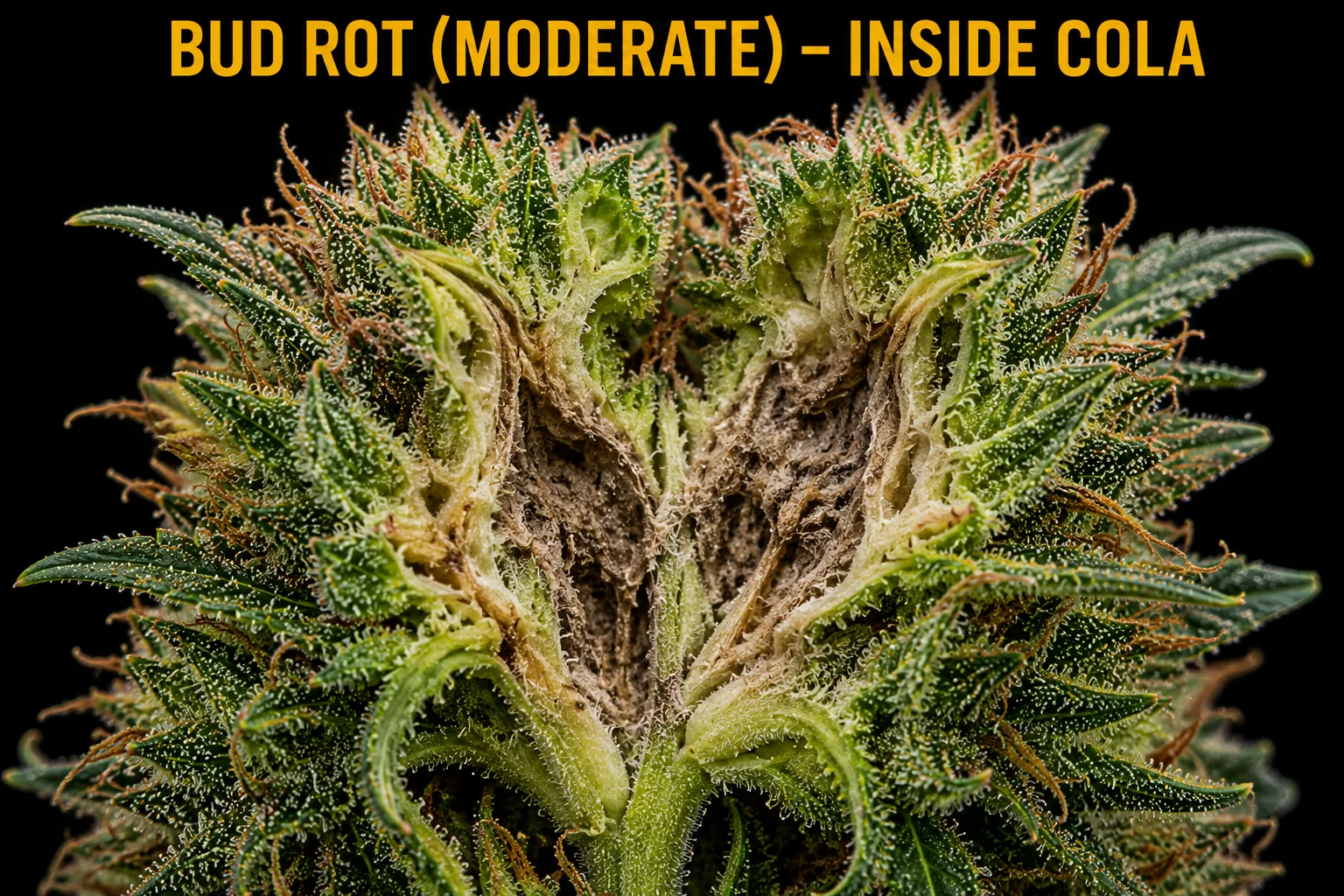
Caught at the first wilted inner leaf, you can cut well below the infection and save the plant. Left to spread, it consumes the cola and jumps to its neighbors. Track the progression:
Powdery mildew
A white dust that starts cosmetic and ends in the buds.
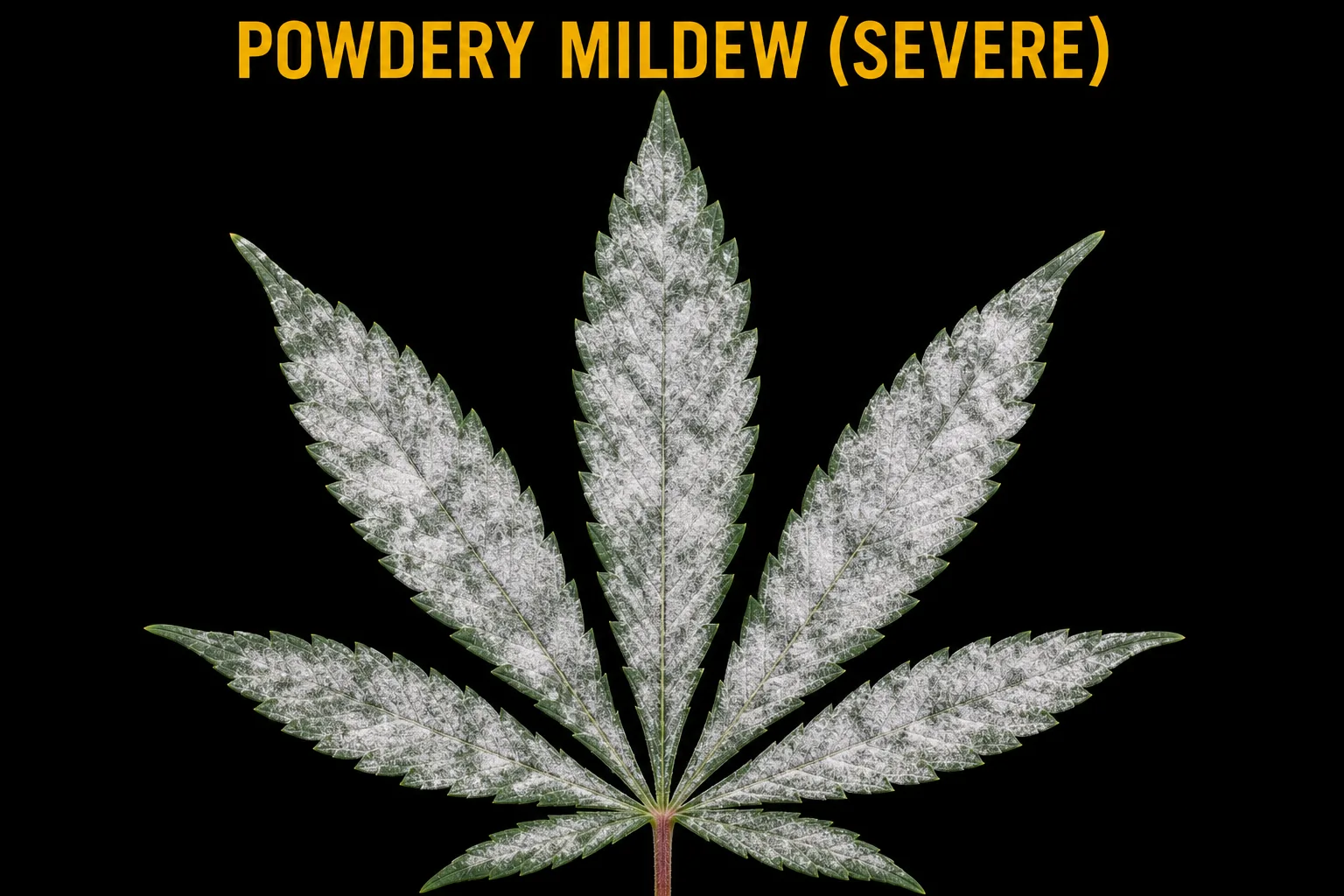
Powdery mildew reads as a white, flour-like coating on leaf surfaces. Early on it wipes away — but it returns fast in stale, humid air, and once it reaches the buds the flower is compromised. The early stage is the one you want to catch.
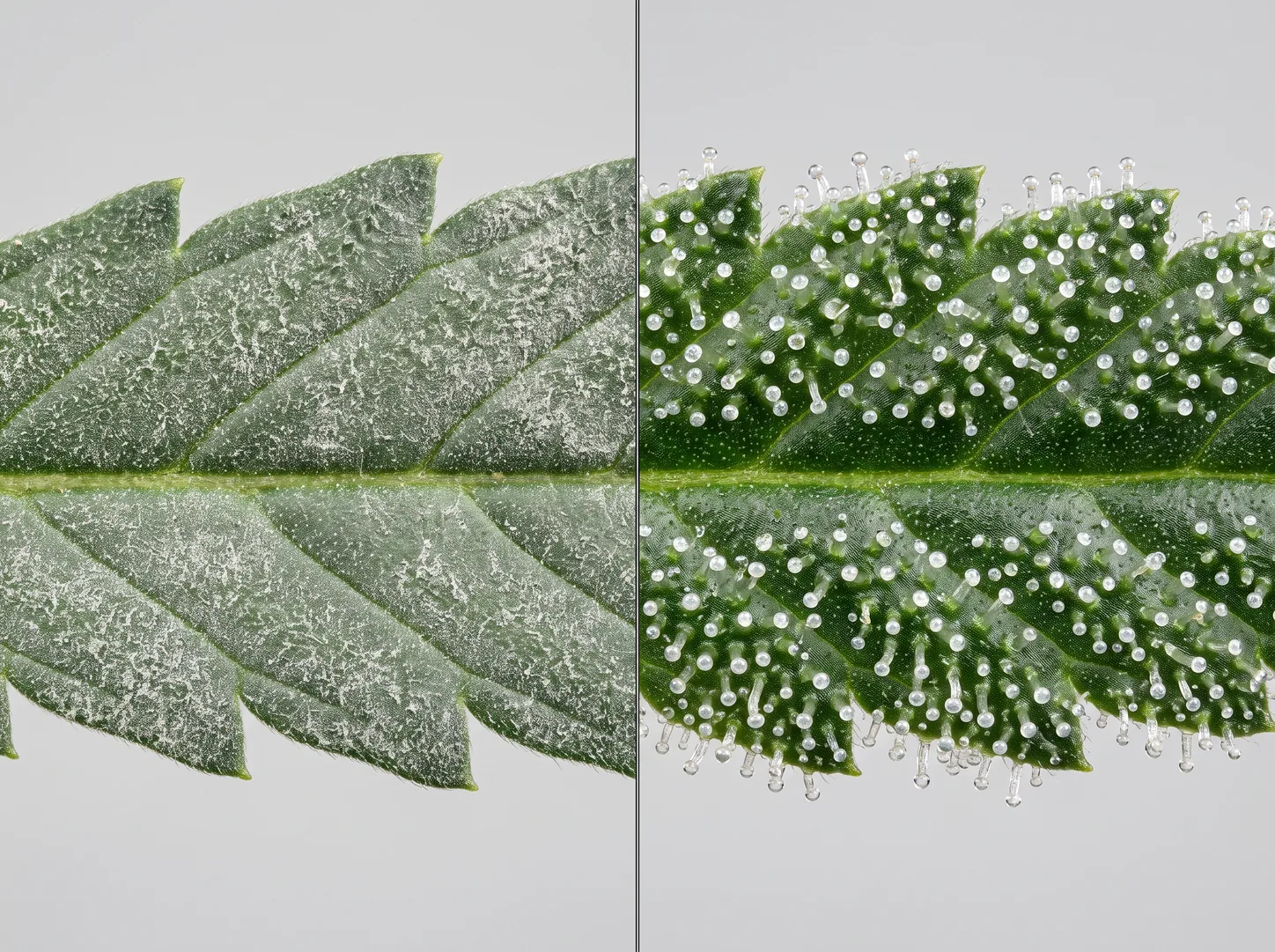
First, rule out the false alarm that sends growers into a panic: is it mildew or trichomes? The tell is structure. Powdery mildew is a flat, matte, dusty film lying on the surface — it looks wipeable, and it rubs off onto a cloth. Trichomes are the plant's own resin glands: glassy, translucent, each a bulbous dome-tipped head on a clear stalk that stands up off the surface and catches the light. Matte dust that wipes away is mildew; glassy stalked domes that sparkle are trichomes and belong there.
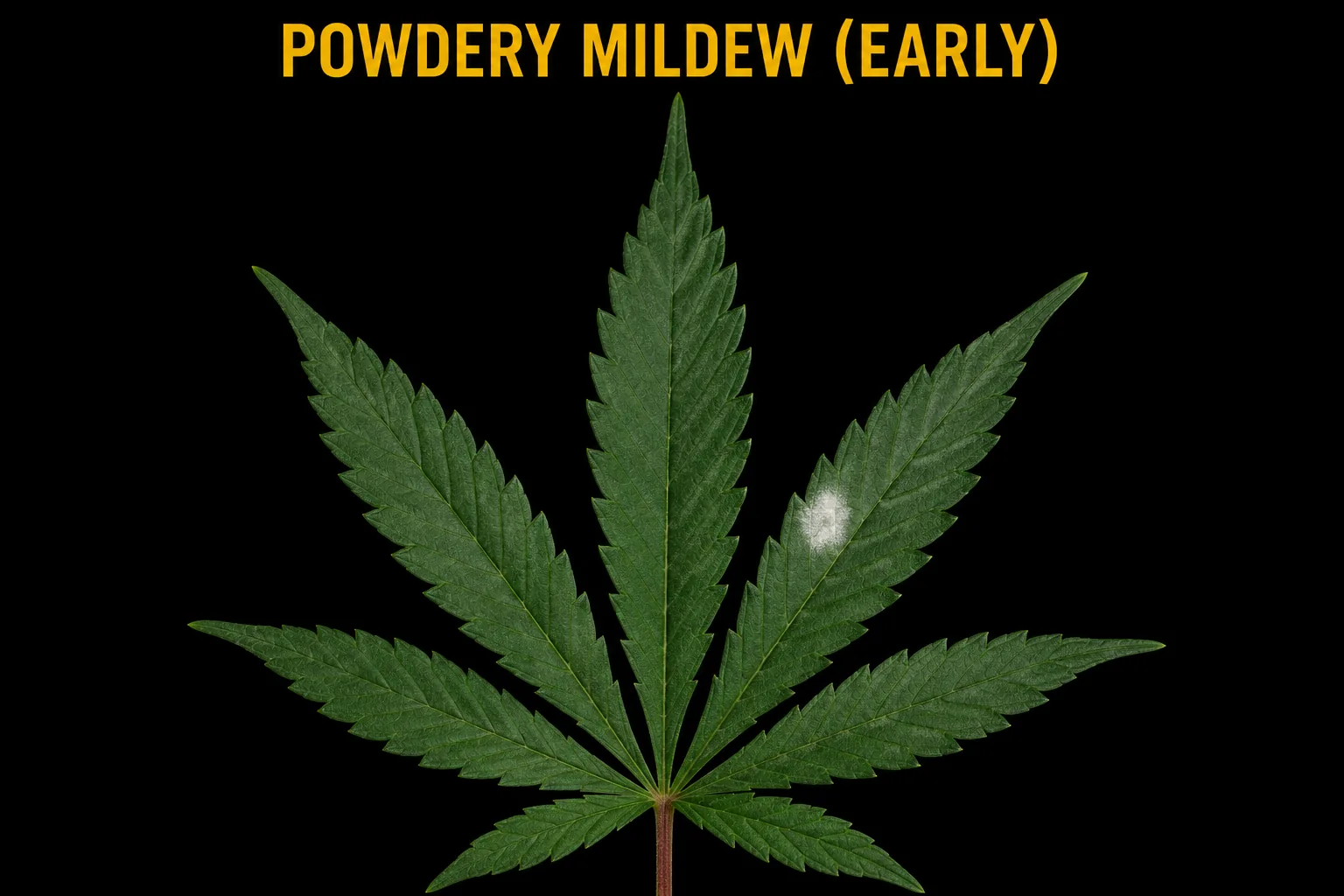
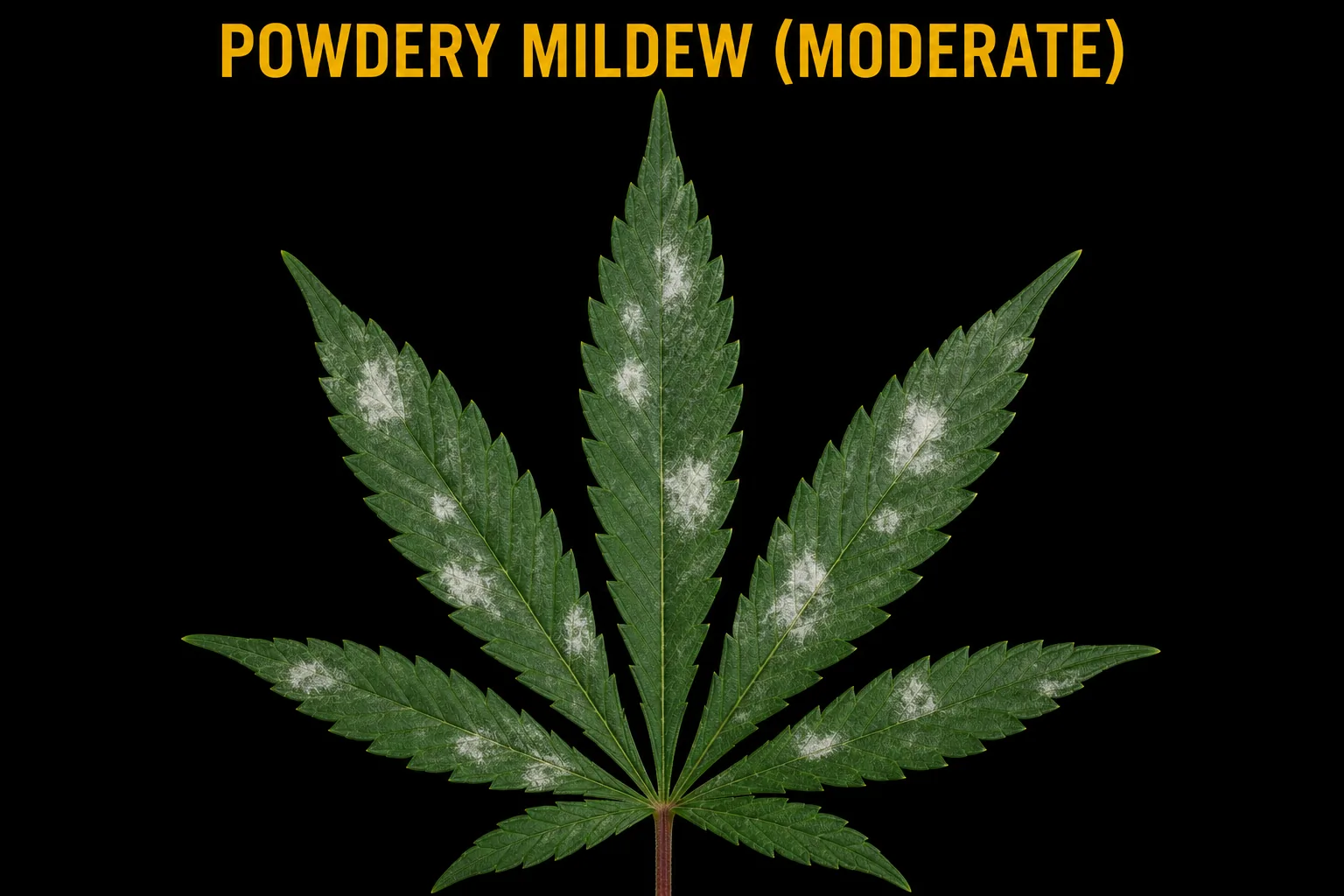
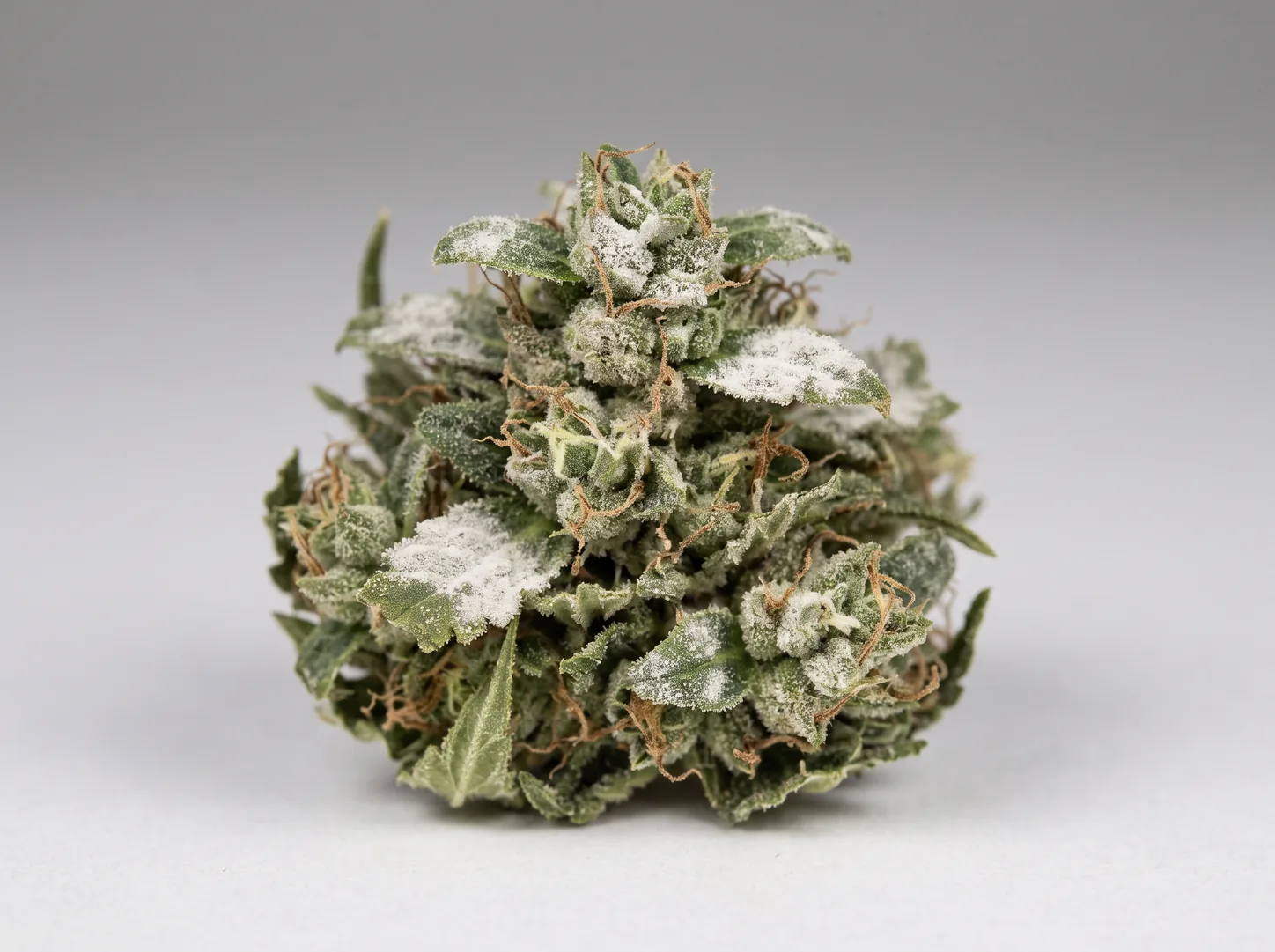
The stage that ends the debate is when the powder reaches the flower itself. A flat, matte, flour-white dusting on the calyxes and sugar leaves of the bud — dull and cakey, not the glassy sparkle of resin — means the mildew is on the flower, and that flower is compromised.
Safety call
Which flower is safe, and which has to go.
| Situation | Call |
|---|---|
| Any grey-brown rot inside a cola | Discard that bud and everything touching it. Do not try to dry or cure rotten flower. |
| Powdery mildew on fan leaves only, caught early | Remove affected leaves, fix airflow and humidity, and watch closely. |
| Powdery mildew on the buds | Treat that flower as compromised — mildew on consumed flower is not worth the risk. |
| Mold appears after harvest, in the jar | A curing problem, not a grow problem — see common curing mistakes. |
Bud rot and mold questions
How do I check for bud rot without destroying good buds?
Inspect the densest colas first, since they trap moisture. Gently part the bud and look for any wilted, discolored inner leaf or grey fuzz; a healthy core is bright and resinous. You only need to open buds that look or feel off — soft spots, a sudden single dead leaf, or a faint musty smell are your cues.
Can I save a plant once I find bud rot?
Often yes, if you catch it early. Cut well below the infected site with clean tools, remove the material from the room entirely, and lower humidity and improve airflow immediately. Then check neighboring colas daily — botrytis spreads to whatever it touches.
Is powdery mildew the same as trichome frost?
No, and confusing them is common. Trichomes are glassy, dome-tipped, and evenly cover buds and sugar leaves; powdery mildew is a flat, matte white dust that sits on the surface, often on fan leaves first, and wipes away. If it smudges off and comes back, it is mildew.