Cannabis Pest Damage Atlas
Before you feed more nutrients, read the damage. Pests rarely let you catch them in the act — but each one signs its work with a distinct pattern, and pest damage sits wherever the insect fed, ignoring the vein-and-age pattern a nutrient problem follows. Match the leaf to the picture here and a mystery becomes a name, so you treat the right thing instead of dosing a deficiency that was never there.
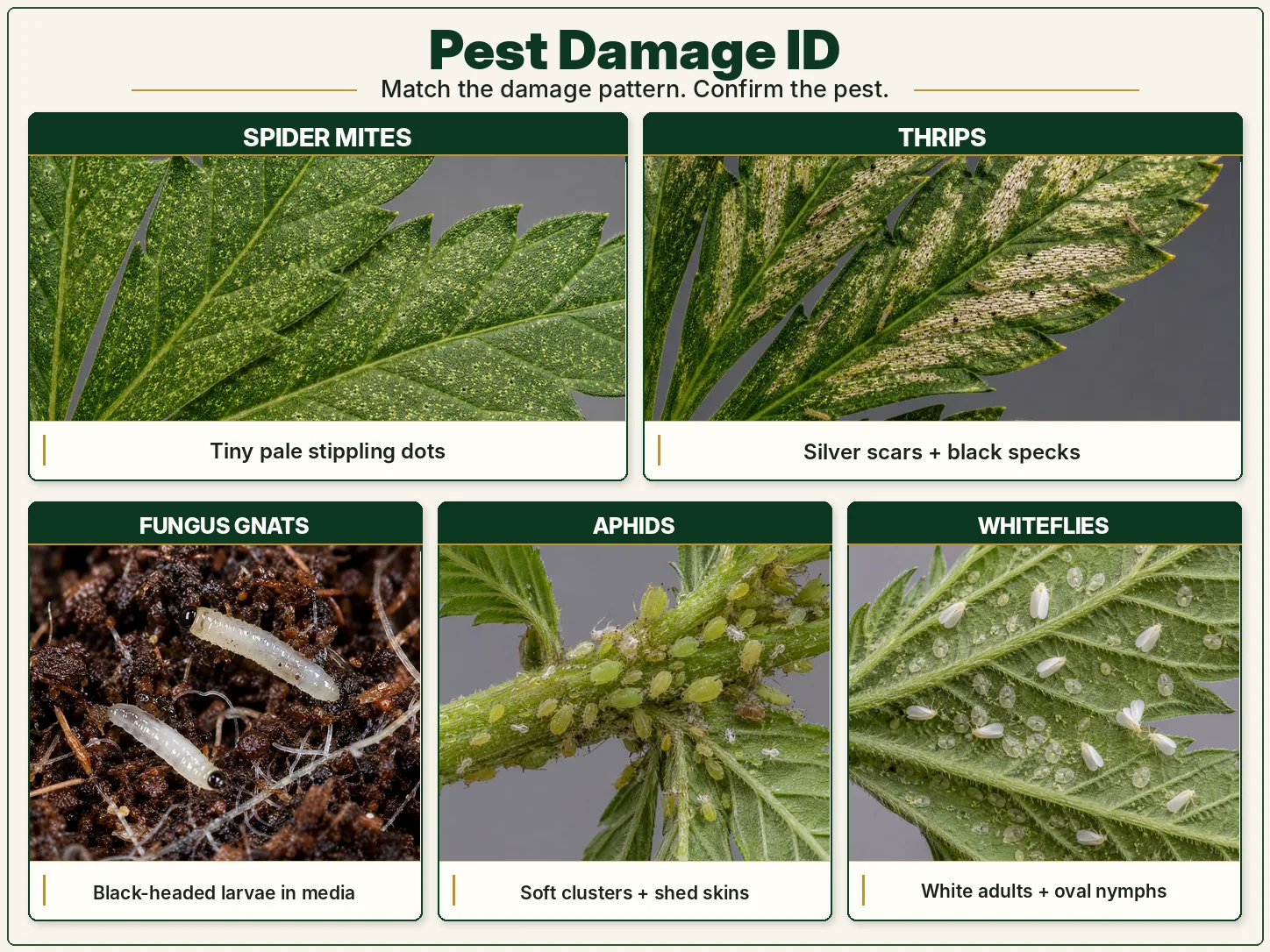
The most confused pair on cannabis is thrips versus spider mites. Both stipple the leaf pale — but thrips leave silvery, shiny smears with black specks, while mites leave tiny matte dots. Get that one distinction and you have sorted most pest panics before you reach for a spray.
The damage-signature board.
Start here to narrow it down, then drop to the family below for the full severity ladder. Each pest signs its work differently — match the pattern, name the pest.
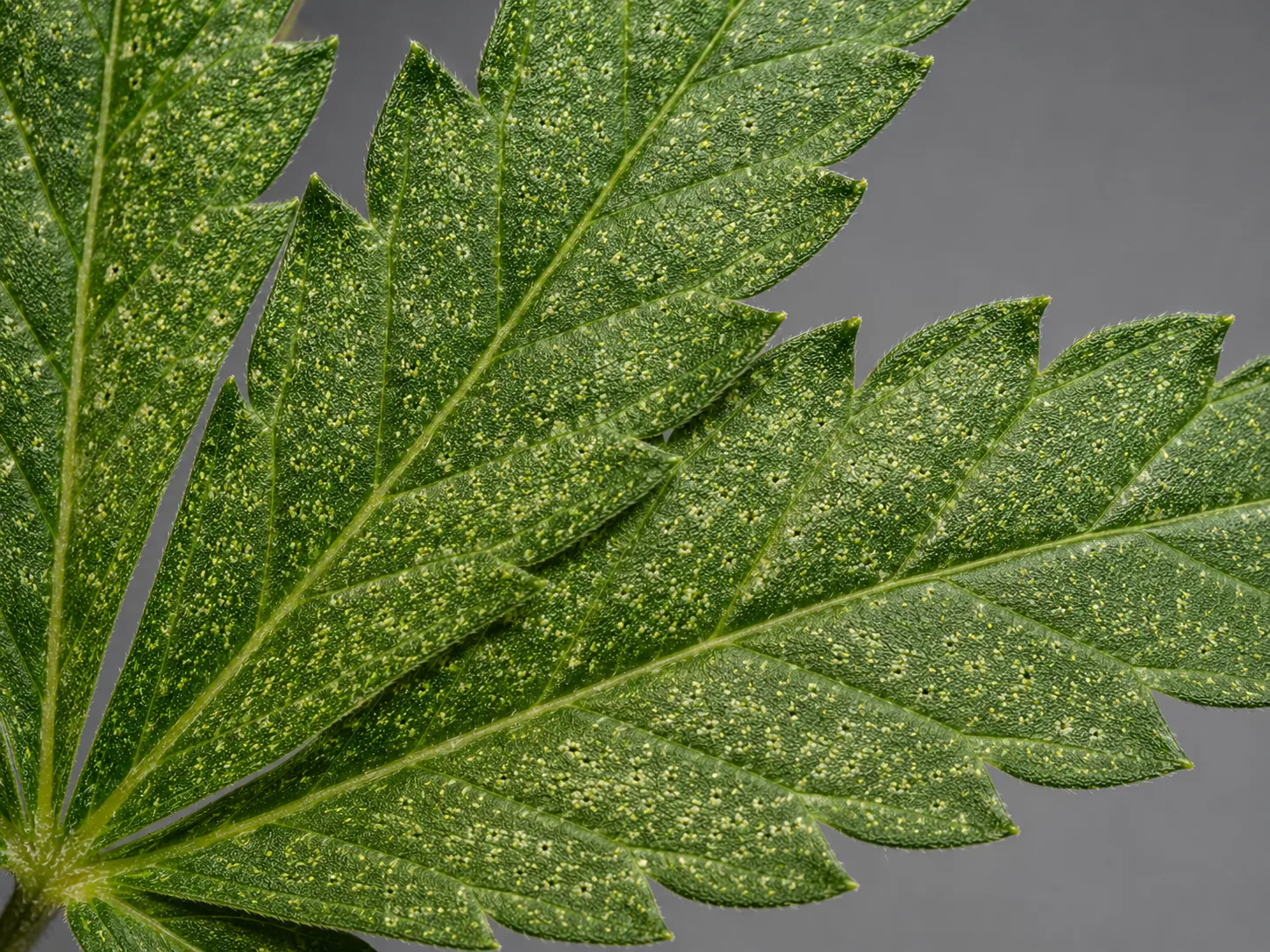
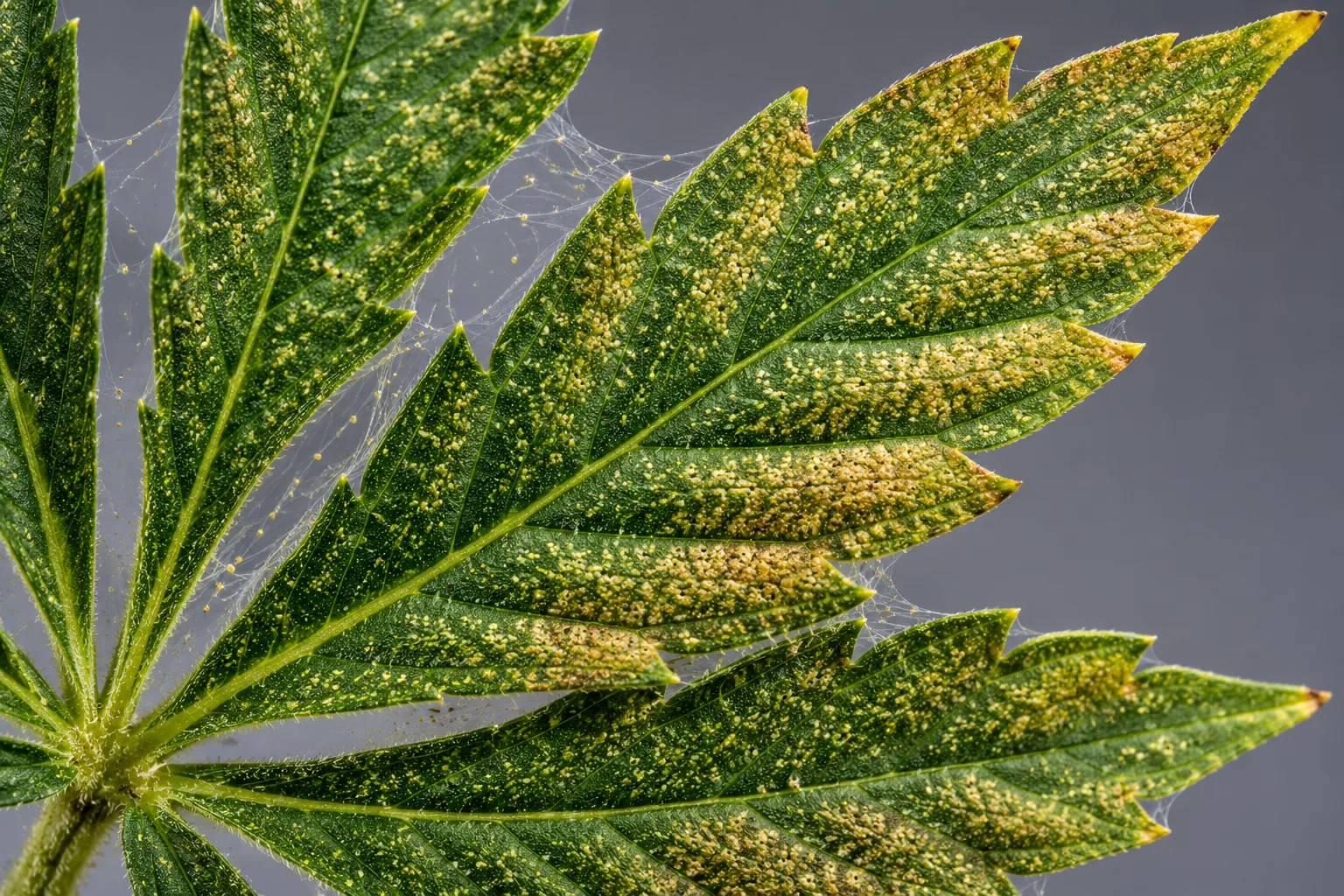
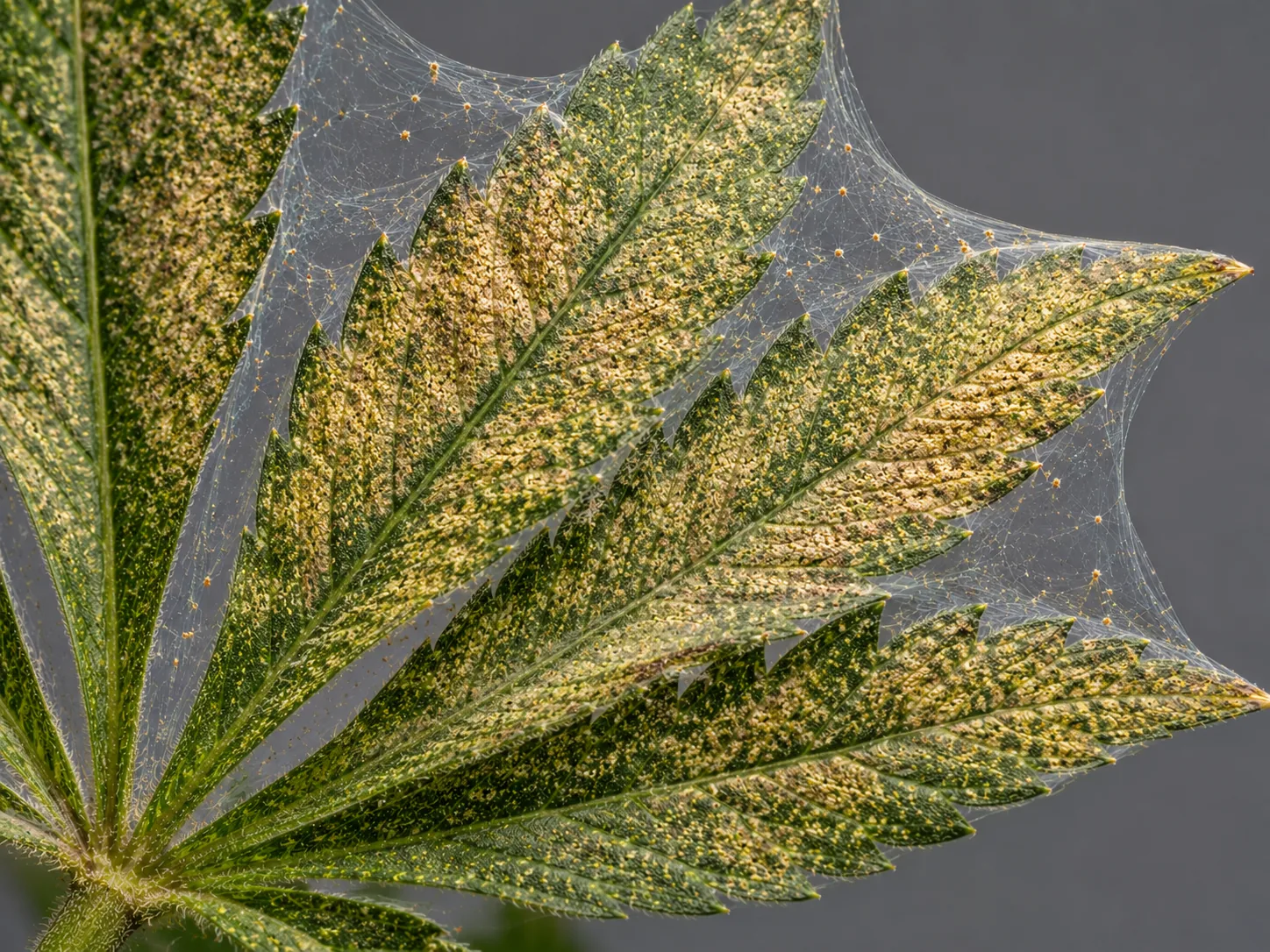
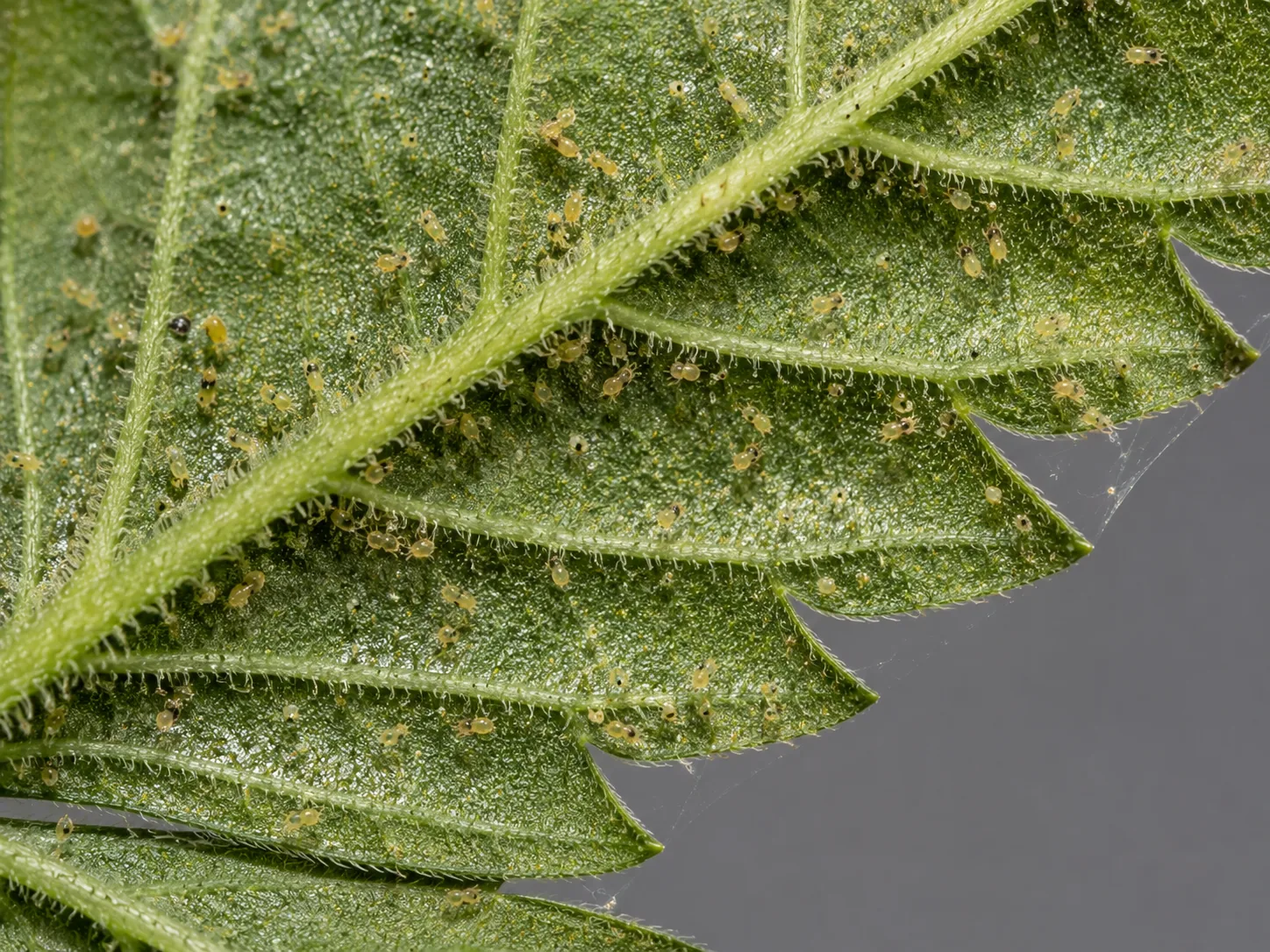
Spider mite damage — stippling, then silk.
Spider mites puncture individual cells and drain them, so the earliest sign is fine, matte pinprick stippling — a pale speckling with no sheen and no black specks. As numbers climb the dots merge into bronzed patches and fine silk webbing appears at the leaf joints; a heavy infestation blankets buds and leaves in webbing you cannot miss. When in doubt, turn a leaf over: the two-spotted mites and their translucent eggs cluster on the underside.
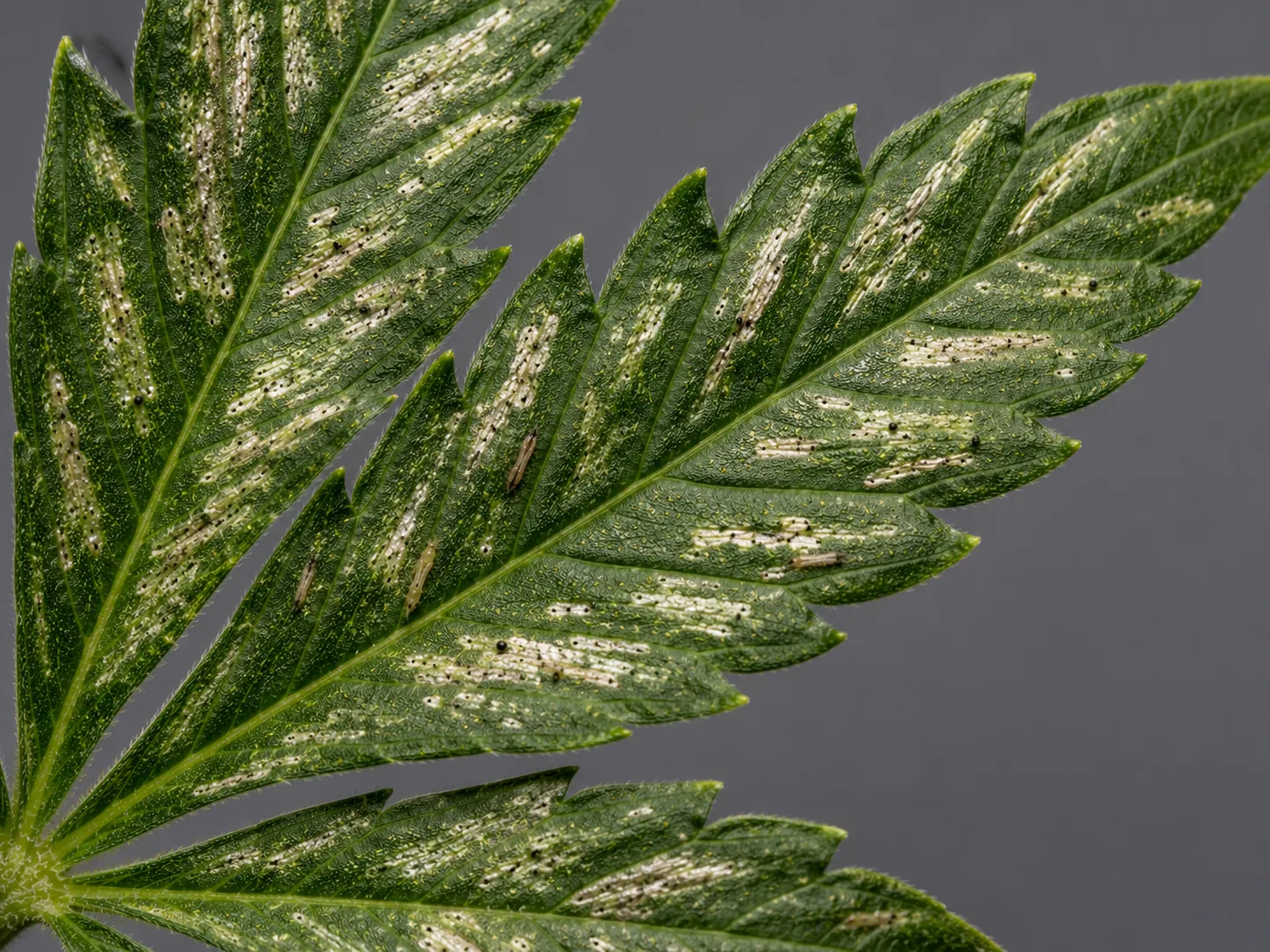
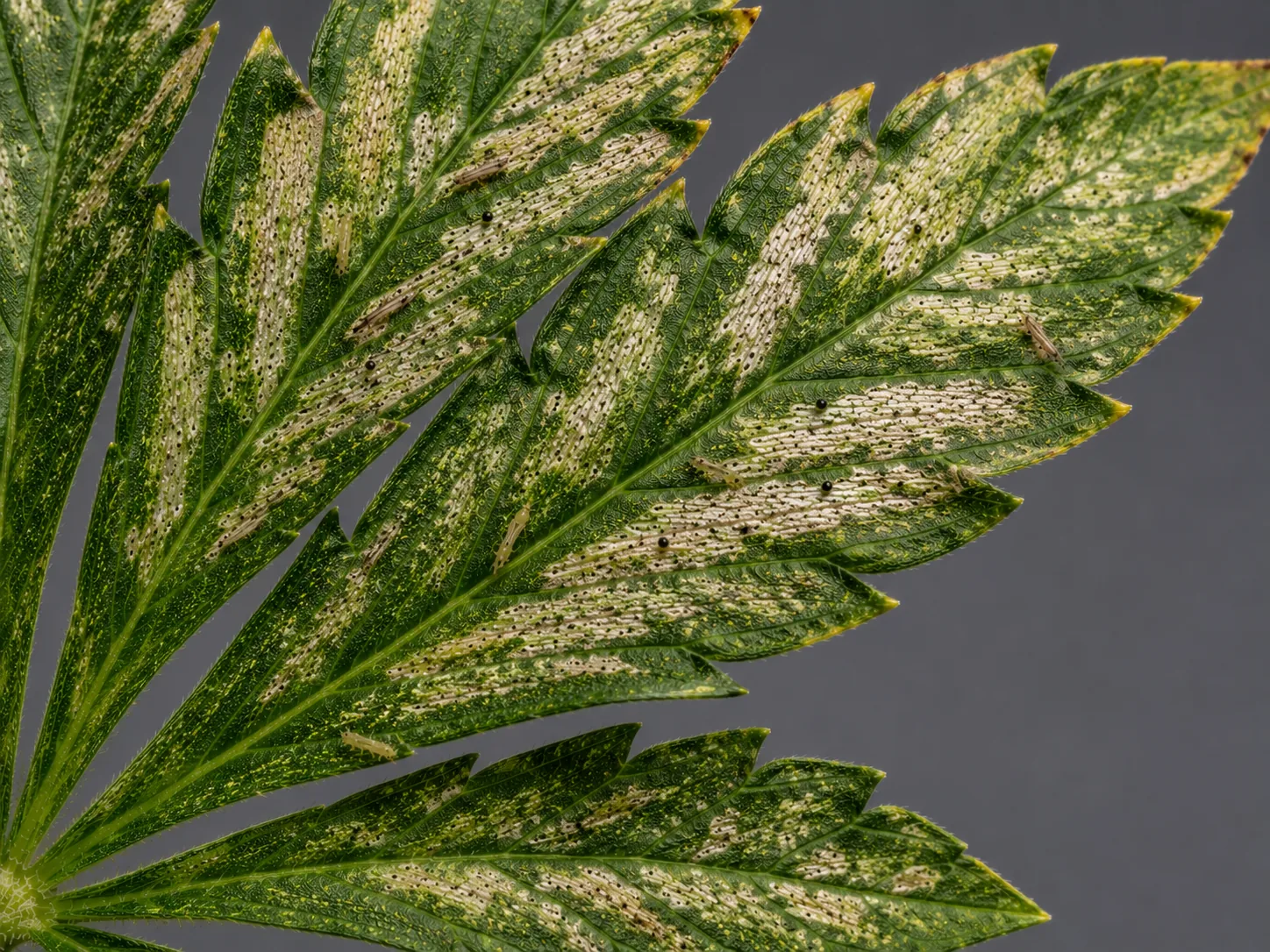
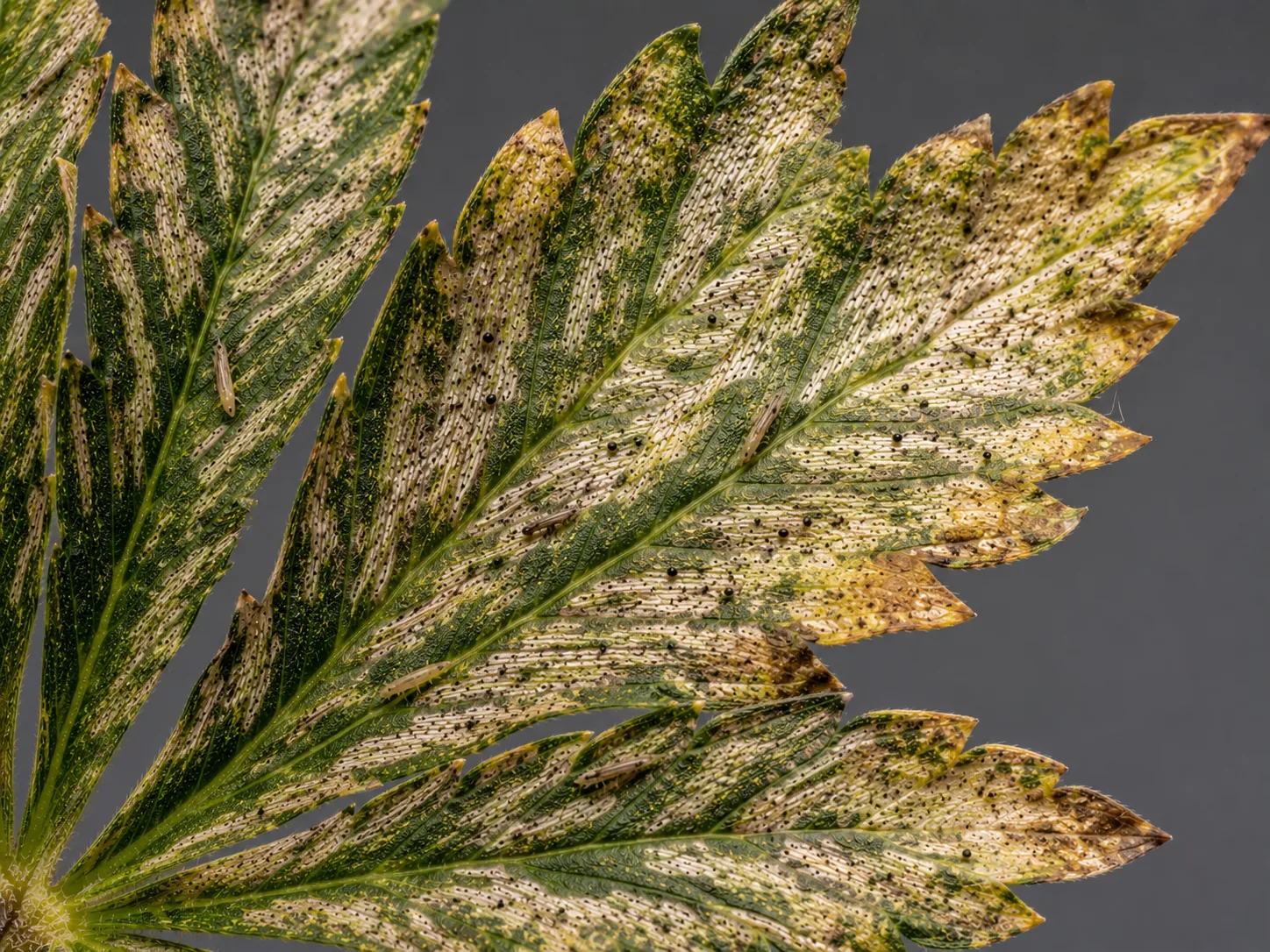
Thrips damage — silvery scars, not dots.
Thrips feed by rasping open the surface cells and drinking what leaks out, so the damage reads as irregular silvery-bronze glossy patches that catch the light with a metallic sheen — never the neat pinprick stippling of spider mites. The giveaway that seals it is the scatter of tiny black fecal specks (frass) across the scarring. Use the progression below to place your plant: the correction is the same at every stage, but severity tells you how fast you have to move.
Two confusers to rule out as you look. Light burn bleaches the tops of a plant a clean, even pale — no metallic sheen and no frass. Potassium deficiency scorches the leaf margins brown from the edge inward; thrips damage sits in the leaf interior wherever the insects fed. If the pale area is shiny and speckled with black, it is thrips.
Fungus gnats — larvae in the media, not marks on the leaf.
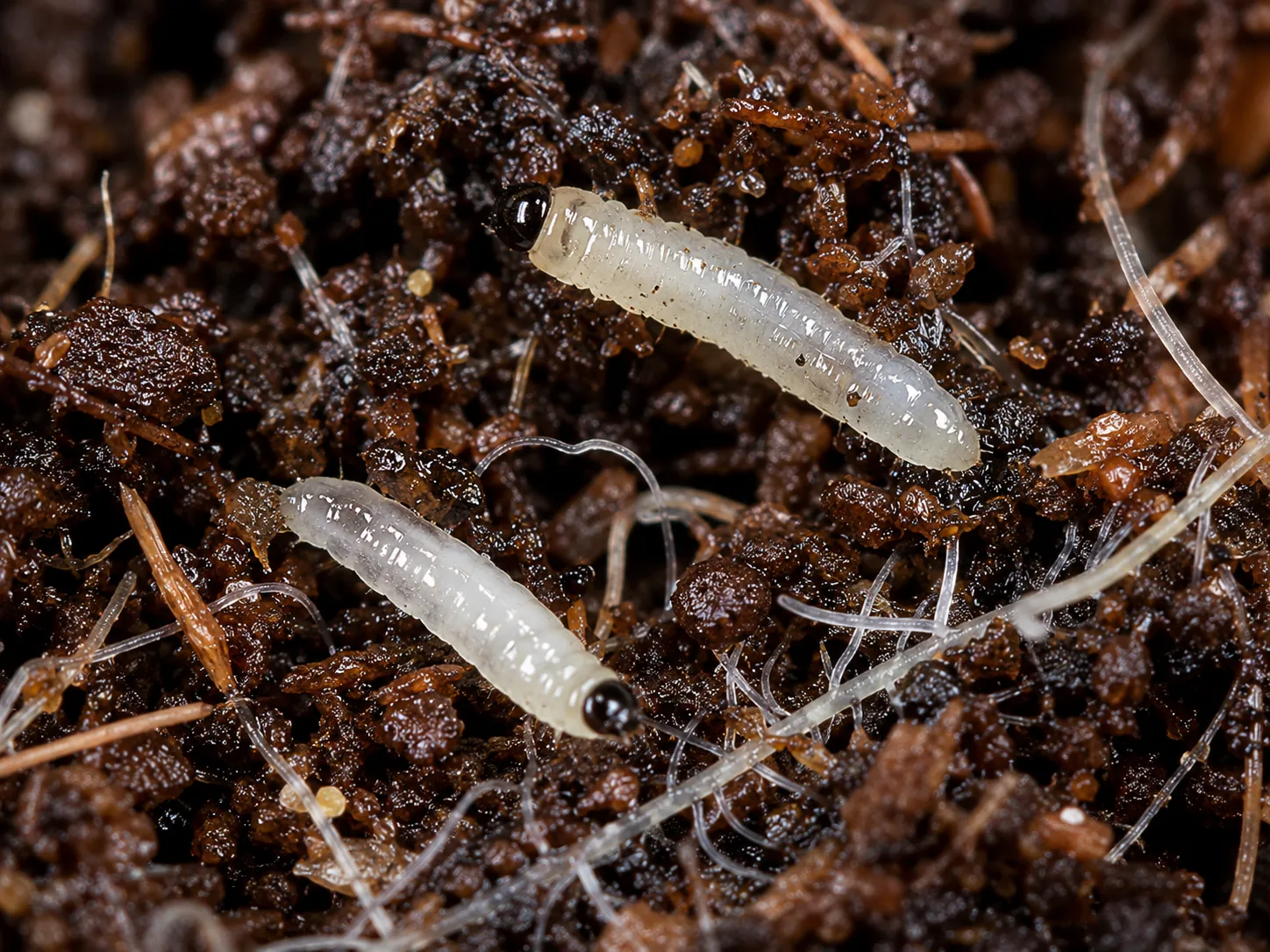
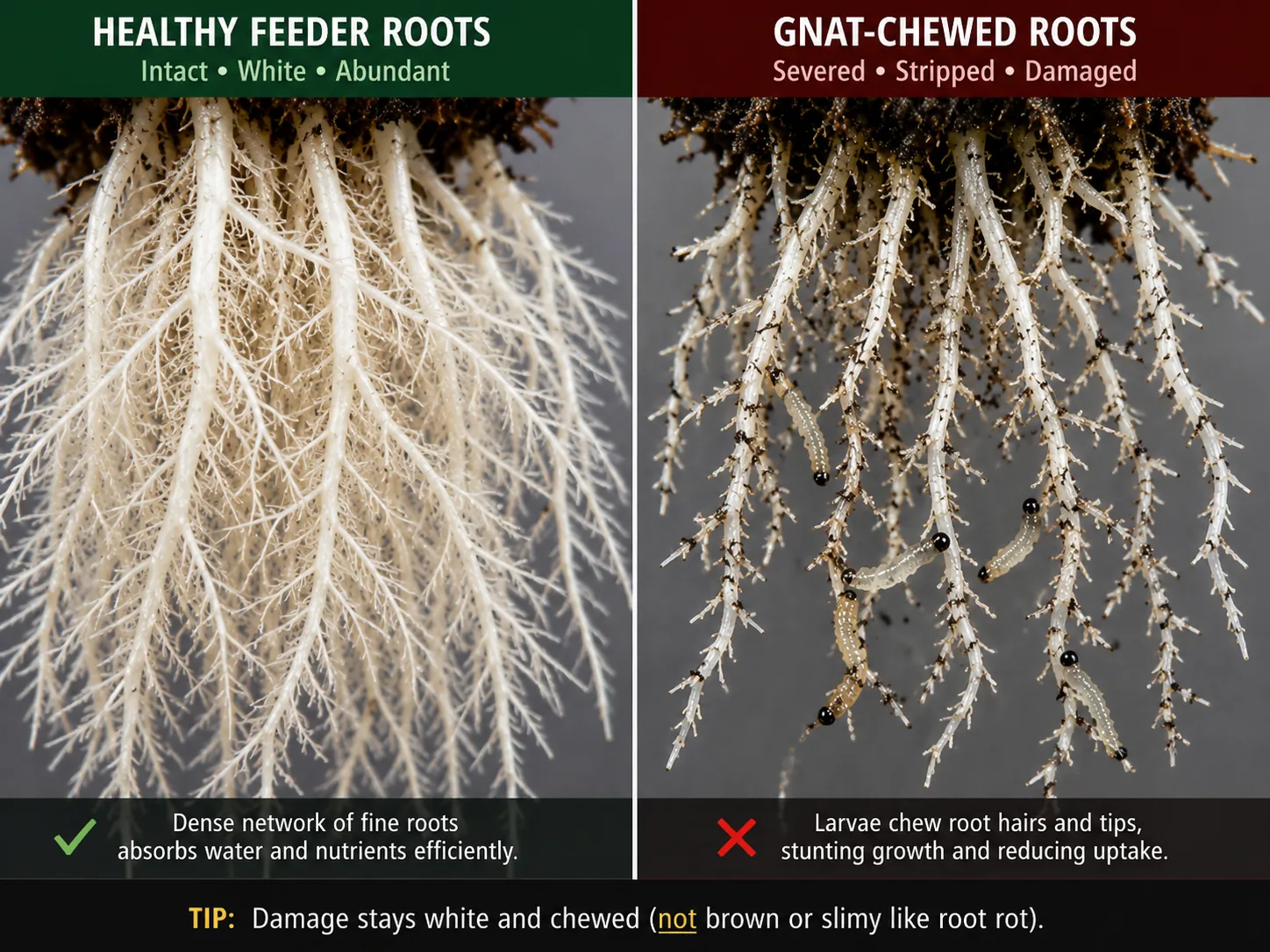
Not every pest shows on the leaf. Fungus gnats are tiny black flies whose larvae live in the top of wet media and chew the fine feeder roots — the hidden cause behind stalled seedlings and unexplained wilt. Confirm them in the media, and tell the chewed roots apart from root rot.
Russet mites — damage you can see, a mite you can't.
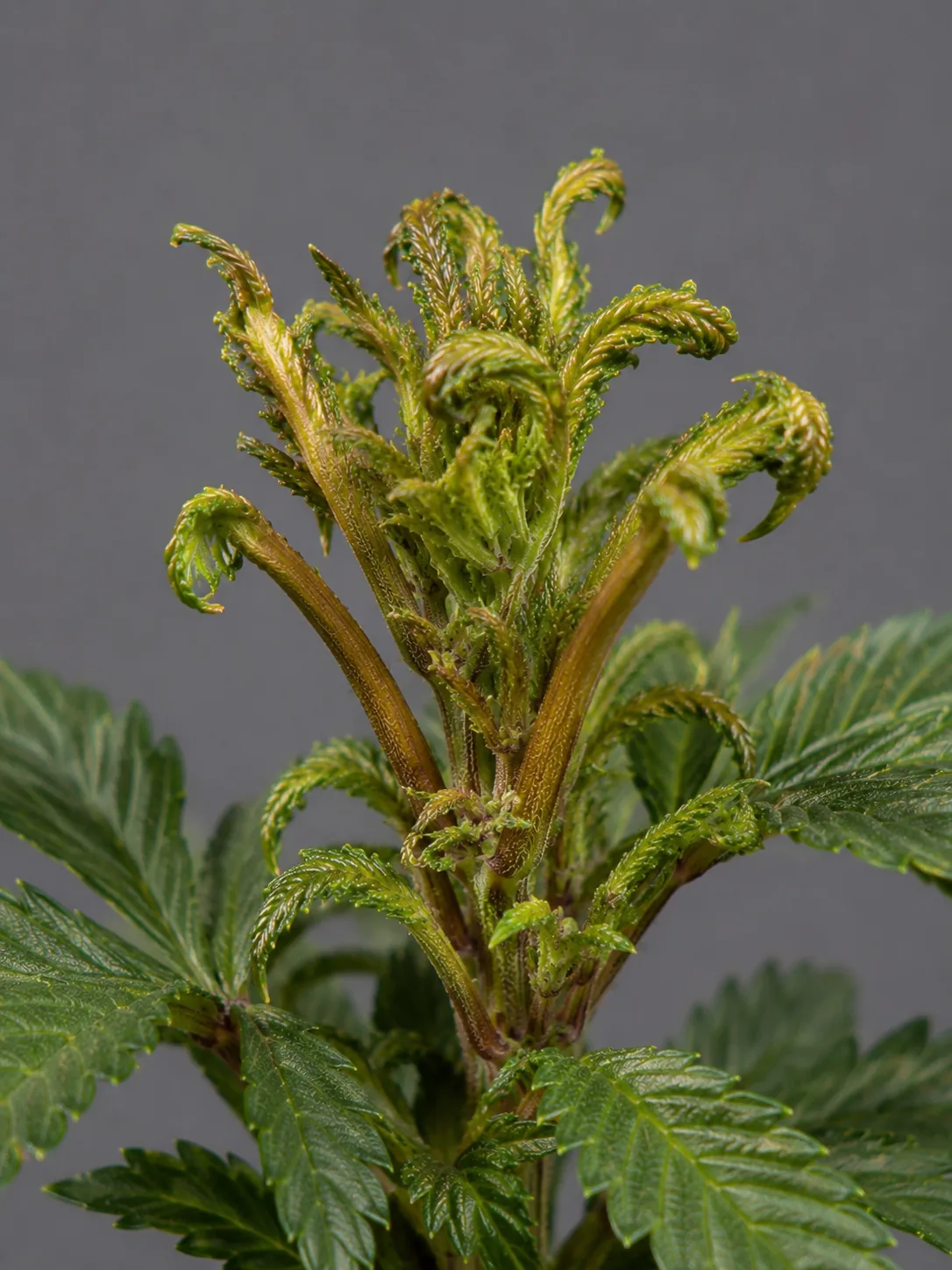
Russet mites are microscopic, so you diagnose them by their damage, not by spotting the bug: new top growth that curls, glazes wet-looking and droops, with bronzed stems. If the top is weird and glossy and you cannot find an insect, suspect russets.
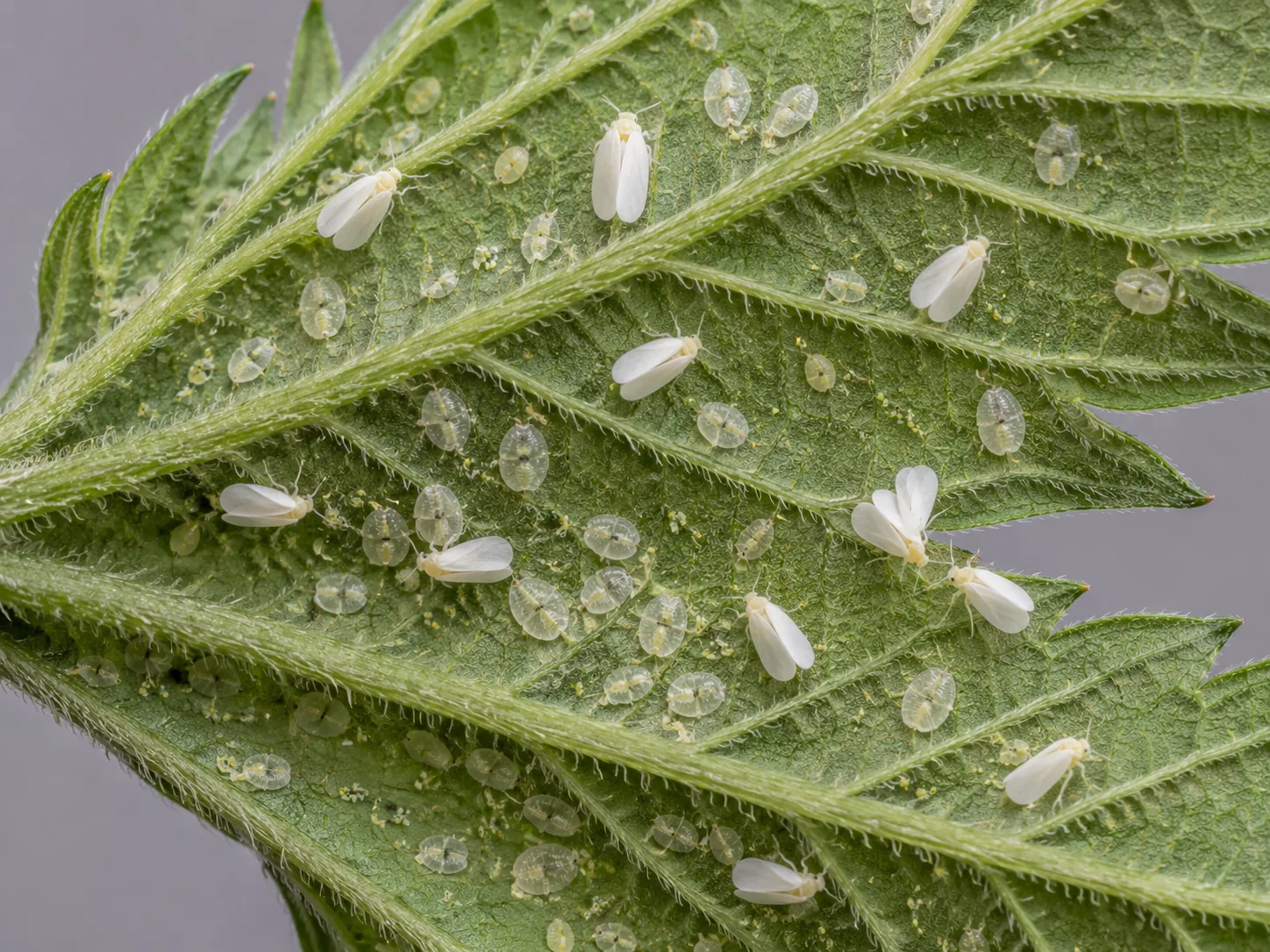
Aphids and whiteflies — clusters and little white flies.
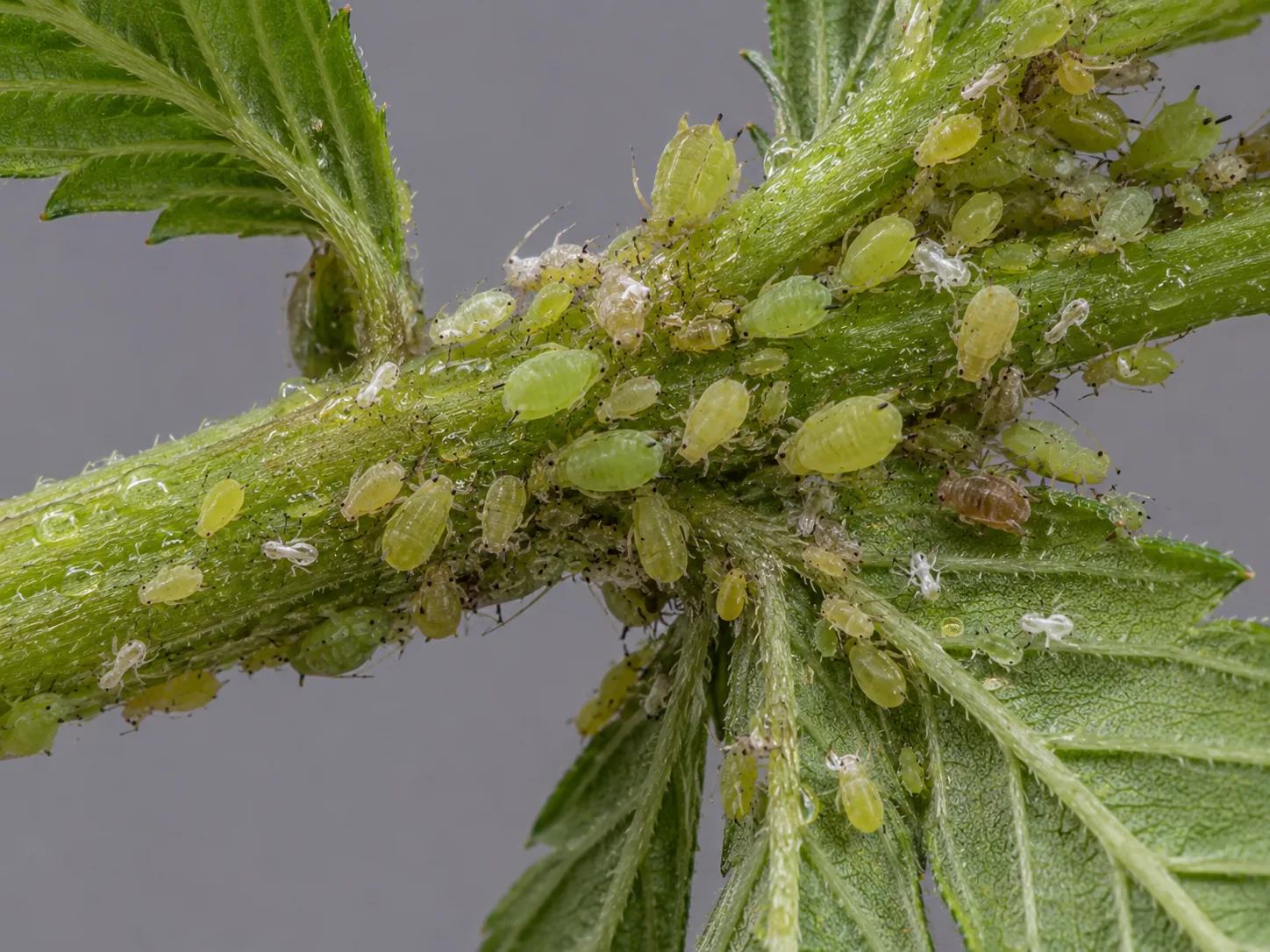
Both cluster on stems and leaf undersides and leave a sticky honeydew sheen. Aphids are pear-shaped soft insects in dense colonies; whiteflies are tiny white moth-like flies that scatter when disturbed — those are insects, not the powdery-mildew dust they are often mistaken for.
What the leaf texture tells you to suspect.
| What you see | Texture & tell | Most likely cause |
|---|---|---|
| Silvery, shiny smears + black specks | Metallic sheen, frass present | Thrips |
| Tiny pale pinprick dots | Matte stippling, often fine webbing when severe | Spider mites |
| Clean, even pale on the top canopy | No sheen, no specks, nearest the light | Light burn, not a pest |
| Brown scorch from the leaf edge in | Follows the margin, interior stays green | Potassium deficiency |
| Spots that follow the vein pattern | Tied to veins or leaf age, no insects | Nutrient problem, not a pest |
When the damage does not line up with the veins or the leaf's age and instead sits in random feeding patches, you are looking at a pest, not a nutrient. From there the texture decides which one. For the deficiency side of that fork, see cannabis nutrient deficiencies — and for the mold and rot side, bud rot and mold.
Cannabis pest damage questions
How do I tell thrips from spider mites?
Look at the shine and look for droppings. Thrips rasp the surface into silvery, light-catching scars and leave tiny black fecal specks (frass) across the damage. Spider mites puncture single cells, leaving fine matte dots with no sheen and no frass, plus fine webbing once an infestation is advanced. Shiny and speckled means thrips; dotted and dry means mites.
Is silver on my leaves always thrips?
Usually, but check for the frass. A metallic silvery scar with scattered black specks is the thrips signature. A clean, even pale on the very top of the canopy with no specks is more likely light burn from a lamp too close. And keep in mind some genetics show natural silvery variegation — but that is uniform and symmetrical, not the ragged feeding patches of a pest.
The damage is done — should I still treat?
Yes. Scarred tissue never recovers, but the insects that made it are still feeding and breeding. The goal is to stop new damage on the growth that has not opened yet. Confirm the pest first with the texture test, then treat and re-check new leaves over the following days to see whether the fresh damage stops.