Equipment guide

Cannabis growing equipment that supports a compact, readable setup.

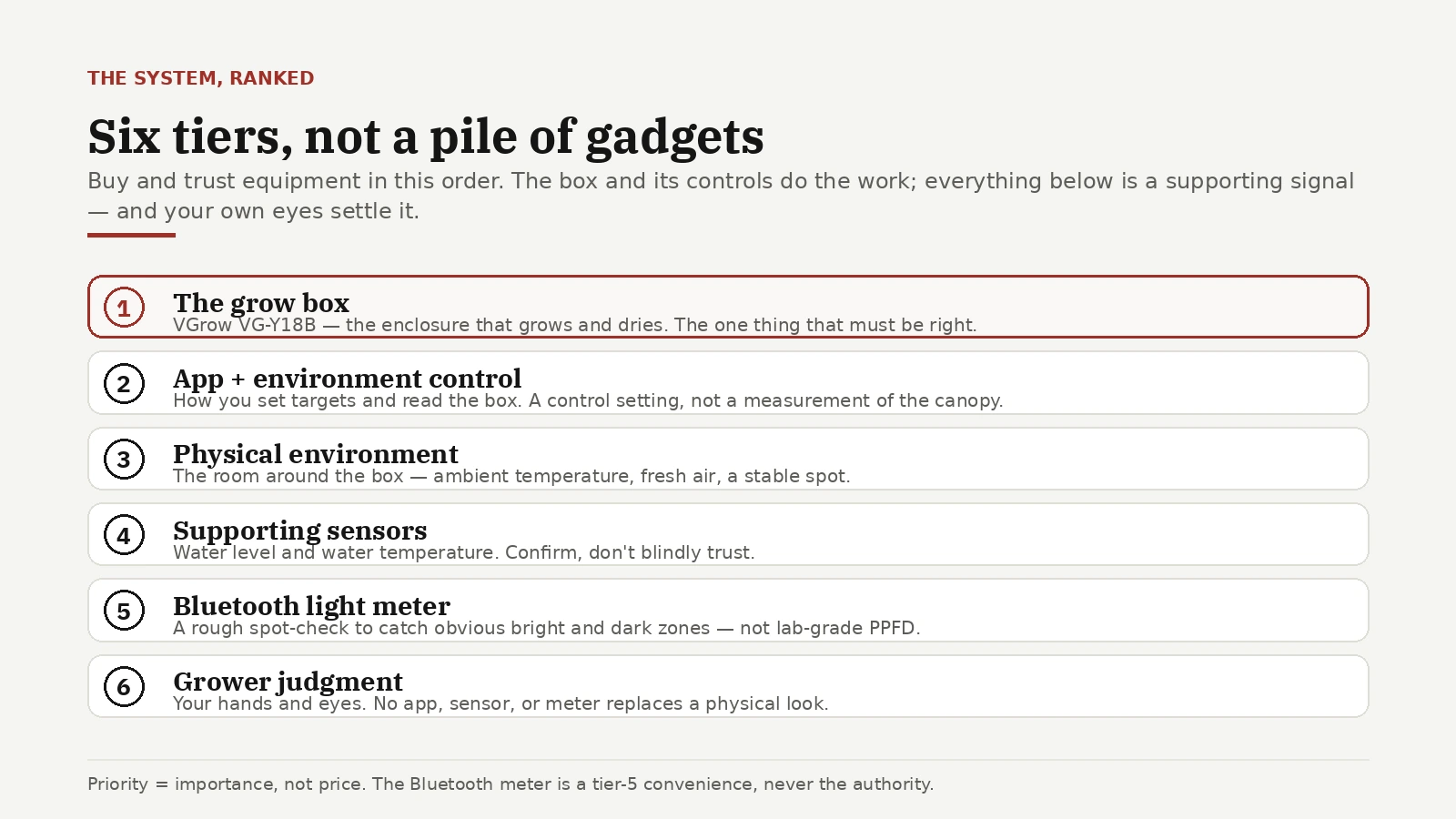
Cannabis growing equipment works best when the VGrow Smart Box, matching DWC kit, and support tools all stay disciplined. Good equipment makes the grow easier to read. Extra equipment should only stay if it earns its place.

Buy for clarity, not for fear. A compact setup gets better when every tool helps you read the room, the reservoir, or the finish more honestly.

Flagship stack

The flagship setup works because each piece solves a real part of the workflow.

The core recommendation is still the VGrow Smart Box paired with the matching 4-gallon DWC kit. That pairing gives beginners a contained cabinet, a hydroponic root zone with direct oxygen and nutrient access, and a much more obvious relationship between environmental drift and plant response.

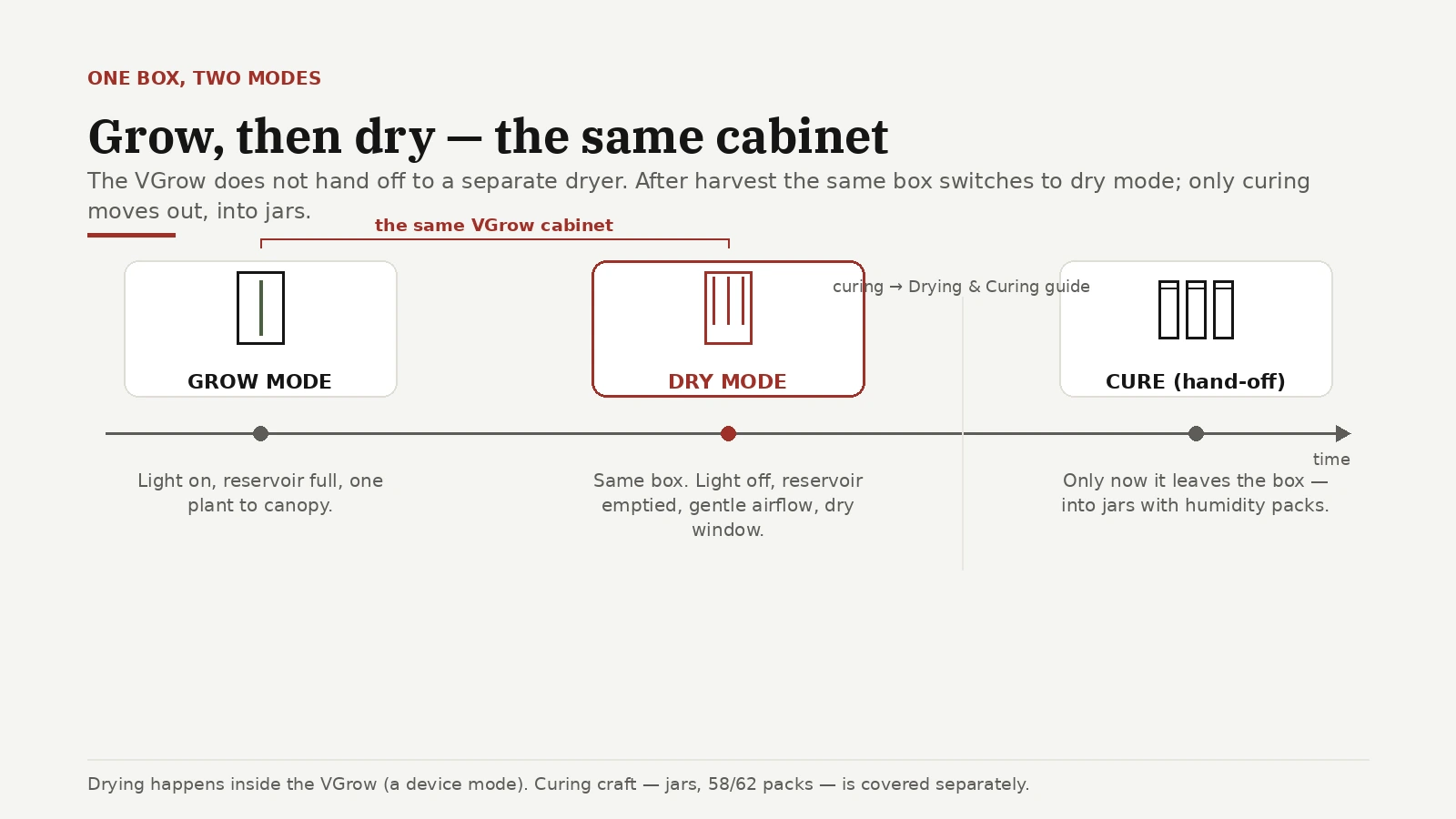
The rest of the equipment should support that same logic. Measurement tools help the room stay readable. A loupe or macro lens helps the harvest stay honest. Jars and humidity tracking protect the finish. If a tool does not sharpen one of those decisions, it is probably extra. The most complete product-specific explanation of that stack now lives on the Vivosun VGrow DWC guide.
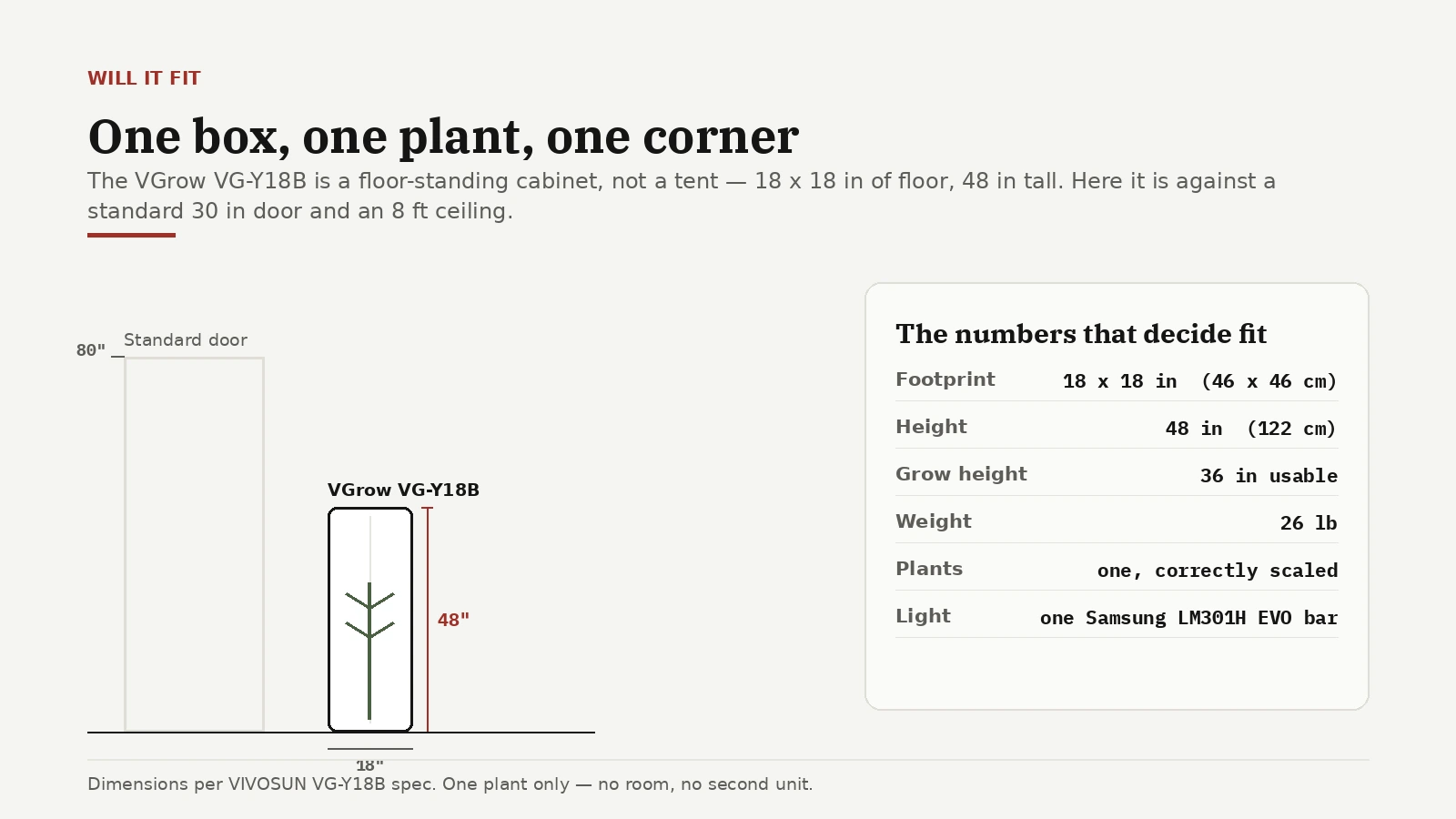
Compact grow cabinet beside a DWC reservoir with a young cannabis plant, representing the flagship equipment stack.
The flagship stack is useful because the cabinet, root zone, and monitoring tools all belong to one workflow.
Stack at a glance

Think in three levels: what runs the room, what sharpens the read, and what can wait.

Level What belongs here Why it matters
Must have VGrow cabinet, DWC kit, pH meter, EC meter, jars, basic humidity readout These tools let you build the environment, feed correctly, and finish the flower without guessing.
Helpful Macro lens or loupe, extra hygrometer, drying accessories, replacement filters These improve precision, especially around harvest timing and the final stages of the process.
Optional Extra automation add-ons, stronger odor upgrades, specialty accessories Nice to have once the core setup is stable, but not required to get a compact grow working well.
Buying map

Buy now, buy later, or skip until the grow proves you need it.

Decision What belongs here Why this is the right timing
Buy now Cabinet, DWC kit, pH meter, EC meter, basic humidity read, jars If these are missing, the room, the root zone, or the finish becomes guesswork immediately.
Buy later Macro lens or loupe upgrade, extra hygrometers, replacement filters, drying helpers These matter, but the first run can survive without the premium version if the baseline tools are already honest.
Skip for now Duplicate automation accessories, redundant monitoring tools, upgrade kits that solve no known problem yet The grow should ask for these. Buying them early usually means you are shopping for calm instead of building real clarity.
1

Required to run

The cabinet, DWC reservoir, nutrient monitoring tools, and curing jars do the heavy lifting. If the setup does not include those, it is not really complete yet.

2

Helpful for beginners

A loupe or macro lens, backup humidity tracking, and simple drying support can save a lot of avoidable mistakes once buds start to mature.

3

Safe to skip at first

If a tool does not help you monitor the environment, read the plant, or finish the flower, it probably does not belong in a first-pass budget.

What each part does

The best equipment earns its place by solving a specific problem in the workflow.

Room

Cabinet and filters

The cabinet contains heat, airflow, and odor so the room stays more readable. Filters matter because smell control is part of environmental control, not a side quest. If the real pressure point is shared-space drift, continue to low odor cannabis grow setup for the room-level version of that logic.

Roots

DWC kit and meters

The reservoir and pH/EC tools tell you whether feeding and oxygenation are staying sane. Skip these and the root zone becomes guesswork fast.

Finish

Loupe, jars, hygrometers

Finish-stage tools matter because harvest and cure are still part of the system. If you buy them too late, the room starts paying for that delay.

DWC answer layer

The equipment hub should also hand off directly into the pages Google keeps discovering but not choosing yet.

These pages already belong to the hardware conversation. Pulling them into a visible answer grid makes the equipment hub a better route for readers who are evaluating the VGrow stack, the DWC method, or the root-zone tradeoffs instead of just scanning a buying checklist.

VG

Flagship chamber workflow

The most product-specific path through the cabinet, the DWC kit, and the compact seed-to-jar method.

VGrow DWC guide
101

DWC in plain language

Start with the short definition, then move into the beginner hydro primer before comparing methods or troubleshooting the reservoir.

What is DWC? DWC basics
Fix

Root-zone failures and tradeoffs

When hydro stops feeling clean, these two pages handle the most useful next questions: what went wrong in the roots and whether soil would fit the room better.

Root problems in DWC DWC vs soil
Skip risk

What breaks when the wrong tool is missing.

  • No pH or EC meter means the reservoir starts asking technical questions with no honest answer.
  • No loupe or macro lens means harvest becomes emotional instead of visual.
  • No jars or humidity read means the finish gets decided by hope instead of moisture behavior.
  • No decent environmental read means the cabinet can drift before the plant has words for what changed.
Why this matters

The right tool lowers uncertainty. The wrong one decorates it.

That is the real buying rule underneath ColaXpress. Good gear reduces confusion at the exact point where a decision has to be made. Weak or mistimed gear does not make the run more premium. It just makes the uncertainty more expensive.

This is why the flagship stack stays disciplined. It is trying to make the room, the root zone, and the finish easier to read, not to turn a compact grow into a collector hobby.

Buy in this order

The cleanest first build starts with the room, then the root zone, then the reading tools.

Step 1 Build the room

Start with the cabinet and the core environment so the grow has an actual home before anything else gets invited in.

Step 2 Set the root zone

Add the DWC kit and the basic measurement tools that keep feeding and reservoir behavior readable.

Step 3 Add finish tools early

Buy the loupe, jars, and humidity reads before harvest sneaks up, not the day the plant finally looks convincing.

Step 4 Upgrade only after a real need appears

Add extras later if the grow has shown you a real problem, not because the budget got nervous.

Open the first-buy guide

Buying advice

Beginner budgets get wasted when anxiety buys the next tool instead of the next useful step.

A lot of first grows get more expensive because the grower keeps reacting to uncertainty by buying more tools. The smarter move is to build a clear baseline setup first, run it, and add only what solves a real problem you have already seen.

That is also why the page order matters. Start with the full grow system, then use the setup checklist, then buy in sequence. Shopping gets cleaner when the workflow is already clear.

Bought too early

The usual mistake is adding gear before the grow has earned the upgrade.

  • Extra gadgets that duplicate readings you already have.
  • Fancy upgrades that do not change the actual environment or finish quality.
  • Impulse accessories bought before you understand your own rhythm.
  • Automation add-ons you are not ready to interpret correctly anyway.
Bought too late

The second mistake is waiting on the tools that protect the read and the finish.

  • Waiting too long to buy loupe or macro support for harvest timing.
  • Delaying jars and humidity reads until the plant is already ready to move.
  • Trying to interpret root-zone behavior without dependable pH and EC tools.
  • Assuming the cabinet can carry sloppy finish planning on its own.
Access

Financing matters because access changes whether a clean system can actually get built.

A disciplined setup is easier to run when it is actually reachable. That is why ColaXpress keeps financing visible as part of the equipment conversation. It is not there to hard-sell. It is there because delayed access changes how people build.

Terms and monthly options can change, so always verify live checkout or product-page details before treating a financing example like a promise. The workflow logic stays useful even when the payment terms move around.

Boundary

This page is workflow guidance, not a demand to buy every clever object in sight.

The flagship stack is the cleanest reference model in the app, but the real lesson is broader: use equipment that makes the room more readable, the root zone more legible, and the finish easier to protect. If a product does not do one of those jobs, it probably does not deserve urgency.