Buying guide
What do I need to start growing cannabis without buying clutter?
The first purchases for a compact cannabis grow should cover four jobs: contain the environment, support the root zone, measure the important variables, and finish the harvest correctly. Everything else can wait.
Beginners do not usually fail because they own too little gear. They fail because they buy a strange pile of half-solutions and call it preparation.
Watch the lessons
The first-cart decisions, taught as one-minute films.
Two ColaXpress Shorts cover this page's ground — the buy-first priority ladder, and exactly what ships inside the VGrow kit so nothing gets bought twice. Upcoming cards count down until their premiere.
What Comes With the VGrow Kit?
Buy first
Enclosure, chosen grow method, pH and EC tools, and a reliable room read.
Buy before harvest
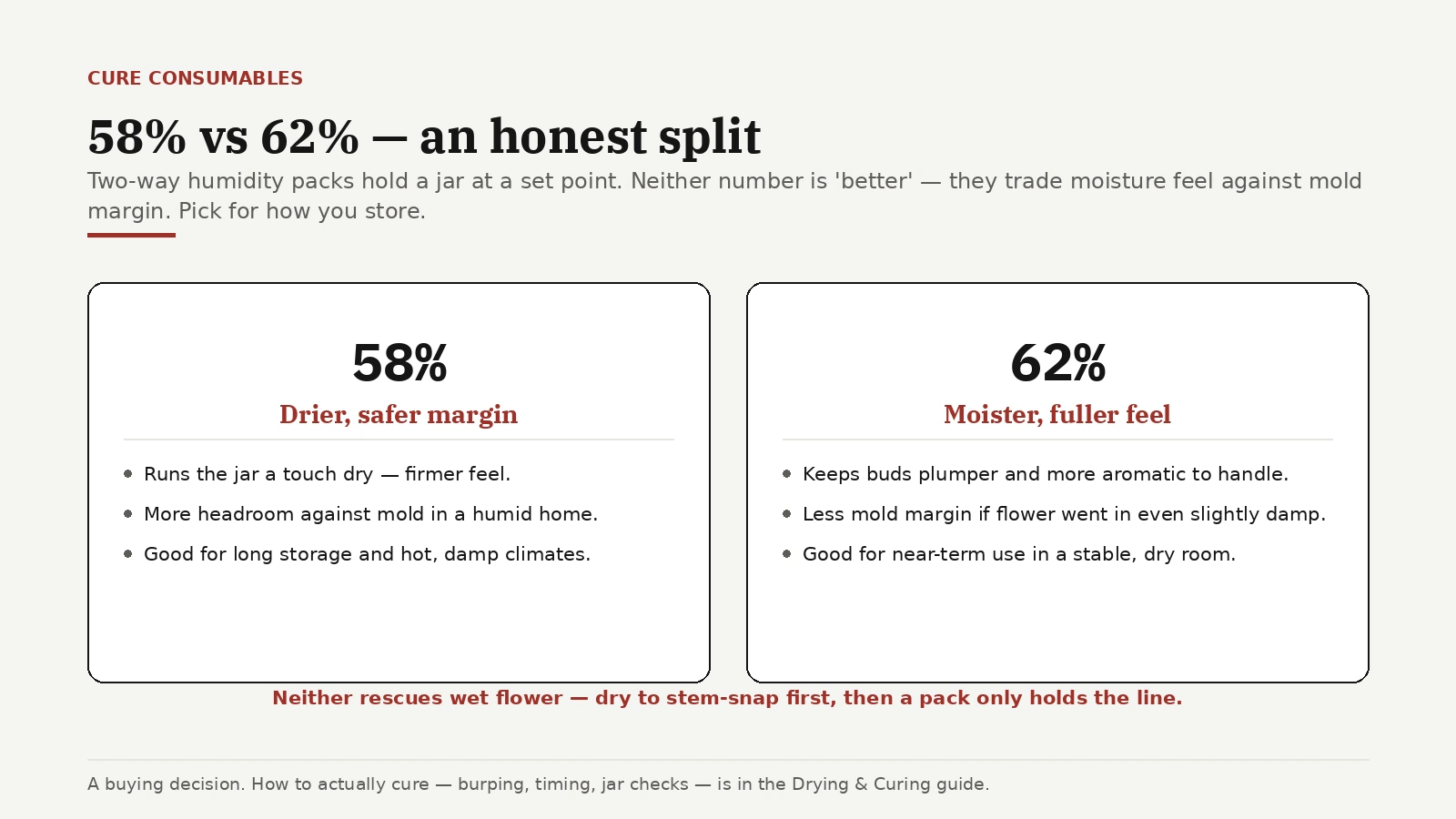
Loupe or macro support, jars, and the humidity reads that keep cure from turning into guesswork.
Skip for now
Anything purchased mostly to calm nerves instead of solve a real problem.
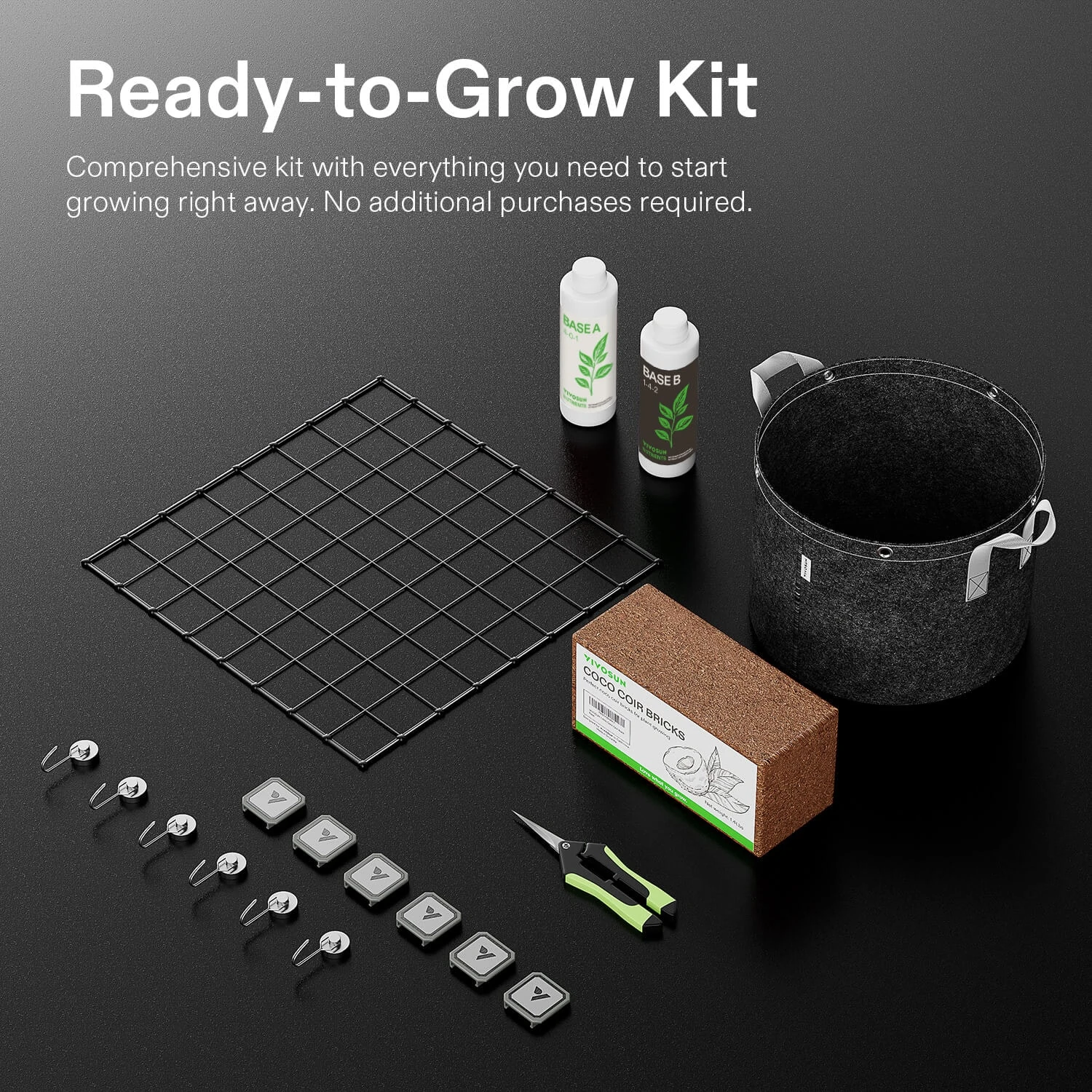
Cart order
The first cart should make the grow possible, not just make the grow feel exciting.
| Buy stage | What belongs here | Why this timing matters |
|---|---|---|
| First cart | Cabinet or tent, airflow and odor basics, root-zone method, pH and EC tools, humidity read | These make the room readable and the method runnable from day one. |
| Second cart | Replacement basics, extra hygrometer, practical backups, simple drying helpers | These strengthen the workflow after the core setup already exists and proves it deserves support. |
| Before harvest | Loupe or macro tool, jars, cure humidity reads, any missing finish gear | Finish tools bought too late turn the last third of the run into improvisation. |
| Later or only if needed | Convenience upgrades, duplicate readings, cosmetic extras, advanced automation accessories | The grow should ask for these. A nervous cart should not. |
Required first
Start with the parts that make the grow readable from day one.
A cabinet or tent, your root-zone system, and the tools to measure pH, EC, and humidity belong in the first purchase wave. Those pieces let you run the grow instead of merely owning one.
The ColaXpress path
The flagship setup stays disciplined on purpose.
The VGrow Smart Box plus DWC kit is the reference setup because it contains the environment and keeps the workflow compact. Then you add only the support gear that helps you read the plant and finish the run cleanly.
Tight budget
If the budget is tight, buy the room, the method, and the measurements before anything pretty.
Start with the enclosure, airflow, and your chosen root-zone method. Then buy the tools that tell you whether the system is actually behaving: pH, EC, humidity, and temperature reads. If those are missing, the cart is not lean. It is unfinished.
The finish tools still belong in the budget, but they can sit in a later wave as long as that wave happens before harvest starts looking real.
Cart reality
A first buy should accomplish three things.
- Make the room readable.
- Make the root zone measurable.
- Make the finish possible before the plant ever asks for it.
If the cart does not do all three, it is probably too decorative, too optimistic, or too dependent on your future self being more organized than your current one.
Priority list
Buy in this order if you want the shortest path to a functional setup.
Cabinet or tent, light cycle, airflow, and odor control. The room has to exist before the plant does.
DWC kit or comparable method, plus the water and nutrient plan that goes with it.
pH meter, EC meter, hygrometer, and eventually a loupe or macro lens for finish-stage clarity.
Drying support, jars, and humidity tracking. The smoke does not care how pretty the veg stage was.
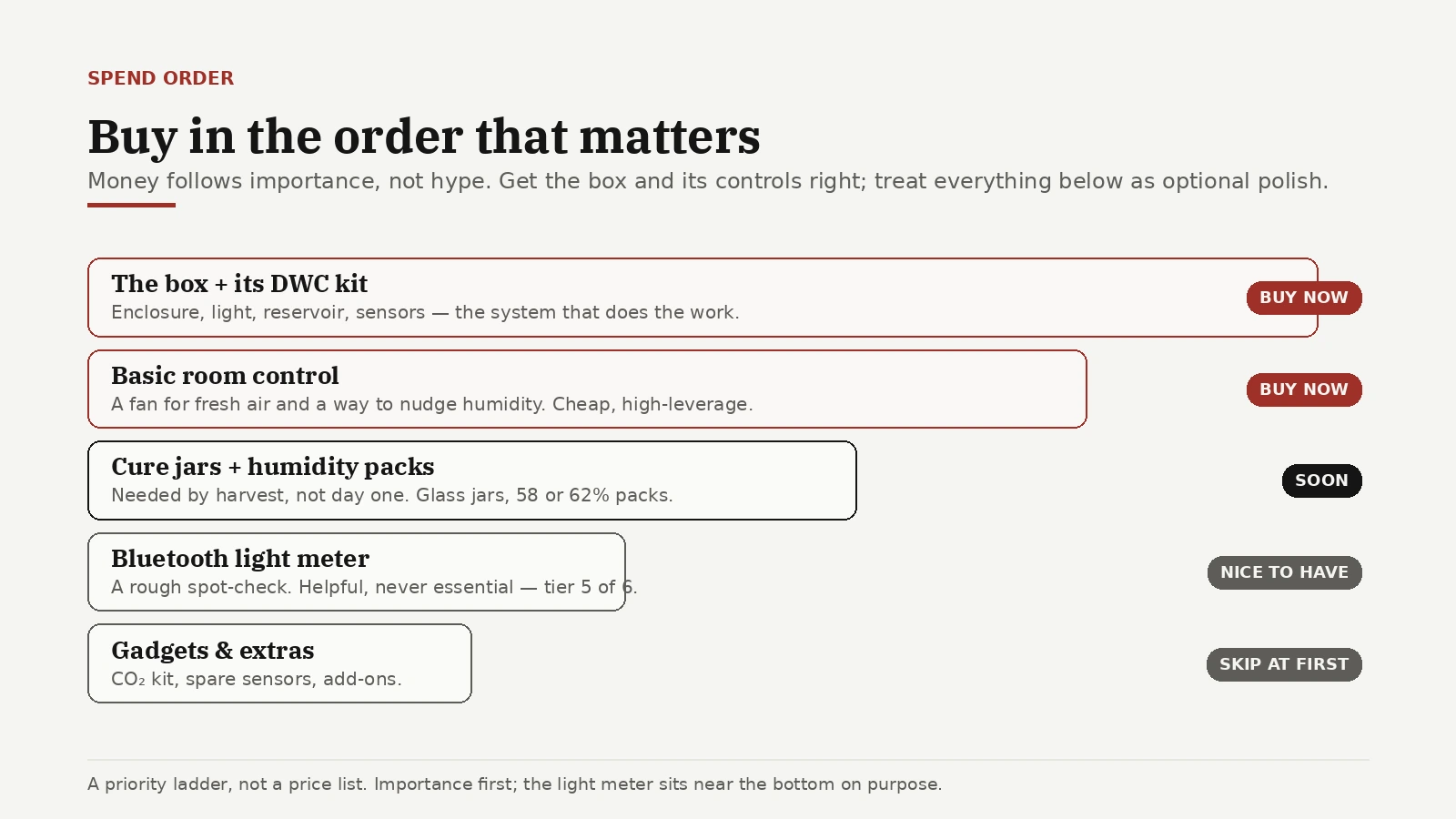
Budget logic
Separate the cart into required, helpful, and optional before you check out.
| Priority | Examples | Why it belongs here |
|---|---|---|
| Required | Cabinet, DWC kit, pH and EC meters, jars, basic humidity monitor | Without these, the setup is incomplete or the process becomes guesswork. |
| Helpful | Loupe, extra hygrometer, backup filters, drying accessories | These improve timing and quality, especially once harvest gets close. |
| Optional | Extra automation, cosmetic add-ons, duplicate readings, novelty accessories | These are refinements, not first-run necessities. |
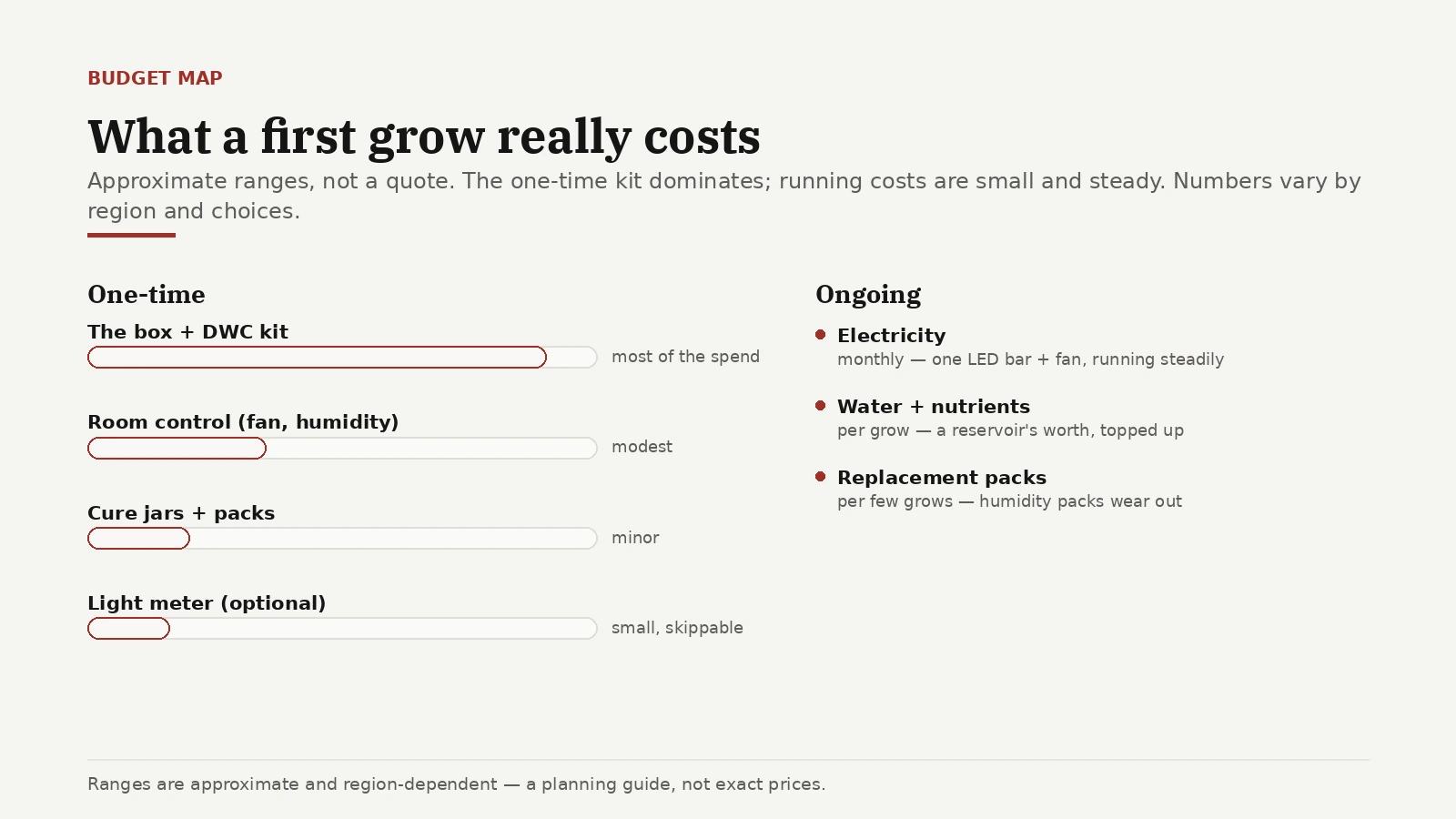
Delay risk
Some tools cost more when you buy them late than when you buy them at all.
| Item | When to buy | What happens if you wait too long |
|---|---|---|
| pH and EC tools | Before the first reservoir run | The root zone starts asking questions you cannot answer honestly. |
| Humidity read | With the enclosure | The room drifts before you have a clean baseline for what normal even looks like. |
| Loupe or macro tool | Before late flower | Harvest timing becomes emotional instead of visual. |
| Jars and cure gear | Before chop day is even on the horizon | The finish turns into a scramble, which is a very expensive way to learn patience. |
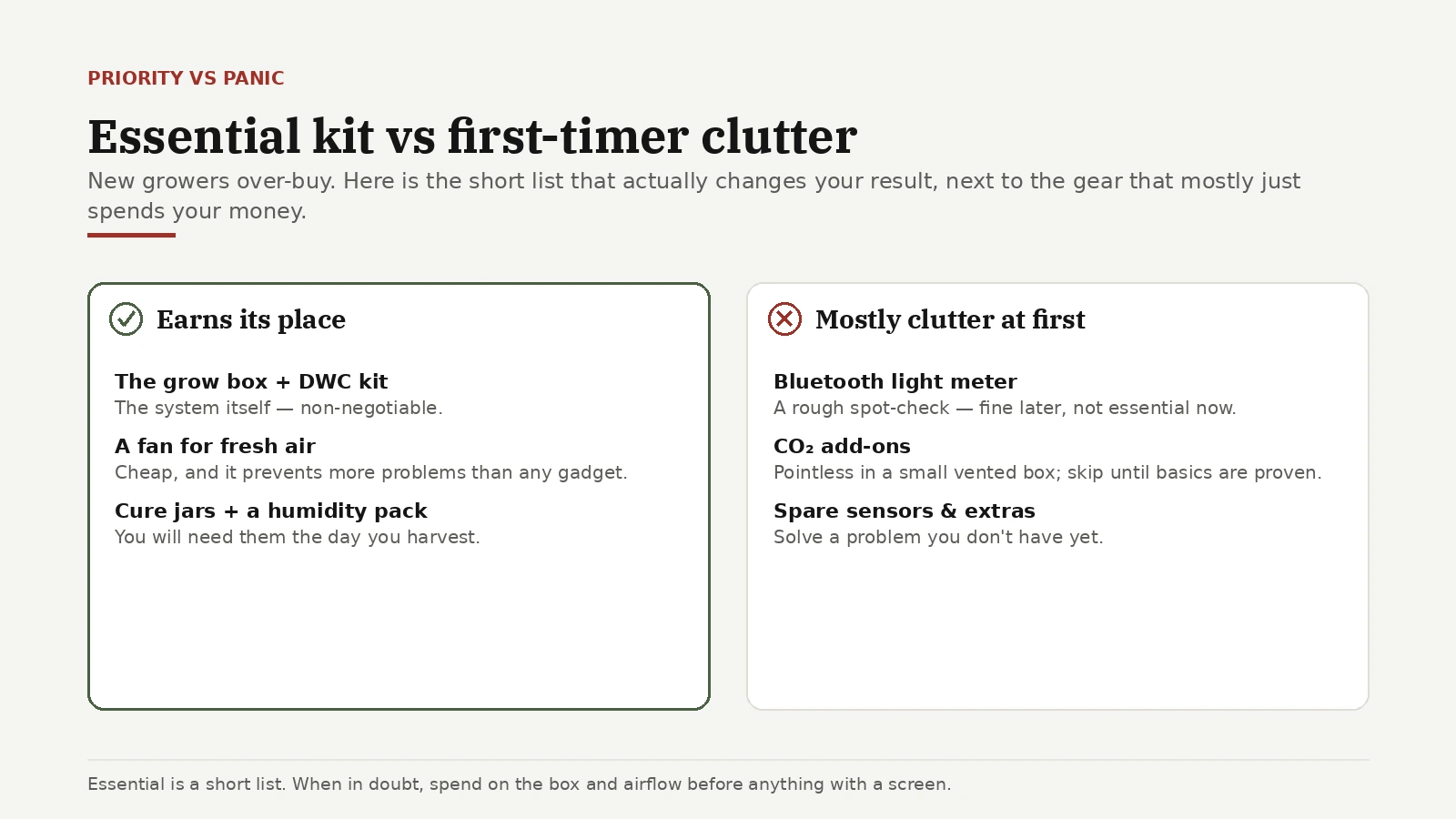
Must
Buy for clarity
If a purchase helps you understand the environment, the feed, or the finish, it is pulling real weight.
Maybe
Buy after a problem appears
A lot of helpful extras are better purchased after your first real pain point shows up.
Skip
Do not buy to soothe anxiety
The beginner cart gets expensive when every uncertain feeling turns into a gadget.
Bought too early
The budget usually drifts when the setup stops being honest with itself.
- Accessories that duplicate the readings already covered by a decent pH, EC, or humidity tool.
- Luxury extras purchased before the grower even knows how the cabinet behaves on a normal day.
- Big-ticket upgrades meant to compensate for poor process instead of weak equipment.
- Impulse items bought for the grow stage while the post-harvest plan remains vague.
Bought too late
The quieter mistake is delaying the tools that protect the last third of the run.
- Waiting on loupe or macro support until the plant already looks nearly done.
- Buying jars and cure reads after harvest timing has already become urgent.
- Assuming the cabinet can make up for missing finish tools on its own.
- Treating replacement basics as optional until the first missing part creates a delay.
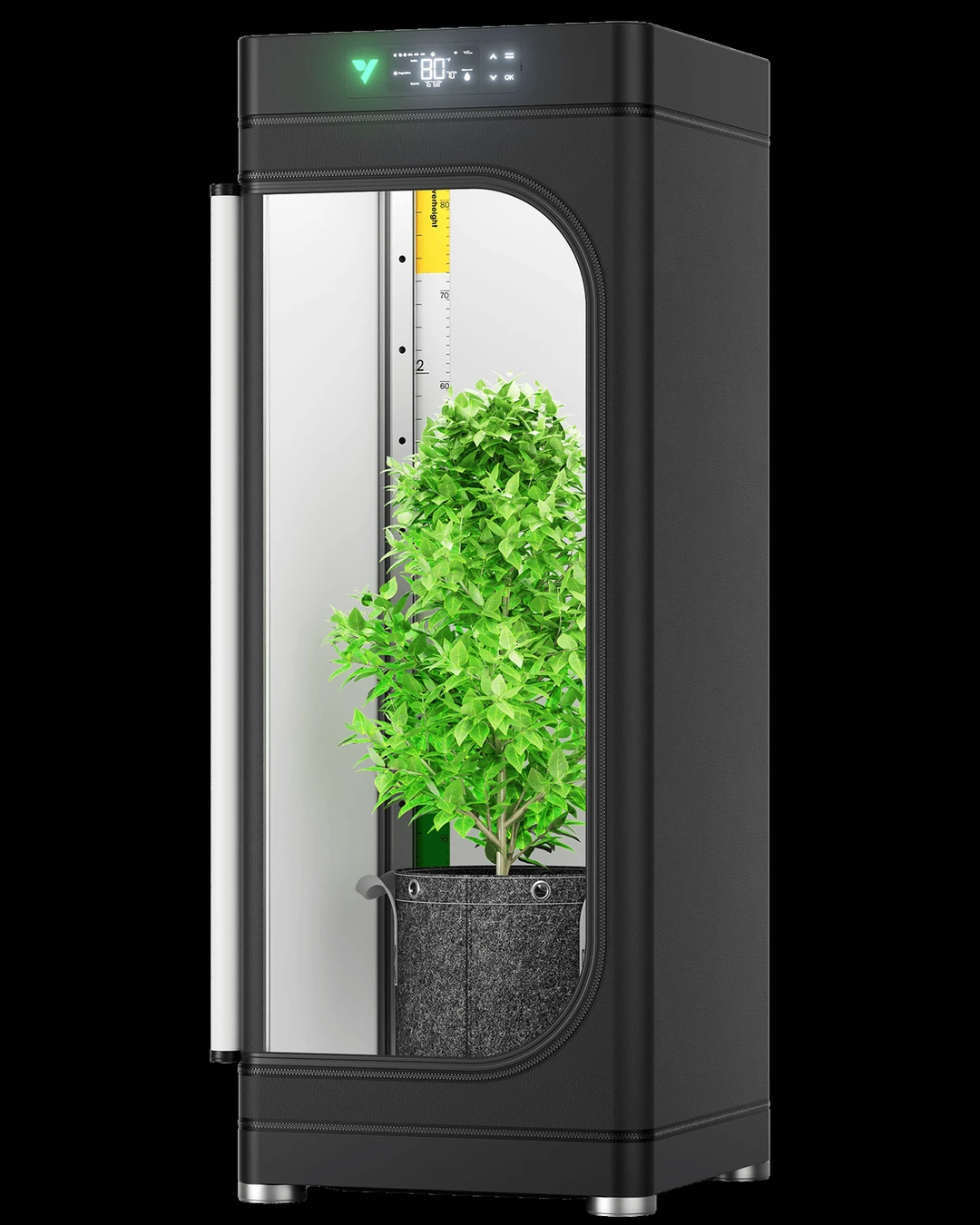
VIVOSUN product photography is used with permission under the VIVOSUN affiliate program.
If the VGrow is your first system, buy the cabinet first and let it replace the scattered cart.
A bundled cabinet covers the "buy now" tier — enclosure, light, ventilation, circulation, monitoring — so you are not paying twice for those as separate parts. Confirm what the kit includes before adding anything, then route the smaller tool decisions to the pages that cover each one: a loupe or scope, curing jars, and the environment instruments they call for.
Affiliate disclosure — if a "Check the VGrow system at VIVOSUN" link appears in this section, it is a paid link: ColaXpress may earn a commission if you buy through it, at no extra cost to you. It never changes the buying order above.