Beginner setup

A cannabis grow room setup checklist should cover the whole run.

A small cannabis grow should be planned as one connected system: enclosure, root zone, monitoring, harvest timing, drying, and curing. If one piece is missing, the setup is not really finished yet.

That is the trap with first grows. People obsess over the cabinet and the light, then act surprised when the last third of the process feels like an ambush. The checklist is here to keep the whole thing honest.

Start with A contained space, stable root zone, and simple monitoring tools.
Do not forget Harvest inspection, jar timing, and a cure plan before the first pistils appear.
Main mistake Building the grow room first and inventing the finish plan later.
Ready to start

Start only if these four things are already true.

  • The enclosure can hold a stable light cycle, airflow pattern, and odor plan.
  • The root zone is chosen, assembled, and simple enough to read without improvising every day.
  • The monitoring tools are already in hand, not still sitting in a future shopping cart.
  • The finish path is planned before the plant gives you a reason to panic.
Not ready yet

The setup is not ready just because the cabinet looks convincing.

A compact grow is ready when the room, the root zone, the reading tools, and the finish plan already make sense together. That is the difference between a calm first run and a project that starts stylish and ends improvised.

The cabinet can look premium and still be unfinished. If the water plan is fuzzy, the meters are missing, or the cure path only exists as a vague promise to your future self, the system is still half-built.

If the room is a rental or shared apartment, pair this checklist with compact cannabis grow setup for apartments before you assume the enclosure is cleared just because it fits the corner.

The short version

Build the room, then the root zone, then the reading tools, then the finish path.

Compact setups win by reducing chaos. That means the environment has to stay contained, the plant has to stay readable, and the grower has to know what they are checking before they start checking it.

Flagship fit

The ColaXpress version keeps the setup tight on purpose.

The flagship path uses a VGrow Smart Box and matching DWC kit because they keep the enclosure and root zone disciplined. The principle is bigger than one product, though: compact grows behave better when every piece earns its footprint. If you want the product-specific walkthrough, use the Vivosun VGrow DWC guide alongside this checklist.

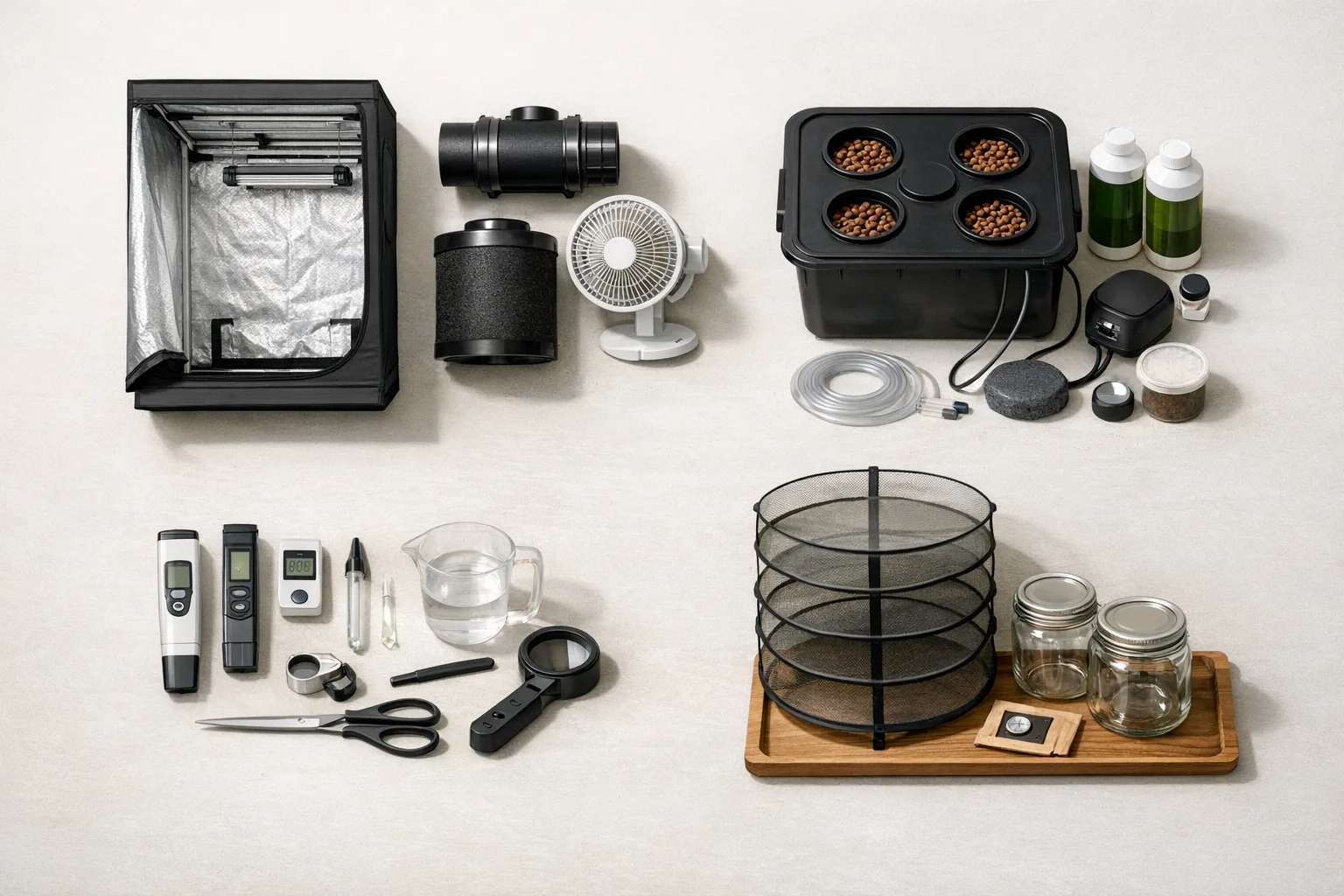
Compact grow setup order board showing the room, root zone, reading tools, and finish path arranged as a disciplined setup sequence.
A compact grow starts cleaner when the setup order stays disciplined.
Setup order

Use this checklist in sequence so the grow starts coherent and stays that way.

Step 1 Choose the enclosure

Pick a cabinet or similarly contained grow space that can hold stable light, airflow, and odor control.

Step 2 Build the root zone

Decide how you will feed and oxygenate the roots. In the flagship path, that means a DWC reservoir that stays readable.

Step 3 Set up monitoring

Have pH, EC, and humidity tools ready before the plant starts making decisions faster than you do.

Step 4 Plan the finish

Know how you will inspect ripeness, dry the flower, and move to jars without guessing under pressure.

Checklist

What belongs in a real compact-grow setup.

Area What to have ready Why it matters
Grow space Cabinet or tent, working light cycle, ventilation, odor control A compact grow fails fast if the enclosure cannot stay stable.
Root zone DWC kit or other chosen method, clean reservoir, water access, nutrient plan Healthy roots make everything downstream easier to read.
Monitoring pH meter, EC meter, hygrometer, loupe or macro lens You cannot manage what you never measure, and vibes are not measurements.
Finish tools Drying space, jars, humidity checks, cure routine Flower quality is often won or lost after harvest, not before it.
Before germination

Verify these before the seed ever asks anything from you.

Check What should already be true Why starting without it creates drag
Room check The cabinet runs, the light schedule works, airflow is not an afterthought, and odor control has a real plan. The plant should not be the first thing that tells you the room is unstable.
Water check The reservoir or chosen root-zone method is assembled, clean, and easy to access without awkward maintenance. If the root zone is awkward to read, the daily routine becomes sloppy fast.
Measurement check pH, EC, humidity, and temperature reads are available before the run begins. You cannot stabilize what you never truly measured.
Finish check A loupe, jars, and a drying-to-cure plan already exist. Finish-stage panic usually starts months earlier, when no one wanted to think about jars yet.
1

Keep the footprint honest

A small space gets cluttered fast. If a tool does not improve the grow or the finish, it is probably stealing oxygen from the setup.

2

Match the method to the room

A compact setup pairs naturally with 12/12 from seed because the plant and the environment are pulling in the same direction.

3

Plan the jar before the flower

The best time to think about curing is when the grow still feels early and calm, not when scissors are already on the table.

Do not start yet if

These are the quiet red flags that mean the setup still needs work.

  • You do not yet have a dependable way to read pH, EC, humidity, and temperature.
  • You know where the plant will grow, but not where it will dry or cure.
  • The room looks good, but the airflow or smell-control plan is still vague.
  • The daily routine would already feel annoying before the first true week even starts.
What readiness feels like

A calm setup feels boring in the best possible way.

That is the real goal. A good first-run setup does not feel dramatic. It feels obvious. The room works. The readings are readable. The method fits the footprint. The finish is already planned. When those conditions exist, the grow can finally become the interesting part.

If the setup still feels like a pile of separate chores, the system is asking for one more round of preparation, not a heroic leap into week one.

What beginners get wrong

The classic mistake is treating setup like shopping instead of system design.

  • Buying equipment in the order it looks exciting instead of the order the workflow needs.
  • Ignoring environmental monitoring because the cabinet itself feels reassuring.
  • Starting the run before the drying and curing path is even half thought through.
  • Forgetting that compact grows need fewer tools, but they need better discipline.
  • Confusing visual polish with readiness, then letting the plant discover the missing pieces first.