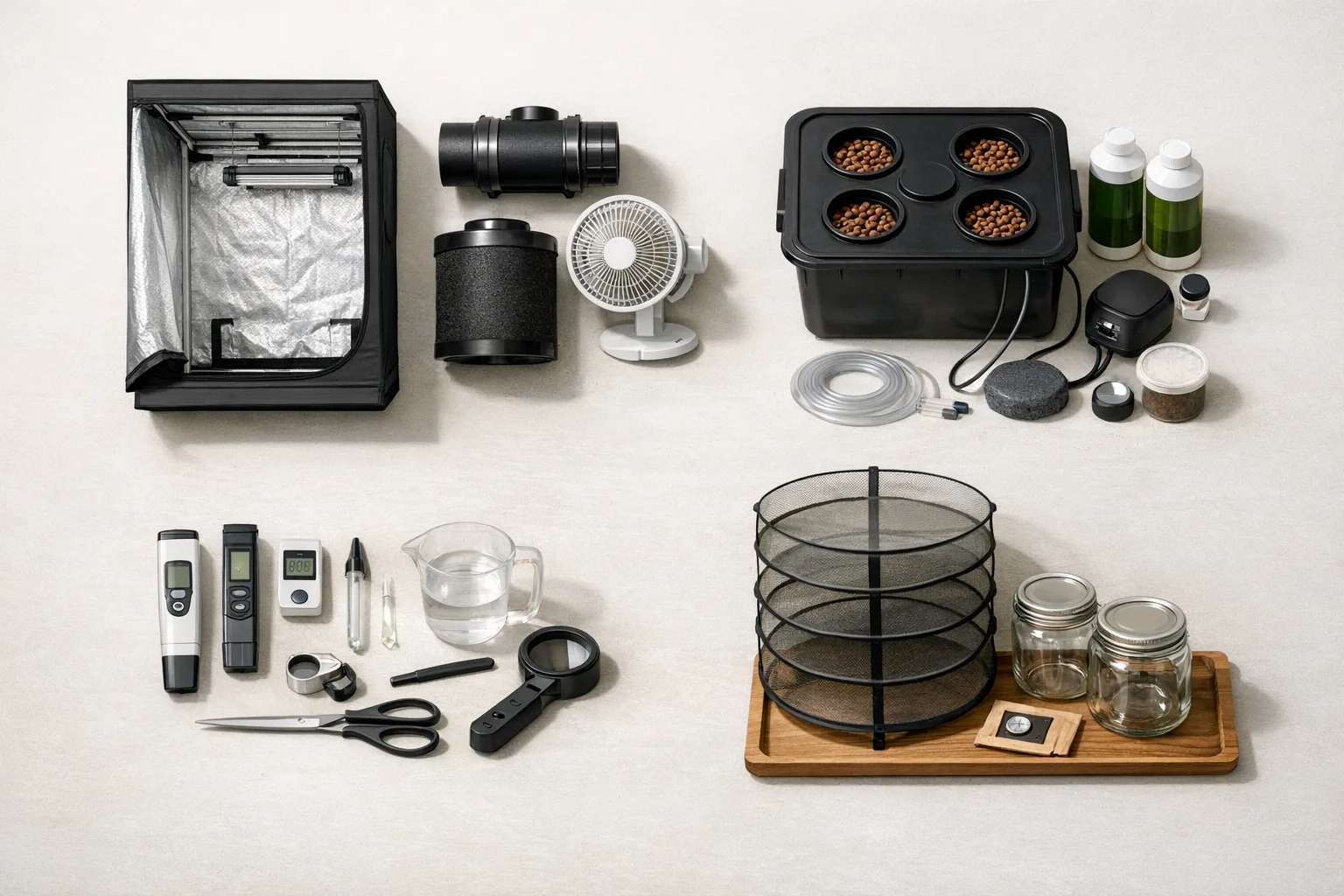
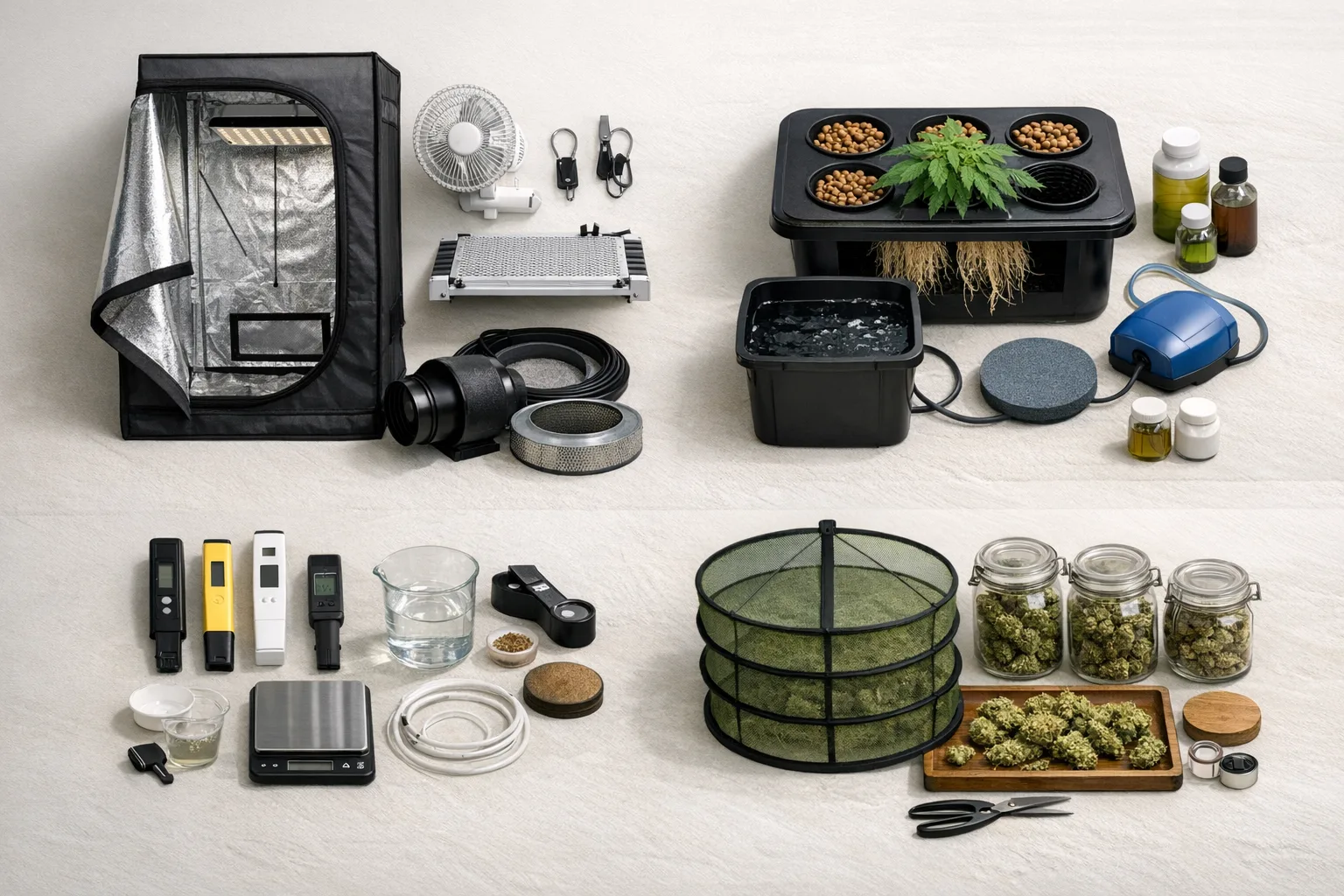
Low odor means controlling drift, not pretending smell disappears.
Searchers using this phrase usually want a setup that keeps a legal home grow from turning into a shared-space nuisance. The honest answer is that low odor does not come from one miracle product. It comes from system discipline. The enclosure needs a defined intake and exhaust path. The exhaust needs working filtration. The surrounding room needs to stay dry enough and cool enough that air does not go stale. The plant needs to stay in scale with the cabinet or tent. The dry and cure still need their own calm handoff. When one of those breaks, odor starts leaking into the rest of the home even if the flowering room looked fine the day before.
That is why this page belongs next to cannabis grow room setup checklist instead of next to generic lifestyle content. Odor control is part of room design, not an accessory. It sits with airflow, humidity, plant size, maintenance, and finish planning. A compact grow that is easy to read is usually easier to keep quieter. A crowded room that keeps surprising you is usually the one that starts announcing itself through smell.
Low odor also does not mean zero odor every minute of the run. Flowering plants still express themselves. Opening the enclosure still releases some smell. Drying and trimming still create windows where odor is naturally stronger. The point is to reduce drift, shorten those spikes, and keep the setup from becoming a constant hallway signal. That is a very different goal from stealth theater, and the difference matters for both trust and results.