DWC quick answer

What Is DWC?

DWC means deep water culture, a hydroponic method where plant roots hang in oxygenated nutrient solution instead of growing through soil or another medium. The method works by giving roots direct access to water, dissolved nutrients, and oxygen at the same time, which is why DWC can feel both fast and unforgiving in a compact cannabis setup.

That sounds more technical than it really is. At its core, DWC is a root zone you can inspect directly. The promise is clarity. The risk is that sloppy routine becomes visible faster.

What it stands for Deep water culture.
Core idea Roots sit in oxygenated nutrient solution rather than soil.
Why people use it Direct feedback, compact cleanliness, and a root zone that is easy to read when the routine is disciplined.
What it means

DWC is a hydroponic root environment, not just a bucket of water with a plant above it.

Searchers asking what DWC is are usually trying to sort out whether the method is simple, advanced, or risky. The most useful answer is that DWC is straightforward in structure and demanding in routine. A plant sits in a net pot or similar support while its roots extend into a reservoir of nutrient solution. An air pump and air stone keep that solution oxygenated so the roots can drink and breathe.

That makes DWC different from soil in one important way: the reservoir becomes the root environment directly. There is less buffering between the grower and the plant. If the solution is clean, oxygenated, and stable, the plant can move with unusual confidence. If the reservoir gets warm, under-aerated, dirty, or erratic, the plant feels it quickly.

If you need the full operating playbook — setup, feeding cadence, and environment control across a whole run — go next to how to run DWC correctly. This page covers the definition, the beginner basics, and the daily routine, and what all of that means inside a compact ColaXpress workflow.
Simple version

DWC is roots in moving truth instead of roots in hidden media.

  • Water provides nutrients.
  • Air provides oxygen.
  • The reservoir provides clarity or confusion depending on the routine.
Why it matters in a compact grow

DWC is popular in compact setups because it removes guesswork, not because it removes responsibility.

In a compact cannabis grow, space is limited and drift gets loud fast. That is exactly why DWC can make so much sense. Instead of wondering what the soil is holding, how wet the medium really is, or whether roots are quietly struggling out of sight, the grower has a direct line to the root zone. Water level, smell, temperature, pH pattern, and root appearance become easier to inspect in a smaller room where the whole system is meant to stay legible.

The benefit is not that DWC makes every decision easier. The benefit is that it makes the important decisions harder to ignore. A compact cabinet or tent has less slack than a large room. If the root zone drifts, the plant often tells the truth faster. If the room is clean and stable, that speed becomes an advantage. If the room is messy, the same speed becomes a bill.

That is why DWC belongs inside a broader system conversation. It pairs naturally with the indoor cannabis grow system, with calm daily monitoring on the daily check routine, and with troubleshooting pages like the guide to failing roots when the reservoir starts feeling less believable than it should.

Beginner basics

DWC hydroponics for beginners comes down to three parts doing three jobs.

Most beginner confusion around DWC comes from treating it like a complicated machine. It is not. Strip away the forum debates and the system has exactly three responsibilities, and each one maps to a piece of hardware or a habit you can actually see.

Water

Reservoir

Holds the nutrient solution and becomes the plant's immediate feeding environment. Keep it opaque, clean, and easy to reach, because you will be looking inside it often.

Air

Oxygenation

Roots need oxygen as much as they need water. An air pump and air stone keep the solution alive — stale, under-aerated water is where root confidence goes to die.

Reading

Monitoring

pH and EC tell you whether the reservoir is staying in a range the plant can actually use. A pen for each is the whole starter toolkit.

Feeding is where beginners most often overreach. Fast-growing hydro does not automatically want harder feeding — sometimes the reservoir is asking for cleaner observation, not a stronger mix. Start light and work from the stage targets in the DWC nutrient schedule instead of answering every uncertainty with more feed.

Daily checks

The beginner routine is four short reads, and most of them happen daily.

Daily Water level

How fast the level drops is data. Rapid drops with a happy plant usually mean growth; odd behavior can tell you a lot before the leaves start sending complaints.

Daily pH

Drift is normal. Wild swings are not. Watch the pattern across days, not one number in isolation.

Regularly EC

EC shows whether feed strength is steady, creeping too hot, or not keeping up with the plant.

Always Root health

Healthy roots look clean and vigorous, and the reservoir smells neutral. It should never smell like a warning label.

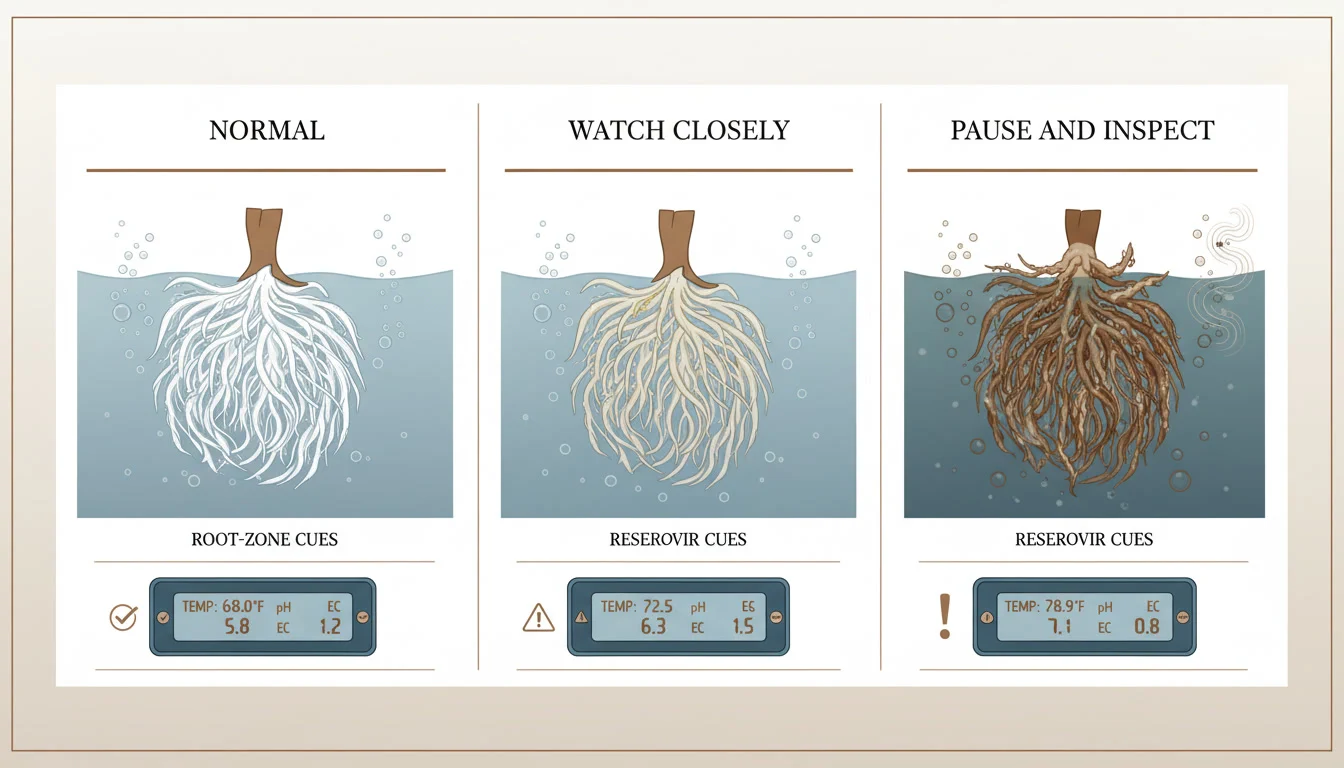
What normal looks like

Good DWC is active, not dramatic.

  • Some pH movement is normal. The problem is wild drift, not every tiny shift.
  • Water level changes mean the plant is using the system, not that the reservoir is suddenly cursed.
  • Healthy roots look clean and alive, free of that something-is-cooking vibe.
  • The reservoir smells clean or neutral when the routine is holding.
What should make you pause

DWC is not mysterious, but it expects you to notice when the pattern changes.

A sharp smell, ugly roots, pH movement that suddenly becomes chaotic, or feed behavior that stops making sense are all reasons to slow down and actually inspect the system. Problems usually announce themselves through patterns before they turn theatrical. The mistake is not spotting something strange — it is deciding the fix before confirming what changed.

If roots are browning, sliming, or souring, go straight to the guide on DWC root rot before changing anything else in the reservoir.

Decision layer

The easiest way to understand DWC is to understand what it is not.

If you think DWC means Better interpretation Why that matters
A faster magic yield system A direct hydro method with tighter feedback. The method can move quickly, but speed comes from disciplined conditions, not from hype.
Roots always submerged without nuance A managed oxygenated reservoir with a root zone that has to stay healthy and inspectable. The distinction matters because oxygen is as important as the nutrient solution itself.
A method for people who like complicated gear A method for growers who want direct visibility into the root environment. DWC only feels complicated when the reservoir feels abstract or when too many variables are changed at once.
A reason to skip diagnosis A system that demands cleaner diagnosis than vague media-based guessing. That is why pages like picking a medium for a small grow matter when the real question is method fit, not hydro novelty.
Where DWC or VGrow fits

The VGrow reference path works because the cabinet and the reservoir are solving the same problem.

DWC fits the ColaXpress workflow best when it lives inside a compact system that values readable signals more than big-room improvisation. That is why the Vivosun VGrow DWC guide keeps showing up as the reference example. The cabinet contains the climate. The reservoir reveals the root story. Together they reduce the amount of noise a beginner has to sort through.

That does not mean a grow box is required for DWC. It means the same logic applies whether the method lives in a cabinet or another small-space workflow: keep the environment honest, keep the air path believable, keep the reservoir accessible, and keep the daily read calm enough that a real problem can stand out. DWC shines when the whole room agrees that the goal is clarity.

The craft edge of that clarity matters too. A grow that stays readable from roots through finish is better positioned to protect final quality, which is why DWC makes more sense when paired with the broader values in cultivating for craft, not yield instead of being framed like a speed contest.

Common mistake

The biggest beginner mistake is treating DWC like a system for reacting instead of a system for reading.

The classic DWC mistake is overcorrection. A grower sees a pH shift, a change in water use, a darker root tone, or a slight slowdown and starts changing several things at once. Nutrients move, top-offs change, hardware gets blamed, and the reservoir becomes less understandable with every attempt to help. DWC does not punish curiosity. It punishes chaotic editing.

Another mistake is assuming DWC exists to outrun patience. People hear that hydro can move quickly and then try to force the method into the role of universal shortcut. The real question is whether the grower can keep the root zone clean, oxygenated, measurable, and consistent enough for the direct feedback to stay useful.

If the broader setup is not built yet, use the cannabis guide search to answer the DWC questions you still have one at a time. If the method still sounds attractive after that, the gear conversation should stay secondary to the workflow conversation.

What to avoid
  • Changing several reservoir variables at once and then guessing which one mattered.
  • Reading every pH movement like an emergency instead of a pattern.
  • Assuming DWC will fix a room that is already noisy, hot, or poorly planned.
  • Using the method because it sounds advanced instead of because the workflow actually fits.
  • Treating the root zone like a mystery after choosing a method that exists to make it visible.
Practical takeaway

DWC is worth learning if you want direct root-zone feedback and you are willing to keep the routine calm.

The clean definition is enough to remember: DWC is deep water culture, a hydroponic method where roots live in oxygenated nutrient solution instead of soil. The more useful definition is this: DWC is a way of growing that trades hidden media for visible responsibility.

01 Picture the method clearly

Roots suspended in solution, oxygen supplied continuously, and the reservoir treated as a live environment.

02 Match it to the room

DWC works best when the enclosure is compact, the routine is calm, and the root zone is easy to inspect.

03 Use the right next page

Use this page for the definition, the beginner basics, and the daily routine; use the run-it-right guide for full operation; use comparison pages for fit; and use troubleshooting only when the pattern truly changes.

04 Keep the finish in view

A readable root zone matters most when it helps the whole grow stay coherent all the way to the jar.

If you are deciding whether DWC fits your compact workflow, do not stop at the definition. The guide on how to run DWC correctly shows what running one actually asks of you week to week, the soil comparison puts the tradeoff side by side, and the ways a root zone fails shows what trouble looks like before you commit.

Three-panel DWC board showing white healthy roots, tan roots to watch, and browning roots to inspect, each with a reservoir gauge.
DWC gets much easier once the grower can separate normal movement, watch closely movement, and actual inspection signals.
FAQ

Questions people usually mean when they ask what DWC is.

Is DWC the same thing as hydroponics?

DWC is one kind of hydroponic growing. Hydroponics is the broader category. DWC is the specific method where roots sit in oxygenated nutrient solution rather than growing through soil.

Why do people say DWC grows fast?

They usually mean the root zone is direct and responsive. When oxygen, nutrients, and the reservoir routine are stable, the plant can move efficiently. When those conditions drift, the same directness can turn into stress just as quickly.

Is DWC good for beginners?

It can be, especially in compact systems where the reservoir is accessible and the daily routine stays simple. It is less about beginner versus expert and more about whether the grower wants direct feedback badly enough to manage it calmly.

Does DWC always mean using a grow box like VGrow?

No. DWC is the root-zone method, not the cabinet. A grow box can make the method easier to organize, but the definition of DWC stays the same whether it is used in a cabinet or another contained setup.