Humidity quick answer

How to Lower Humidity in a Small Grow Tent

To lower humidity in a small grow tent, start by moving wet air out of the tent faster, giving fresh air a cleaner way in, reducing canopy crowding, stopping unnecessary moisture sources, and making sure the room outside the tent is not already heavy and damp. In most small tents, humidity is not solved by one dramatic product. It drops when the tent, the plant mass, and the surrounding room stop working against each other.

In a small tent, one weak climate habit gets loud fast. A damp room, overlapping leaves, or a poor exhaust path can turn a normal run sticky overnight.

Usually caused by Weak exhaust, poor air path, crowded leaf mass, or a lung room that is already too damp.
Best first move Read the room in order: outside air, exhaust, circulation, plant density, and water behavior.
Do not do Stack random fixes before you know whether the real problem is climate, structure, or routine.
What it means

Lowering humidity means removing moisture faster than the tent is creating or trapping it.

Searchers looking up how to lower humidity in a small grow tent usually want a fast fix, but the real answer is structural. Humidity drops when the tent can exchange air cleanly, when the canopy is not trapping moisture, and when the room feeding the tent is stable enough to help instead of sabotage the enclosure. In a small tent, even a minor weakness can push the air into a heavy pattern.

That is why the best first step is not guessing at the plant. Start with the room, then the exhaust path, then the canopy, then the water story. If the air outside the tent already feels wet, the tent is borrowing a bad climate. If the canopy is packed too tightly, the leaves are holding moisture inside the structure.

This page is the quick-answer version for the tent phrasing. If the enclosure keeps feeling heavy, pair it with humidity problems in a grow cabinet for the deeper enclosure diagnosis and use the daily cannabis grow checklist if the room stopped being easy to read.
Quick truth

A humid tent is usually an airflow story wearing a plant costume.

  • Check the room before blaming the plant.
  • Check the air path before buying another fix.
  • Check the canopy before asking one fan to do everything.
Compact grow dashboard showing tent humidity, room temperature, airflow notes, and a simple daily check order for catching heavy air early.
The best humidity correction starts with a repeatable read of the room, not a panic response to one sticky moment.
Why it matters in a compact grow

Small tents punish moisture drift faster because they have less slack.

A compact grow is easier to read, but it has less slack. That makes humidity feel louder in a small tent than it might in a looser room. Warm wet air sits closer to the canopy, dense leaves trap it more easily, and weak decisions around intake, exhaust, and plant size become obvious faster.

This is where compact growing rewards honesty. If the tent is overfilled for the airflow you have, humidity will keep returning until structure changes. If the room outside the tent is already damp, the tent will keep inheriting that burden.

The compact grow setup checklist exists for exactly this reason: environment first, then plant fit, then workflow. When that order is reversed, humidity becomes one of the first places the room tells on you.

Educational board showing a small grow tent air path with intake, exhaust, circulation, and canopy density notes for lowering humidity.
In a small tent, lowering humidity usually means fixing the route the air is supposed to travel, not just turning up noise.
Decision layer

The same humidity problem usually comes from one of four patterns.

What you notice What it usually points to Calmer correction
The tent feels wet mostly when lights change The enclosure is holding more moisture than the exhaust path can clear when the room settles. Check the room outside the tent, verify exhaust performance, and confirm the tent is not just too full.
The canopy feels thick and stagnant Leaf density and airflow are fighting each other inside a footprint that no longer has enough breathing room. Reduce crowding honestly and stop asking circulation alone to solve a structure problem.
The room outside the tent already feels heavy The tent is inheriting a weak lung room, so every internal adjustment stays uphill. Stabilize the surrounding room first. A tent cannot dry air that never arrives dry enough to help.
You keep changing settings but the humidity keeps returning The diagnosis is reactive, and the main cause has not actually been isolated yet. Change one variable at a time, track what moved, and compare your routine against common mistakes growing cannabis.
Where DWC or VGrow fits

DWC and compact cabinets make humidity easier to read, but they also punish sloppy room logic faster.

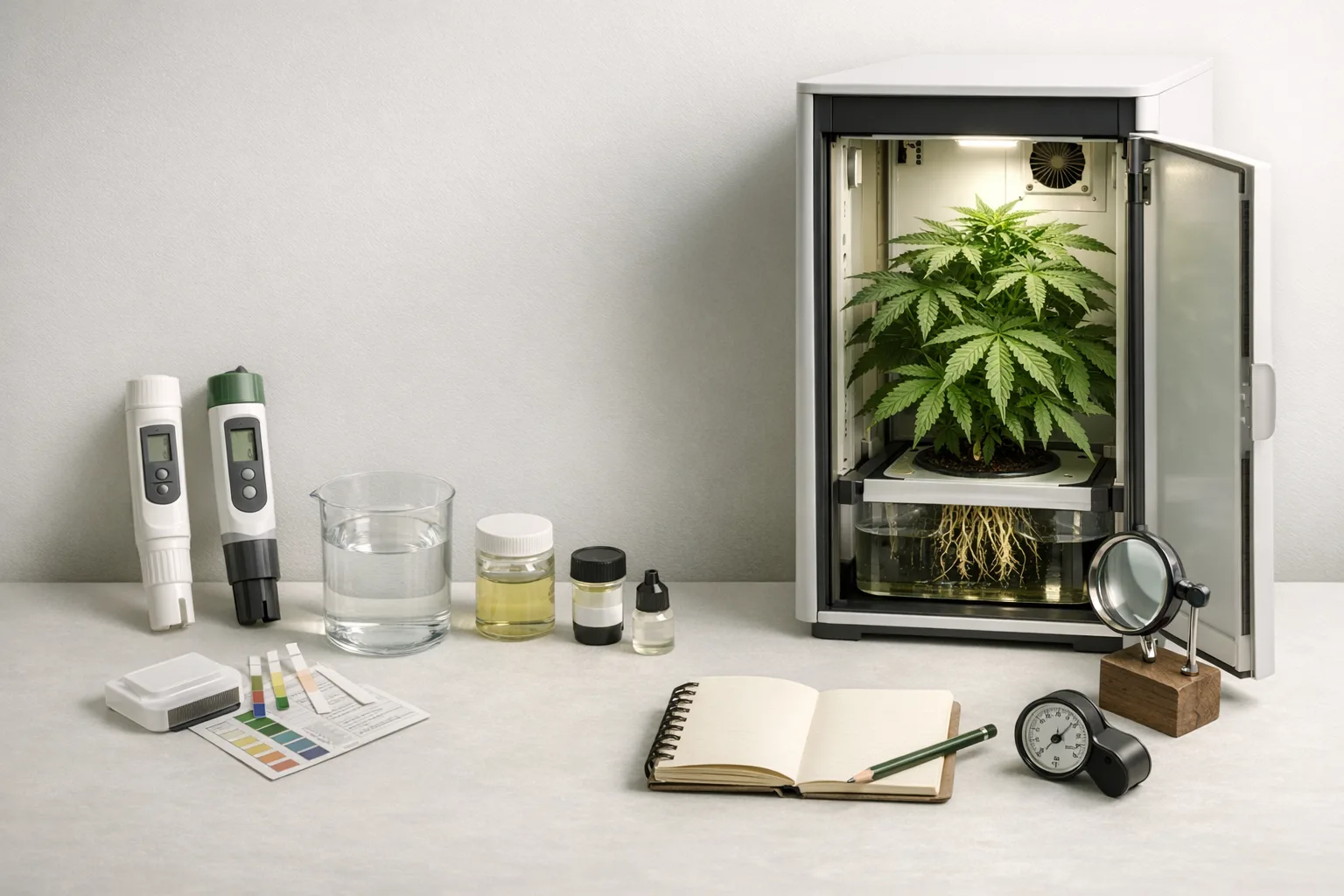
Even though this page targets the tent phrasing, the same climate logic shows up in a DWC cabinet or a VGrow-style workflow. A DWC reservoir adds a live water story to the room, which means the enclosure has to stay readable. If the air path is weak, the reservoir is warm, or the canopy is too crowded, the room can start feeling heavier before the plant has a dramatic way to complain.

Humidity control is stronger when the whole compact system is coherent. The enclosure should move air cleanly, the plant should fit the footprint, and the water system should not be turning the room into a vague moisture source. Readers running hydro should compare this with root problems in DWC, then use the Vivosun VGrow DWC guide if they want the cabinet version.

The bigger point is that humidity is rarely an isolated climate number. In a compact workflow, it is part of the overall readability of the run.

Compact DWC cabinet panel showing reservoir readability, airflow route, and moisture-control checkpoints that also apply to a small tent.
DWC does not create a humidity problem by itself, but it makes room discipline matter more because air and water stay in closer conversation.
Common mistake

The usual mistake is treating humidity like one machine should fix it.

The classic humidity mistake in a small tent is trying to solve everything with one late intervention. A grower notices heavy air, turns one device up, buys another piece of gear, or starts changing watering, pruning, and environment settings all in the same stretch. That creates motion, but not clarity.

Another version of the same mistake is expecting leaf removal to clean up what is really an airflow design problem. Structure matters, but defoliation is not a substitute for a believable air route.

Use cannabis growing equipment to sanity-check whether the room has the right tools, but do not treat equipment as a license to skip diagnosis. Then use cannabis grow questions when you need a quick answer that keeps the next decision from getting sloppier.

What to avoid
  • Changing several climate variables at once and then guessing which one helped.
  • Ignoring the room outside the tent and demanding the tent fix inherited humidity alone.
  • Keeping a canopy denser than the footprint can clear.
  • Reading one humid moment as proof that the whole grow is failing.
  • Asking hardware to rescue a design mismatch you already know is there.
Practical takeaway

Run the correction in a simple order and the room usually gets honest again fast.

Lowering humidity in a small grow tent is less about finding a trick and more about removing contradictions. A tent should not be carrying more moisture than its air path, plant size, and surrounding room can support.

01 Read the lung room

Check whether the room feeding the tent already feels warm, wet, or stagnant.

02 Confirm the air route

Make sure intake, circulation, and exhaust behave like a path, not scattered noise.

03 Check plant fit

Be honest about whether the canopy is too dense for the tent to breathe through cleanly.

04 Check the water story

Runoff, wet surfaces, and hydro reservoirs all change the moisture load the tent has to clear.

If the problem keeps repeating after that sequence, stop treating it like a single symptom. Go back to the broader system view on indoor cannabis grow system, then compare this quick-answer page with the deeper enclosure troubleshooting on humidity problems in a grow cabinet.

Compact grow system map showing how room air, tent airflow, canopy density, root-zone moisture, and daily checks combine to control humidity.
Humidity control gets easier when the room, the tent, the plant, and the water system are all following the same plan.
FAQ

Questions growers ask when a small tent starts feeling wet.

Should you leave a small grow tent open to lower humidity?

Sometimes opening the tent can tell you whether the room outside is helping or hurting, but it is not a real long-term fix by itself. The lasting answer is a cleaner air route and a room that is not feeding the tent heavy air.

Can too much leaf mass raise humidity in a small tent?

Yes. A dense canopy traps moisture and slows the air path through the plant. In a tight footprint, that can make the tent feel wetter even when the hardware has not changed.

Does DWC make humidity harder to control in a tent?

It can make room discipline more important because there is an active water system involved, but it does not automatically create a humidity problem. The real question is whether the enclosure, airflow, and reservoir routine still make sense together.

Why does humidity often get worse when lights change?

That is often when weak airflow, trapped canopy moisture, or a damp surrounding room becomes more obvious. The tent loses momentum, and the system can no longer hide the fact that moisture is not being cleared cleanly enough.