Nutrient Lockout Signs in Cannabis Plants
Learn the nutrient lockout signs cannabis growers should act on, how to confirm its cause, and how to reset a hydro system without guesswork or panic.
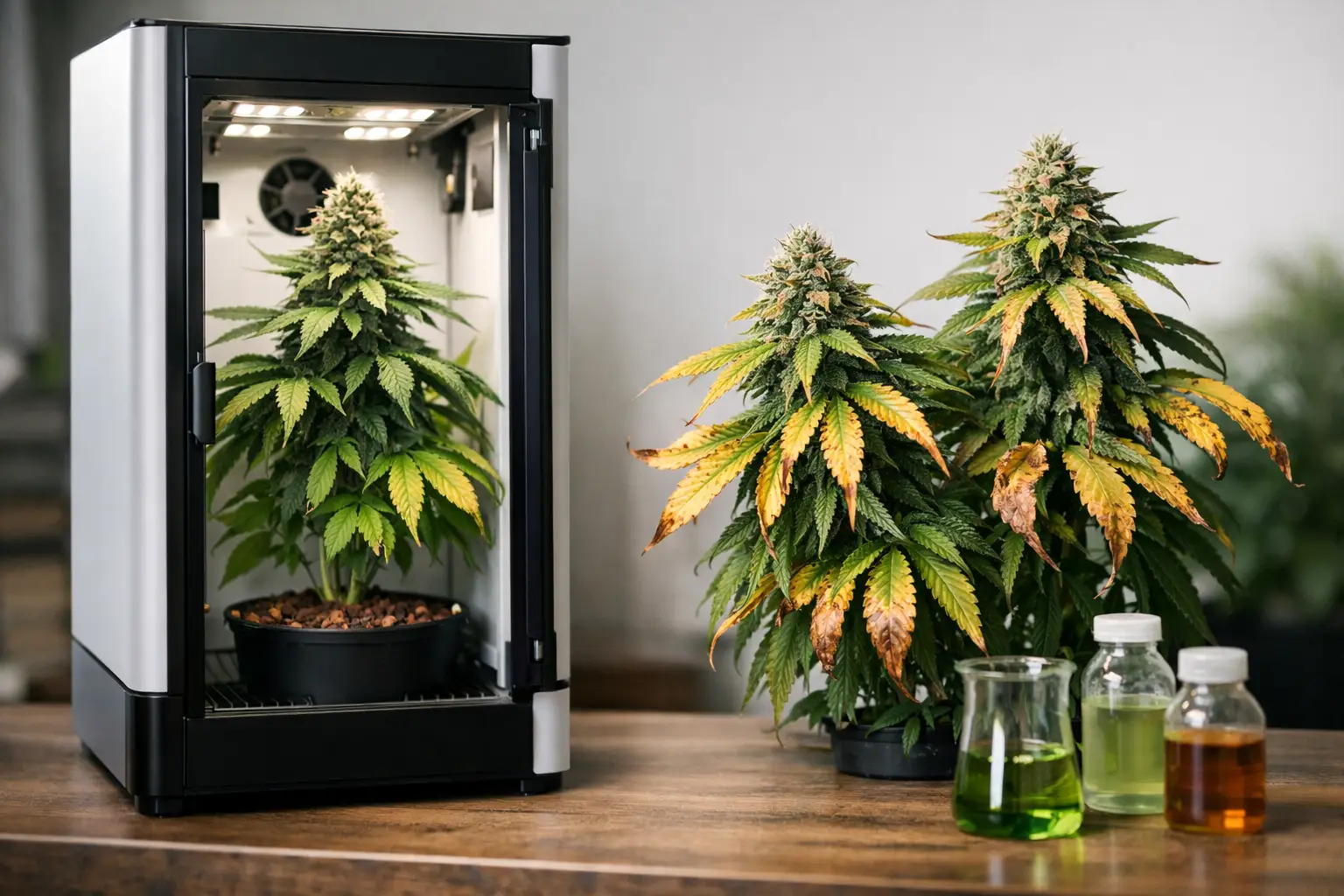
Your leaves can look hungry while the reservoir is full of nutrients. That is the trap behind nutrient lockout signs: the plant is not necessarily underfed. It may be sitting in a solution it cannot use. In a compact cabinet, where root-zone changes move fast, pouring in more nutrients can turn a manageable correction into a stressed, clawed, burned plant.
Lockout is a root-zone problem first. Treat it that way. Read the plant, check the water, then make one clean correction instead of chasing leaf colors with bottles.
What nutrient lockout actually means
Nutrient lockout happens when roots cannot properly absorb one or more essential elements, even though those elements are present in the growing medium or nutrient solution. In deep water culture, the usual causes are pH drift, excessive EC, poor water temperature, weak root health, or an unbalanced nutrient mix.
A true deficiency and lockout can produce similar leaf symptoms. Yellowing, rusty spots, curled margins, and slowed growth do not identify the cause by themselves. The difference is context. A plant that has been fed lightly for weeks may genuinely need more nutrition. A plant in a strong reservoir with drifting pH is more likely locked out.
This distinction matters because the fixes move in opposite directions. A deficiency may call for a modest increase in feed. Lockout usually calls for simplifying and stabilizing the root zone. Craft growing is about making the right move, not making the biggest move.
Nutrient lockout signs to watch for
The first nutrient lockout signs often appear as new damage while the reservoir readings look normal on paper. The plant may lose color between leaf veins, develop small rust-colored spots, or show yellowing that starts on either older or newer leaves depending on which nutrients are being blocked.
Look for patterns rather than a single ugly leaf. One damaged lower leaf after a canopy adjustment is not a diagnosis. Damage that continues to spread across multiple leaves after the plant has been adequately fed deserves attention.
Multiple deficiency patterns at once
Lockout commonly looks messy. You may see pale new growth suggesting an iron or calcium issue while older fan leaves show interveinal yellowing associated with magnesium. That combination is a clue. It is less likely that the plant suddenly needs several separate products and more likely that uptake has broken down.
In DWC, widespread mixed symptoms often point back to pH, EC, or roots before they point to a missing supplement.
Burned tips alongside pale leaves
This is one of the clearest contradictions growers miss. Tip burn says the solution is strong enough to stress the plant. Pale or spotted leaves say the plant is not accessing nutrition correctly. Adding more feed because the leaves look deficient is the wrong direction.
Burned tips do not always mean an emergency. Mild tip burn can simply show you have reached the upper edge of the plant's comfort zone. But burned tips combined with worsening deficiency-like symptoms should put lockout high on your list.
Slow growth despite a full reservoir
A healthy cannabis plant in an appropriate environment should show a readable rhythm of new growth. When that pace slows sharply, leaves lose their clean posture, and water use drops, inspect the root zone. The plant may be conserving itself because uptake has become difficult.
Do not confuse this with the slower metabolism of late flower. A plant deep into ripening will naturally drink less and fade. Lockout is more suspicious when it appears during vegetative growth or the active stretch, especially if the decline is abrupt.
pH that keeps drifting out of range
For DWC cannabis, a practical pH range is roughly 5.5 to 6.2. Letting the reservoir move gradually within that range can allow access to different nutrients. Letting it sit too low or too high for long periods can block uptake.
A reservoir that needs a small daily adjustment is not automatically broken. One that swings hard, returns rapidly after adjustment, or drifts beyond range while the plant declines is giving you a diagnostic signal. Check root health, water temperature, reservoir cleanliness, and nutrient strength before repeatedly forcing it back with pH products.
Roots that are no longer clean and vigorous
Healthy DWC roots are generally light colored, firm, and fresh-smelling. They do not need to be snow white, especially with certain nutrients or beneficial products, but they should not look slimy, matted, darkening, or smell sour.
Damaged roots cannot take up nutrients well. Warm water, low dissolved oxygen, light leaks, and biological buildup can all turn a nutrient issue into a root-health issue. In a small reservoir, this can happen quickly. The cabinet may look controlled while the bucket is quietly becoming the problem.
Confirm the cause before changing the feed
Do not diagnose lockout from a chart alone. Run a short, disciplined check in the same order every time.
Start with pH and EC or PPM. Compare the current numbers with what you mixed and with the plant's recent behavior. If EC is high for the plant's stage and the water level has dropped faster than EC, the plant is likely taking more water than nutrients. That usually means the solution is too strong. If EC falls while water falls, the plant is feeding actively. Neither reading proves lockout, but both tell you whether the reservoir is aligned with the plant.
Next, check water temperature. DWC performs best when the solution stays cool, commonly around 65 to 68°F. Higher temperatures reduce available oxygen and make root problems more likely. In a compact cabinet, warm drivers, pumps, and room heat can raise reservoir temperature more than growers expect.
Then inspect the roots and smell the reservoir. Finally, look at environmental conditions above the bucket. Excessive heat, very dry air, poor airflow, or light stress can make leaves appear nutrient-stressed even when the reservoir is sound. The plant is one system. Do not isolate the bottle from the environment.
How to correct lockout in a compact DWC grow
If pH is out of range but the solution is otherwise clean and EC is reasonable, correct pH gradually and observe new growth for several days. Existing leaf damage will not heal. Your evidence is whether the next leaves emerge cleaner and whether the damage stops advancing.
If EC is clearly too high, roots look stressed, or several symptoms are stacking up, perform a reservoir reset. Empty the old solution, clean the reservoir and air equipment, and refill with properly mixed water at a gentler nutrient strength for the plant's stage. Use a complete base nutrient before reaching for individual deficiency additives. A clean baseline beats a crowded recipe.
Do not overcorrect into starvation. A near-zero nutrient solution may temporarily reduce pressure, but cannabis still needs a stable supply of minerals to recover. The right reset is usually a balanced, lower-strength solution with correct pH, strong aeration, and controlled temperature.
After the reset, stop changing variables every few hours. Keep lighting, temperature, and feed stable long enough to read the response. In a VGrow-sized space, daily checks make sense. Daily drastic changes do not.
Prevent lockout with a readable routine
Most lockout episodes are built over days, not minutes. Prevention is less glamorous than rescue, which is exactly why it works. Mix nutrients in the same order each time, measure EC after mixing, adjust pH last, and record the numbers. Top off with water or a lightly balanced solution based on how EC is trending, not based on anxiety.
Keep the reservoir lightproof and well aerated. Keep water temperature under control before summer heat makes it a crisis. Avoid stacking boosters, cal-mag, and additives without a specific reason. More inputs create more opportunities for imbalance, especially for a beginner working with a small volume of water.
The best grow room is not the one with the most bottles. It is the one where you can explain what changed, why it changed, and what the plant did next. When nutrient lockout signs show up, slow down, restore root-zone clarity, and let clean new growth tell you whether the correction worked.