Why Are DWC Roots Brown? Find the Cause
Why are DWC roots brown? Learn to separate harmless staining from root rot, read reservoir signals, and correct the cause before plant growth slows down.
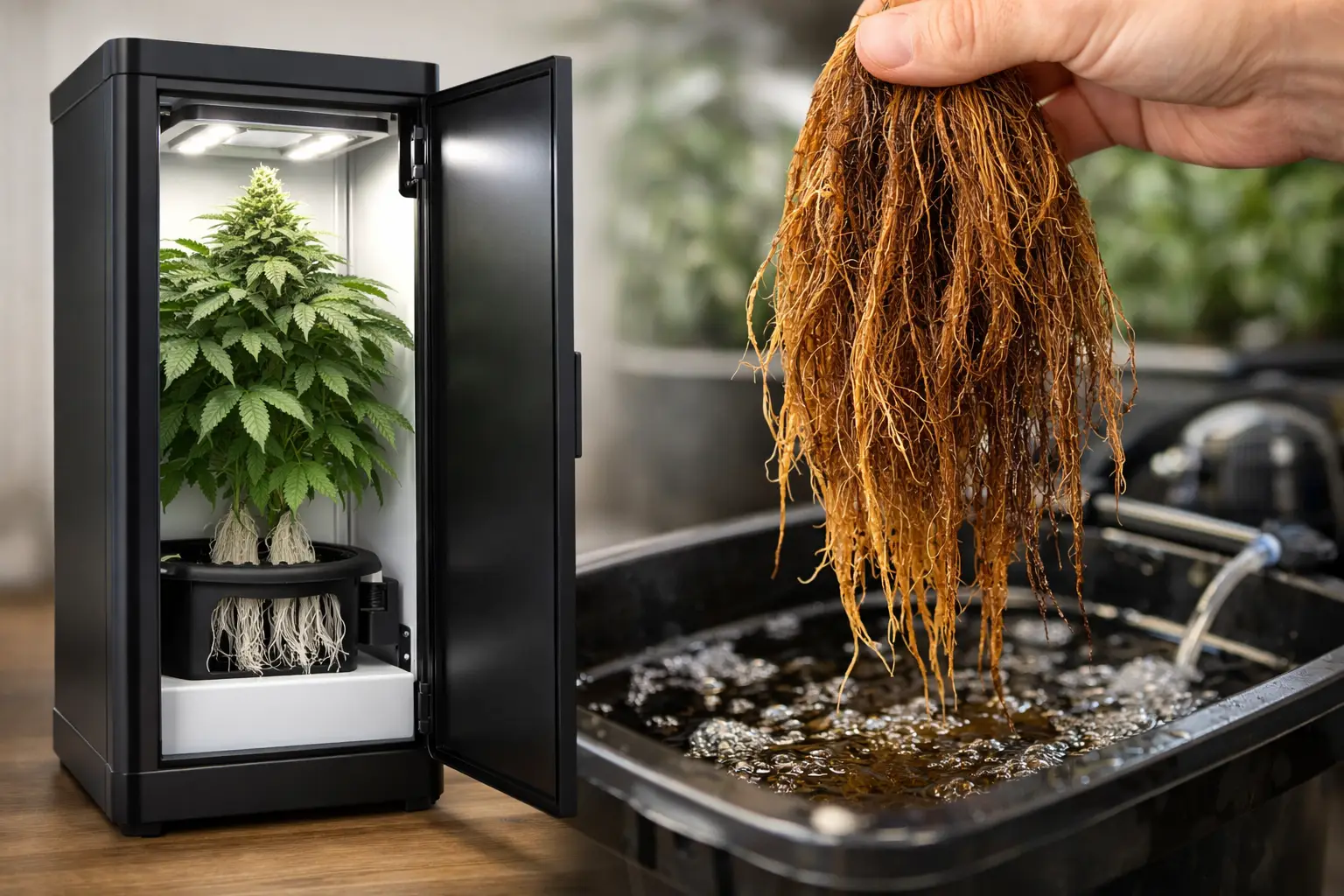
Brown roots in a DWC bucket can mean trouble, but color alone is not a diagnosis. That distinction saves growers from two common mistakes: panicking over harmless nutrient staining or ignoring an early root-zone failure because the plant still looks decent above the lid. If you are asking, “why are DWC roots brown,” start with texture, smell, water condition, and plant behavior. Read the whole system, not one color signal.
In a compact cabinet grow, DWC has little room to hide problems. A warm reservoir, weak aeration, light leak, or sloppy top-off routine can move from minor stress to stalled growth fast. The answer is not more bottles or a panic flush. It is a clean inspection and a disciplined correction.
Brown DWC roots are not always root rot
Healthy DWC roots are usually white to cream-colored, thick, and firm. They may develop tan or light brown staining from nutrients, beneficial microbes, organic additives, or mineral residue. Stained roots can still be healthy if they feel crisp, hold together when gently moved, and sit in clean-smelling water.
Root rot looks and behaves differently. Affected roots often turn darker brown, gray, or black. They can look slimy, matted, or thin at the ends. When touched, the outer layer may shed or smear. The reservoir may smell sour, swampy, or like decay, and the plant can begin drooping even though the bucket is full.
Do not scrub or bleach roots simply because they are no longer bright white. A clean-looking root zone is useful, but sterile-looking roots are not the goal. Functional roots are the goal.
Why are DWC roots brown? Check these signals first
Lift the net pot or lid carefully and inspect the roots under good light. Then check the reservoir itself. You are looking for a pattern, not a single symptom.
If the roots are tan but firm, with no bad smell and no slime, staining is the likely explanation. This is common with darker base nutrients, humic products, kelp, and some microbial inoculants. A plant that is drinking normally, holding leaf posture, and producing new growth is telling you the root zone is still working.
If roots are brown and the water is cloudy, foamy, murky, or foul-smelling, treat it as a root-zone problem. The same is true when leaves droop during lights-on, new growth slows, or the plant drinks less despite stable temperature and humidity. That is not a cue to add more nutrients. It is a cue to remove the conditions helping pathogens win.
A quick field check comes down to four questions:
- Do the roots feel firm or slimy?
- Does the reservoir smell neutral or foul?
- Is the water clear or visibly dirty?
- Is the plant drinking and growing at its normal pace?
One imperfect answer does not always mean disaster. Several of them together mean the reservoir needs attention now.
The most common causes of brown roots in DWC
Nutrient and additive staining
This is the harmless version of brown roots. Dark nutrient formulas and organic supplements can tint root tissue, especially over a week or two. The stain is usually even rather than patchy. Roots remain dense and pale underneath the surface color, and the reservoir does not smell rotten.
The trade-off is visibility. A heavily colored nutrient line can make early rot harder to spot, particularly for beginners. In a first compact DWC run, simpler mineral nutrients make plant reading easier. Clarity beats complexity.
Reservoir water that is too warm
Warm water carries less dissolved oxygen, while pathogens become more active. That is the classic DWC failure loop: water warms up, roots receive less oxygen, biological pressure rises, roots weaken, and the plant slows down.
For most small DWC cannabis grows, keeping reservoir temperature around 65-70°F gives you a workable margin. Brief variation happens. A reservoir sitting in the mid-70s day after day is a different situation, especially in a warm cabinet or during late flower when equipment heat and plant mass are higher.
Do not assume the room temperature tells the full story. Measure the water. A bucket sitting on a warm floor, beside a driver, or under an uninsulated lid can run warmer than the cabinet air.
Weak aeration or poor water movement
Roots need oxygen continuously. A small air pump, clogged airstone, kinked airline, or undersized diffuser may keep the water bubbling while still failing to oxygenate the root mass well enough. The problem becomes worse as roots fill the bucket.
Look for vigorous, even bubbling across the reservoir. Replace weak airstones rather than trying to stretch them through another run. This is not gear obsession. It is basic DWC function. A modest system with reliable air is better than an overbuilt cabinet with a neglected reservoir.
Light leaks and biological growth
Light entering the bucket feeds algae. Algae itself is not always the direct cause of brown roots, but it creates a messier, less stable reservoir and competes for oxygen when lights are off. It also tells you the system is not sealed.
Check net-pot openings, inspection ports, tubing holes, lid seams, and translucent containers. Cover every opening that allows light into nutrient solution. The reservoir should be dark, clean, and boring. That is a compliment.
Dirty equipment and inconsistent maintenance
Old root fragments, dirty buckets, reused air tubing, and residue on airstones create an easy starting point for trouble. So does topping off blindly for days without checking pH, EC, temperature, or water level.
DWC rewards routine. It punishes improvisation. If the bucket is a mystery until the plant looks sick, the inspection schedule is already too loose.
What to do when brown roots are slimy or smell bad
When the evidence points to rot, act in a sequence. Do not keep adding products to failing water and hope the chemistry sorts itself out.
First, remove the plant lid and inspect without tearing the roots apart. Drain the reservoir completely. Clean the bucket, lid, air tubing, and airstone, then refill with fresh water and a properly mixed nutrient solution. Correct the reservoir temperature before the new solution goes in, not afterward.
Next, restore aeration and block every light leak. If the old airstone is weak or dirty, replace it. If your cabinet runs hot, address the heat source or adjust the placement of the reservoir. Frozen bottles can be a temporary emergency measure, but they are not a workflow. Constant temperature swings create their own instability.
Then choose one root-zone approach and stay consistent. Some growers run a clean, mineral-based reservoir with sanitation as the priority. Others use beneficial microbes. Either can work, but mixing heavy organic additives, random sterilizers, and microbial products creates confusion. Pick the system you can maintain and read.
After the reset, watch drinking rate, leaf posture, reservoir temperature, and new root growth for several days. Do not chase a perfect root color overnight. New, firm root tips and a plant that resumes drinking are better signs than whether every old root turns white.
Prevent brown-root drama before it starts
Set the bucket up so the easy decision is the right one. Keep the reservoir lightproof, use dependable aeration, measure water temperature, and maintain a simple nutrient program you understand. Clean all reservoir-contact equipment between runs, and do not let dead plant matter sit in the bucket.
For a compact VGrow-style setup, plan the reservoir around the cabinet rather than forcing the cabinet around the reservoir. Keep heat-producing equipment away from the bucket where possible. Make sure you can lift the lid, inspect roots, and change solution without turning basic maintenance into a full teardown.
Most importantly, establish a recurring check. Look at water level and temperature daily. Read pH and EC on a regular schedule that fits your plant's stage and drinking rate. Inspect roots before they become an emergency, not after leaves begin collapsing.
Brown roots are a prompt to look closer, not a verdict. Keep the reservoir dark, cool, oxygenated, and readable, and your DWC grow stays what it should be: a controlled process, not a bucket full of surprises.