Dry-to-cure bridge

When are buds ready for jars after drying?

Cannabis buds are generally ready for jars after drying when a well-filled test jar, sealed overnight with a salt-checked hygrometer, holds a steady 58–62% RH, inside the ASTM D8197 range for dry flower (water activity 0.55–0.65). A dry-feeling exterior and small stems that begin to snap instead of bending endlessly are the cue to start that check, not proof the flower has stopped releasing hidden interior moisture.

This is the handoff that makes people nervous for good reason. Jar too early and the cure starts with too much moisture. Wait too long and the flower can drift into brittle, over-dried territory.

Look for A drier outer feel, smaller stems that snap, and a sealed jar test that holds a steady 58–62% overnight with no clammy rebound.
Do not trust Surface dryness alone. Buds can look dry on the outside while still holding too much moisture inside.
Main mistake Jarring because the outside feels crisp while the center is still quietly wet.
The short answer

Dry enough for jars means balanced moisture, not a dramatic crunch.

A proper move into cure happens when the flower has lost enough exterior moisture to avoid mold trouble, but still holds enough internal moisture to soften and equalize gradually in the jar. If you only need the narrow definition of the stage that comes next, start with what a cure is actually doing. This page stays on the handoff question.
Why this matters

This is the moment where impatience gets expensive.

Rushing the jar stage can flatten aroma, trap excess moisture, and force a grower into constant rescue burping. Waiting too long can leave the flower brittle, with too little moisture left to even out gently in the jar.

Ready

The move to jars should feel measured, not lucky.

  • The outer flower feels dry enough to handle without feeling slick or clammy.
  • Smaller stems snap or come close instead of bending forever.
  • A short jar test does not make the whole batch suddenly feel wetter again.
  • The buds still have life in them, but not the kind that turns a jar into a humidity trap.
Not ready or too dry

Both mistakes are real, and they do not feel the same.

If the flower feels cool, dense, and obviously wetter again after a short jar test, the dry is not done yet. If the buds feel brittle, papery, and stripped of elasticity, you may have waited too long and lost some of the slow equalization that makes cure worthwhile.

Ready for jars is not a magic second on a timer. It is a balanced moisture state you confirm from more than one clue.

What to check

Use several clues together instead of turning one rule into a superstition.

Check 1 Outer feel

The surface should feel dry, not damp or cool-wet. Sticky is fine. Wet is not.

Check 2 Stem behavior

Small stems should begin to snap with some confidence instead of bending like soft wire. It is a grower's cue that no study has validated against moisture or water activity, so let it start your jar checks, not end them.

Check 3 Bud squeeze

The flower should have some spring, but it should not feel spongy or dense with hidden moisture.

Check 4 Jar test

Seal a well-filled jar with a hygrometer overnight at a steady room temperature, probe off the flower. A steady 58–62% says ready (55–58% is done, on the dry side); 62–65% means hang it another day and recheck; a jar that settles above 65%, or a batch that feels wetter again fast, goes back to the drying space. The full jar check is in the drying humidity guide.

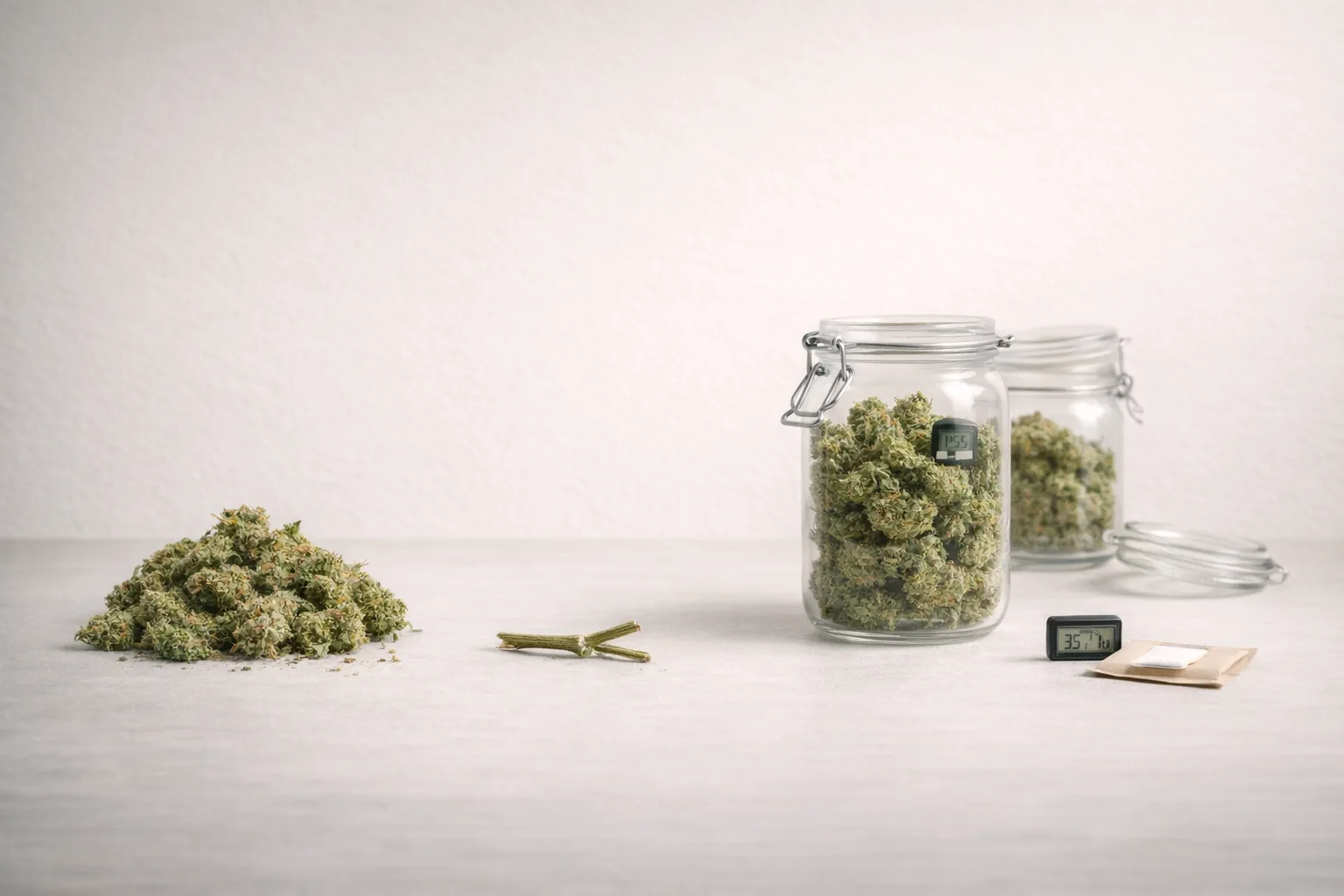
Dried cannabis buds beside snapped stems and two clamp jars of flower with a digital hygrometer and humidity pack for a jar test.
Jar readiness comes from several clues agreeing, not one rule doing all the work.
What ready looks like

A bud that is genuinely ready reads as mixed, not one perfect state.

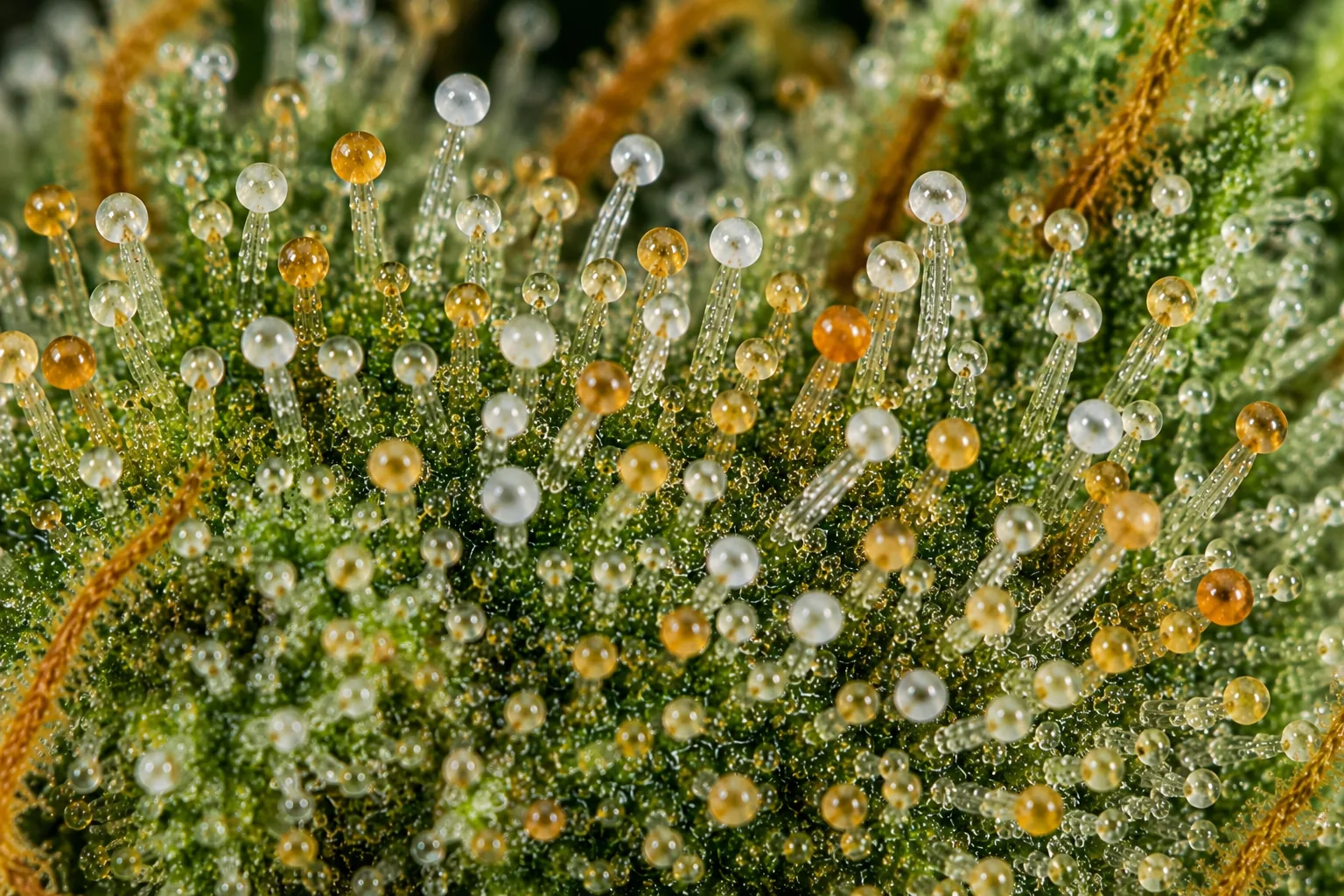
Macro of a ripe cannabis bud where milky-white trichome heads sit alongside scattered amber ones among orange pistils.
The look many growers call ready is mixed: mostly cloudy with some amber, not one flawless head.
Make the call

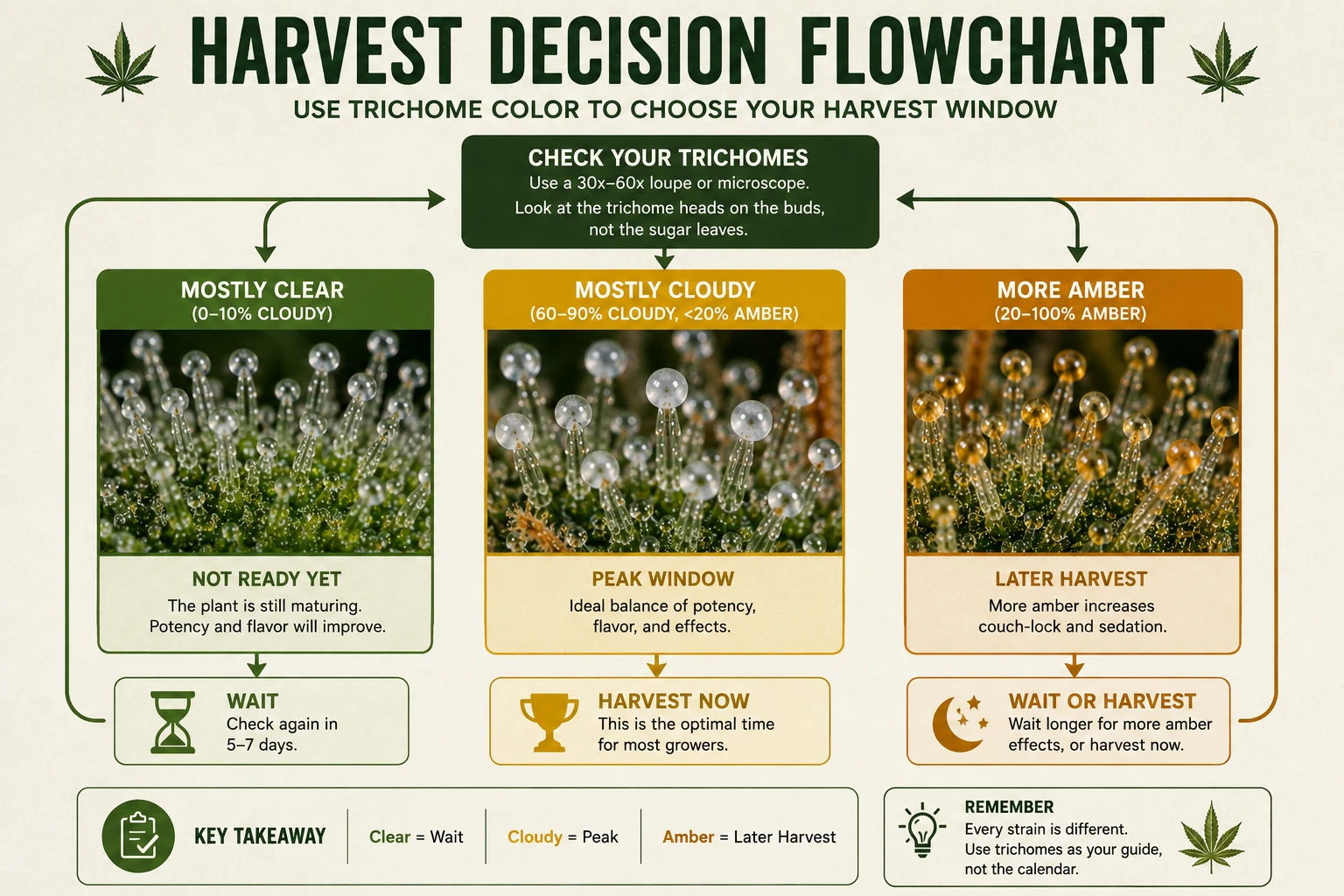
Use trichome color to choose the harvest window before you ever fill a jar.

Flowchart sorting trichome color into harvest timing, with clear, cloudy, and amber branches leading to wait, harvest, or later.
Trichome color to harvest window, as growers commonly read it: clear = wait, cloudy = the window many growers treat as peak, amber = later. The chart's potency and effect labels are grower lore: no study links amber heads to couch-lock or sedation, and in the one small study that scored color as a harvest-day predictor, simply using that study's average calendar day came closer to the lab-measured peak.
Jar response

The first short jar test should tell you what to do next.

What happens in the jar What it probably means Best next move
Buds stay stable The handoff is probably clean enough to begin cure Move forward calmly and monitor the first days of cure instead of reopening the whole drying debate.
Buds feel wetter fast There is still too much hidden moisture inside Step back out of the jars and return to drying before the cure becomes a rescue project.
Buds feel brittle The dry may have gone further than ideal Proceed gently, monitor closely, and accept that the cure may be less forgiving than a better-timed handoff.
Outside

Dry shell

The outer flower should no longer feel slick or humid. It should feel settled, not freshly damp.

Inside

Controlled core

A little inner moisture is part of the cure, but a wet center turns the jar into a moisture trap.

Test

Jar response

The jar tells the truth fast. If the buds rehydrate the whole container too aggressively, step back.

What beginners misread

The classic mistake is mistaking a dry exterior for a finished dry.

  • Jarring because the outside feels dry while the center is still loaded with moisture.
  • Using one oversized stem as the only drying test instead of checking smaller ones too.
  • Assuming slightly soft means wrong, when some internal moisture is exactly the point.
  • Panicking at the first sign of jar moisture instead of learning the difference between normal equalization and obvious over-wet flower.
Check more than one bud

The whole batch should not be decided by the most convincing sample.

Test more than one bud, and do not limit yourself to the prettiest one. Different bud sizes and different parts of the plant can finish the dry a little differently. One seemingly perfect sample can make a whole jar decision look easier than it really is.

What to do next

If the answer is still "not yet," that is useful information, not failure.

The right move is simple: keep drying, keep reading, and check again soon. The dangerous move is jarring because you are tired of waiting. The move to jars should feel like a measured handoff, not a guess.

Best handoff

A good jar transition should feel calm, not dramatic.

When the drying phase is truly done, moving to jars feels controlled. The buds do not suddenly sweat like they have been hiding secrets, and the cure becomes a slow, steady equalization instead of a constant emergency-management project.

The jar test is a moisture judgment — tools only make it easier to read.

Readiness is decided by the flower, not the container: small stems that snap rather than bend and buds that spring back say it is time to check; a jar that does not fog and holds a steady 58–62% overnight confirms it. A hygrometer in the jar and clean, sealable glass make that read easier and safer. What no tool can do is rescue flower that was jarred too wet — a two-way humidity pack is sold to hold an already-dry jar steady, not to dry a wet one, and ASTM D8197 requires further drying, not a humidity pack, once water activity is above 0.68. Dry correctly first. ColaXpress owns and has tested none of these products. We found no published oxygen or moisture test of a two-piece mason lid and no calibrated independent test of a 62% pack. The nearest evidence is seed-bank work on other closures, and it is mixed: Kew rates rubber-sealed clamp lids above screw lids for keeping moisture out, while a Dutch study (Groot 2015) found plastisol-lined twist-off jam jars held oxygen as well as rubber-ring clamp jars over three months.

Affiliate disclosure — if a "Check the Ball wide-mouth jars on Amazon" link appears in this section, it is a paid link: ColaXpress may earn a commission if you buy through it, at no extra cost to you. It never changes the guidance above. As an Amazon Associate I earn from qualifying purchases.

Check the Ball wide-mouth jars on Amazon