How to Cure Weed Properly Without Ruining It
Learn how to cure weed properly with a disciplined jar workflow: stable moisture, measured burping, and clear signs your flower is ready to store safely.
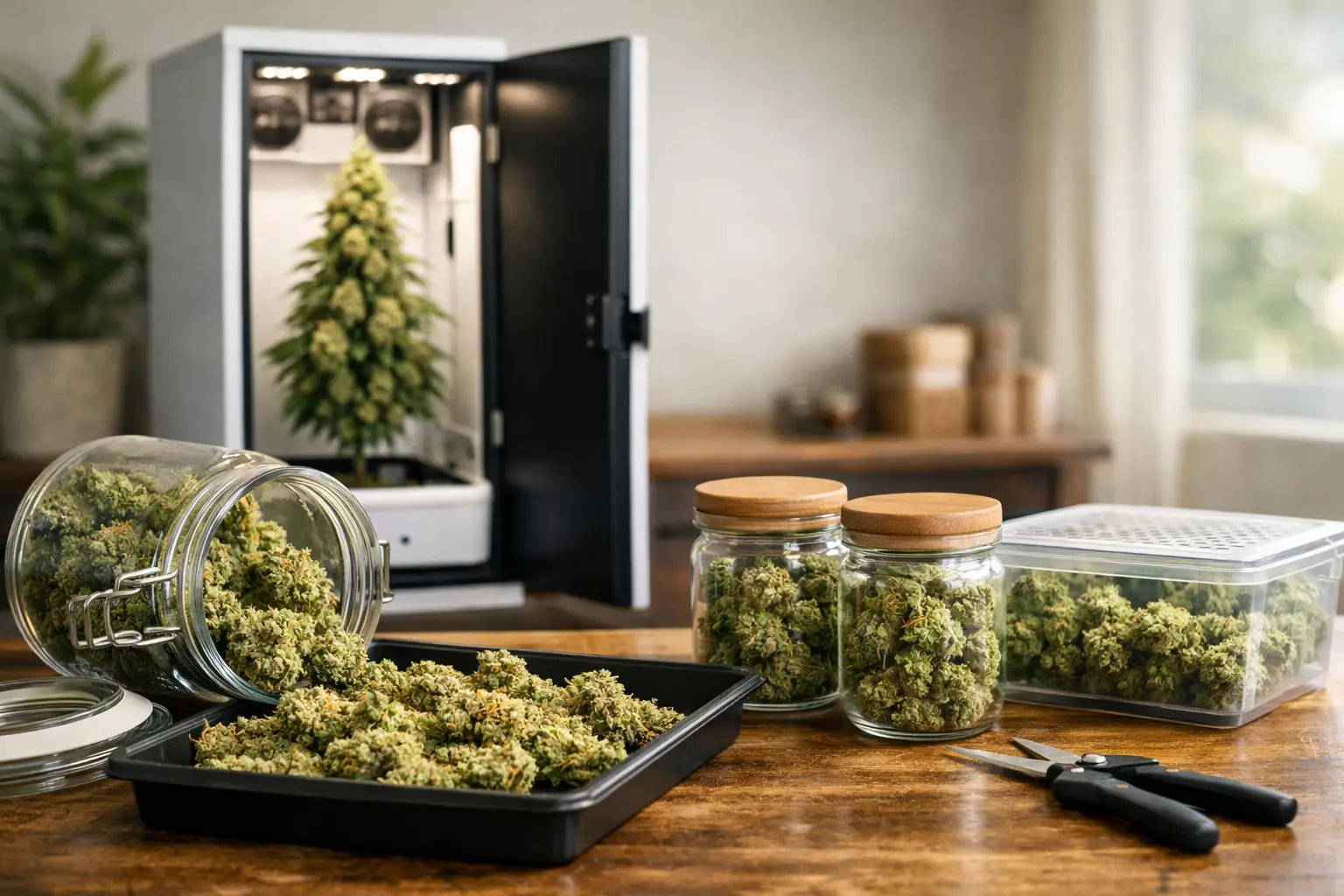
A good harvest can still turn into harsh, flat, musty flower in a week. That is why learning how to cure weed properly matters as much as getting the plant to harvest. Curing is not a ceremonial final step or a place to improvise. It is controlled moisture management after drying, and it is where clean work either protects your flower or exposes every shortcut made at the finish.
For compact indoor growers, post-harvest discipline matters even more. A cabinet or small tent can produce excellent flower, but it usually cannot absorb a sloppy dry-and-cure process. You do not need a shelf full of gadgets. You need dry flower, clean containers, a small hygrometer, and a routine you can follow without guessing.
What Curing Actually Does
Drying removes enough water for flowers to store safely. Curing continues the slower moisture equalization inside the bud. Water remaining in the center moves outward over time, while the flower settles into a stable range that burns more evenly, feels less scratchy, and holds its aroma better.
A cure will not rescue flower that was dried into dust or sealed while wet. That is the hard truth. It can refine a careful dry, but it cannot reverse mold, bring back volatile aroma compounds that already evaporated, or erase the smell of hay caused by rushed handling.
Think of the workflow as three separate stages: harvest, dry, then cure. Blurring those stages creates chaos. A jar is for curing properly dried flower, not for finishing a wet dry because the drying space was inconvenient.
Start With a Dry That Is Close, Not Crispy
The best cure begins before anything goes into a jar. Hang whole plants or branches in a clean, dark area with gentle air exchange. Do not point a fan directly at the flowers. Direct wind dries the outside too fast, leaving a deceptively crisp shell around a wetter center.
There is no honest universal number of drying days. Flower density, trim style, plant size, room temperature, humidity, and airflow all change the timeline. Many home growers land somewhere around 7 to 14 days, but the calendar is a reference, not a command.
The outside of the buds should feel dry to the touch without feeling brittle. Smaller stems may snap, while thicker stems can still bend slightly. That stem test is useful, but it is not enough by itself. Dense flowers can pass a snap test and still hold too much internal moisture.
If you are growing in a VGrow cabinet or another small enclosure, resist the urge to use the flower tent itself as a fast drying chamber with hard fan settings. Small spaces change quickly. Dry too fast and the outer layer seals up. Dry too slowly with stagnant air and you create a mold risk. Read the room, not just the clock.
How to Cure Weed Properly in Jars
Use clean, dry, airtight glass jars with wide mouths. Fill them roughly two-thirds to three-quarters full. The buds need room to move when you gently turn the jar, and you need enough headspace for the air inside to respond. Do not pack flowers down to fit more weight. Max-weight thinking ruins finish quality.
Place a small digital hygrometer in at least one representative jar. It is the simplest tool for replacing guesswork with readable information. After sealing the jars for several hours, check the relative humidity.
The practical target is generally 58% to 62% RH. That range keeps flower pliable enough for a slower cure while staying below the moisture zone where mold becomes a serious concern. Some growers prefer the lower end for a drier feel and easier grinding. Others like 62% for a softer, fresher texture. Either can work if the flower is stable and clean.
If the jar climbs above 65% RH after it has been sealed, the flower was not dry enough. Do not shrug this off and hope burping will fix it. Remove the buds, spread them loosely on clean cardboard or an unbleached paper surface for a few hours, then return them to the jar and check again. Repeat as needed. The goal is correction, not speed.
If the jar settles below 55% RH almost immediately, the flower is likely over-dried. A two-way humidity control pack can help maintain a better storage environment, but it cannot fully restore the aroma and texture lost in an overly fast dry. Use it as a stabilizer, not a repair kit.
Burp With a Purpose, Not Out of Habit
Burping means opening the jar to exchange humid air and release excess moisture. Early in the cure, it also lets you inspect the flower. It is not a daily ritual that must continue forever.
For the first week, open jars once or twice a day for several minutes. Gently roll or rotate the jar so buds do not stay compressed in the same position. Smell the air when you open it. Healthy curing flower should smell like cannabis, perhaps muted at first, but never sour, ammonia-like, basement-musty, or sharply fermented.
During week two, if RH is stable in the target range and the flowers feel evenly dry, reduce burping to once a day or every other day. By weeks three and four, opening the jars once or twice a week is usually enough. Once the humidity remains stable and the aroma has become clearer, keep the jars closed except for occasional checks or when you are using the flower.
The exact schedule depends on what the hygrometer says. A jar reading 68% needs more than a casual five-minute opening. A jar sitting at 60% for several days does not need constant air exposure. Structure beats superstition.
Watch for the Problems That Ruin a Cure
Mold is the non-negotiable failure point. If you see fuzzy growth, web-like material, unusual gray patches, or suspect an off smell deep in a bud, do not smoke it and do not try to dry it out. Separate the jar from the rest of your harvest and inspect nearby flowers carefully. Mold is not a flavor issue. It is a safety issue.
Ammonia smell is another stop sign. It usually means plant material went into the container too wet and microbial activity is building. Remove the flower from the jar immediately and assess it closely. If the smell is strong, persistent, or accompanied by visible growth, discard the affected flower.
A grassy or hay-like smell is different. It is common early in the process, especially if chlorophyll-heavy plant material is still settling. If the jar is in a safe humidity range and there are no signs of mold, patience may improve it over several weeks. But do not confuse patience with denial. A wet jar does not become safe because it has been closed longer.
Avoid adding orange peel, lettuce, bread, or other household moisture sources to jars. They create uneven humidity and can introduce contamination. If flower needs help staying at a stable storage humidity, use a purpose-made humidity pack and keep the process clean.
Give the Cure Enough Time
Flower can be usable after roughly two weeks of careful curing, but four weeks is a more realistic point for judging the finished result. Many cultivars continue to improve for six to eight weeks when stored correctly. The harsh edge often softens, the aroma becomes more defined, and the smoke or vapor feels more settled.
Longer is not automatically better. Once flowers have reached a stable cure, the job shifts to storage. Keep jars in a cool, dark place with minimal temperature swings. Light and heat steadily degrade cannabinoids and terpenes. Opening jars repeatedly to smell the progress also sheds aroma each time. Enjoy the check-ins, but do not turn them into unnecessary handling.
For a larger harvest, use smaller jars instead of one oversized container. That way, opening your everyday jar does not disturb the rest of the flower. Label each jar with the cultivar and date it entered cure. This small habit turns future grows into useful data instead of vague memory.
A Simple Standard for Finished Flower
Properly cured flower should feel dry on the surface, slightly springy when gently squeezed, and easy to break apart without turning to powder. The scent should be clean and recognizable. When consumed, it should not taste damp, sour, or aggressively harsh from excess moisture.
Do not judge your finish by whether the buds look photogenic or whether a friend says they feel sticky. Judge it by stability. The jar holds near its target humidity, the flower smells clean, and the experience is consistent from the first bud to the last.
That is the point of curing: not hype, not a complicated ritual, and not squeezing one more shortcut into a small grow. Give the finish the same discipline you gave the plant, and your next jar will tell you exactly why it matters.