What Humidity for Drying Weed Works Best?
What humidity for drying weed gives the best flavor, burn, and shelf life? Learn the right RH range, temperature, timing, and common dry room mistakes.
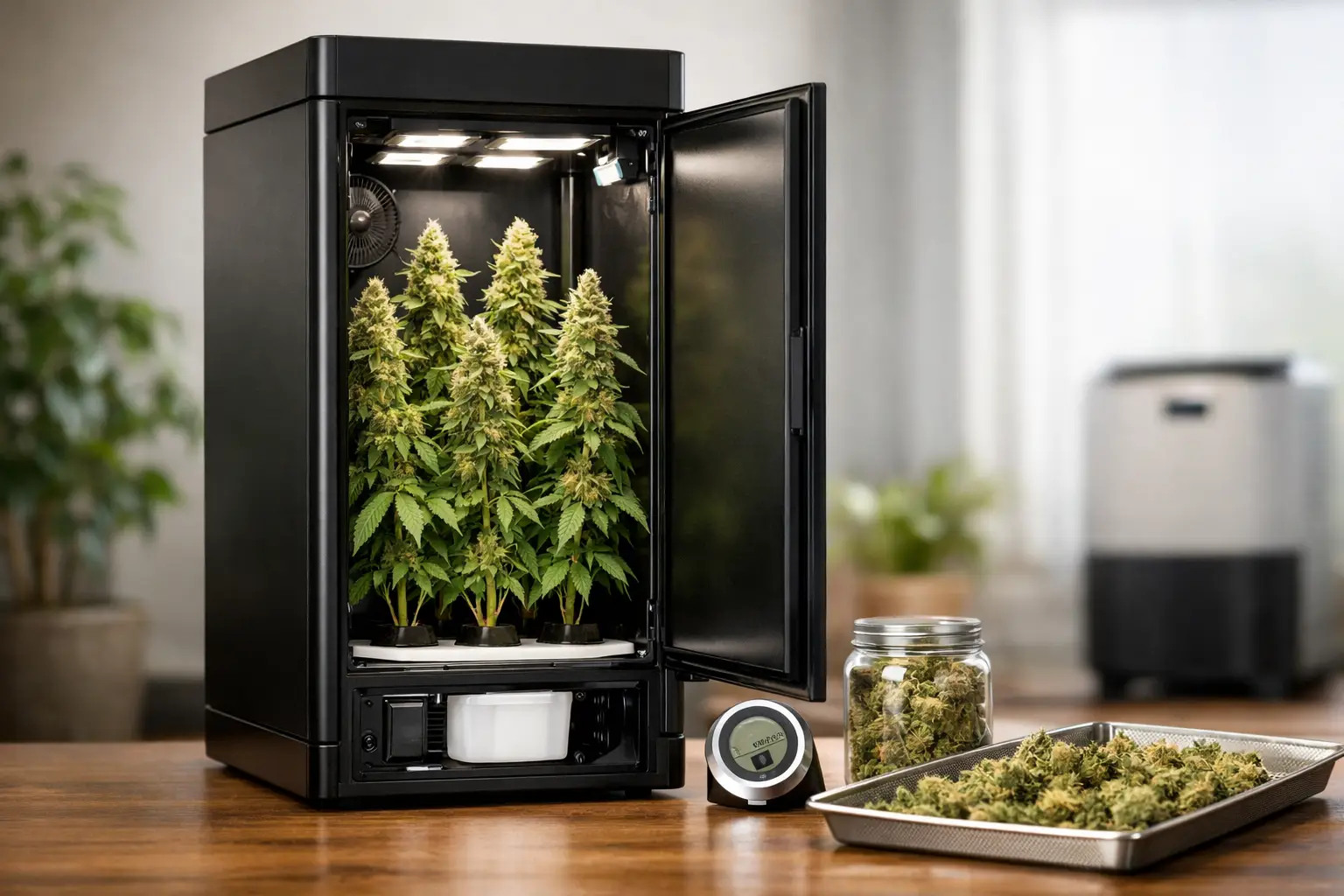
A lot of growers don’t ruin their harvest in the tent. They ruin it after the chop. If you’re asking what humidity for drying weed gives you the best shot at smooth smoke, preserved terpenes, and a cure that actually holds, the short answer is 58% to 62% RH, with 60% as the center of the target.
That range is where control beats guesswork. Too dry, and the outside of the flower crisps up before the inside can release moisture evenly. Too wet, and you invite mold, hay smell, and a stalled finish. In compact indoor setups, where a cabinet or small tent can swing fast, humidity during drying is not a side detail. It is part of the grow.
What humidity for drying weed is ideal?
For most home growers, the ideal drying environment is 60% relative humidity at around 60°F. People call this the 60/60 rule for a reason - it slows the process enough to protect aroma and texture without dragging drying into dangerous territory.
If you can’t hit 60/60 exactly, don’t panic. A practical range is 58% to 62% RH and roughly 60°F to 68°F. Humidity matters a little more than chasing a perfect number on temperature if your room has to compromise. In most small-space home grows, holding steady conditions is more valuable than swinging between “perfect” settings.
If your dry room sits at 55% RH, your flower will usually dry too fast unless temperature is low and plants are left in larger branches. If it stays above 65% RH for too long, especially with dense buds and weak airflow, risk starts climbing fast. The right answer is not the highest humidity you can get away with. It is the range that dries the plant slowly and evenly.
Why the right RH matters more than most beginners think
Drying is controlled moisture removal. That sounds basic, but a lot goes wrong when the room is off.
When humidity is too low, the outer layer of the buds dries first and forms a dry shell. Inside, moisture is still trapped. That creates a false sense that the flower is done. You jar it, the inner moisture moves outward, and suddenly the jar RH spikes. Now you’re burping constantly or dealing with flower that smells grassy and uneven.
When humidity is too high, the plant hangs wet for too long. That can flatten aroma, encourage microbial problems, and leave the flower feeling limp instead of properly dried. Dense indoor buds are less forgiving here, especially if you ran strong flower conditions and grew compact colas.
This is why disciplined growers treat drying like an environmental phase, not downtime. The harvest is still active work.
Temperature and humidity work together
A grower asking what humidity for drying weed should also ask, “At what temperature?” RH by itself does not tell the whole story.
At higher temperatures, moisture moves faster and terpenes are more likely to volatilize. A room at 72°F and 60% RH is not the same as a room at 60°F and 60% RH. Both may read the same humidity, but the warmer room pushes a faster, harsher dry.
That’s why cool and stable wins. If you can keep the space around 60°F to 65°F with 58% to 62% RH, you are in a very workable zone. If your room runs warmer, aim for the lower end of the temperature range and resist the urge to drop RH too low just to “finish” faster.
Fast drying is not efficient if the quality falls apart.
What to aim for in a small tent or cabinet
Compact environments behave differently from larger dry rooms. They swing faster. A small exhaust change, a dehumidifier in the lung room, or a shift in home HVAC can move your numbers more than you expect.
In a cabinet or small tent, the goal is stable airflow without direct air blasting on the hanging flower. You want gentle air exchange and even room conditions. Oscillating fans should move air around the space, not directly at the buds. Direct fan pressure dries the outside too fast and leaves you chasing problems later.
This is also where branch size matters. Whole plant hanging slows the dry. Hanging larger branches instead of fully wet-trimmed individual buds also buys you time. In tight home setups, that extra buffer can save quality if your environment runs slightly dry.
If your space tends to sit around 50% to 55% RH, keep more plant mass attached and avoid aggressive trimming before the hang. If your space tends to stay humid, a cleaner wet trim and smaller branch breakdown can help prevent excess moisture from lingering.
What humidity for drying weed if your home is too dry?
This is common in winter and in air-conditioned homes. If your room sits below 55% RH, the dry can move too fast even if everything else looks clean.
The fix is not complicated, but it does require attention. Add humidity to the room, not directly onto the plants. Use a clean humidifier if needed, and monitor with a reliable hygrometer instead of guessing. Keep lights off in the dry space and avoid any heat source that pushes temperature up while you’re trying to raise RH.
You can also slow the process structurally. Leave branches larger, keep sugar leaves on, and avoid overhandling the flowers. Every move should support a slower, more even dry.
If buds feel crisp in three or four days, the room is almost certainly too dry, too warm, or both.
What humidity for drying weed if your home is too humid?
High humidity is more dangerous than low humidity because mold is not a quality issue. It is a crop loss issue.
If your drying space sits above 65% RH, lower it before you hang anything if possible. Use dehumidification in the room outside the tent or cabinet if that works better for your setup. Increase air exchange, but keep airflow gentle. You want stale moisture removed, not flowers blasted dry.
Dense colas deserve extra caution. If your plants finished with thick tops, don’t crowd the drying area. Space matters. Buds packed too close together create little humidity pockets, and that is where trouble starts.
In humid conditions, check the crop daily for any off smell that reads musty instead of plant-fresh. Drying weed should smell green and pungent early, then gradually cleaner and louder. A damp basement smell is a warning, not a phase.
How long should drying take?
In a well-run environment, most harvests dry in about 7 to 14 days. The exact timing depends on bud density, branch size, trim style, and room conditions.
Seven days is on the fast side. Fourteen days is slower and often better if the environment is clean and safe. The point is not to force a specific number of days. The point is to avoid the rushed dry that wrecks the cure.
A common beginner mistake is testing only the outer bud. The outside can feel dry while the stem still bends and the inner flower holds too much moisture. You want small stems to begin snapping, not folding soft, while the buds feel dry on the surface but still slightly alive inside - not brittle.
That is the transition point into curing, not the point to keep drying until everything feels crunchy.
Common mistakes that throw off humidity control
Most drying mistakes are not dramatic. They are small process errors that stack up.
One is trusting a cheap, inaccurate hygrometer. Another is measuring room RH in the wrong spot - near an intake, next to a humidifier, or directly under a hanging branch. You want a realistic reading from the actual drying zone.
Another mistake is overventilating. Growers get nervous about mold and run too much exhaust. That often drops RH and speeds the dry beyond what the flower can handle. Good drying is not about maximum airflow. It is about controlled exchange.
The last big mistake is treating all harvests the same. A lightly trimmed plant in a cool room dries differently from heavily manicured buds in a warmer cabinet. Method has to match conditions.
A practical target for most home growers
If you want the simplest working answer to what humidity for drying weed, use this: aim for 60% RH, keep temperature around 60°F to 65°F, move air gently, and expect a 7 to 14 day dry.
Then adjust based on what your space actually does. If you run dry, leave more plant mass attached. If you run humid, increase spacing and control moisture before the hang. Read the room, not forum folklore.
That is the real pattern behind consistent post-harvest work. The flower tells the truth, but only if the environment is readable.
For growers building a repeatable indoor system, drying should feel like part of the workflow, not the messy part after the fun part. Keep it cool, keep it stable, and let patience protect what the grow already earned.
When the room is right, the cure gets easier - and that’s where good weed starts acting like well-finished weed.