How Long to Cure Weed for Better Flavor
Wondering how long to cure weed? Learn the real timeline, what changes week by week, and when your jars are helping quality - or just wasting time.
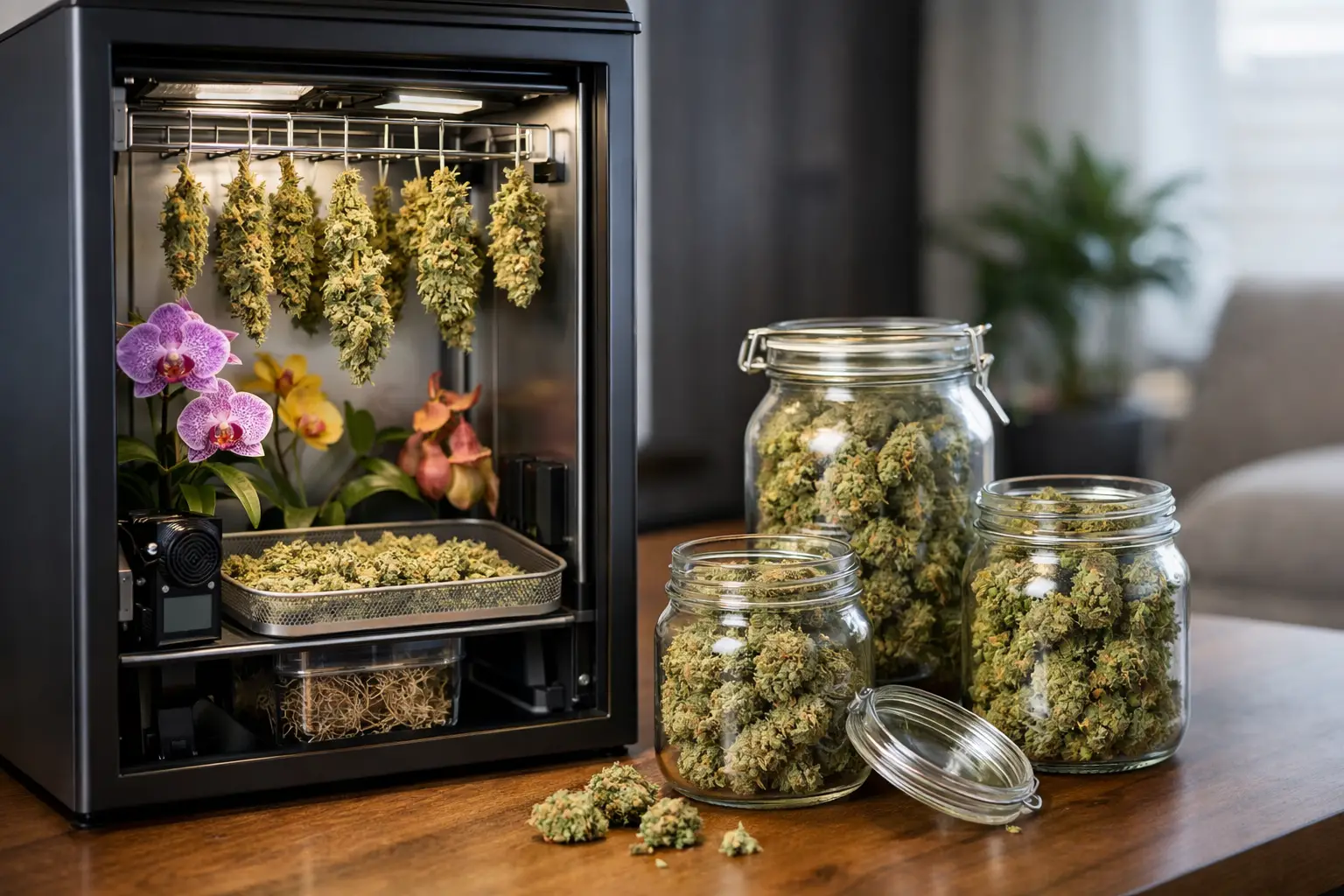
If your flower smelled stronger before it went into the jar, your cure is not done - or your dry was off. That is the part many new growers miss. When people ask how long to cure weed, they usually want a number. What they actually need is a timeline tied to moisture, jar behavior, and realistic quality changes.
A proper cure is not magic, and it is not optional if you care about smoke quality. It is the stage where decent flower becomes cleaner, smoother, and more stable. In small indoor grows, where every harvest matters, this is not the place to get casual.
How long to cure weed, really?
For most home growers, weed needs at least 2 to 4 weeks of curing to become noticeably better, and 4 to 8 weeks to hit a strong quality window. Many jars continue improving beyond that, especially if the dry was clean and storage conditions stay stable.
That said, cure time is not a fixed countdown. It depends on how well the flower was dried, how dense the buds are, how much moisture remained inside the stem and center mass, and how consistently the jars stay in range. If you jar flower too wet, a longer cure does not fix it. It just increases the chance of hay smell, uneven moisture, or mold.
This is why disciplined growers separate drying from curing. Drying removes enough water to make the jar safe. Curing refines what is left. Confuse those stages, and the whole finish gets sloppy fast.
What curing is actually doing
Curing is controlled moisture equalization and slow stabilization. After drying, the outside of a bud often feels drier than the inside. Once sealed in a jar, that inner moisture redistributes. If the flower was dried correctly, that process softens the smoke, preserves aroma better, and makes the flower burn more evenly.
You are not trying to keep buds soft and spongy. You are trying to hold them in a stable zone where they are dry enough to store but not so dry that the terpenes fall flat. Craft flower is not built by chasing a squishy feel. It is built by controlling the finish.
A cure also gives chlorophyll-related harshness time to fade. That is why fresh-dried bud can smell muted, grassy, or rough even when it looks good. Give it time in the right conditions, and the profile usually opens up. Rush it, and you lock in mediocrity.
The real timeline, week by week
The first 7 days in jars are more about monitoring than enjoying. This is the danger window. If the buds were jarred a little too early, trapped moisture starts showing up fast. You may notice the flower feels softer a few hours after sealing, and the smell can go dull or grassy. That is your warning sign, not part of some romantic curing process.
By week 2, a properly dried harvest usually starts settling. The aroma becomes more distinct, the smoke gets less sharp, and the jar behavior becomes more predictable. This is often the earliest point where homegrown starts showing what it really is.
Weeks 3 and 4 are where many growers notice the biggest quality jump. Harsh edges calm down. Flavor becomes cleaner. The flower feels more uniform from the outside in. If you were wondering how long to cure weed before it feels worth the effort, this is the range where the answer becomes obvious.
From week 5 through week 8, improvements are usually more gradual. Some cultivars keep developing nicely, especially dense flower with a strong terpene profile. Others level off earlier. There is no prize for curing every jar forever. Past a certain point, stable storage matters more than daily fussing.
The cure only works if the dry was right
This is where a lot of beginners get burned. They think curing starts at chop day, or they try to use the jar to finish the dry. Bad move.
Your weed should be dried first in a controlled space, ideally slow enough to preserve quality but complete enough that the jars do not trap excess moisture. If small stems still feel fully wet and bend without any snap, you are probably early. If the outside feels crisp while the inner flower still feels damp after sealing, you are also early.
In compact grow setups, this matters even more because environmental swings hit harder. A rushed dry in a warm room can flatten smell before the cure even starts. An overly wet jar in a cabinet grow can take a solid harvest and turn it into a mildew risk. Clarity, not chaos. Dry first. Cure second.
Jar conditions matter more than the calendar
If you want a practical target, aim to keep curing flower around 58% to 62% relative humidity inside the jar. That is the useful zone for most home growers. Higher than that and you are drifting into risk. Lower than that and the cure slows down while aroma can drop off.
A small digital hygrometer in the jar removes guesswork. This is one of the few places where a simple tool earns its keep. If the jar keeps climbing above 65% after sealing, the flower was too wet. Take it back out and dry a bit longer. Do not keep burping a bad jar and pretend that counts as process.
Temperature matters too. Keep jars in a cool, dark place. Heat pushes terpenes in the wrong direction and shortens the quality window. Light does the same. Curing is quiet work. The less drama around storage, the better the result.
How often should you burp the jars?
Burping is just controlled air exchange. It is not a ritual.
In the first week, open jars once or twice a day if the flower is still settling and the humidity is near the upper end of range. You are checking for excess moisture, smell changes, and any signs that the buds were jarred too soon. If humidity is stable and the flower feels right, you do not need to babysit the jars all day.
In week 2, many growers can reduce burping to once daily or every other day. After that, if the moisture is stable and the cure is clean, you can back off further. The goal is not endless handling. The goal is stable storage with minimal disruption.
Overhandling flower is a beginner habit. Every time you dump, shuffle, and inspect buds for no reason, you knock off trichomes and create more variation. Discipline beats fiddling.
Signs your weed is curing well
Good cure progress is fairly easy to read. The aroma gets clearer instead of flatter. The buds feel dry on the outside but still have a slight give when squeezed. The smoke gets smoother over time, and the burn becomes more even.
Bad cure signs are just as clear. A hay smell that does not improve usually points to a rough dry, too much early moisture, or both. Ammonia smell means stop and inspect immediately. That is not a quirky stage of the process. It is a warning. Visible moisture, damp clumping, or rapidly rising jar humidity are also signs you moved too fast.
This is where structured growers win. If you read the jar and respond early, you protect the harvest. If you rely on vibes, you gamble with it.
Can you cure too long?
Yes, but not in the way people usually mean. Properly cured flower stored well can remain enjoyable for months. The bigger issue is that peak freshness is not permanent. Over time, even well-stored weed can lose brightness, top-note aroma, and overall punch.
So how long to cure weed before using it? Realistically, 3 to 6 weeks is a strong target for most home harvests. How long to keep curing beyond that depends on the cultivar and your storage discipline. If the flower already smells good, smokes clean, and stays stable in the jar, you are not gaining much by treating the cure like a shrine.
A practical standard for home growers
If you want a simple working rule, dry the harvest properly first, jar it with a hygrometer, and give it a minimum of 2 weeks before judging it. Expect a more convincing result around week 4. If conditions stay stable, let your best jars run to 6 or even 8 weeks and compare them side by side. That kind of direct read teaches more than forum noise ever will.
For small-space growers, the finish stage is where craft shows up. Big plants and fancy gear get attention, but the jar tells the truth. Treat the cure like part of the grow, not the leftover chore after harvest, and your flower will start tasting like you meant it.