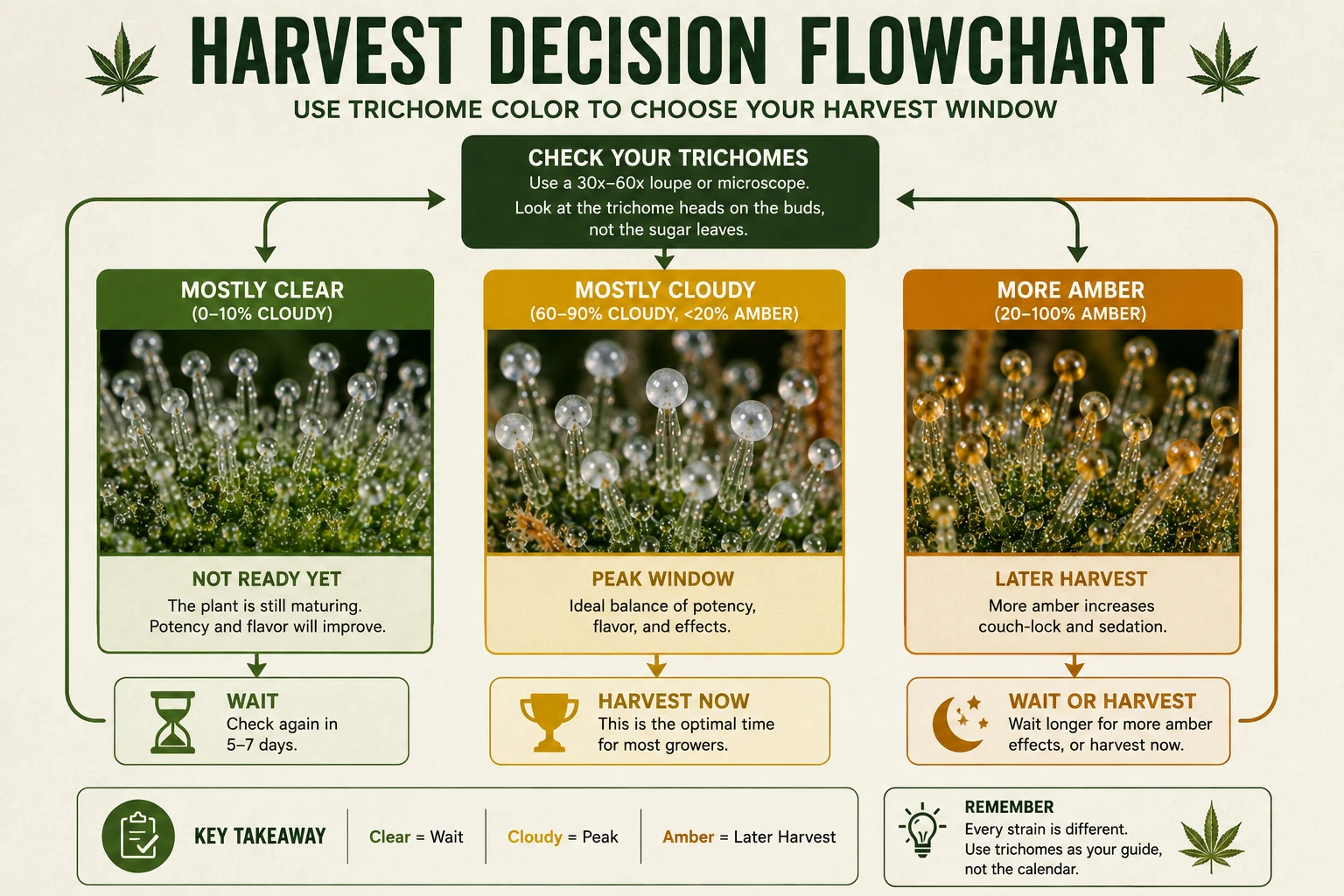
When the chart and the calendar disagree, the chart wins.
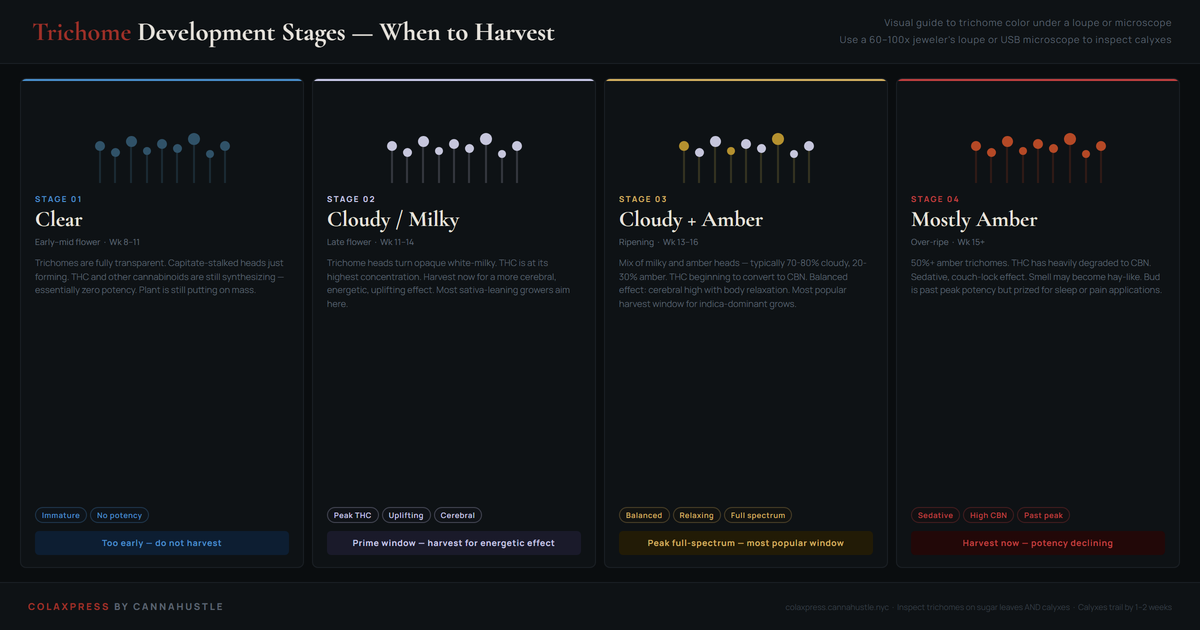
Breeder flowering times are rough guidance, not a command. Light intensity, feeding, root-zone health, and environment all change finish speed — a healthy hydro plant under strong light can ripen on a different schedule than the same cultivar in soil. If the packet says day 56 but the calyx heads still read half clear, the calendar loses. The same goes for pistils: darkened, curled-in pistils tell you the plant is close and it is time to start inspecting seriously, but stress, genetics, and accidental pollination can all shift pistil behavior. A plant can carry mostly orange pistils and still show too many clear heads.
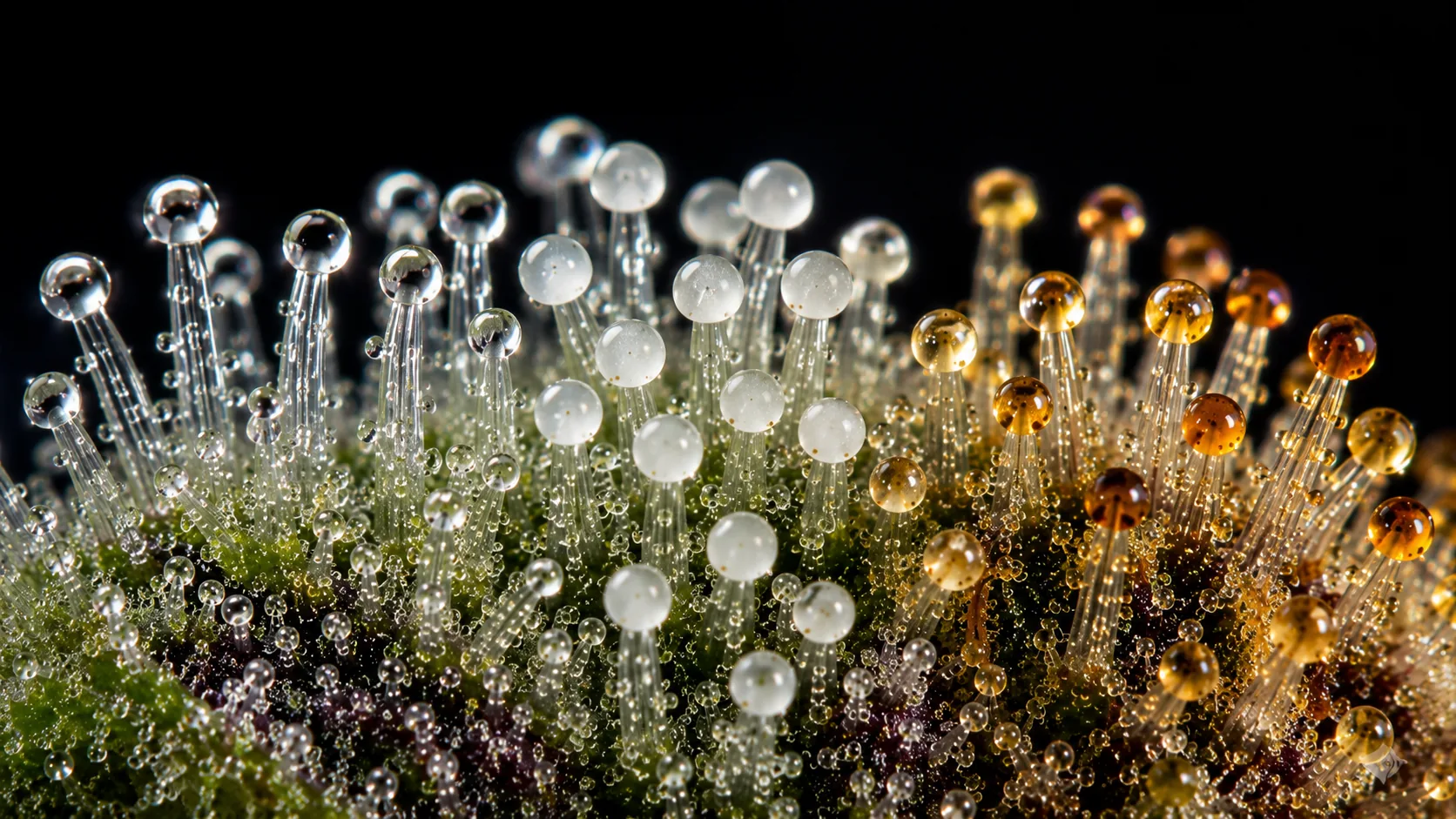
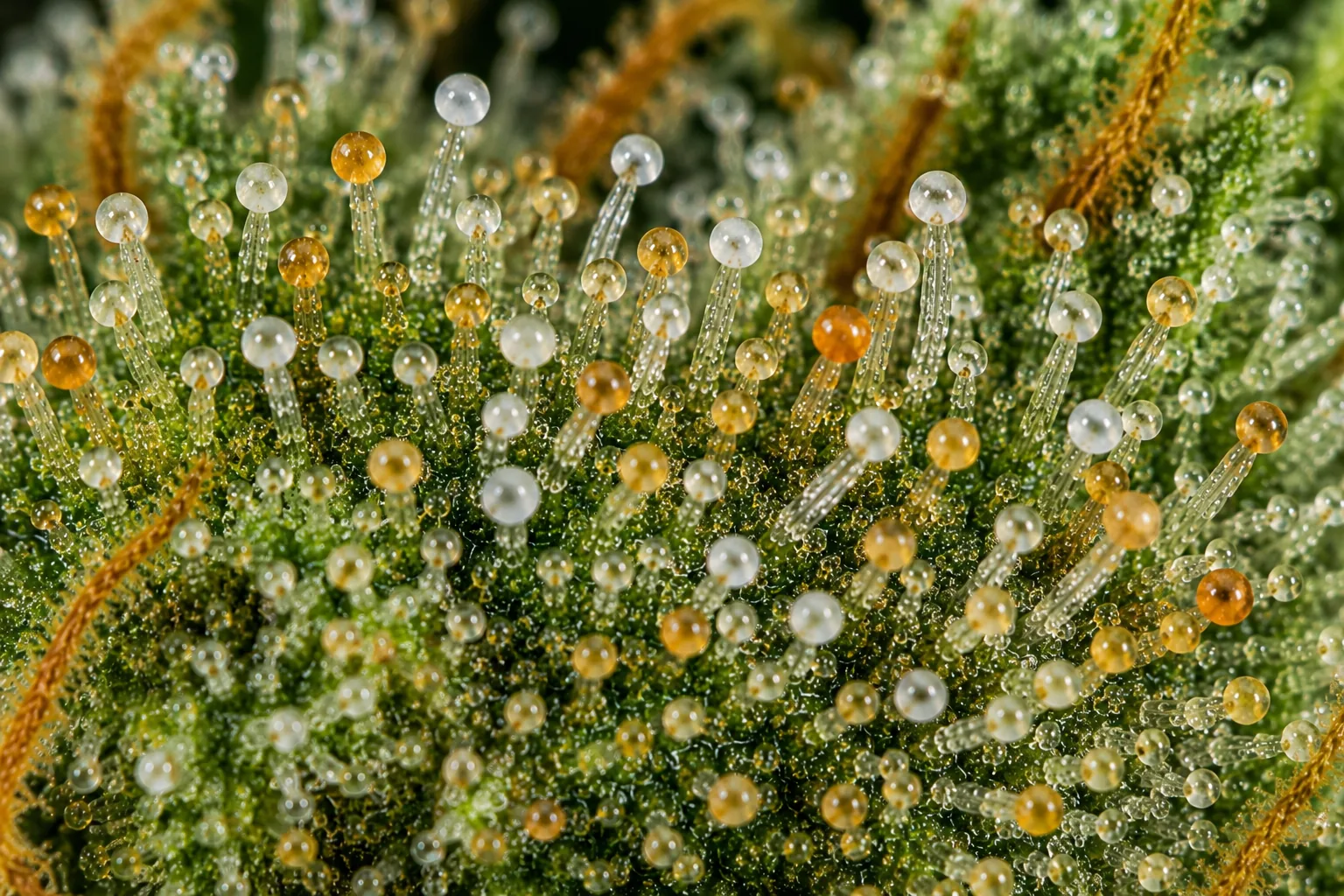
Once you are in the probable window, the chart rewards frequency. Check every day or two — this is not the stage to disappear for a long weekend and hope the plant politely holds still. Signs you are checking too early: buds not fully swollen, aromas still thin, most heads clear. Signs you are running late: the plant looks tired, the aromatic sharpness has flattened out, and amber is spreading across the bud trichomes instead of appearing lightly here and there.