Trichome reference

Trichome Anatomy: Parts and Types of Cannabis Resin Glands

A trichome is a tiny structure with a clear job: make and hold the resin that carries a cannabis plant's cannabinoids and terpenes. Understanding its parts makes the rest of trichome reading click into place. A mature gland trichome has a round head sitting on a stalk, and inside that head is the resin gland doing the chemistry. When growers talk about clear, cloudy, and amber, they are describing the head. This page breaks down the anatomy and the three trichome types, so the harvest signals make sense.

You do not need a botany degree to grow well, but knowing what you are looking at turns guesswork into reading.

The head The round secretory ball where cannabinoids and terpenes are made and stored.
The stalk Raises the head above the plant surface; present on the most productive type.
The type that matters Capitate-stalked trichomes are the large, resin-rich glands growers actually read.
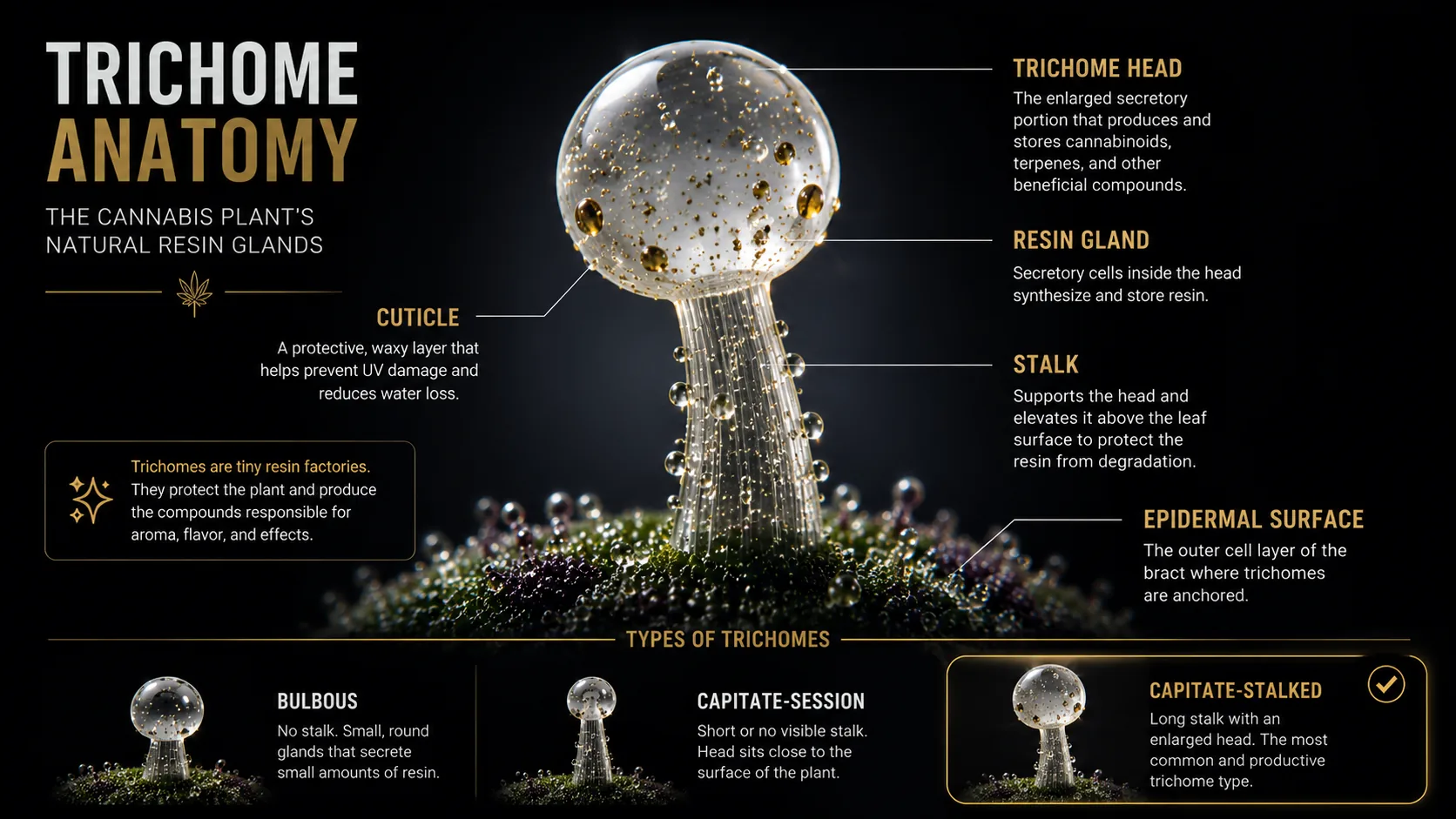
Labeled diagram of cannabis trichome anatomy: trichome head, resin gland, stalk, cuticle, and epidermal surface, with the three trichome types - bulbous, capitate-sessile, and capitate-stalked.
The parts of a gland trichome, and the three types. The capitate-stalked type is the large, resin-rich gland growers inspect.
The parts

Head, gland, stalk, cuticle.

The trichome head is the enlarged, secretory portion at the top, the part that produces and stores cannabinoids, terpenes, and other compounds. Inside it, the resin gland is the cluster of secretory cells doing the actual synthesis. The stalk supports the head and lifts it above the leaf surface, which helps protect the resin from degradation. A thin cuticle wraps the head as a protective layer that limits UV damage and water loss, and the whole structure is anchored to the epidermal surface, the outer cell layer of the bract.

When you read trichomes for harvest, you are looking at the head: clear means the resin is still building, cloudy means it is full and at peak, amber means cannabinoids are converting and degrading. The stalk and cuticle do not change color usefully, so the head is the signal. For the full reading routine, see how to read trichomes.

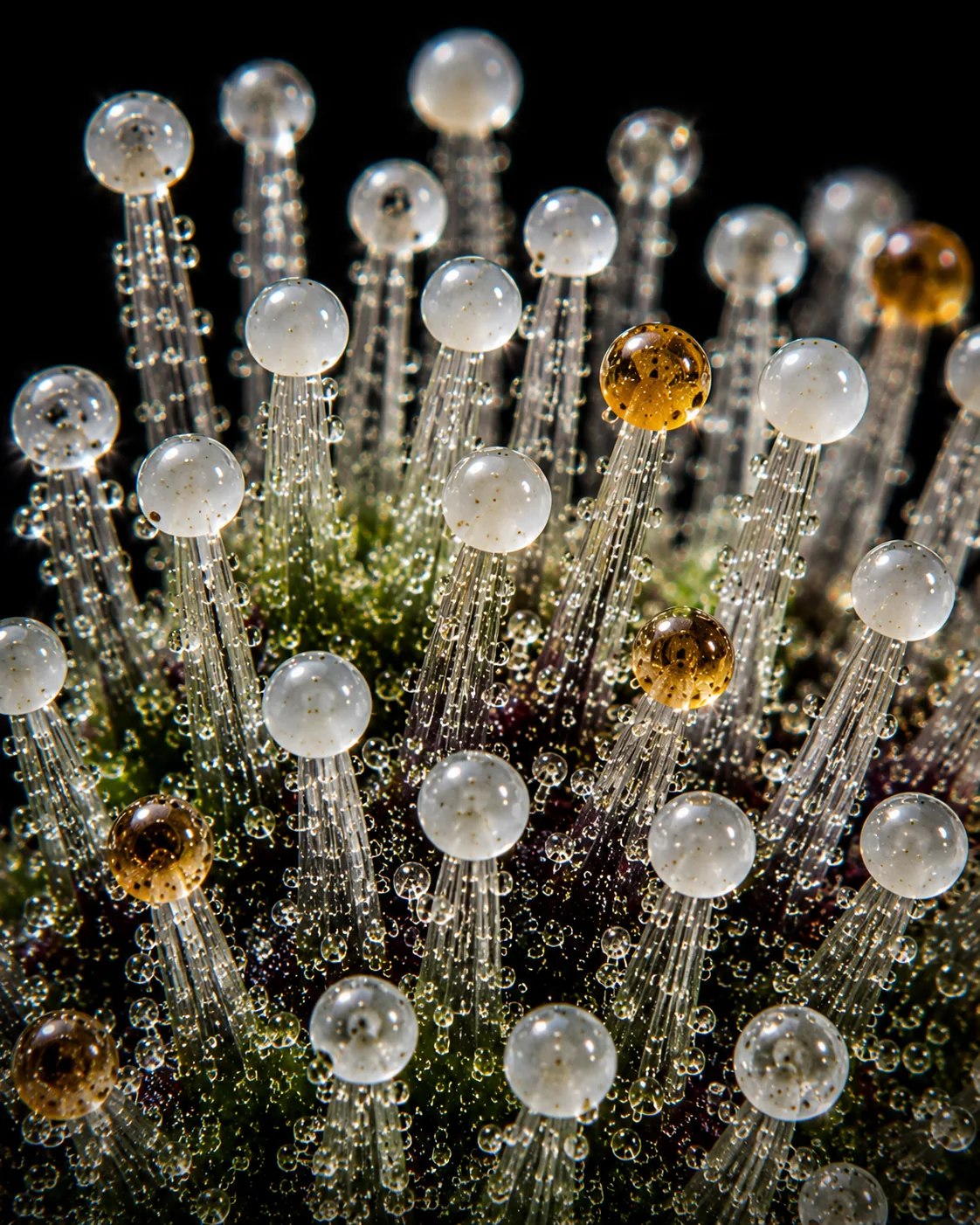
Vertical macro photograph of cannabis capitate-stalked trichomes, showing round resin heads on clear stalks with a few turning amber.
Capitate-stalked trichomes up close: round heads on stalks, the structure the whole harvest call depends on.
The three types

Not all trichomes are equal.

Type Structure Why it matters
Bulbous No stalk; small, round glands The smallest type; secrete only small amounts of resin
Capitate-sessile Short or no visible stalk; head sits close to the surface More productive than bulbous, but not the main harvest signal
Capitate-stalked Long stalk with a large, enlarged head The most common and productive type; this is what growers read for ripeness

Trichome anatomy questions

What are the parts of a trichome?

A gland trichome has a head, a resin gland inside that head, a stalk, and a cuticle. The head is the secretory ball that makes and stores cannabinoids and terpenes; the resin gland is the secretory cells doing the chemistry; the stalk raises the head above the plant surface; and the cuticle is a thin protective layer over the head. The structure is anchored to the epidermal surface of the bract.

What are the three types of cannabis trichomes?

Bulbous (smallest, no stalk, little resin), capitate-sessile (short or no stalk, more productive), and capitate-stalked (long stalk with a large head, the most common and resin-rich). Capitate-stalked trichomes are the ones growers inspect for harvest timing.

Which trichome type do I read for harvest?

The capitate-stalked trichomes. They are large enough to see clearly under a loupe and hold most of the resin, so their head color, clear, cloudy, or amber, is the signal you use to time the harvest.