Trichome quick answer

What Are Trichomes?

Trichomes are the tiny resin glands that form on cannabis flowers and nearby plant surfaces. Growers care about them because they are one of the clearest visual signals for flower maturity, harvest timing, and finish quality. In practical terms, trichomes are the part of the plant you inspect closely when you want to decide whether a flower is still early, in the harvest window, or clearly later.

They get romanticized constantly, but the useful truth is simpler: trichomes are inspection points. Read calmly, they make the finish stage less theatrical and more precise.

What they are Tiny resin glands visible on cannabis flowers and some surrounding plant tissue.
Why they matter They help growers read maturity and make cleaner harvest decisions.
Main mistake Checking the wrong surface or turning one sample into a dramatic final verdict.
What it means

Trichomes are the plant’s most useful finish-stage inspection points.

Searchers asking what trichomes are usually want a basic definition, but the better answer explains the job those structures do in the grower’s decision process. Trichomes are glandular structures that appear like tiny crystals or resin heads on the flower. On cannabis, they are watched so closely because they change appearance as the plant matures. That change helps growers decide whether the plant still needs time, is entering the main harvest window, or has moved later into ripeness.

That is why trichomes matter more than a generic “sparkly” description. They are a way to check whether the flower is telling an early, active, or later finish story. When growers move from clear to cloudy to amber language, they are really talking about how trichomes look under inspection and what those appearances suggest about timing. If you want the broader harvest call, the full anchor page is when to harvest cannabis. If you already know what trichomes are and only need the stage comparison, go narrower with cloudy vs amber trichomes.

Trichomes also teach restraint. A flower can look tempting from across the room and still be early. Under magnification, trichomes reward closer reading, not louder opinions about the calendar.
Short version

Trichomes are where the flower stops posing and starts reporting.

  • They are tiny resin glands.
  • They change appearance as the flower matures.
  • Growers inspect them to make better finish decisions.
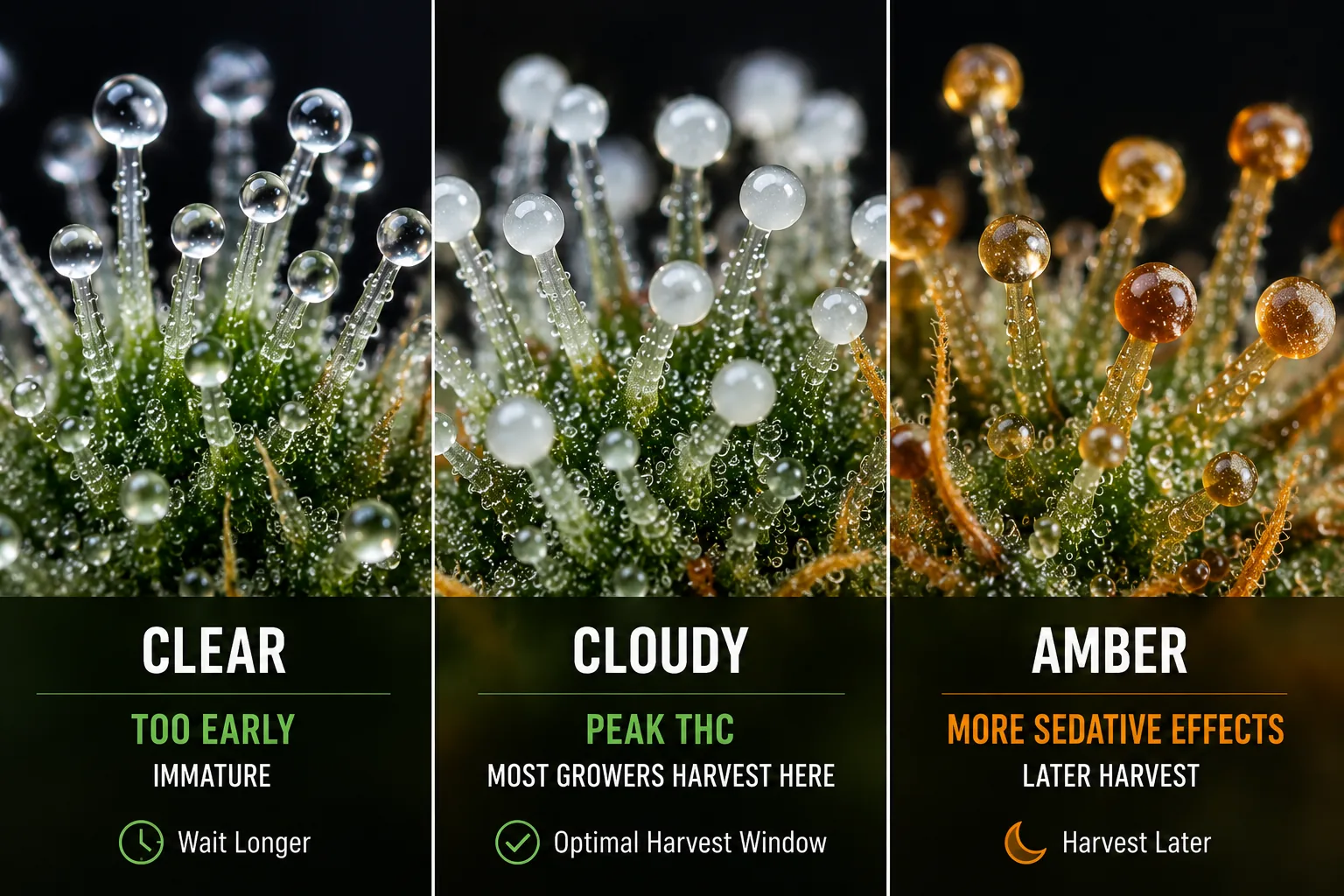
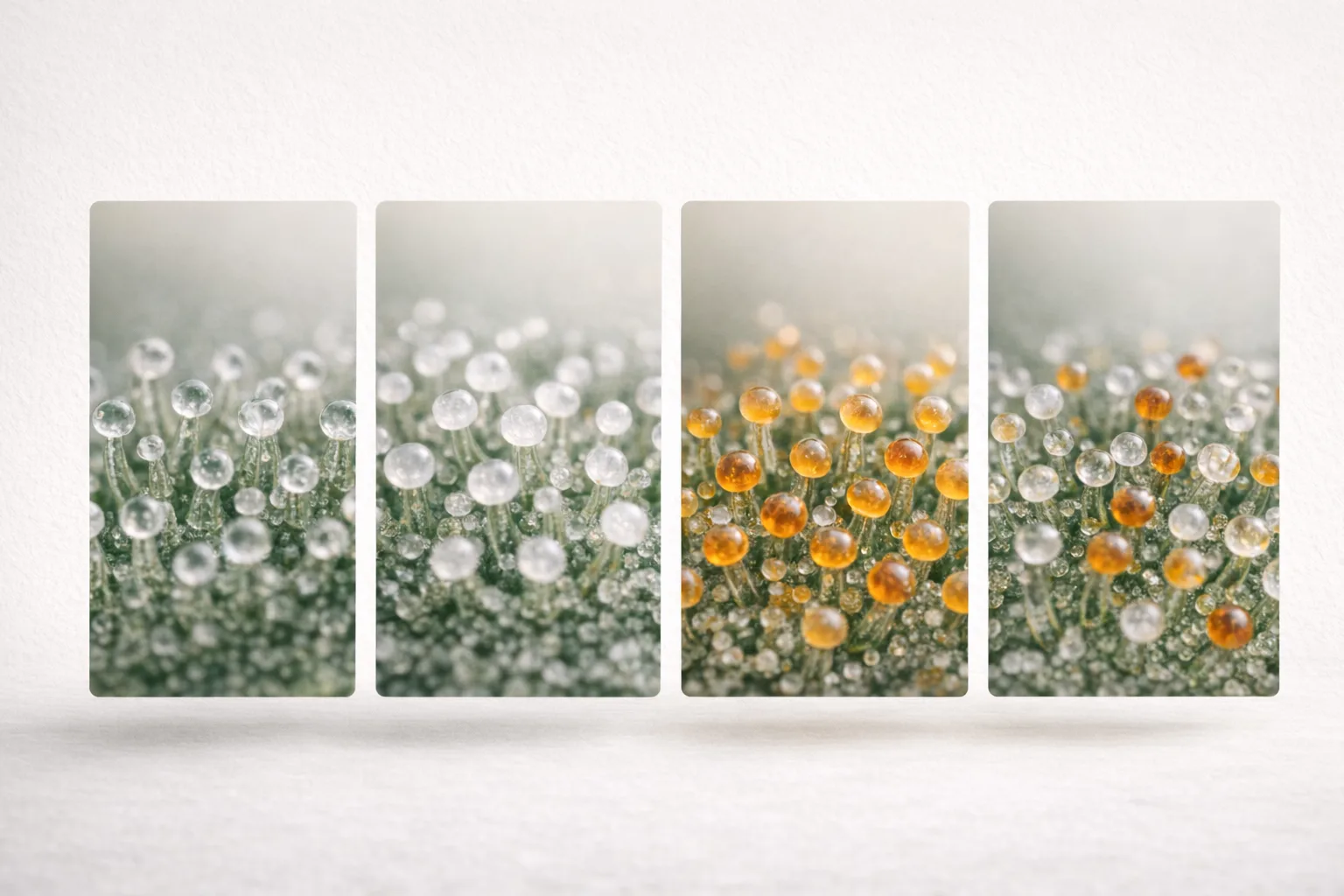
Macro close-up of cannabis trichomes on a flower surface showing stalked resin glands in neutral light.
A useful trichome image does not need to feel mystical. It only needs to show the inspection surface clearly enough to remind the grower what they are actually reading.
Why it matters in a compact grow

Compact rooms make finish signals easier to compare, which makes trichome reading more valuable.

In a compact grow, the plant, the light, and the finish-stage routine are easier to keep inside one readable workflow. That matters because trichome inspection works best when the grower can check flowers calmly, compare more than one bud site, and revisit the same plant without a lot of room noise getting in the way. A smaller space does not make trichomes more important in theory. It makes them easier to use honestly.

Compact cultivation also punishes rushed finishing. A contained workflow gives the grower a better chance to inspect with decent lighting, sample multiple buds, and stop treating one frosty sugar leaf as proof that the entire plant is ready. That is why trichomes belong in the same conversation as the rest of the finish chain, not as a last-minute gimmick.

This is also where trichome reading helps prevent false certainty. A compact run can feel under control, and that feeling can make growers impatient. Trichomes are one of the tools that keep control from turning into assumption. If you want the direct stage comparison, use cloudy vs amber trichomes. If the issue is not the harvest window but the finish after cutting, move next to curing cannabis and when are buds ready for jars.

Comparison board showing clear, cloudy, amber, and mixed cannabis trichome inspection states for finish-stage reading.
Trichome reading gets practical once the grower stops asking for a perfect sample and starts reading the overall balance across the flower.
Decision layer

The most important trichome lesson is knowing what they can and cannot decide by themselves.

If you think trichomes mean Better interpretation Why that matters
Any sparkle means harvest soon Visible frost alone is not a timing verdict. Flowers can look tempting long before the trichome mix says the main harvest window is actually live.
One amber head settles everything The decision comes from the overall pattern across real bud sites. Growers need a balance read, not a dramatic anecdote under the loupe.
Sugar leaves tell the same story as the buds The flower itself is the better inspection surface. Leaf trichomes can mature faster and make the whole plant look more finished than it really is.
Trichomes replace every other finish clue They are the strongest visual signal, but still work best inside a full finish routine. That is why trichome inspection connects naturally to when to harvest cannabis instead of trying to replace the whole harvest decision page.
Where DWC or VGrow fits

Contained systems matter here because good trichome reading depends on a readable finish workflow.

Trichomes are part of the finish stage, so they benefit from the same compact logic that helps the rest of the ColaXpress workflow. A contained cabinet or another tidy small-space setup makes it easier to inspect calmly, keep lighting conditions consistent, and move from harvest timing to dry and cure without the room turning into chaos. That is the real fit between trichomes and compact systems: not gadget worship, but finish clarity.

A DWC or VGrow-style workflow does not change what trichomes are. It changes how cleanly the grower can use them. When the run has stayed readable from root zone to canopy to finish, the harvest decision becomes easier to verify instead of easier to argue about. That is why the finish cluster belongs beside system pages like indoor cannabis grow system and hardware context like the Vivosun VGrow DWC guide.

The craft point matters too. Trichome inspection is not just about timing a cut. It is about protecting the final quality the grow worked for. That is why trichomes make the most sense when they are handled as part of craft cannabis cultivation rather than as isolated microscope theater.

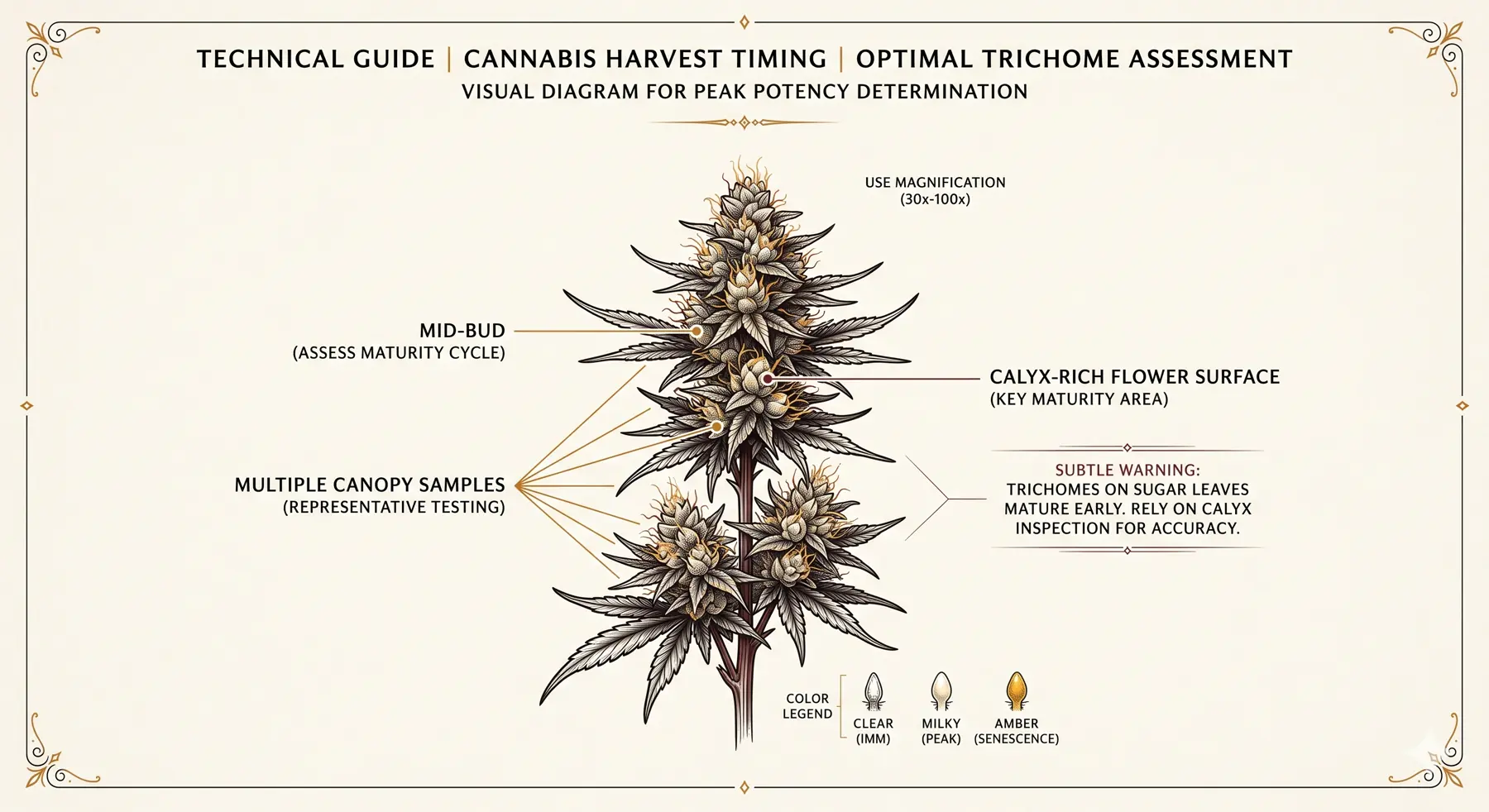
Inspection diagram showing where to inspect trichomes on cannabis buds and how to compare real flower surfaces instead of sugar leaves.
Trichome reading stays useful when the inspection stays on real flower surfaces, is repeated across the canopy, and lives inside a calm finish routine.
Common mistake

The biggest mistake is turning trichomes into a shortcut for the whole harvest conversation.

The classic trichome mistake is not ignorance. It is overconfidence. A grower checks one spot, sees what they wanted to see, and starts calling the entire plant early, ready, or late without sampling enough of the canopy to deserve that conclusion. Trichomes are useful because they reduce guessing. They become dangerous when they are used to decorate a guess that was already emotionally chosen.

Another common mistake is letting the loupe replace the workflow. Magnification matters, but the point is not to collect dramatic close-ups. It is to support a repeatable inspection habit. Good growers compare multiple buds, look at the flower itself, and tie the trichome read to the rest of the finish plan.

If the grower still needs basic orientation after reading this page, the best next stop is the broader support path in cannabis grow questions and cannabis guide search, then back into the harvest cluster with a clearer question.

What to avoid
  • Using sugar leaves as the main source of harvest certainty.
  • Calling the whole plant from one dramatic sample.
  • Inspecting under bad light and pretending confidence fixed the visibility problem.
  • Using trichomes as a substitute for the rest of the finish workflow.
  • Confusing frosty-looking flower with fully mature flower.
Practical takeaway

Trichomes matter because they turn harvest timing from a vibe into a real inspection practice.

The clean definition is enough to remember: trichomes are tiny resin glands on cannabis flowers. More usefully, they are finish-stage signals that let growers check maturity more honestly than the calendar or a frosty photo.

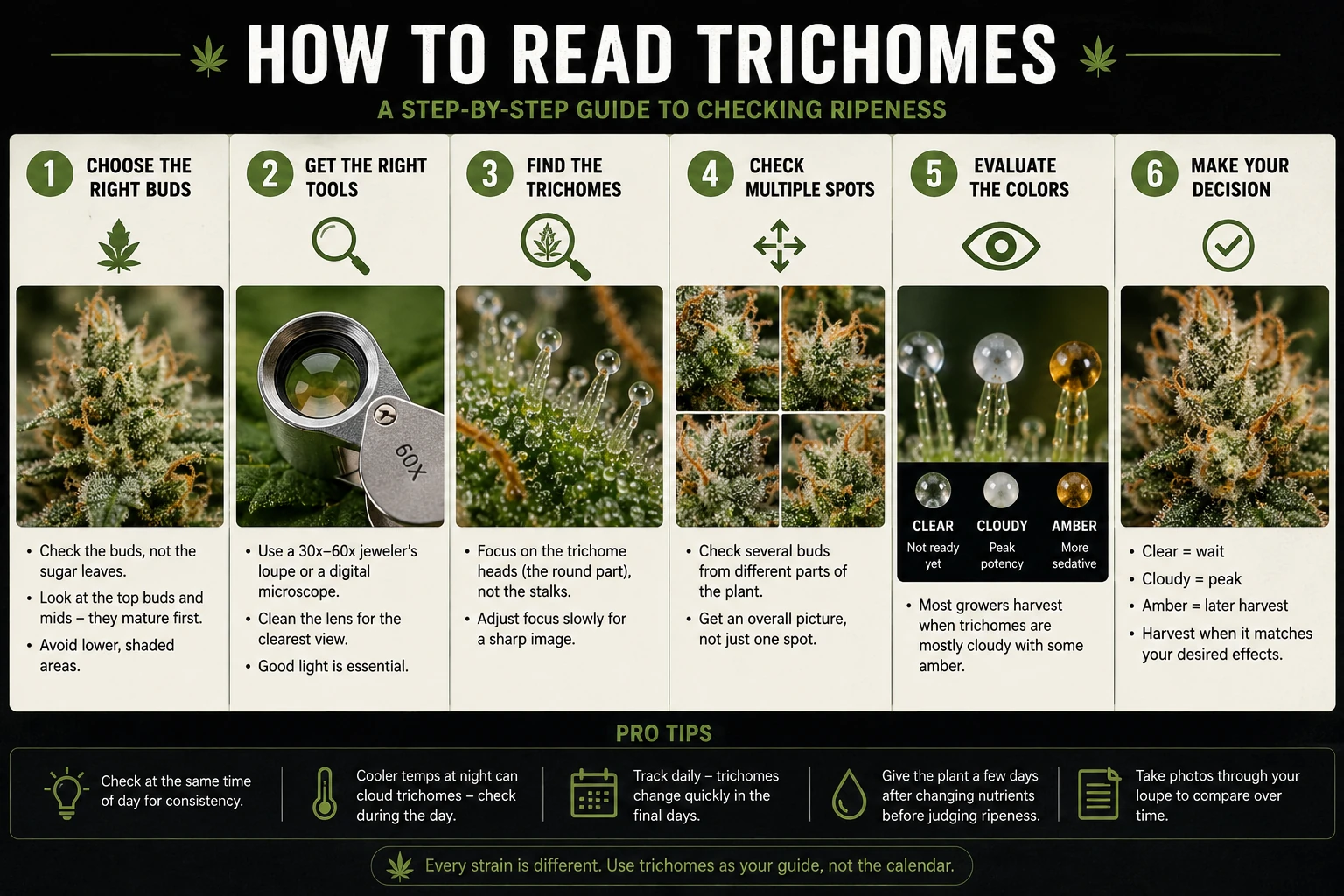
01 Know what you are looking at

Trichomes are inspection points, not just sparkle.

02 Check the right surface

Inspect actual buds and compare more than one flower site.

03 Read the pattern

Use the balance across clear, cloudy, and amber stages instead of chasing one perfect sample.

04 Connect it to the finish chain

Use the trichome read to support harvest timing, then protect the result through drying and cure.

If you came here asking what trichomes are, the next move is learning how that definition changes the finish workflow. Use this page for vocabulary, cloudy vs amber trichomes for the narrow stage comparison, when to harvest cannabis for the full cut decision, and curing cannabis so the inspection habit leads to a better result.

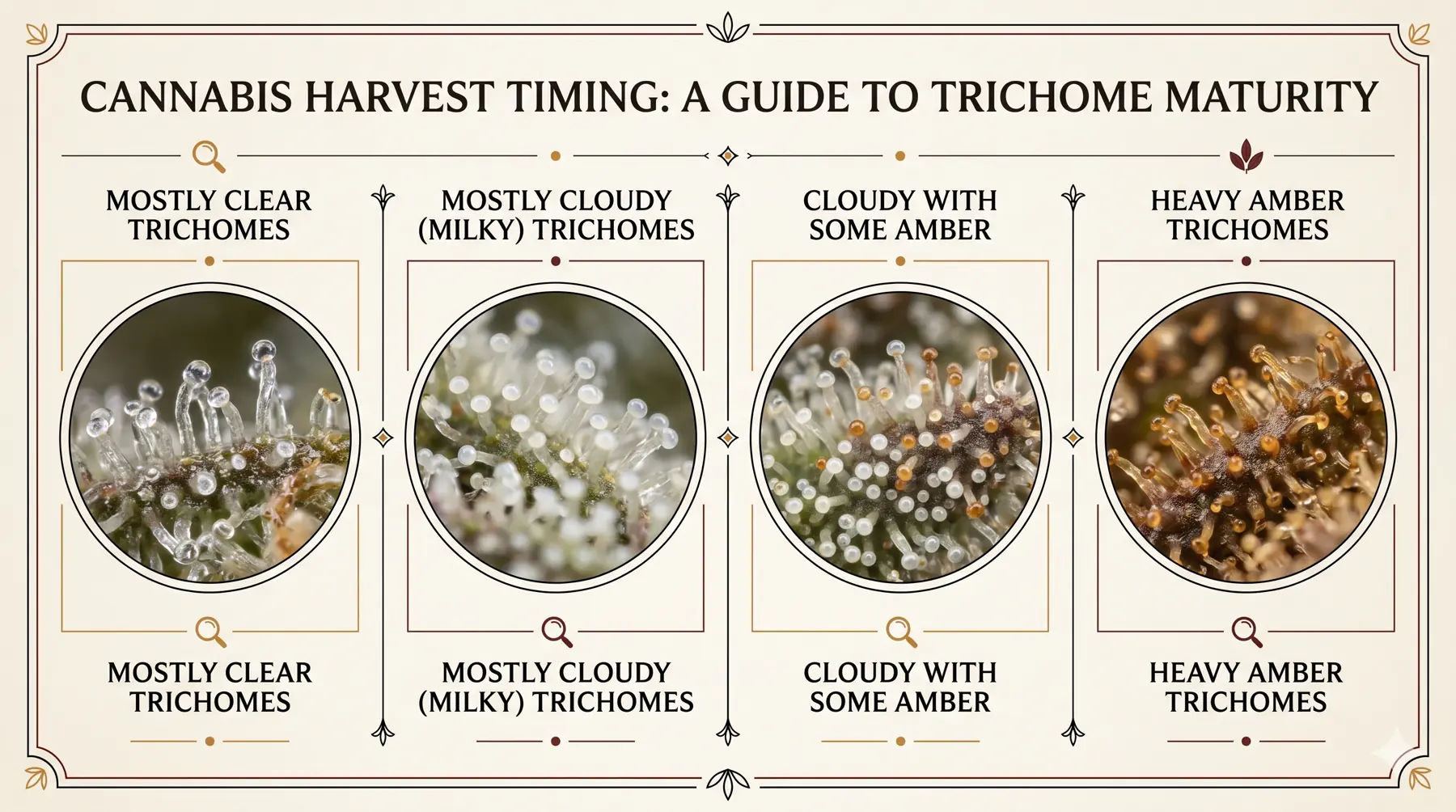
Harvest timing chart comparing mostly clear, mostly cloudy, cloudy with some amber, and heavier amber trichome patterns.
A trichome chart is useful when it trains the eye toward overall pattern, not when it tempts the grower to fake certainty from one isolated head.
FAQ

Questions people usually mean when they ask what trichomes are.

Are trichomes only found on the buds?

They are most important on the flower itself, but trichomes can also show up on nearby sugar leaves and other surfaces. For harvest timing, the better inspection target is the bud, not the fastest-aging leaf around it.

Why do growers care so much about trichomes?

Because trichomes are one of the clearest visual ways to judge maturity. They help growers decide whether the flower still looks early, is moving through the main harvest window, or is clearly later in ripeness.

Do trichomes decide harvest timing by themselves?

They are the strongest visual signal, but they still work best inside a broader finish routine. Growers get cleaner decisions when trichomes are read across real bud sites and compared with the rest of the plant’s finish behavior.

Can a compact grow make trichomes easier to inspect?

It often can. A compact workflow makes the finish stage easier to organize, which helps growers recheck the same plant calmly, compare more than one flower site, and move from harvest timing into dry and cure with less room noise.