Harvest timing

How to Read Trichomes

Reading trichomes is the most reliable way to decide when to harvest cannabis. The resin heads change color as the flower matures, and that color is a better timing signal than the calendar, the strain's advertised flower time, or the orange pistils everyone notices first. This page is the inspection routine: the tool you need, where on the plant to look, and how to actually tell clear, cloudy, and amber apart without fooling yourself.

The skill is not exotic. It is calm magnification plus an honest read of the overall balance, not one dramatic head you found and fell in love with.

Tool A 30 to 60x jeweler's loupe or a USB microscope. 40x confirms they exist; 60x tells you the color.
Where The calyxes on the actual bud, sampled from several sites. Not the faster-aging sugar leaves.
What to read The ratio of clear to cloudy to amber across the flower, not a single perfect trichome.
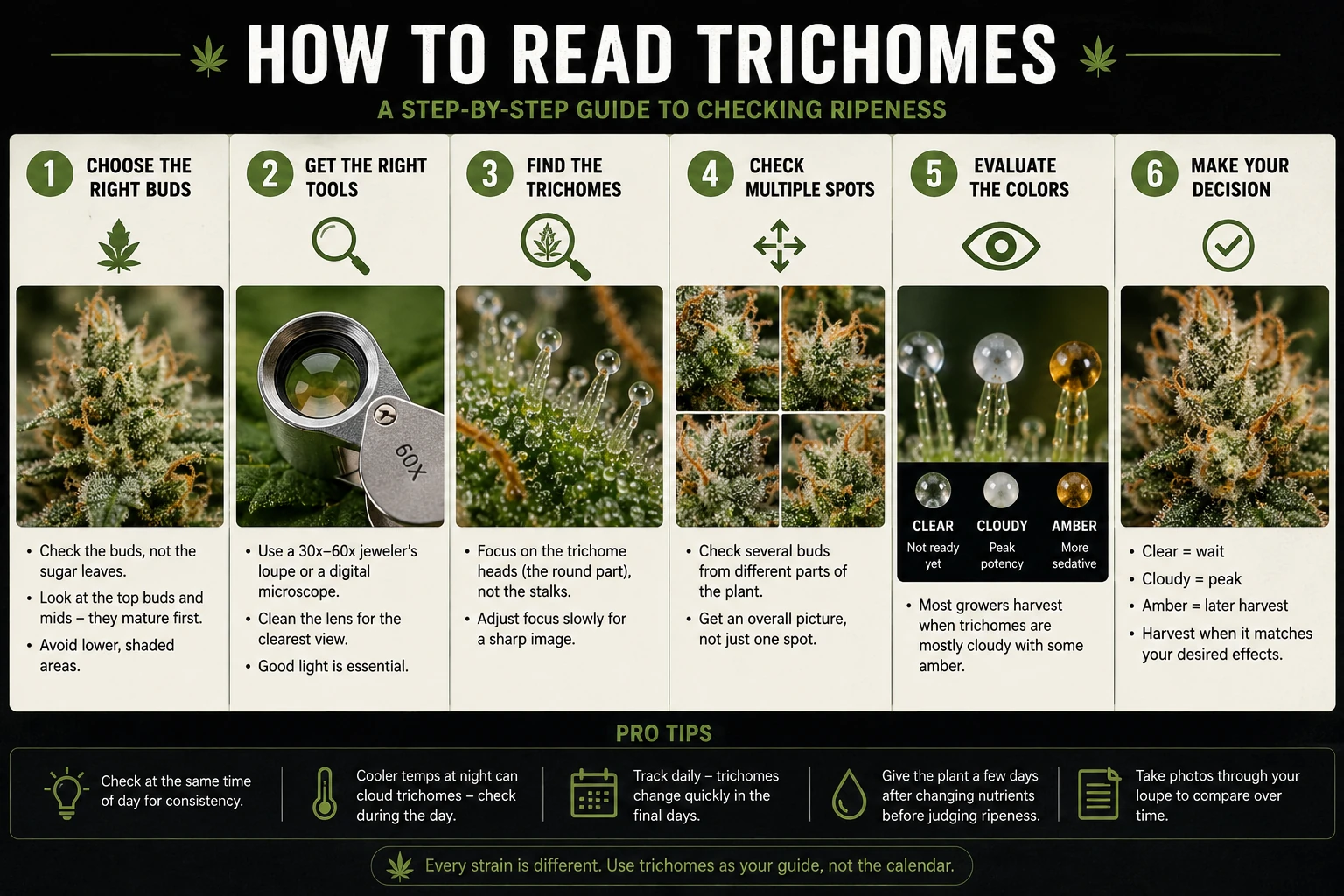
Six-step visual guide to reading cannabis trichomes for ripeness: choose the right buds, get a 30 to 60x loupe, find the trichomes, check multiple spots, evaluate clear, cloudy, and amber colors, then make the harvest decision.
The whole routine in one view: right buds, right magnification, multiple spots, then read the color balance.
The routine

Six steps that turn a frosty bud into an honest harvest decision.

Step 1

Choose the right buds

Check the top colas and mid-canopy buds first, since they mature fastest. Skip the lower, shaded popcorn for the main decision. You want a representative read of the flower that finishes first.

Step 2

Get the right tool

A 30 to 60x jeweler's loupe is the minimum; a USB microscope is easier because you are not trying to hold still two centimeters from a bud under grow lights. Clean the lens and use good light.

Step 3

Find the trichomes

Focus on the trichome heads on the bud itself, the round glands on stalks, not the stalks alone and not the sugar leaves. Adjust focus slowly until the heads are sharp.

Step 4

Check multiple spots

Sample several buds from different parts of the plant. One frosty corner is not a verdict. You are building an overall picture, because the canopy rarely finishes all at once.

Step 5

Evaluate the colors

Read the ratio: clear means not ready, cloudy means peak potency, amber means a later, more sedative finish. Most growers harvest when heads are mostly cloudy with some amber.

Step 6

Make the decision

Match the balance to the effect you want. Clear equals wait, cloudy equals peak, amber equals later. The decision comes from the pattern, not one head.

The three states, up close

What clear, cloudy, and amber actually look like under the loupe.

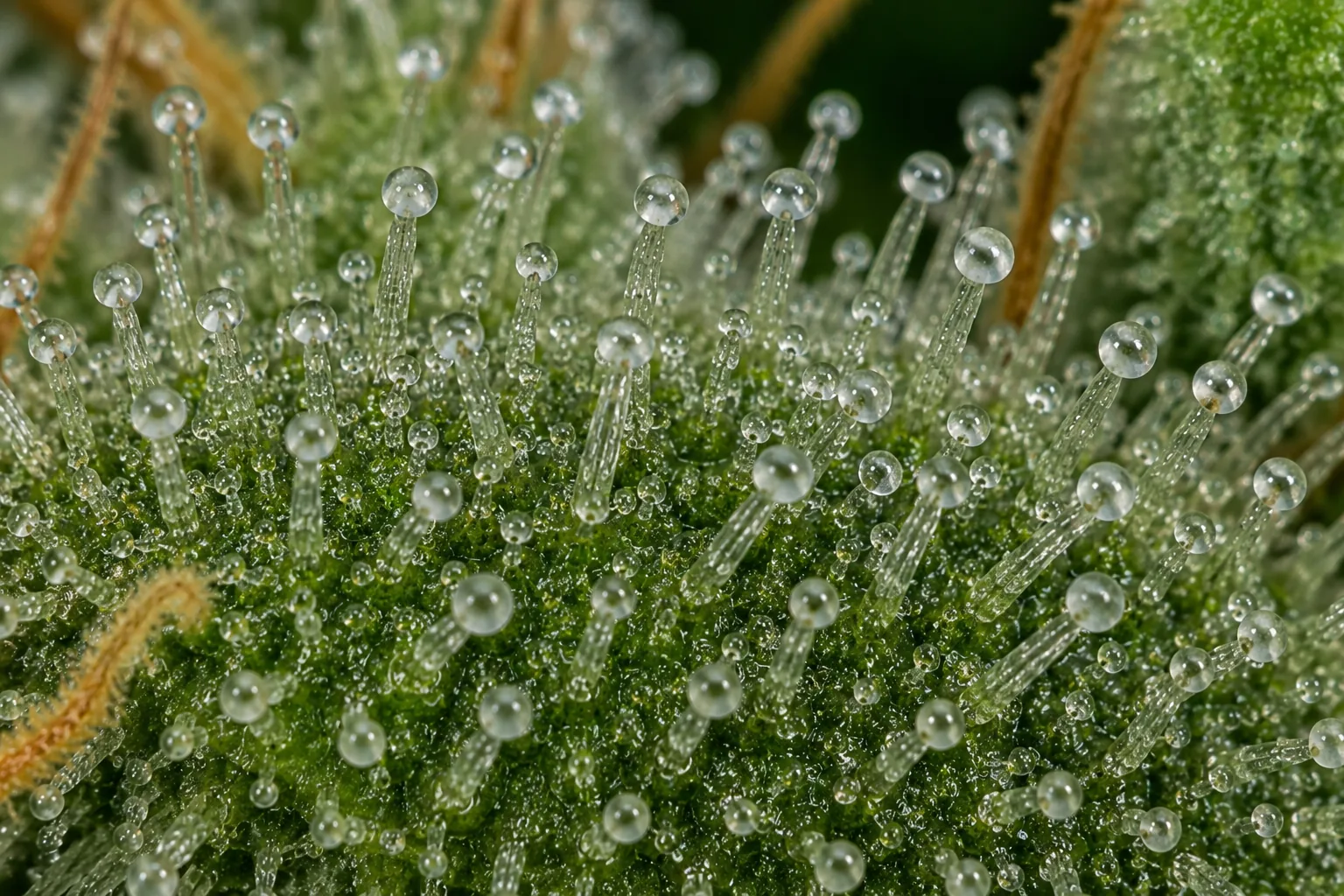
Macro photograph of clear, glassy, fully transparent cannabis trichome heads - the immature, too-early harvest stage.
Clear: glassy and transparent. Too early to call the finish.
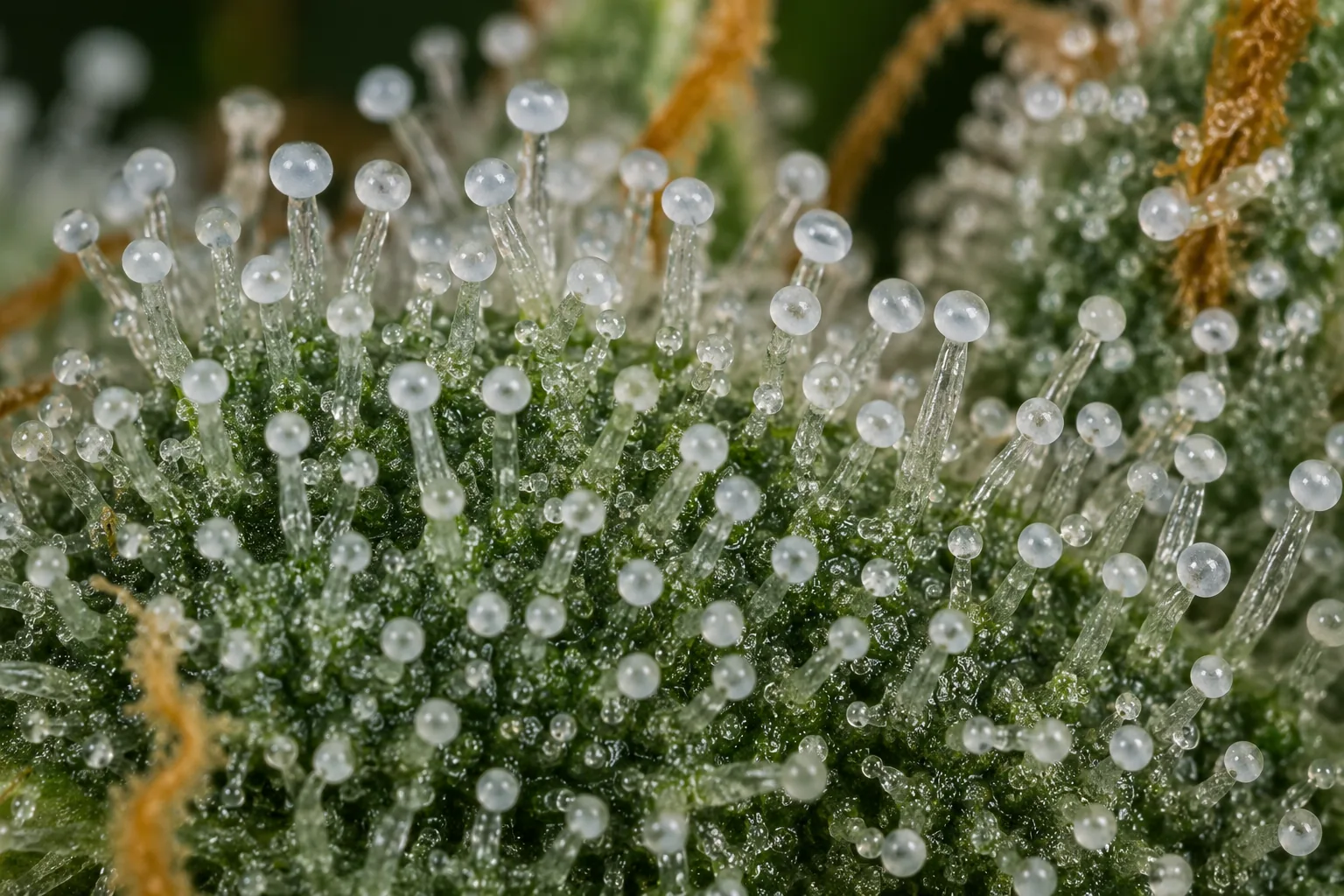
Macro photograph of cloudy, milky-white cannabis trichome heads - the peak-THC harvest window.
Cloudy: milky and opaque. Usually the peak harvest window.
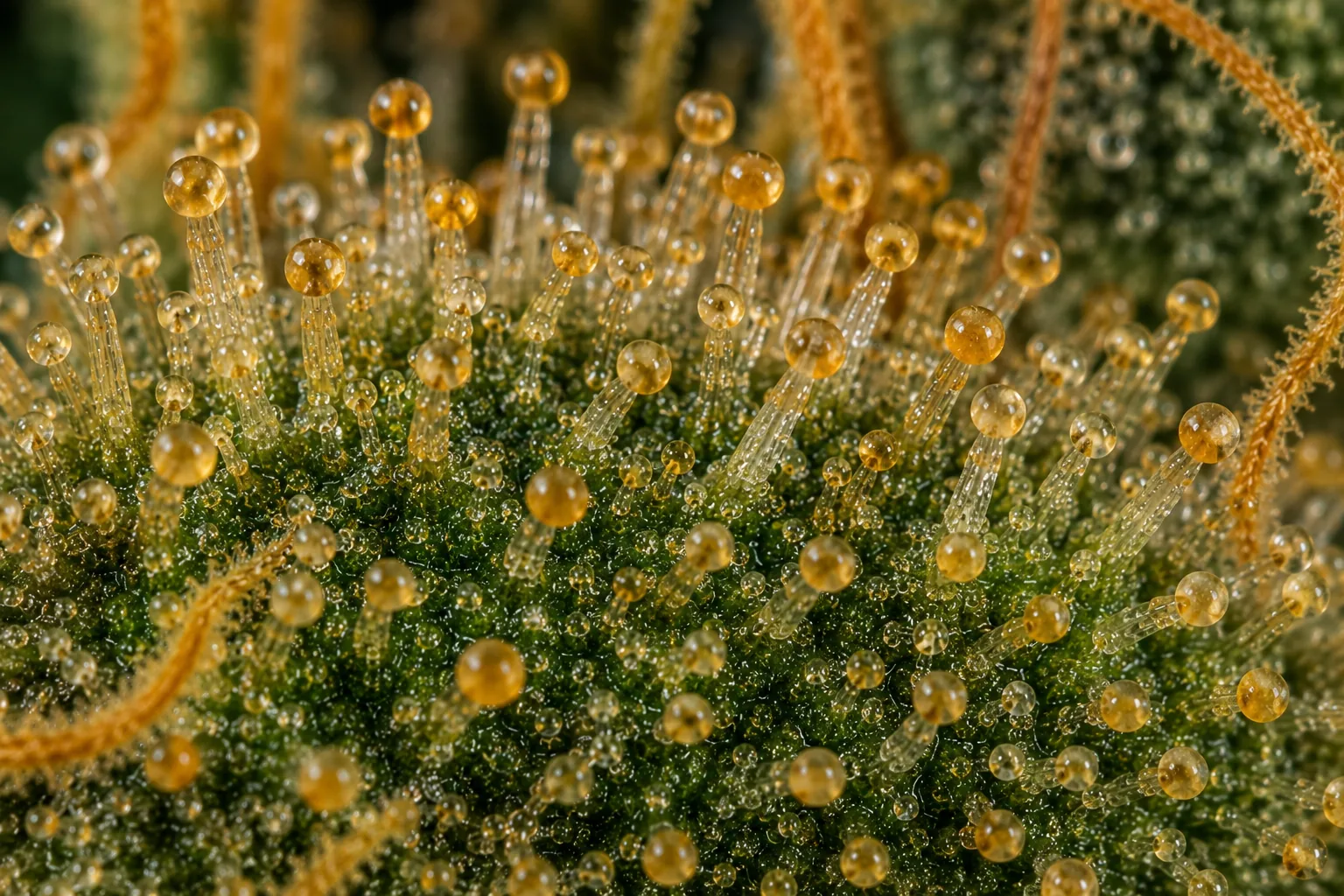
Macro photograph of amber, golden-brown cannabis trichome heads - a later, more sedative harvest stage.
Amber: warm and golden. A later, more sedative finish.
What "ready" actually looks like

A real harvest call is a mix, not one flawless state.

In practice you are almost never reading a field of identical heads. The window most craft growers target is mostly cloudy with roughly twenty to thirty percent amber. That balance keeps the bulk of the THC intact while a little of it has converted toward the heavier, calmer end. If you wait for every head to match, you have already waited too long.

Read the balance, recheck in a day or two if it is close, and remember the canopy finishes in waves. If your tops are at the window but the lowers are still clear, you can harvest the tops and let the rest run.
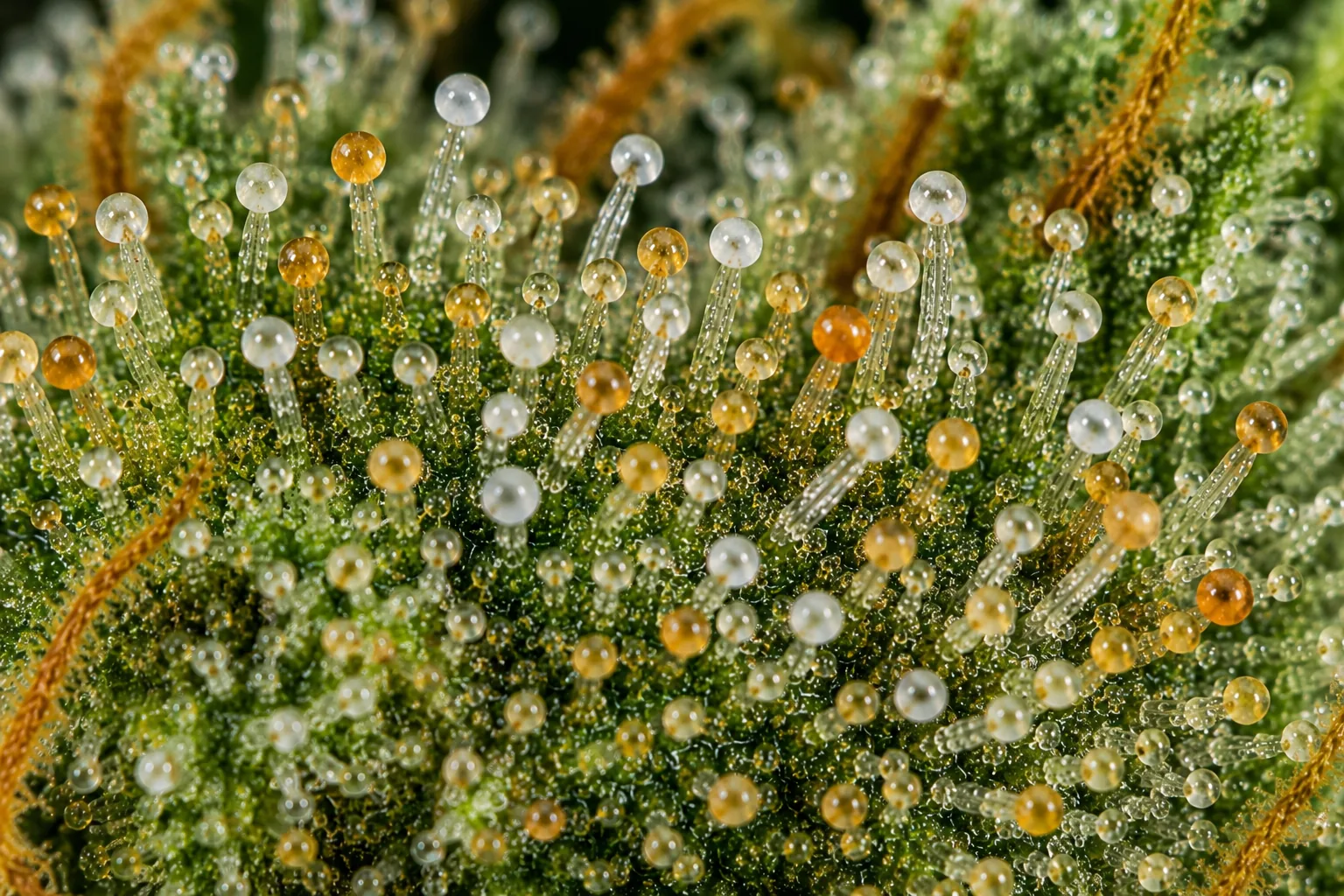
Macro photograph of a ready cannabis bud with mixed cloudy-white and amber trichome heads - the balanced full-spectrum harvest window.
The ready look: mostly cloudy with some amber, not one perfect head.
Color to action

Turn what you see into a decision.

What you see What it means What to do
Mostly clear Still maturing; potency and flavor not developed Wait. Recheck in five to seven days.
Mostly cloudy Peak THC, energetic and cerebral finish This is the window. Harvest now for a clear-headed effect.
Cloudy with some amber Balanced, full-spectrum window The popular craft target. Harvest if it matches your goal.
Mostly amber THC degrading toward CBN; sedative Harvest now unless you specifically want couch-lock.
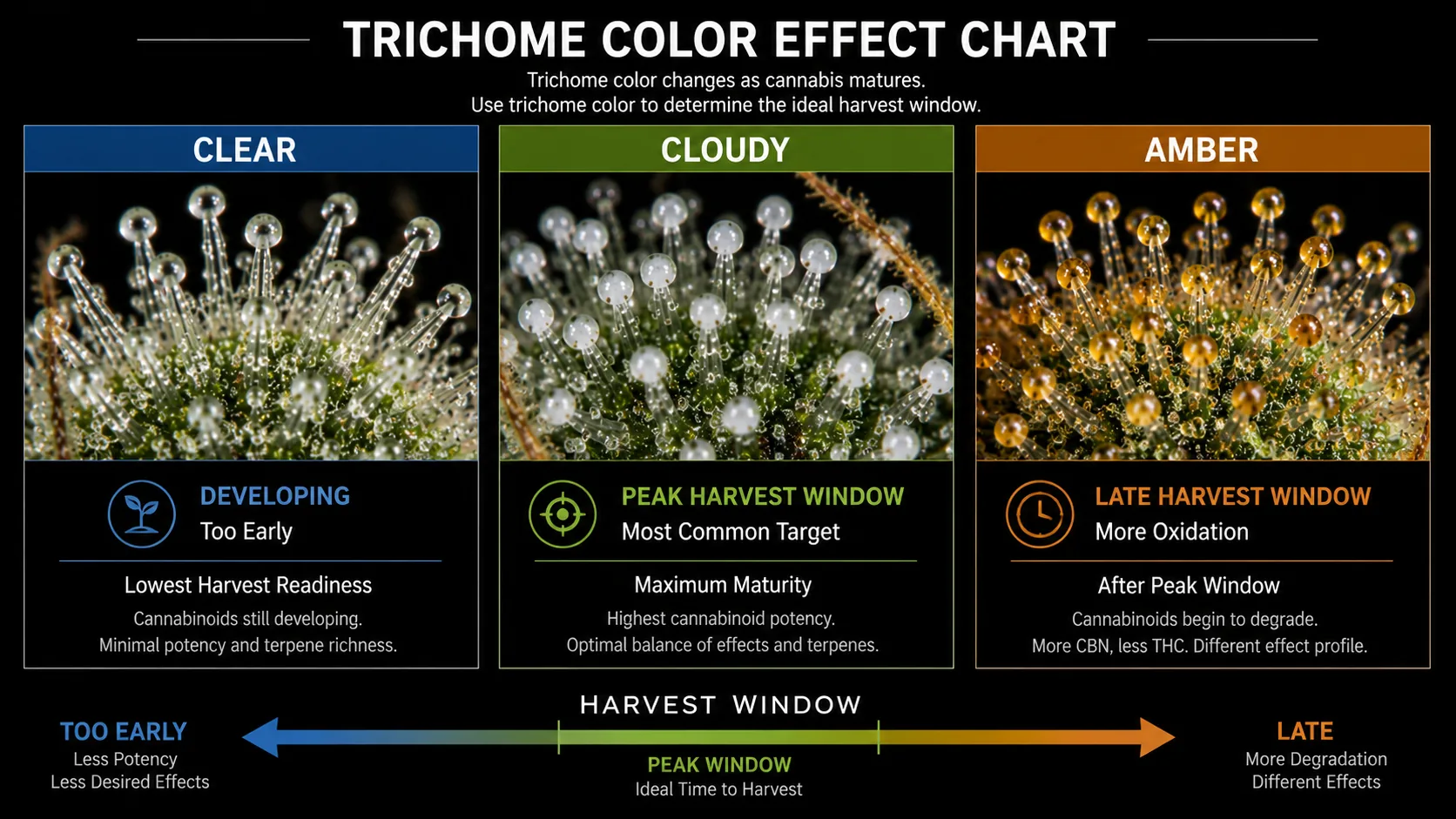
Trichome color effect chart: clear trichomes are developing and too early, cloudy are the peak harvest window with maximum potency, and amber are a later window where cannabinoids begin to degrade toward a more sedative profile.
The same color read as an effect map: clear is developing, cloudy is peak, amber is the late, more sedative window.
What beginners get wrong

Most bad harvest calls come from the inspection, not the plant.

  • Reading sugar leaves instead of calyxes. Sugar leaves amber one to two weeks early and pull you into harvesting too soon.
  • Judging by pistil color alone. Pistils are a rough estimate; trichomes are the precise read.
  • Sampling one spot. The canopy finishes in waves, so one frosty bud is not the whole plant.
  • Calling everything cloudy because the plant looks generally done from across the room.
  • Treating amber as a prize. Amber is later, not better.

Trichome reading questions

What magnification do I need to read trichomes?

A 30 to 60x jeweler's loupe is the practical minimum. At 40x you can confirm trichomes exist but cannot reliably separate clear from cloudy; at 60x the distinction is visible with care; at 100x it is unambiguous. A USB microscope that connects to a phone or laptop is easier than a handheld loupe because you are not trying to hold perfectly still under grow lights.

Where exactly on the bud should I look?

Inspect the calyxes, the small round structures that make up the bud where the pistils emerge. Avoid timing by the sugar leaves, which amber one to two weeks before the calyxes. Take samples from several bud sites because top colas usually mature faster than lower buds.

Should I read pistils or trichomes?

Use both, but trust trichomes for the final call. Pistils darkening and curling in is a useful rough signal that the plant is getting close, while trichome color is the precise read of the actual finish window. If the two disagree, the trichomes win.

What is the ideal trichome ratio to harvest?

For most growers, mostly cloudy with roughly twenty to thirty percent amber is the balanced, full-spectrum window. Harvest predominantly cloudy with minimal amber for a more energetic, cerebral effect, or wait for heavier amber if you specifically want a sedative, body-heavy result.