Harvest timing

Amber Trichomes: Too Late to Harvest?

Amber trichomes are not automatically too late. They signal a later, more mature harvest, and a measured amount of amber is exactly what many growers are aiming for. As a trichome head ages, the THC in it slowly converts to CBN, and the head shifts from milky white to warm amber. A little amber means a balanced, full-bodied finish. A lot of amber means the window has moved toward sedative, and eventually past peak. The question is not amber yes or no, it is how much.

Amber gets treated like a trophy. It is not. It is later, with consequences, and the skill is reading how far the conversion has gone.

What it means Warm, golden-brown heads. THC has begun converting to sedative CBN.
The call Not too late on its own. Twenty to thirty percent amber is a popular target.
Watch for Mostly amber heads, which mean peak THC has passed and the effect turns heavy.
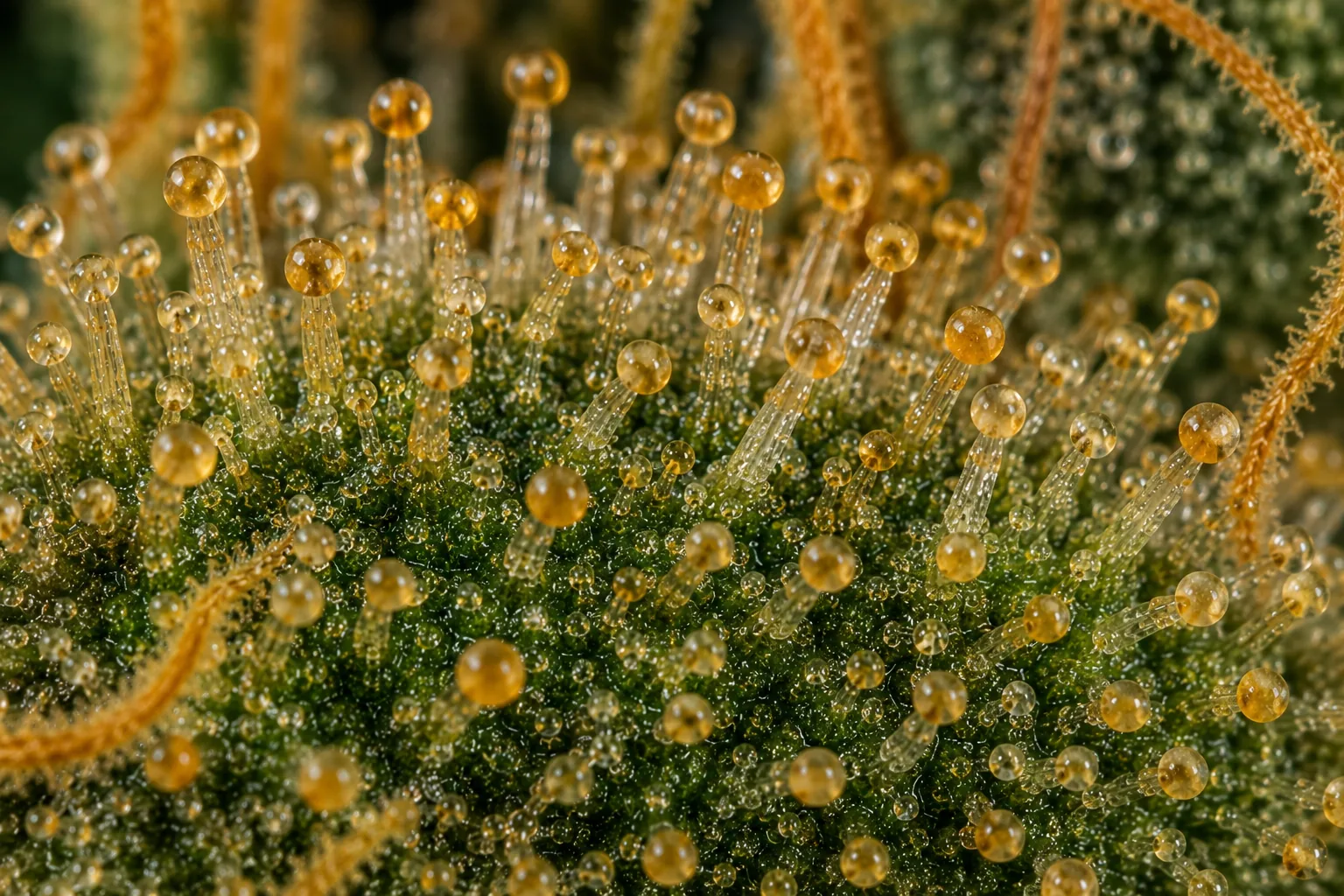
Macro photograph of amber, golden-brown cannabis trichome heads - a later, more sedative harvest stage.
Amber trichomes: the heads have turned warm and golden as THC converts toward CBN.
What amber means

Amber is the conversion stage.

Once a trichome head is fully cloudy and at peak THC, time keeps moving. THC is not stable forever; it gradually oxidizes into CBN, a different cannabinoid that is mildly sedative and contributes body heaviness rather than the cerebral lift of THC. As that conversion happens inside the head, the color shifts from milky white to amber. So amber is not extra potency, it is a record of THC that has already changed into something calmer.

That is the useful reframe: amber does not mean stronger, it means later and heavier. A flower with some amber gives a fuller, more relaxing effect because part of its THC has become CBN. A flower that has gone mostly amber has converted a lot of its THC, so total potency is past peak even though the high feels heavy. Neither is wrong; they are different finishes for different goals.
Short version

Amber is THC turning into calm. A little is a choice; a lot is past peak.

  • Heads are warm and golden-brown.
  • THC is converting to sedative CBN.
  • Some amber is desirable; mostly amber is late.
When amber is the goal

How much amber to aim for.

For most craft growers the target is mostly cloudy with roughly twenty to thirty percent amber. That balance keeps the bulk of the THC while letting enough convert to round off the edge and add body. If you specifically want a sedative, sleep-leaning result, waiting for forty to fifty percent amber is a legitimate choice. Beyond that, you are trading away noticeable potency for heaviness, which suits some growers and not others.

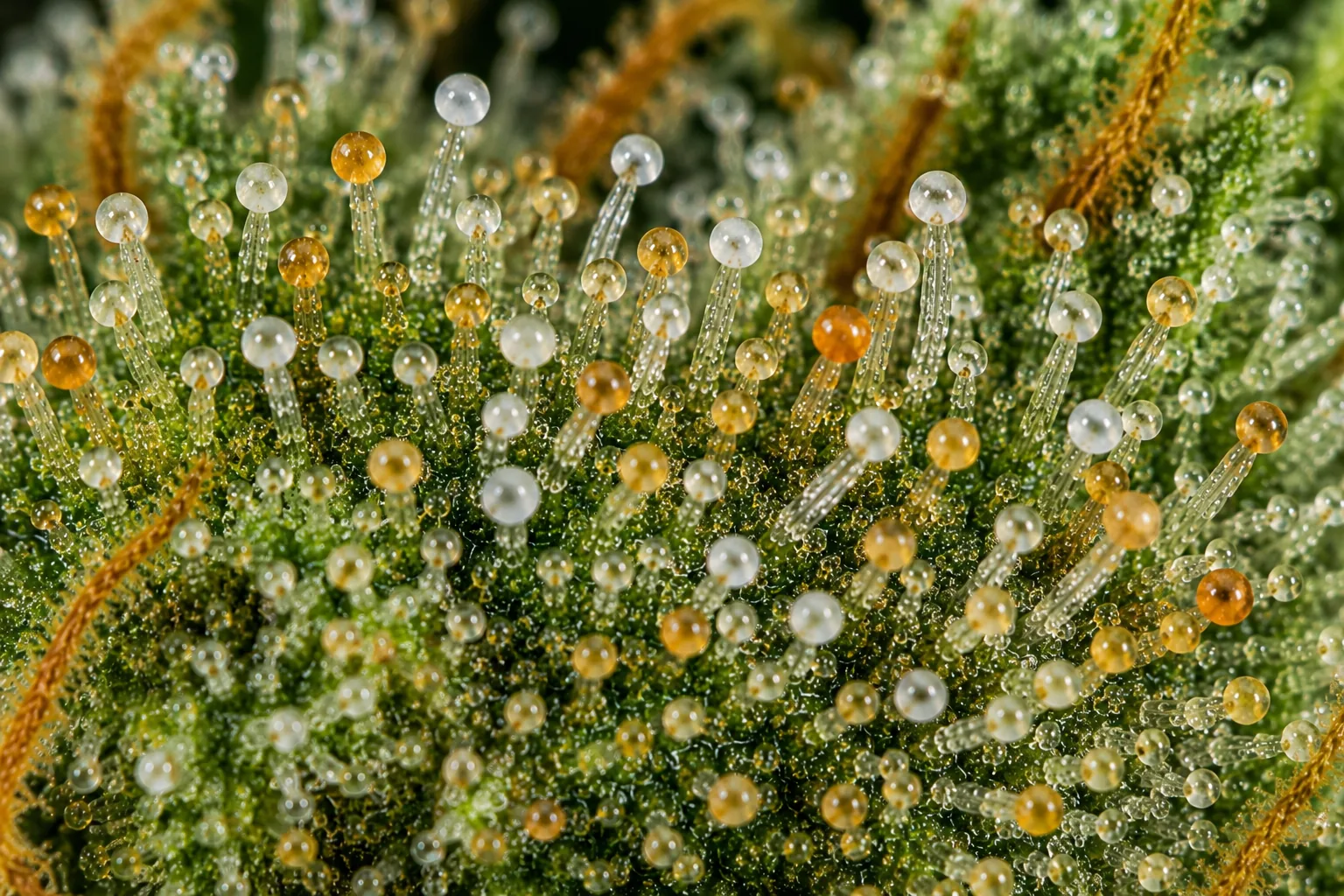
The image below is the practical target: a mixed field, mostly cloudy with some amber coming in. That is what the start of an amber-aware harvest actually looks like, rather than a uniform field of golden heads. For the full side-by-side of the two stages, see cloudy vs amber trichomes.

Macro photograph of a ready cannabis bud with mixed cloudy-white and amber trichome heads - the balanced full-spectrum harvest window where amber begins.
The target window: mostly cloudy with some amber, not a uniform field of gold.
How much amber

Amber percentage and what it gives you.

Amber level What it means Effect profile
Under 10% Peak THC, window just opening Energetic, cerebral, clear-headed
20 to 30% Balanced full-spectrum window Relaxed but still potent; the craft target
40 to 50% Late window, leaning sedative Heavy body, calm, sleep-leaning
Mostly amber Past peak; significant THC degraded Strongly sedative, couch-lock, lower total potency
When it is actually too late

Past peak, and the foxtail trap.

Genuinely too late looks like a canopy where the heads are overwhelmingly amber and some are beginning to look gray or to wither. At that point a meaningful share of the THC has degraded and you are past the point of trading up. The flower is still usable and worth curing, just adjust your expectations toward a heavy, sedative profile.

One trap worth naming: foxtailing. Under heat or light stress, some plants push new clusters of calyxes late in flower, which carry fresh clear and cloudy trichomes alongside older amber ones. That can make a plant look less finished than it is, or push you to wait for the new growth while the original buds slide past peak. Read the main, oldest buds for the real call, not the late foxtails.

Common mistakes

Why growers misread amber.

  • Treating amber as a sign of strength rather than conversion past peak.
  • Chasing a high amber percentage by accident through simple impatience to "let it finish."
  • Reading sugar leaves, which amber one to two weeks before the calyxes and exaggerate ripeness.
  • Letting late foxtail growth reset the harvest clock while the main buds overshoot.

Amber trichome questions

Are amber trichomes too late to harvest?

Not by themselves. Some amber, around twenty to thirty percent, is the balanced window most craft growers target. It only becomes too late when the heads are overwhelmingly amber, which means peak THC has passed and a significant share has degraded to CBN. At that point the effect is heavy and sedative with lower total potency.

What do amber trichomes do to the high?

As THC converts to CBN, the effect shifts from energetic and cerebral toward relaxed, body-heavy, and sedative. More amber means a calmer, sleepier high. That is why some growers deliberately wait for heavier amber when they want a nighttime or sleep-leaning result.

Why are only some of my trichomes amber?

That is normal and expected. Trichomes do not convert all at once, so a real harvest read is always a mix of cloudy and amber heads. You are reading the overall ratio across several buds, not waiting for a uniform color. Late foxtail growth can also add fresh clear and cloudy heads next to older amber ones, so judge by the main, oldest buds.