Harvest timing

Pistils vs Trichomes: Which Tells You When to Harvest?

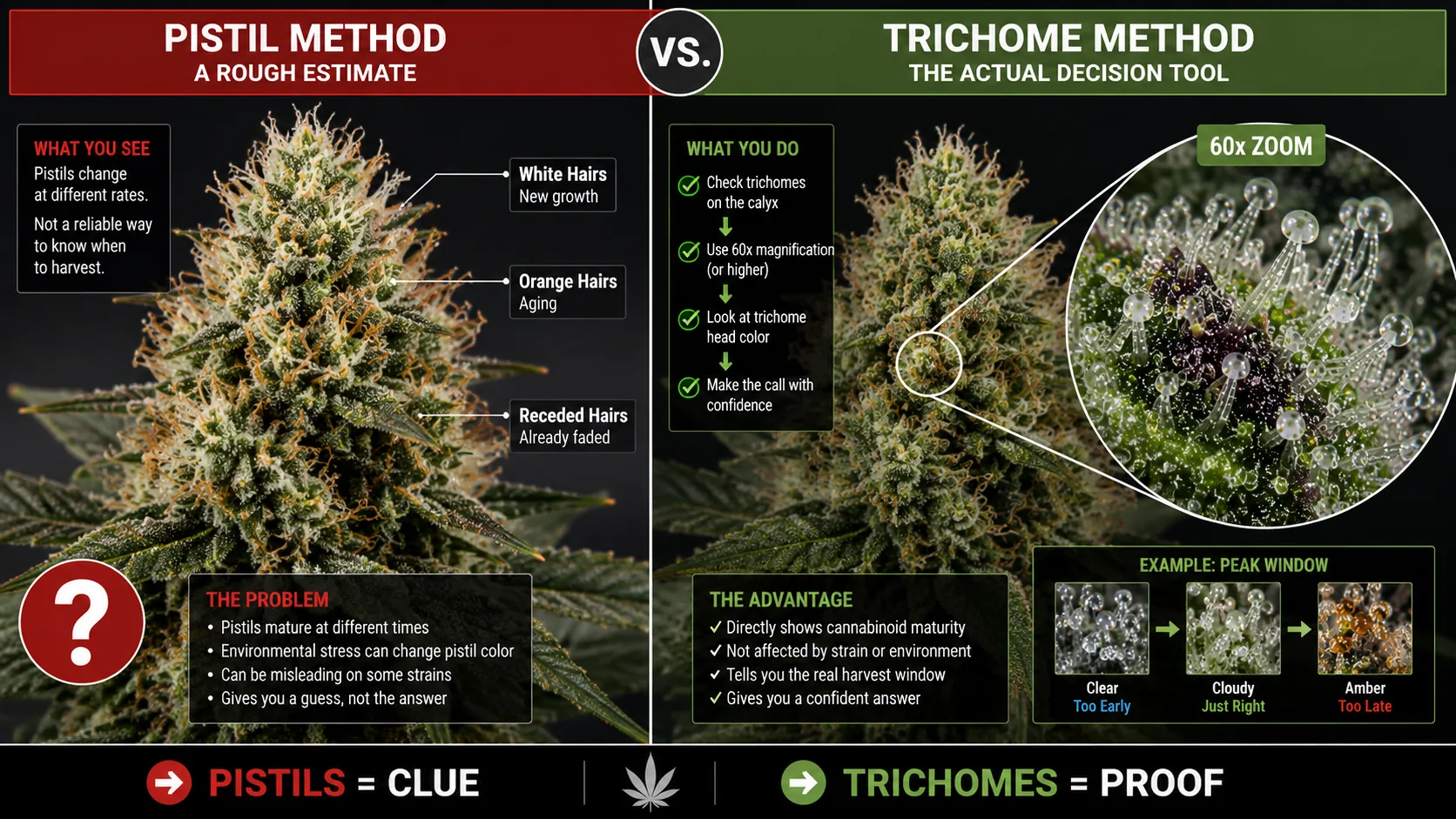
Both are ripeness signals, but they are not equal. Pistils, the hair-like strands on the bud, are easy to see and give a rough estimate of how far along a plant is. Trichomes, the resin heads you read under magnification, are the actual decision tool. Pistils tell you the plant is getting close; trichomes tell you whether to cut today. If the two disagree, the trichomes win.

The short version: pistils are the clue, trichomes are the proof. Most rushed harvests happen because someone trusted the hairs and never looked closer.

Pistils Visible to the naked eye. A rough estimate of progress, easily thrown off by strain and stress.
Trichomes Read under a loupe. The precise read of cannabinoid maturity and the real harvest window.
The verdict Use pistils to know when to start checking; use trichomes to make the actual call.
Side-by-side comparison of the pistil method and the trichome method for judging cannabis harvest timing: pistils give a rough estimate while trichome color is the reliable decision tool.
Pistils are a clue; trichomes are proof. The pistil method estimates, the trichome method decides.
The pistil method

Pistils are a rough estimate, not a verdict.

Pistils are the fine strands that emerge from the calyxes. Early in flower they are white and stand upright; as the plant matures they darken to orange, red, or brown and curl inward. The common rule of thumb is to harvest when somewhere between fifty and seventy percent of the pistils have darkened. It is a useful first signal because you can see it without any tools.

The problem is precision. Pistils mature at different rates across the plant, environmental stress can darken them early, and some strains throw mostly dark pistils well before the flower is actually ripe. Reading hairs gives you a guess, not an answer. They tell you the plant is in the neighborhood of ripe, which is exactly when you should stop trusting them and reach for a loupe.
When to use pistils

Pistils answer "should I start checking?" not "should I cut today?"

  • Visible without tools.
  • Good for spotting that the plant is getting close.
  • Unreliable as the final harvest call.
The trichome method

Trichomes show cannabinoid maturity directly.

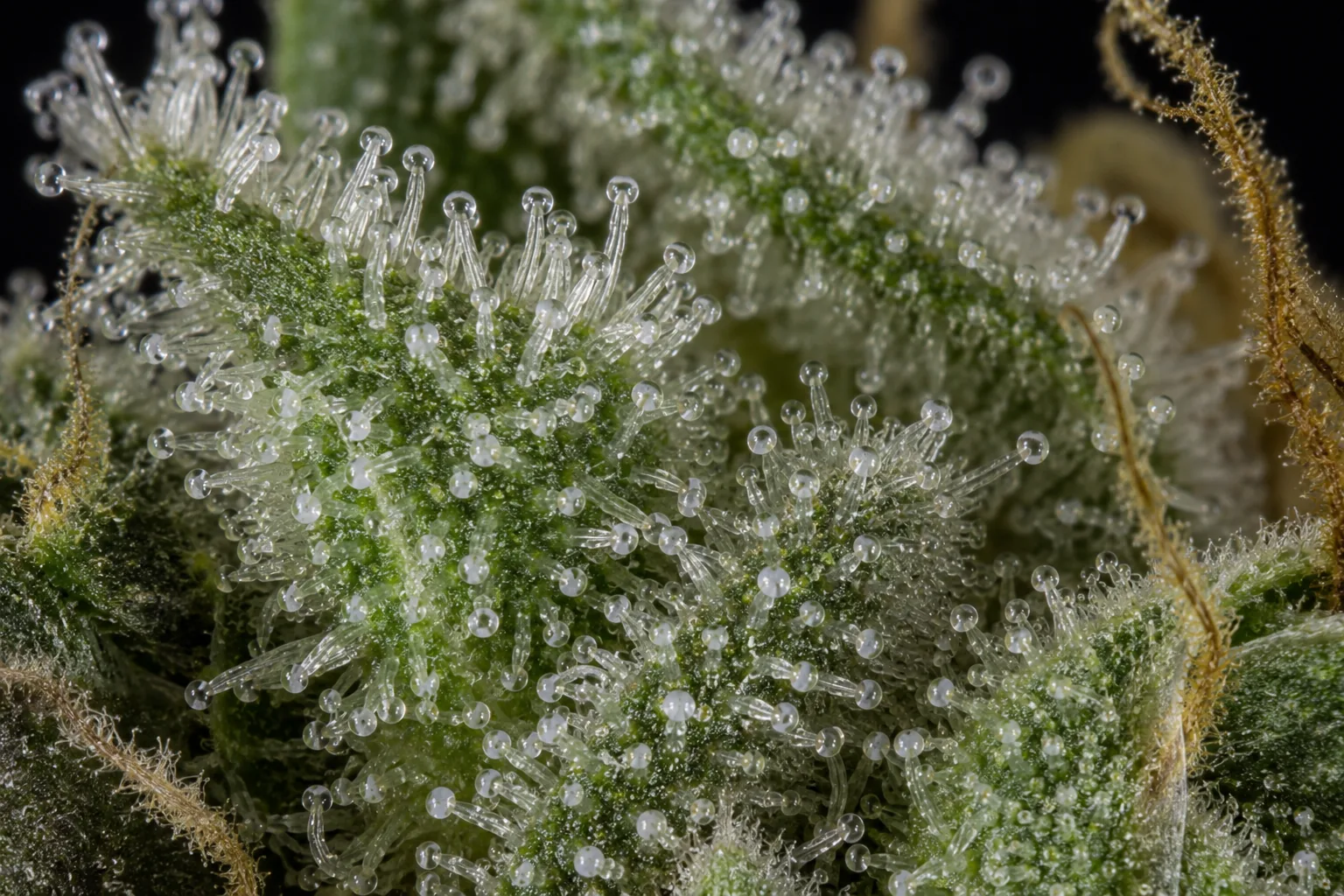
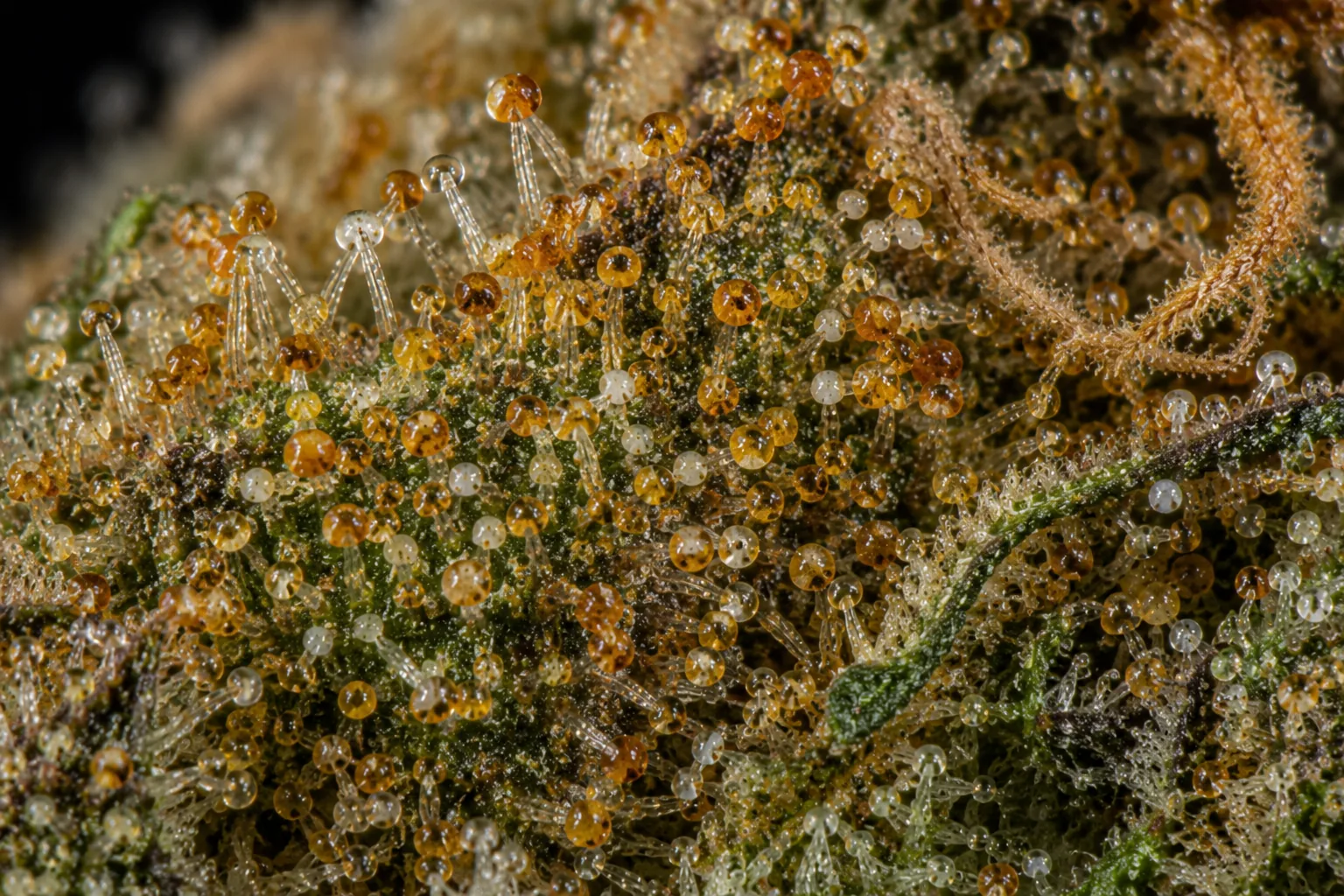
Trichomes are the resin glands, and their color tracks what is actually happening to the cannabinoids inside. Clear heads mean the flower is still building and is not ready. Cloudy, milky heads mean peak THC. Amber heads mean THC is converting to the more sedative CBN. Because you are reading the resin itself rather than a proxy, trichome color is not affected by the strain or stress in the way pistils are. It tells you the real window.

The two macro shots below are what the trichome method actually looks at. On the left, clear and glassy heads say too early. On the right, heavy amber says past peak and into sedative territory. That direct read is why trichomes are the decision tool. For the full inspection routine, see how to read trichomes, and for the magnification you need, see trichome magnification.

Macro photograph of clear, glassy cannabis trichomes indicating the harvest is too early.
Clear heads: too early.
Macro photograph of heavily amber, partly degraded cannabis trichomes indicating the harvest is past peak and late.
Heavy amber: past peak.
Side by side

Two methods, two jobs.

Property Pistil method Trichome method
What you read Color of the hairs (white to amber, curling) Color of the resin heads (clear, cloudy, amber)
Tool needed None; naked eye 30 to 60x loupe or USB microscope
Reliability Rough; thrown off by strain and stress Direct read of cannabinoid maturity
Best use Knowing when to start checking Making the actual harvest decision

Pistils vs trichomes questions

Should I harvest based on pistils or trichomes?

Trichomes for the final decision. Pistils are a good rough signal that the plant is getting close, but they are easily misled by strain genetics and stress. Once pistils start darkening, switch to reading trichome color under magnification to decide the actual day.

Can I harvest by pistils alone if I have no loupe?

You can, but expect a less precise result. Harvesting when fifty to seventy percent of pistils have darkened and curled gets you roughly into the window. A cheap 30 to 60x loupe or a phone microscope costs little and removes most of the guesswork, so it is worth getting one.

What if the pistils and trichomes disagree?

Trust the trichomes. If most pistils have darkened but the trichomes are still mostly clear, the plant is not ready despite the hairs. If the pistils still look pale but the trichomes are cloudy with some amber, the plant is in the window. The resin is the more direct signal.