Post-harvest

Wet Trim vs Dry Trim: Which Should You Choose?

After you cut the plant, you decide when to remove the leaves: right away while the buds are still moist (wet trim), or after they have dried on the branch (dry trim). Both produce excellent flower; they are two workflows, not a right and a wrong. Wet trimming is faster and keeps the drying space cleaner. Dry trimming protects the buds during the dry and slows the process, which many craft growers prefer. The best choice depends on your space, your climate, and how much time you have.

There is no universal best method here. Pick the workflow that fits your room and your goals, then do it consistently.

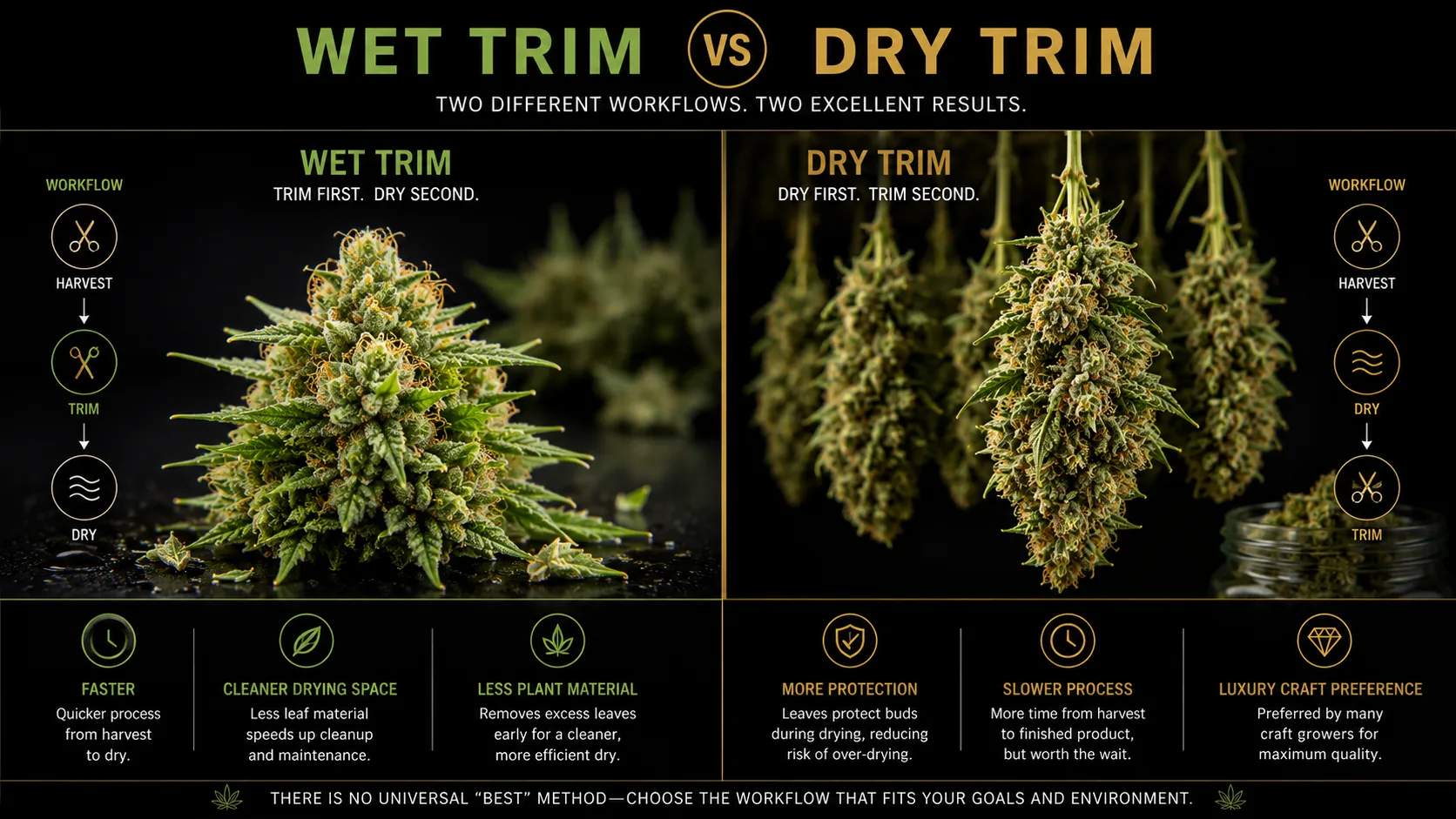
Wet trim Trim first, dry second. Faster, cleaner drying space, less plant material to dry.
Dry trim Dry first, trim second. More protection during the dry and a slower, gentler finish.
The deciding factor Humid climate or tight space leans wet; dry climate or craft priority leans dry.
Comparison of wet trim and dry trim cannabis workflows: wet trim is faster with a cleaner drying space and less plant material, while dry trim offers more bud protection, a slower process, and is preferred by many craft growers.
Two workflows: wet trim (trim then dry) is faster and cleaner; dry trim (dry then trim) protects the buds and slows the dry.
Wet trim

Trim first, dry second.

With a wet trim, you remove the fan and sugar leaves right after harvest, while the buds are still moist, then hang or rack the trimmed buds to dry. The leaves cut away cleanly when they are turgid, so trimming is quicker and the result looks tidy immediately. Because you are drying less plant material, the buds dry a little faster and the drying space stays cleaner with fewer leaves to shed moisture.

The trade-off is speed of drying: with the protective leaves gone, buds can dry too fast in a dry climate, which is the enemy of a smooth cure. Wet trimming suits humid environments and tight spaces where you want airflow around bare buds and cannot afford a slow, leafy dry that invites mold.

Dry trim

Dry first, trim second.

With a dry trim, you hang the whole branches with leaves intact, let them dry, and trim afterward. The leaves act as a buffer that slows moisture loss, so the dry is gentler and more even, which protects terpenes and reduces the risk of over-drying. Many craft growers prefer this for the finished quality it tends to produce.

The costs are time and space: drying whole, leafy branches takes more room and the leaves can curl tight around the buds, making the eventual trim slower and fiddlier. Dry trimming suits drier climates and growers who have the space and want to bias toward a slow, protective finish. Whichever you choose, the dry feeds straight into the cure, so pair it with curing cannabis and when buds are ready for jars.

Side by side

How the two workflows compare.

Factor Wet trim Dry trim
Order Trim, then dry Dry, then trim
Speed Faster; buds dry quicker Slower, gentler dry
Space Less; bare buds take little room More; whole leafy branches
Bud protection Lower; exposed during dry Higher; leaves buffer the dry
Best for Humid climates, tight spaces Dry climates, craft finish

Wet trim vs dry trim questions

Is wet trim or dry trim better?

Neither is universally better; they are two workflows. Wet trimming is faster, keeps the drying space cleaner, and suits humid climates or tight spaces. Dry trimming slows and protects the dry, which many craft growers prefer, but needs more room. Choose based on your climate, space, and priorities.

Does dry trimming really improve quality?

It can, indirectly. Leaving the leaves on slows moisture loss, so the dry is gentler and more even, which helps preserve terpenes and reduces the risk of over-drying. The leaves themselves do not add quality; the slower, protected dry is what many growers are after.

Which trim is better for a humid climate?

Wet trimming usually. Removing the leaves opens up airflow around bare buds and speeds the dry slightly, which lowers mold risk when ambient humidity is high. In a dry climate the opposite logic favors dry trimming, since you want to slow moisture loss.