9 Craft Cannabis Growing Tips That Matter
Craft cannabis growing tips for indoor growers who want better flower, cleaner runs, and repeatable results in compact spaces at home.
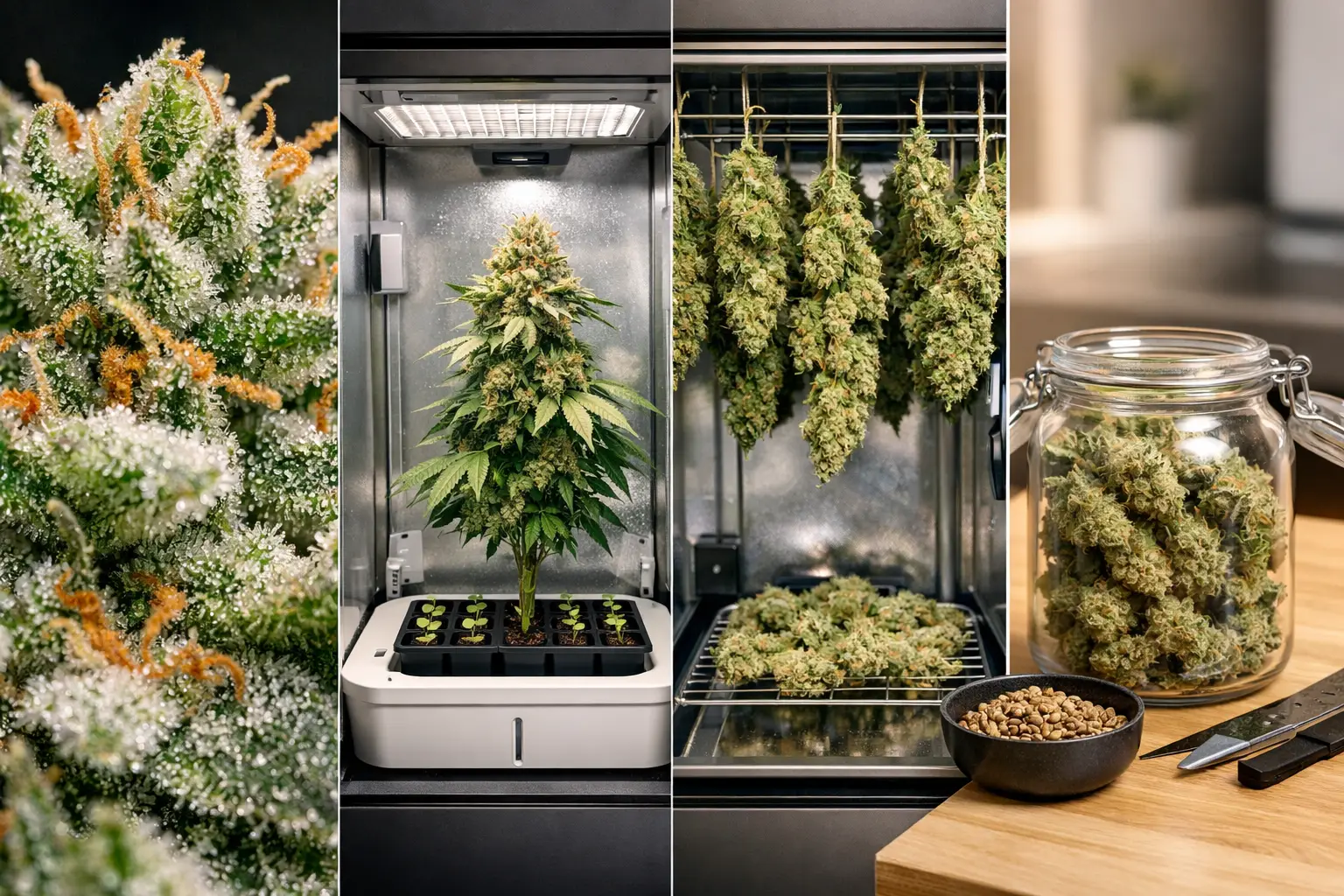
If your grow plan starts with yield targets instead of flower quality, you are already drifting off course. The best craft cannabis growing tips are not about pushing bigger plants, stacking bottles, or copying a social media setup that does not match your space. They are about building a clean, readable process that helps a small indoor grow finish strong.
That matters most in cabinets, closets, and compact tents where every mistake compounds fast. In a tight environment, bad airflow, lazy watering habits, weak dry-room control, or a poorly timed harvest will show up quickly. Craft growing is not fancy growing. It is disciplined growing.
Craft cannabis growing tips start with method-to-space fit
A lot of beginner problems are not really plant problems. They are fit problems. The method does not match the enclosure, the plant count does not match the light footprint, or the workflow does not match the grower's schedule.
If you are growing in a compact cabinet or small tent, choose a method you can actually manage every day. That usually means avoiding systems that create too many moving parts for your level of experience. A simple deep water culture setup can work very well in small indoor spaces, but only if you are willing to monitor water temperature, solution level, root health, and pH consistently. Soil can be more forgiving in some ways, but it also invites sloppy wet-dry habits if you are not paying attention.
The point is not that one method is universally better. The point is that craft quality starts when your method fits your enclosure, your routine, and your tolerance for maintenance. Clarity beats ambition here.
Keep the plant small enough to finish well
Beginners often make the same mistake: they veg too long, overfill the space, and spend the rest of the run trying to control a plant that should have been flipped earlier. In compact grows, oversized plants do not feel impressive for long. They become airflow problems, humidity traps, and light management headaches.
A smaller plant with a controlled canopy will usually produce better flower than a crowded one that never gets proper environmental control. That is one reason many small-space growers prefer faster schedules such as 12/12 from seed. It is not about chasing a trick. It is about keeping the plant proportional to the enclosure and finishing with cleaner, denser flower.
If your plant is already pressing against the walls, stacking into the light, or creating a shaded lower half by early flower, you did not gain an advantage. You borrowed trouble.
Train less, read more
Training has its place, but many new growers use it as a rescue strategy for plants that were never sized correctly to begin with. A little topping, bending, or branch positioning can help manage shape. Constant intervention usually means your plan was loose from the start.
Craft growers read structure early. They do not wait for chaos and then call it technique.
Environmental control is where quality is won
You do not grow premium flower with nutrients alone. You grow it with vapor pressure, airflow, temperature control, and humidity discipline. This is where a lot of home growers lose quality while still thinking the grow is going fine.
In veg, you want steady growth without overly soft tissue. In flower, you want enough airflow and moisture control to keep the canopy healthy and the buds clean. Late flower is where your environment needs to tighten up. Dense flowers in a damp enclosure are not a badge of success. They are a mold risk.
Keep your canopy readable. Leaves should not constantly pray one day and taco the next. The room should not swing wildly from cool and humid lights-off conditions to hot and dry lights-on stress. If your environment is unstable, your plant will spend energy adapting instead of finishing.
This is where compact systems either help or hurt. A well-managed enclosed grow can be very efficient because the environment is easier to steer. A cluttered enclosure with poor circulation and no real monitoring becomes guesswork fast.
Feed for health, not for hype
Overfeeding is one of the easiest ways to turn a promising run into a mediocre one. New growers see pale leaves, slow growth, or minor spotting and assume the answer is always more nutrition. Often it is not. Sometimes the issue is pH drift, root-zone stress, poor oxygenation, temperature swing, or simple impatience.
Craft flower does not come from the loudest nutrient line or the most aggressive feeding chart. It comes from keeping the plant in a stable range where uptake is consistent and stress stays low. If you are in DWC, this means paying close attention to water quality, root health, and reservoir conditions. If you are in media, it means understanding dryback and avoiding the cycle of overwatering, under-watering, then panic feeding.
More inputs do not equal more quality. Clean inputs, stable conditions, and measured adjustments do.
Read the roots and leaves together
Leaves tell you what the plant is showing. Roots tell you why. In hydro, especially, you cannot separate top growth from root-zone performance. White healthy roots, proper water temperature, and steady oxygenation matter just as much as what is happening above the lid.
If the leaves look off, do not just stare at the canopy. Check the reservoir, smell the root zone, confirm your pH trend, and look for environmental causes before blaming the feed schedule.
Flowering strategy matters more than grow-room mythology
A disciplined flowering plan beats a pile of folklore. That means entering flower with a plant that fits the space, keeping the canopy open enough for airflow, and avoiding major stress once budding is underway.
You do not need to strip every leaf, chase every training trend, or keep changing variables because someone online got a bigger number. In compact indoor growing, stability tends to outperform constant tinkering. Once the plant is set up for flower, your job is to maintain conditions and respond to real signals, not invent work.
This is especially true in the second half of flower. Late-stage stress shows up in quality loss, not just appearance. Heat, excess humidity, root-zone trouble, and light stress can flatten aroma, reduce finish quality, and create avoidable cleanup problems at harvest.
The best craft cannabis growing tips often show up at harvest
A lot of growers spend months getting to the finish line and then rush the only stage that directly determines smoke quality. That makes no sense. Craft growing is not just about producing flower. It is about preserving it.
Harvest timing should be based on plant maturity, not boredom. If the plant still has more to give, let it finish. If it is fading properly, swelling well, and showing real ripeness, do not keep it running just because you are chasing a different trichome photo you saw online.
Once chopped, the dry matters as much as the grow. If your drying space is too warm, too dry, or poorly ventilated, the flower will tell on you. Harsh smoke, weak aroma, flat flavor, and uneven moisture are usually finish-stage failures, not genetic betrayals.
A disciplined dry and cure process is part of the grow, not an extra. This is one place where ColaXpress is right to be opinionated: growers ruin more good flower in the final stretch than they realize.
Slow down when everyone else speeds up
The best finish-stage advice is simple. Do less, but control more. Keep the environment stable. Avoid overhandling. Jar or container the flower based on actual moisture condition, not on a fixed number of days. Burp less if your dry was correct. Interfere less once the process is on track.
Craft quality rewards restraint.
Build a repeatable workflow, not a heroic grow
If every run feels like a rescue mission, your system is not working. Good indoor growers are not the ones who save disasters with complicated tricks. They are the ones who set up a grow that stays readable from seed to jar.
That means documenting what you did, what the environment looked like, how the plant responded, and where quality improved or dropped. It also means changing fewer variables at once. If you switch nutrients, lighting intensity, training style, and dry conditions in one run, you will not know what actually moved the outcome.
Craft cannabis growing tips are only useful if they help you repeat quality. That is the standard. Better flower, fewer surprises, cleaner finishes.
The useful mindset is simple: grow the plant that fits your space, manage the environment like it matters, and treat the last two weeks after chop with the same discipline you gave the first two weeks after sprout. That is how small indoor grows stop feeling chaotic and start producing flower you are actually proud to keep.