Cannabis VPD Guide for Small Grow Spaces
This cannabis VPD guide explains how to set temperature and humidity in grow spaces, read plant response, and avoid environmental swings through flower.
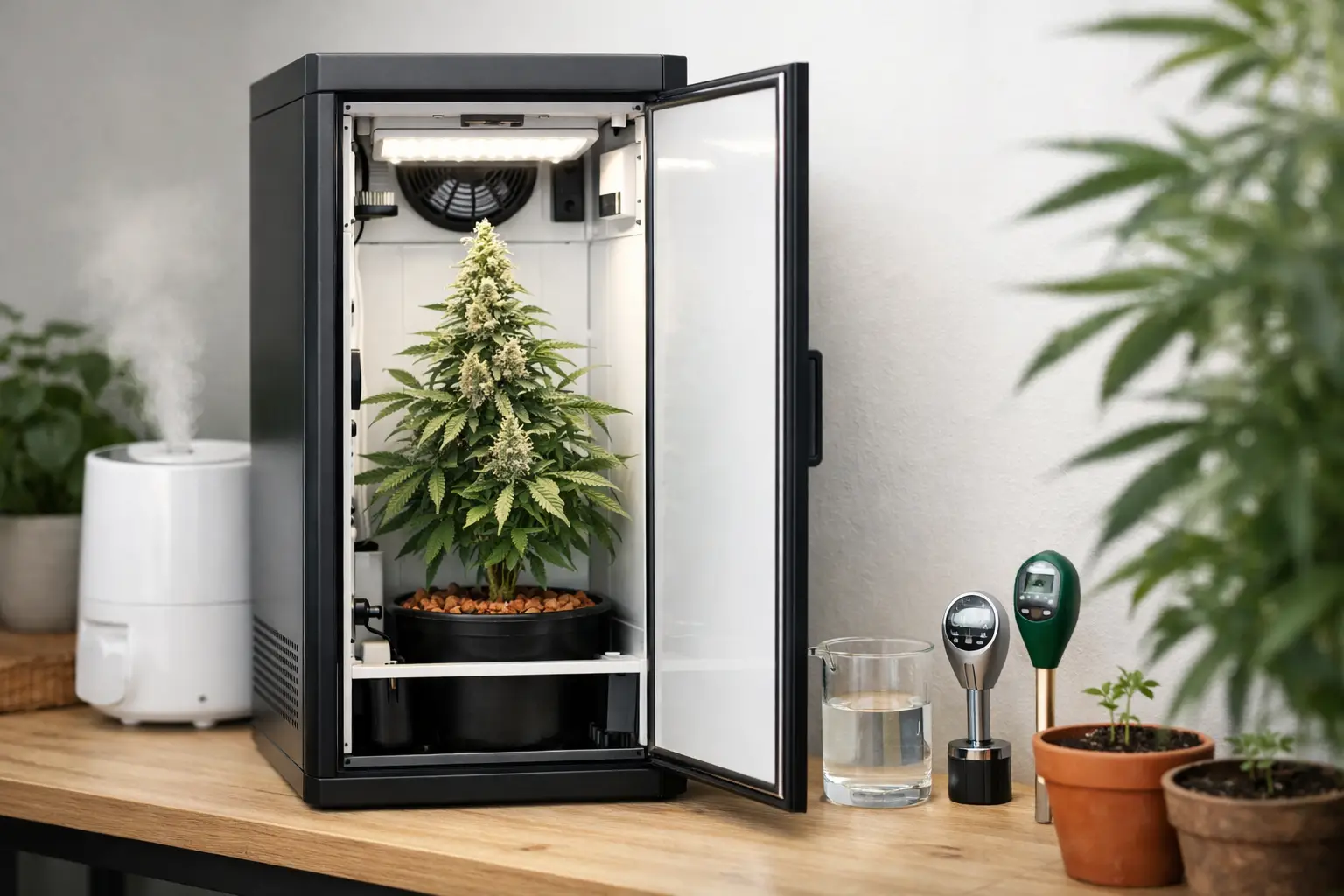
A compact grow can look clean on a temperature and humidity display while the plant is quietly working too hard. That is why a cannabis VPD guide matters. VPD gives you a way to read heat and moisture together, rather than chasing a single humidity number or reacting to every small temperature change. In a cabinet, tent, or small room, that clarity prevents a lot of avoidable drama.
VPD is not a yield hack. It is an environmental control tool. Used well, it helps you build a stable routine where roots can drink, leaves can transpire, and flower can finish without being pushed by heat, dry air, or constant adjustment.
What VPD Actually Tells You
VPD means vapor pressure deficit. In plain terms, it describes how strongly the air pulls moisture from a plant's leaves. It depends on temperature and relative humidity, and it is measured in kilopascals, or kPa.
Warm, dry air creates a higher VPD. The air has more demand for water, so the plant transpires faster. Cool, humid air creates a lower VPD. The air is already carrying more moisture, so transpiration slows down.
Neither extreme is a craft grower's friend. Push VPD too high and plants can drink faster than their roots can supply water and nutrients. You may see leaf edges curl upward, pale new growth, fast reservoir drawdown, or a plant that looks thirsty even though the root zone is wet. Keep VPD too low and transpiration slows. Growth can feel soft and sluggish, leaves may stay overly dark, and dense flowers face a less forgiving humidity environment.
The useful question is not, What VPD produces the biggest plant? In a compact setup, ask whether the environment is stable enough for the plant's current stage and whether the plant is responding normally. Clarity, not chaos.
Cannabis VPD Guide: Start With Stable Air
VPD charts are useful, but they are not a license to turn every grow into a laboratory project. A chart gives a target zone. Your job is to hold the environment close enough to that zone for long enough that the plant can settle into a predictable rhythm.
Start with air temperature and relative humidity at canopy height. Do not rely on a sensor sitting on the cabinet floor, beside a humidifier outlet, or directly under the light. In a small enclosure, a few inches can produce a misleading reading.
Leaf temperature adds another layer. Under strong LED lighting, leaf surfaces can run a few degrees cooler than the air because they are transpiring. Since VPD is technically based on leaf temperature, an air-temperature chart is an estimate. That is fine for most home growers. Just understand the trade-off: if your leaves run cooler than the room air, the actual leaf VPD is lower than the number shown on a basic air-based chart.
A simple infrared thermometer can help verify this, but it is not required on day one. A good sensor, steady airflow, and plant observation beat a pile of gadgets. Do not buy your way around an unstable workflow.
Practical VPD Ranges by Growth Stage
These are working ranges, not commandments. Genetics, root health, lighting intensity, and your ability to control humidity all matter. In a small cabinet, a slightly less aggressive target that stays stable is usually better than a perfect number that swings all day.
| Plant stage | Practical VPD range | What you are trying to support | | --- | ---: | --- | | Seedling and early establishment | 0.5-0.8 kPa | Gentle transpiration while roots develop | | Vegetative growth | 0.8-1.1 kPa | Steady leaf growth and active nutrient flow | | Early to mid flower | 1.0-1.3 kPa | Healthy uptake without keeping the canopy too damp | | Late flower | 1.2-1.5 kPa | A drier finish with mold risk kept in view |
Seedlings and recently rooted plants do not need a hard, dry environment. Their root systems are limited, and high VPD can turn a minor watering or root-zone issue into visible stress. Keep the air moderately warm and humid, then let the plant establish before asking more from it.
Vegetative plants generally tolerate a moderate increase in VPD well, especially when the root zone is healthy and lighting is appropriate. But bigger numbers are not automatically better. If you are running 12/12 from seed in a compact cabinet, the plant may move from establishment into flower quickly. There is no prize for forcing a high-vegetative VPD window before the canopy is ready.
Flower changes the priorities. You still need enough transpiration for normal plant function, but dense developing buds and high humidity are a bad combination. As flowers stack, lower humidity becomes more valuable. This is especially true in a tightly packed cabinet where airflow can be weaker in the center and below the canopy than the monitor suggests.
Late flower is where growers often make a poor trade. They keep humidity high because the plant looked happy there in veg, then discover that happy leaves are not the only concern. Flower safety matters. A slightly higher VPD, supported by good air exchange and circulation, is usually the cleaner finish.
How to Run VPD in a Small Grow Cabinet
Treat VPD as part of a sequence. First make the enclosure readable. Then tune the environment. Then watch the plant before changing anything else.
Begin by logging temperature and humidity with lights on and lights off for at least several days. The daytime number is only half the picture. When lights shut off, temperature drops and relative humidity rises. In a small grow space, that swing can push the room into a low-VPD, high-humidity zone for hours. During flower, that is not a minor detail.
Next, set the basics. Use your exhaust system to remove humid air and heat, while internal circulation keeps air moving across and through the canopy. Circulation is not the same as exhaust. A fan stirring air inside the cabinet helps prevent damp pockets, but it does not remove moisture from the enclosure.
Then make one correction at a time. If daytime VPD is too high, reduce heat, raise humidity modestly, lower excessive light intensity, or improve the root zone before assuming the plant needs more water. If VPD is too low, increase exhaust, reduce added humidity, or raise temperature carefully. Do not make three changes at once and call the result a diagnosis.
For DWC growers, this discipline matters even more. A plant transpiring hard under high VPD will pull more water from the reservoir. That can concentrate nutrients as the water level drops, creating a second problem that looks like a feeding issue. Check water level, solution strength, and root health before responding with more nutrients. Environmental stress can wear a nutrient-deficiency costume.
Read the Plant Before You Chase the Number
A VPD reading is useful. Plant behavior decides whether your setup is working.
At excessively high VPD, leaves may canoe upward at the edges, new growth can look stressed or thin, and the reservoir or medium may dry far faster than expected. High light can create similar symptoms, so inspect the full picture. If the canopy is hot, bright, dry, and drinking aggressively, VPD is likely part of the story.
At excessively low VPD, growth may feel slow despite acceptable feeding, leaves can remain very dark and heavy, and the canopy may stay humid after watering or during the lights-off period. In flower, inspect dense areas and lower branches rather than trusting the sensor near the top of the cabinet.
Do not confuse one bad hour with a failed grow. A brief temperature spike when the house gets warm is different from a daily six-hour swing. Plants handle imperfection. They do not handle repeated instability well.
The VPD Mistakes That Create Avoidable Drama
The first mistake is using a chart as a command instead of a reference. If reaching 1.25 kPa requires blasting the heater, drying the room excessively, and stressing the plant every night, that number is not serving the grow.
The second is ignoring lights-off humidity. Many growers build a decent daytime environment, then let relative humidity climb after dark because the exhaust is slowed or the room cools sharply. In late flower, this is where a clean-looking setup can become risky.
The third is treating humidity as the only control. Temperature changes VPD just as much as humidity changes do. If your cabinet is too warm, adding more humidity may mask the number while leaving the plant under intense light and heat. Fix the actual pressure point.
The fourth is forgetting airflow through the canopy. A sensor may report 50% relative humidity while dense buds in the middle of a crowded plant sit in a still, wetter pocket. Prune for airflow when needed, keep a gentle fan moving, and do not pack a compact space beyond what you can ventilate.
A disciplined grow does not need perfect numbers every minute. It needs a readable environment, sensible stage targets, healthy roots, and enough restraint to avoid fixing problems that are not there. Hold that line through late flower, then carry the same patience into drying and curing. That is where careful environmental control becomes finished cannabis worth keeping.