12/12 From Seed vs Veg for Small Spaces
Compare 12/12 from seed vs veg for compact cannabis grows. Learn when each method works, how to manage size, and protect flower quality in small spaces.
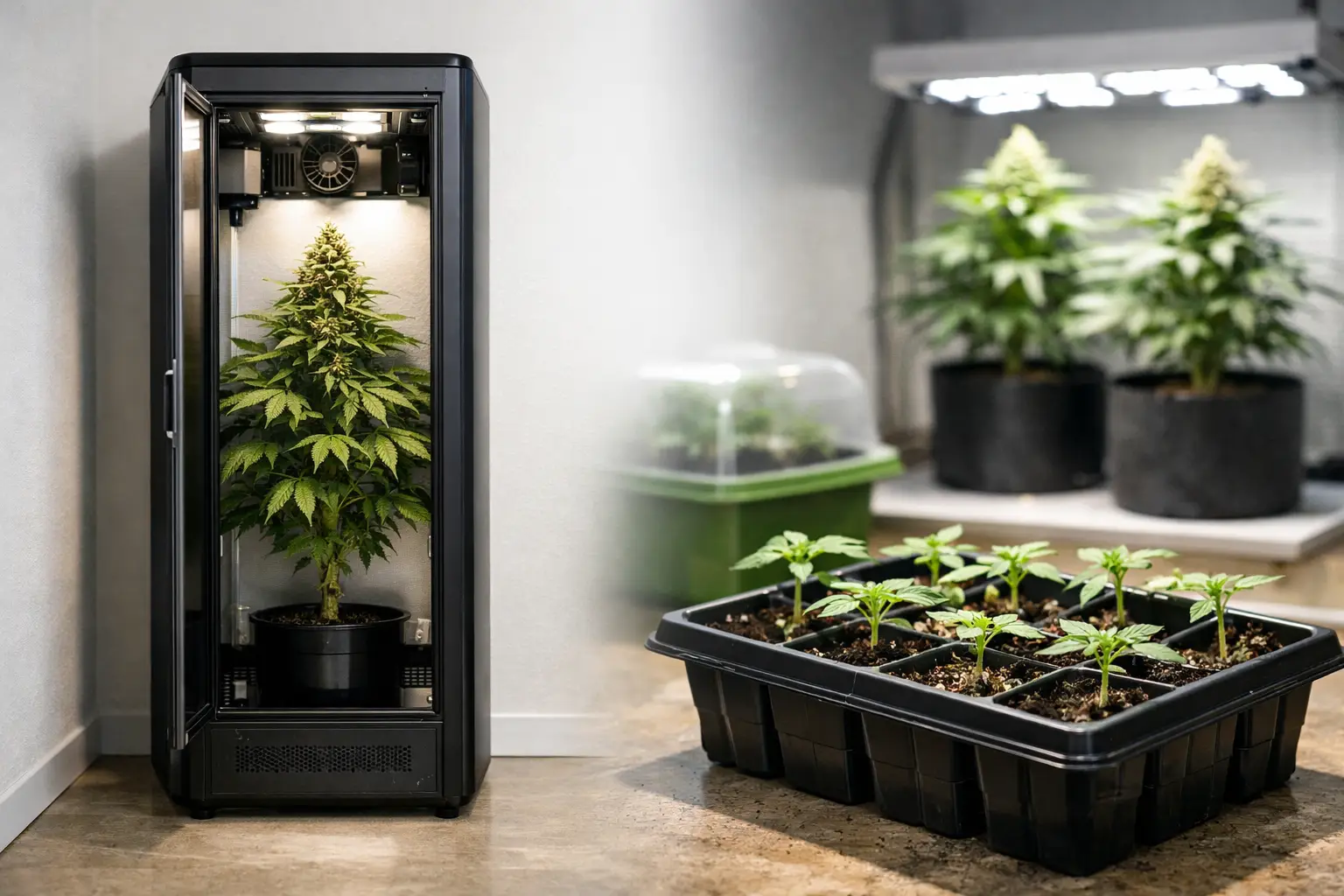
The 12/12 from seed vs veg decision determines the entire shape of a compact cannabis grow before the plant has even formed its first real branches. One path starts flowering pressure immediately. The other gives you time to build a larger plant before the flip. Neither is automatically better. In a cabinet or tight tent, the right choice is the one your space, plant count, and environmental control can actually support.
A small grow does not need a giant plant to produce satisfying flower. It needs a readable canopy, enough room between tops, stable root-zone conditions, and a finish that does not turn into humidity drama. Choose the schedule that keeps those things under control.
What 12/12 From Seed Actually Does
With a photoperiod plant, 12/12 from seed means the light schedule stays at 12 hours on and 12 hours off from germination through harvest. The plant still has a juvenile phase. It cannot flower the moment it cracks open, because it needs time to mature sexually first. But once it is mature enough, the short-day schedule tells it to begin flowering rather than continue building vegetative structure.
The result is usually a smaller plant with fewer branches, a shorter overall cycle, and a more limited training window. That is not a failure of the method. It is the point. You are trading plant size and recovery time for a faster, more space-conscious workflow.
In a compact enclosure, that trade can be smart. A plant that spends only a brief period stretching is easier to keep away from the light, easier to ventilate, and less likely to turn the cabinet into a crowded jungle. Fewer oversized branches also make it easier to inspect leaves, manage irrigation, and move air through the flower sites.
The catch is that 12/12 from seed leaves little room for mistakes. Early root stress, poor seedling lighting, nutrient problems, or a badly timed transplant can reduce the plant's final potential because there is no long veg period to rebuild. Your early environment needs to be steady. This method rewards clean execution, not improvisation.
Veg First Builds More Options - and More Work
A conventional veg period keeps photoperiod plants under a longer light schedule, commonly 18/6, before switching to 12/12 for flower. That extra time lets the plant produce more nodes, branches, and root mass. It also gives you room to top, train, correct an uneven canopy, and recover from minor early mistakes.
For growers who want to learn plant training, veg is more forgiving. You can shape a plant around the limits of the enclosure instead of accepting its natural early architecture. A short veg may be all that is needed to create several main tops and fill a small screen or low, wide canopy.
But veg is not free growth. Every additional week adds height, leaf mass, water use, and environmental load. In a cabinet, an extra week can turn a manageable plant into one that blocks airflow and crowds the light. Beginners often veg because a plant looks small, then discover that the flowering stretch doubles the problem. The goal is not to use every inch of space with leaves. The goal is to finish clean flower without a late-stage rescue mission.
Veg also extends the calendar. That may be worthwhile if you are running fewer plants and want more flower from each one. It may be a poor fit if your priority is a simple, repeatable seed-to-jar cycle in a very limited footprint.
12/12 From Seed vs Veg: The Real Trade-Offs
The practical difference is not simply small yield versus big yield. It is control versus speed, with plant count and enclosure size sitting in the middle.
A 12/12-from-seed run generally gives you smaller individual plants. This can make it useful for a tight cabinet, a modest-height tent, or a grower running several small plants with minimal training. The canopy may stay naturally compact, and the harvest date arrives sooner because you skip dedicated veg time. You also avoid the common beginner problem of keeping a plant in veg until it has outgrown its home.
Vegging first gives you more ways to shape the final canopy. One well-trained plant can occupy the same footprint as several 12/12-from-seed plants. That reduces the number of individual root zones and plants to inspect, but it increases the consequences of a single plant problem. If one large plant develops root trouble, pest pressure, or a severe deficiency, the whole run takes the hit.
Plant genetics matter as much as schedule. Some cultivars stretch aggressively after the flip. Others stay squat and branch tightly. A tall, vigorous cultivar under 12/12 from seed can still become difficult in a short enclosure, while a compact cultivar with a brief veg can remain perfectly manageable. Read the breeder's flowering and stretch information as a starting point, then trust what the plant shows in your own environment.
Do not confuse photoperiod scheduling with autoflower timing. Autos flower according to age, not a 12/12 trigger. They can grow under 12/12, but the comparison here is mainly about photoperiod plants, where the light schedule is a real steering wheel.
Match the Method to Your Space
For a compact cabinet, start with vertical clearance. Measure from the top of the root zone or pot to the highest safe canopy position under the light. Then subtract the expected flowering stretch. If that remaining space is slim, 12/12 from seed or a very short veg is usually the disciplined choice.
DWC growers need to account for plant vigor, not just canopy width. A healthy hydro plant can accelerate quickly once its roots are established. That is an advantage only when the reservoir temperature, nutrient strength, dissolved oxygen, and water level are stable. In a small DWC setup, a plant can go from manageable to crowded in days. Long veg periods demand that you read the root zone and canopy together.
For soil or coco growers, the same basic rule applies: do not use veg to postpone a decision. If you need a small plant, flip while it is small. If you need a wider, trained plant, give it enough veg to establish branches, then flip before the canopy becomes dense.
A practical approach for first runs is to choose one method and keep the rest of the system simple. Do not compare schedules while also changing nutrients, container size, training style, and cultivar. That creates noise, not knowledge. Run a cultivar, record the height at flip and the final stretch, then adjust the next cycle with one clear change.
How Training Changes the Choice
Training can narrow the gap between these approaches, but it cannot erase the biological clock. Low-stress training works well with both methods because it guides branches outward without demanding a long recovery period. On a 12/12-from-seed plant, begin gently once the stem is flexible and the plant is clearly established. The objective is an open, low canopy, not aggressive shaping.
Topping is more situational. It can create more main branches, but it also costs recovery time. In a short 12/12-from-seed run, topping too early on a weak seedling or too late near the flowering transition can leave you with less growth, not better structure. It is often more useful during veg, when the plant has time to respond and fill out.
Defoliation deserves the same restraint. Remove leaves that are damaged, blocking airflow, or permanently shading important interior sites. Do not strip a small flowering plant because a social feed told you bare stems equal bigger buds. Leaves power the plant. In compact spaces, selective thinning for airflow beats dramatic leaf removal every time.
Build the Schedule Around the Finish
Flowering strategy is not separate from drying and curing. An overcrowded vegged plant may produce more material, but dense foliage holds moisture and makes late-flower humidity harder to manage. That raises the risk of poor airflow, powdery mildew, and mold hidden inside heavy flowers. A smaller 12/12-from-seed plant can be easier to finish safely because each branch is accessible and the canopy breathes.
That does not mean small is always superior. If your enclosure has reliable extraction, good circulation, enough height, and a stable dry space ready after harvest, a trained vegged plant can make excellent use of the room. The point is to build a grow you can finish with the same discipline you used to start it.
Before germination, decide what success looks like. If it means fast cycles, manageable plants, and a clean learning curve, start at 12/12 from seed. If it means practicing canopy shaping and producing more from fewer plants, use a controlled veg period. Pick the path that leaves room for good airflow, calm decisions, and a proper dry. That is craft, not max-weight theater.