Compact strain decision

Best Cannabis Strains for Small Spaces

The best cannabis strains for small spaces are not the loudest names or the frostiest catalog photos. They are cultivars with compact or moderate structure, restrained stretch, a flowering window your setup can support, and a canopy that still makes sense inside a cabinet, closet, or small tent. In practice, the best small-space strain is the one that fits the room honestly enough that the grower can still read the plant, finish it well, and protect the jar.

That answer matters because most small-space problems start before the light ever turns on. A cabinet can carry a disciplined plant. It struggles when the strain choice was based on hype, height denial, or the fantasy that every compact grow should somehow behave like a larger room.

Best trait Moderate stretch with a manageable branch pattern.
Worst trap Choosing by hype name instead of structure and finish fit.
Real goal A plant the room can support all the way through cure.
What it means

"Best" in a small space means best fit, not biggest promise.

Searchers using this keyword are usually asking for named strains, but the decision only gets useful once the room enters the conversation. A cultivar that works beautifully in a larger tent can still be a weak choice for a cabinet if it stretches hard, branches wide, flowers for a long time, or finishes with more biomass than the enclosure can dry and cure calmly. That is why the better answer starts with traits instead of brand names.

In a small space, the strongest strain profiles are usually compact or moderate in height, predictable in stretch, and structurally readable enough that the grower can keep the canopy clean without turning the run into a training contest. Flowering time matters too. If the room is modest and the finish path is tight, long, wandering flower cycles often cost more control than they return in romance.

The goal is not to erase personality from the plant. The goal is to choose a plant whose personality still fits the enclosure. A small-space winner usually feels calm in the room, not oversized and theatrical. If the strain choice forces the cabinet into constant correction, it was never the best choice for that footprint in the first place. That is why this page stays trait-first instead of pretending one short list of famous names can answer every cabinet.
Short version

The best small-space strain is the one that lets the room stay believable.

  • Moderate stretch
  • Manageable branch width
  • Sane finish timing
  • No need for heroic corrections
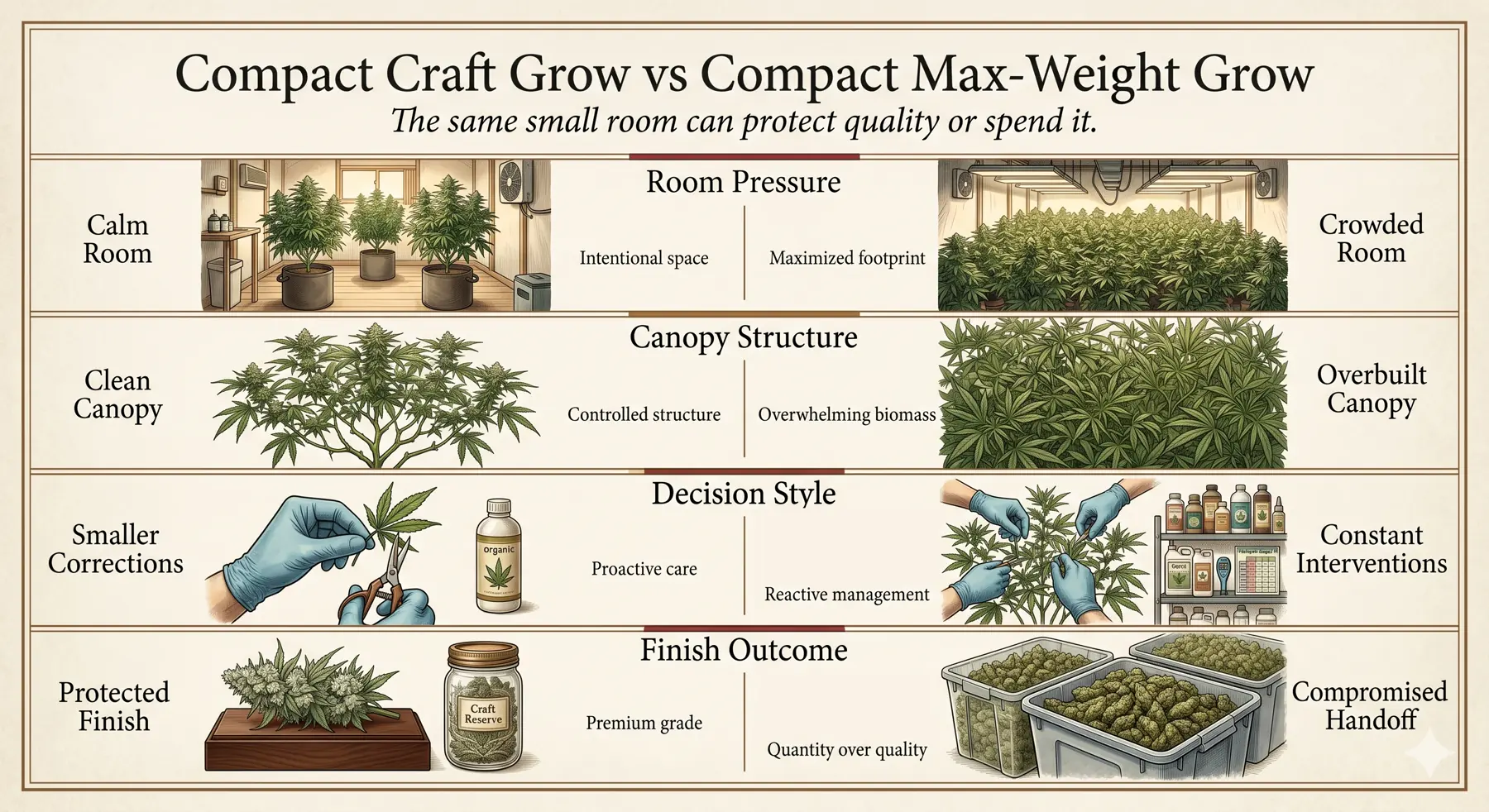
Comparison board showing compact plant structure, moderate stretch, wide-canopy risk, and small-space fit notes for cannabis cultivar selection.
The room does not care which name is trending. It cares whether the structure stays inside the logic of the footprint.
Why it matters in a compact grow

Small rooms punish the wrong plant choice faster than almost any other early decision.

A cabinet or small tent has less room for denial. If the cultivar stretches too hard, the light path gets noisy. If the lateral spread gets too ambitious, airflow and access get worse. If the flowering window is longer than the grower planned for, the whole run starts dragging while humidity, maintenance, and finish logistics become harder to keep elegant. This is why strain choice is not a decorative choice in compact growing. It is a structural one.

The same logic that makes small space cannabis grow work also applies here: the room gets better when every major choice makes the next stage easier to read. A compatible strain supports that. An oversized strain spends it. The cabinet does not just reveal environmental mistakes. It reveals genetic mismatch too.

This is also why trait shorthand matters more than old myth shorthand. Labels like "indica" or "sativa" do not tell you enough by themselves. The better questions are simpler: How hard does it stretch? How much side branching does it push? How long does it want to flower before it finishes honestly? How much canopy does it ask the room to carry? Those are the questions that belong in a small-space decision.

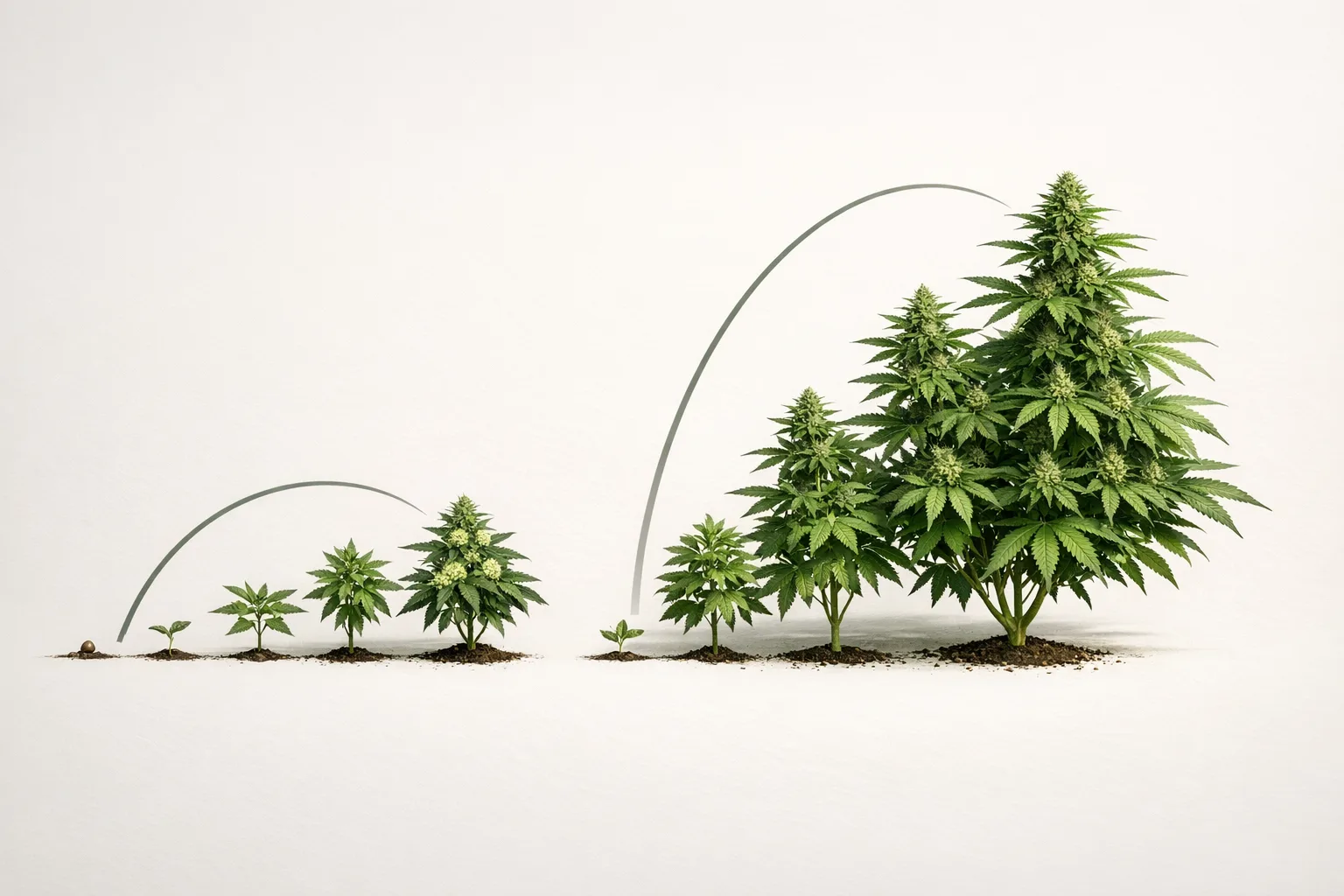
Timeline board comparing compact cultivar profiles, moderate-stretch profiles, and long-stretch profiles across canopy control and finish timing in small spaces.
Structure and timing matter together. A manageable plant that still outstays the finish plan can still become a bad small-space fit.
Decision layer

The best decision usually comes from matching strain traits to room limits before the grow starts.

Trait to favor Why it helps in a small space What to watch
Moderate stretch The plant stays more believable under compact light and height limits. Very short stretch is not required, but aggressive stretch usually creates late correction work.
Contained branch habit Airflow, inspection, and access stay cleaner when the canopy does not sprawl everywhere. A branchy cultivar can still work, but only if the room and training plan actually support it.
Sane flowering window The room spends less time carrying a plant that has already become high maintenance. Long-flowering profiles are not impossible, but they demand more patience and better environmental discipline.
Predictable finish behavior Harvest, drying, and cure stay easier to plan when the cultivar does not produce surprise chaos at the end. The prettiest flower profile is still a weak fit if the finish path cannot support it cleanly.

For many compact growers, that decision lands in one of three broad profiles: compact main-cola-forward photoperiods, moderate-stretch hybrids that accept gentle training, or restrained autos that finish without turning the cabinet into a timing argument. None of those are automatically best on their own. They are simply the profiles most likely to agree with a small room when the room is being treated honestly.

If the method itself is still unsettled, use 12/12 from seed and when 12/12 from seed is a bad idea as the counterweight pair. They help clarify whether the room wants a shorter, simpler structure or a different plant plan entirely.

Where DWC or VGrow fits

DWC and cabinet systems make strain fit more visible because the rest of the workflow is already so contained.

In a VGrow-style cabinet or another tidy compact system, the strain choice becomes easier to judge because the room has fewer excuses. The root zone is readable, the environment is more contained, and the plant is being asked to fit a real footprint from the beginning. That is one reason the flagship stack in the Vivosun VGrow DWC guide keeps favoring calmer structure over giant-plant ambition.

DWC also sharpens feedback. A plant that is already genetically mismatched to the room tends to feel even louder when the rest of the system is clean. The grower ends up correcting structure, light distance, and airflow all at once instead of simply reading the plant and keeping it on course. In that sense, a contained DWC run does not make strain choice less important. It makes it less deniable.

This is why the best small-space strains are usually the ones that keep the whole system readable. The cabinet, the root zone, and the finish chain all benefit when the plant itself is not trying to outgrow the logic of the enclosure. For the bigger philosophy behind that, the next stop is craft cannabis cultivation and then back into the grow system hub if the whole workflow still needs tightening.

Compact grow cabinet fit-check board showing plant height, branch spread, access path, and reservoir readability for cultivar selection.
A good cabinet fit is not just about height. It is about access, airflow, light distance, and whether the plant still leaves room for the workflow around it.
Common mistake

The classic mistake is choosing by image or reputation instead of by room behavior.

Growers often pick strains for compact rooms as if they are choosing posters. The name sounds good, the photos look dense, or the cultivar has a reputation for premium flower, so the structural questions never get asked. Then the room spends the next several weeks paying for that optimism. Stretch becomes stress. Side branching becomes blocked airflow. Long flowering becomes finish fatigue. The issue is not that the cultivar was bad. The issue is that the fit was lazy.

Another common mistake is assuming autoflower means automatic win. Some restrained autos can be excellent in a small space, but "auto" does not erase stretch, branch pattern, finish behavior, or the need for a coherent environment. The same is true for shorthand labels. "Indica-leaning" is not a substitute for knowing whether the plant actually stays compact enough to respect the footprint.

What to avoid
  • Choosing from marketing mood instead of structure traits.
  • Ignoring stretch because the room looks fine in week two.
  • Assuming a long-flowering profile will somehow stay easy in a small cabinet.
  • Picking a cultivar that needs heavy training when the goal was a cleaner first run.
  • Forgetting that drying and cure still need to support whatever the plant finally produces.
Practical takeaway

Pick strains for the room you actually have, the method you actually run, and the finish you can actually support.

The best cannabis strains for small spaces are usually the cultivars that keep the room calm enough to finish well. That means moderate stretch, manageable structure, and a flowering rhythm that does not turn the last third of the grow into constant negotiation.

01 Start with the room

Choose a plant that fits the cabinet or tent before training even enters the conversation.

02 Match the method

If you are running compact DWC or 12/12 from seed, favor strains that reward clarity over canopy sprawl.

03 Respect the finish

Do not choose a plant whose final size, timing, or drying load will overwhelm the finish plan.

04 Use profile over hype

A calm, believable cultivar usually beats a famous one that asks the room to lie.

If you want the shortest decision framework, use this one. For the tightest cabinet, choose compact and moderate-stretch profiles first. For a first run, favor predictable structure over exotic ambition. For the flagship small-space workflow, let the plant support the cabinet instead of turning the cabinet into a rescue tool. Use this page as the trait-level filter before you decide whether the room wants the main 12/12 from seed path or the counterweight on when 12/12 from seed is a bad idea. And if the whole compact-grow logic still feels fuzzy, return to compact craft cannabis grow, then widen to cannabis grow questions for the exact gap still bothering you.

Small-space strain selection checklist showing room height, branch habit, flowering pace, method fit, and finish load for compact cannabis grows.
The cleanest small-space strain checklist is simple: height, spread, timing, method fit, and finish load all need to agree.
FAQ

Questions people usually mean when they search this phrase.

Are autoflowers automatically the best cannabis strains for small spaces?

No. Some restrained autos fit compact rooms well, but auto alone does not settle the decision. Stretch, branch width, finish timing, and overall room fit still matter.

Are indica strains always better for small spaces?

Not automatically. Old shorthand labels do not tell you enough by themselves. Small-space growers get a better result by checking actual structure traits instead of trusting a broad category label.

Should small-space growers avoid long-flowering cultivars completely?

Not completely, but they should be chosen carefully. A longer flowering profile asks more patience and stronger environmental discipline from a compact room, so it is rarely the easiest first choice.

Can a VGrow or DWC setup make a bad strain choice work anyway?

It can make the mismatch easier to see, but it does not erase it. A clean system helps a good-fit strain perform better. It does not turn an oversized, chaotic fit into a calm one by itself.