How to Run DWC Correctly Indoors
Learn how to run DWC correctly indoors with clean water, stable roots, proper feeding, and tight environmental control in small grows.
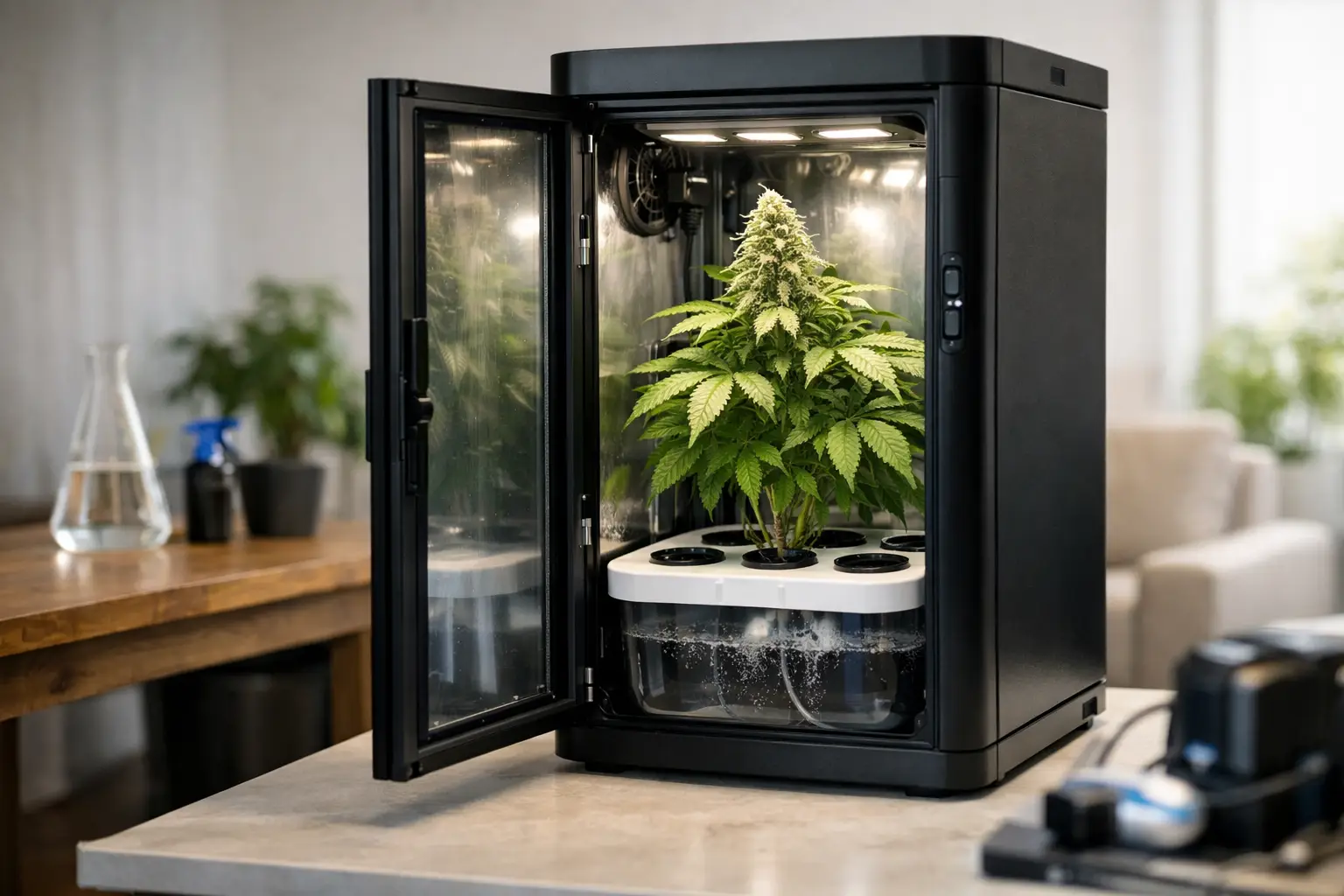
DWC gets sold as fast growth in a bucket. That part is true. What gets skipped is the part that matters more: deep water culture is brutally honest. If your water temperature drifts, if your air pump is weak, if your feed is sloppy, the plant tells on you fast. That is why learning how to run DWC correctly is less about chasing explosive growth and more about building a stable root zone you can read and repeat.
For small indoor cannabis grows, that discipline matters even more. In a cabinet or compact tent, you do not have much room for error, giant reservoirs, or constant improvisation. DWC can work extremely well in tight spaces, but only when the method matches the space and the grower respects the sequence.
How to run DWC correctly starts with setup
Most DWC problems are setup problems that show up later as plant problems. People blame nutrients, genetics, or pH swings when the real issue is poor oxygenation, light leaks into the reservoir, or water that runs too warm from day one.
Your basic system needs to do four things well. It needs to hold enough solution to stay stable, block all light from the root zone, keep the water heavily aerated, and make water level management simple. If one of those is weak, the whole method gets twitchy.
A small grower does not need a complicated recirculating system to get good flower. In many compact environments, a single-bucket or single-site DWC setup is easier to keep clean and easier to read. That matters. Clarity beats complexity when you are still learning plant signals.
Use an opaque reservoir and lid. Make sure net pots fit cleanly and do not wobble. Run a quality air pump with enough output for aggressive bubbling, not a token stream of air. If the roots are sitting in warm, dimly oxygenated soup, you are not running DWC. You are building root disease with extra steps.
The root zone is the real crop
Leaves get the attention. Roots run the show.
If you want to know how to run DWC correctly, start by treating root health as your main job. Healthy DWC roots should look bright, smell clean, and grow fast enough that reservoir changes become part of normal maintenance rather than emergency response. Brown slime, sour smells, stalled growth, and constant pH chaos are warnings that the root zone is under stress.
Water temperature is one of the biggest pressure points. Warm nutrient solution holds less dissolved oxygen and gives pathogens a better shot. In compact indoor spaces, pumps, lights, and ambient room heat can push reservoir temperatures higher than people realize. You do not need to obsess over every decimal, but you do need control. If your water is regularly creeping into the danger zone, the fix is environmental, not motivational.
That means managing room temperature, insulating the reservoir from heat sources, keeping lines and lids clean, and avoiding unnecessary equipment that dumps heat into a small enclosure. DWC rewards restraint. Every extra gadget in a tight grow space adds heat, clutter, or one more failure point.
Feeding in DWC is about consistency, not aggression
A lot of beginners burn up a good hydro run by feeding like they are trying to force performance. DWC already delivers nutrients directly and efficiently. You do not need to hammer the plant to get response.
Start lighter than your ego wants to. Young plants in early DWC do better with a controlled feed than a hot reservoir. As roots establish and top growth picks up, you can increase strength based on what the plant is actually doing. Fast drinking, healthy color, and steady vertical growth support a gradual increase. Burnt tips, dark clawing leaves, or a reservoir that gets more concentrated as water disappears tell you the plant is not on board.
pH matters here, but not in a neurotic way. The goal is not to freeze the number in place. The goal is to keep it in a range where nutrient uptake stays available and predictable. Small movement is normal. Violent swings are a sign that something upstream is off, usually root stress, bad mixing habits, or a reservoir that is too small to stay stable.
Mix nutrients thoroughly, in the proper order, before adjusting pH. Top off with intention. Full reservoir changes should be regular enough to reset the system before drift turns into mess. In a structured small-space grow, clean repetition beats reactive tinkering every time.
Water level changes matter more than new growers think
Early on, keep the water level close enough to the net pot area that roots can find moisture and air easily. Once roots are established and hanging into the solution, give them space. DWC roots want both oxygen and nutrient contact. If the entire mass stays submerged without a healthy air gap and strong bubbling action, you are reducing one of the method's main advantages.
As the plant gets larger, drinking patterns become useful data. If the reservoir level drops fast while the plant stays happy, that usually means growth is on track. If water disappears but EC rises and the plant looks stressed, you are likely feeding too hard. If the plant barely drinks at all, do not just add more nutrients and hope. Read the environment, root zone, and plant posture first.
Environment decides whether DWC feels easy or chaotic
Hydro growers sometimes talk like the bucket is the whole system. It is not. The air above the lid drives demand below it.
If your canopy temperature, humidity, and airflow are out of line, the roots have to compensate. That is when small mistakes become visible fast. A plant transpiring hard in dry air may drink heavily and leave nutrient concentration behind. A plant sitting in poor airflow and soft light may barely use what is in the reservoir. Same bucket, different room, different result.
This is why method-to-space alignment matters. In a small cabinet or tent, run the plant size, reservoir size, and lighting intensity that your environment can actually support. DWC can get vigorous quickly. That does not mean every grow should be pushed hard. For many home growers, a restrained plant with clean environmental control produces better flower than an oversized one managed in constant correction mode.
If you are running a compact system like a VGrow-style cabinet, the rule is simple: keep the process readable. Do not stack advanced training, oversized veg times, and aggressive feeding onto a hydro method you are still learning. Get one clean run first.
Cleanliness is not optional in DWC
So much beginner pain in hydro comes from treating sanitation like a bonus instead of a baseline. DWC is wet, oxygen-rich, and biologically active. If you let dead plant material, residue, light leaks, or dirty tools into that system, the bucket remembers.
That means cleaning between runs, wiping spills early, checking airlines and stones, and keeping the lid area tidy. It also means not letting organic debris pile up in the reservoir. You want a root zone, not a compost tea experiment.
There is some room for style in how growers manage their systems, but there is very little room for laziness. You can run different nutrient lines, different training styles, and different flower durations. You cannot ignore hygiene and expect DWC to stay stable.
How to run DWC correctly through flower
Flower is where beginners often get overconfident. Vegetative growth in DWC can be so fast that people assume the rest will take care of itself. It will not.
As the plant shifts into flower, watch stretch, drinking rate, and canopy density. In small indoor spaces, this is where restraint pays off. A crowded canopy traps moisture, reduces airflow, and raises disease pressure. The fix is not always more defoliation. Sometimes the real fix was flipping earlier, training less aggressively, or choosing a smaller final plant.
Feeding in flower should still follow plant response, not bottle charts. The plant may want more support as flower production ramps, but quality is not built by dumping in more food. Stable uptake, good oxygenation, and a clean finish matter more than trying to squeeze extra bulk from stressed roots.
Late flower is where discipline separates a decent crop from one you are actually proud to jar. Keep the environment steady. Keep the reservoir clean. Avoid dramatic last-minute changes that create stress instead of improvement. DWC can finish beautifully, but only if the plant reaches the final stretch without root trouble and without a room that has gone sideways.
The most common DWC mistake is trying to outrun the method
People get in trouble when they treat hydro like a shortcut. It is not a shortcut. It is a responsive method that rewards structure.
If you want DWC to work, run a simple system, control the environment, feed conservatively, and watch the roots as closely as the leaves. That approach is less flashy than chasing monster growth screenshots, but it fits how good indoor cannabis is actually produced - with clean process, readable signals, and fewer self-inflicted problems.
That is the real craft mindset behind DWC. Not bigger for the sake of bigger. Cleaner, steadier, and easier to repeat. If you can keep the bucket boring, the plant usually does the impressive part on its own.