How to Grow Weed Indoors the Right Way
Learn how to grow weed indoors with a clear, small-space system covering setup, lighting, feeding, harvest timing, drying, and cure.
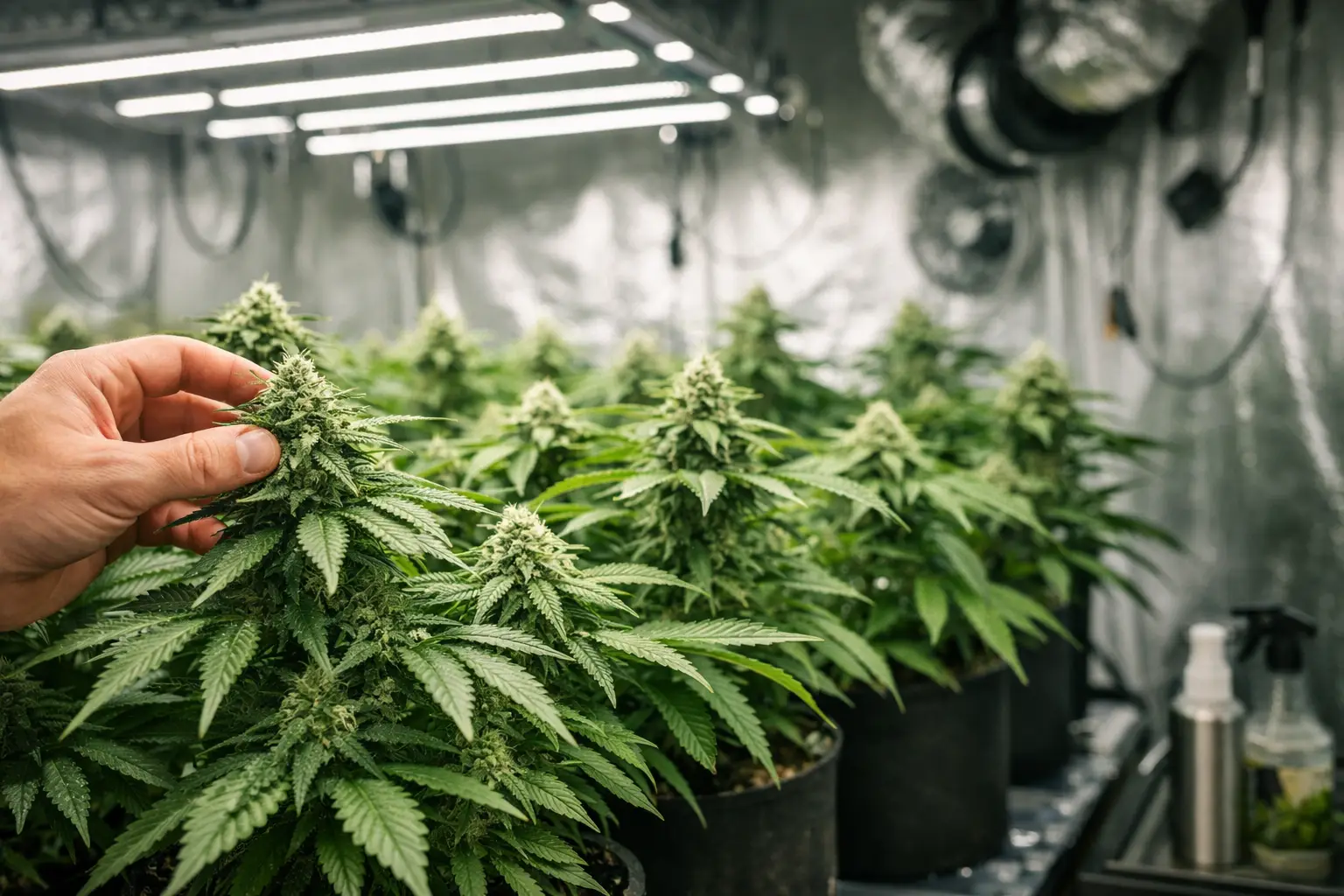
Most first-time growers do not fail because cannabis is hard to grow. They fail because they start with a messy system. If you want to learn how to grow weed indoors, the fastest path is not buying more gear or copying five different forum growers. It is choosing a method that fits your space, then running it with discipline from seed to jar.
That matters even more in a cabinet, closet, or small tent. Tight spaces punish bad decisions early. Oversized genetics, sloppy watering, weak airflow, and a rushed dry all stack up fast. The good news is that small-space growing can produce excellent flower when the workflow is clean and the environment stays readable.
How to grow weed indoors starts with fit
Indoor growing is not one decision. It is a chain of decisions, and the first one is method-to-space alignment. Before you think about nutrients or training, define the enclosure, the plant count, and the root-zone method. If those three things do not fit each other, the rest of the grow becomes damage control.
For most beginners, a compact, controlled environment beats a large open room. A cabinet or small tent is easier to light, easier to ventilate, and easier to read. You are not trying to build a warehouse. You are trying to produce clean flower consistently.
The method matters just as much. Soil can work well, but it often invites overwatering in beginner hands. Coco gives speed, but it demands frequent irrigation and tighter feed management. Deep water culture, when run correctly, gives fast growth and simple root access, but it requires attention to water level, temperature, and oxygenation. None of these is magic. Each comes with trade-offs.
If your space is compact and your goal is a repeatable first run, the smartest move is to choose one system and stay loyal to it for a full cycle. That is the difference between clarity and chaos.
Build the room before you grow the plant
A lot of growers germinate first and figure out the environment later. That is backwards. Your enclosure should be fully operational before the seed cracks.
At minimum, your indoor setup needs stable lighting, steady air exchange, internal air movement, and a way to monitor temperature and humidity accurately. In a small space, environmental control is not a nice extra. It is the grow.
Light intensity has to match plant size. Beginners often blast young plants with more light than they can use, then misread stress as a feeding problem. Start moderate, especially in early growth, and increase intensity only as the plant builds structure. More light is only better when the plant can actually process it.
Airflow is similar. You want leaves gently moving, not getting battered. Your exhaust should refresh the enclosure and remove heat, while a circulation fan prevents stale pockets around the canopy. Weak air movement in flower is an open invitation to moisture issues.
Humidity needs to track the growth stage. Young plants prefer a softer environment. Flowering plants need drier air, especially late in the cycle. If temperature and humidity drift without control, everything else becomes less predictable - nutrient uptake, transpiration, growth rate, and disease pressure.
Pick genetics for your space, not your ego
This is where many indoor grows go sideways. A compact space does not care that a strain is famous or photogenic. It cares whether the plant stretches beyond your vertical limits, flowers in a reasonable time, and behaves predictably.
For a first indoor run, choose genetics with manageable structure and known indoor performance. Avoid cultivars famous for extreme stretch unless you have the ceiling height and experience to manage them. A plant that doubles or triples after the flip can overrun a small enclosure quickly.
Shorter-flowering cultivars are often the better call for beginners because they reduce the time you spend managing risk. Longer flower times can produce excellent results, but they extend the window for mistakes. If your goal is learning the system, not chasing a fantasy harvest, simpler is smarter.
Germination, early growth, and why less is often better
Once the environment is ready, start the seed cleanly and keep the early stage boring. Boring is good. Boring means stable.
Seedlings do not need heavy feeding, intense light, or aggressive training. They need a healthy root zone, moderate conditions, and time to establish. Most early damage comes from growers doing too much. Overwatering is a classic example. In hydro, that may mean poor root-zone management or water conditions. In soil or coco, it often means keeping the media too wet for too long.
The first real goal is not top growth. It is root development and structural health. A plant with a strong root system and tight internodes gives you options later. A stretched, stressed seedling puts you behind before the grow has really started.
For compact indoor cultivation, many growers benefit from a disciplined flowering strategy instead of a long, messy veg. One option is 12/12 from seed, especially when space is limited and the system is built around smaller plants. That approach is not about maximum weight. It is about control, speed, and fitting the plant to the enclosure.
Feeding and watering should be readable
New growers often treat nutrients like a performance enhancer. They are not. Nutrients are support. The plant still needs a stable environment and an appropriate light level to use them properly.
If you are feeding in soil, keep the root zone aerated and avoid the constant-wet trap. If you are in coco, understand that you are managing a hydroponic-style feed schedule, not guessing your way through occasional watering. If you are in DWC, keep the reservoir oxygenated, the water temperature under control, and the solution stable enough that the roots stay white, vigorous, and active.
What matters most is readability. You want a system where plant response makes sense. If leaves claw after a feed increase, back off and assess. If the plant is pale under strong light, it may need more nutrition, but it may also be dealing with root stress or environmental imbalance. Good growing is not about reacting fast. It is about reacting correctly.
Keep changes small. Make one adjustment at a time. That is how you learn what caused the response.
Flowering is where structure beats improvisation
The flowering stage exposes every weak habit in your process. Crowded canopies, bad airflow, unstable humidity, and random feeding all become harder to hide once buds start stacking.
This is the stage where restraint matters. Do not keep topping, bending, and reinventing the plant deep into flower. Set the structure early, maintain an even enough canopy to use your light efficiently, and let the plant focus on reproduction.
Defoliation is useful when it improves airflow and light access. It becomes harmful when it turns into panic pruning. Remove what is blocking function, not every leaf that offends your sense of neatness.
Late flower is also when environmental discipline pays off. High humidity and poor air movement around dense buds can ruin weeks of good work. Keep the room dry enough, keep air moving, and avoid dramatic swings between day and night conditions.
Harvest timing is not a calendar event
One of the biggest mistakes in learning how to grow weed indoors is treating harvest like a date on a breeder card. Flowering estimates are rough guidance, not law.
The plant decides when it is done. You read that through overall maturity, pistil behavior, bud development, and trichome condition. Harvest too early and the flower often feels thin, underdeveloped, and short-lived. Harvest too late and you can lose some of the character that made the cultivar worth growing in the first place.
There is no universal perfect window because effect preference matters. But there is a clear bad habit to avoid: chopping on schedule without reading the plant.
Dry and cure decide whether the grow was actually good
A lot of growers put all their energy into the live plant and then throw away quality in the final two weeks. That is backwards. Post-harvest discipline is part of the grow, not an afterthought.
Drying should be controlled, dark, and steady. Too hot and too fast, and the outer flower dries before the inside can equalize. That traps harshness and flattens aroma. Too damp and stagnant, and you invite mold. The target is a slow enough dry that preserves terpenes and allows moisture to leave the flower evenly.
Curing continues the cleanup. Once the buds are properly dried and trimmed, they need time in storage to settle. Fresh flower can smell loud and still smoke rough. Cure improves texture, smoothness, and clarity of expression. This is where patient growers separate themselves from growers who only care about getting to the jar photo.
At ColaXpress, this is the line we hold hardest: if the dry and cure are sloppy, the run was sloppy.
The right indoor grow is the one you can repeat
If you are serious about learning how to grow weed indoors, stop asking how to get the biggest plant. Ask how to get the cleanest repeatable result in your actual space. That shift fixes a lot.
A readable setup, manageable genetics, stable root-zone practice, and a disciplined finish will beat a chaotic max-yield attempt almost every time. Grow the room. Grow the method. Then grow the plant.
Your first goal is not to impress anyone. It is to complete a clean cycle you understand well enough to run again, with fewer mistakes and better flower.