Best Compact Grow Cabinets for Small Spaces
Find the best compact grow cabinets for a controlled home setup, with clear trade-offs on space, airflow, drying, automation, and plant count.
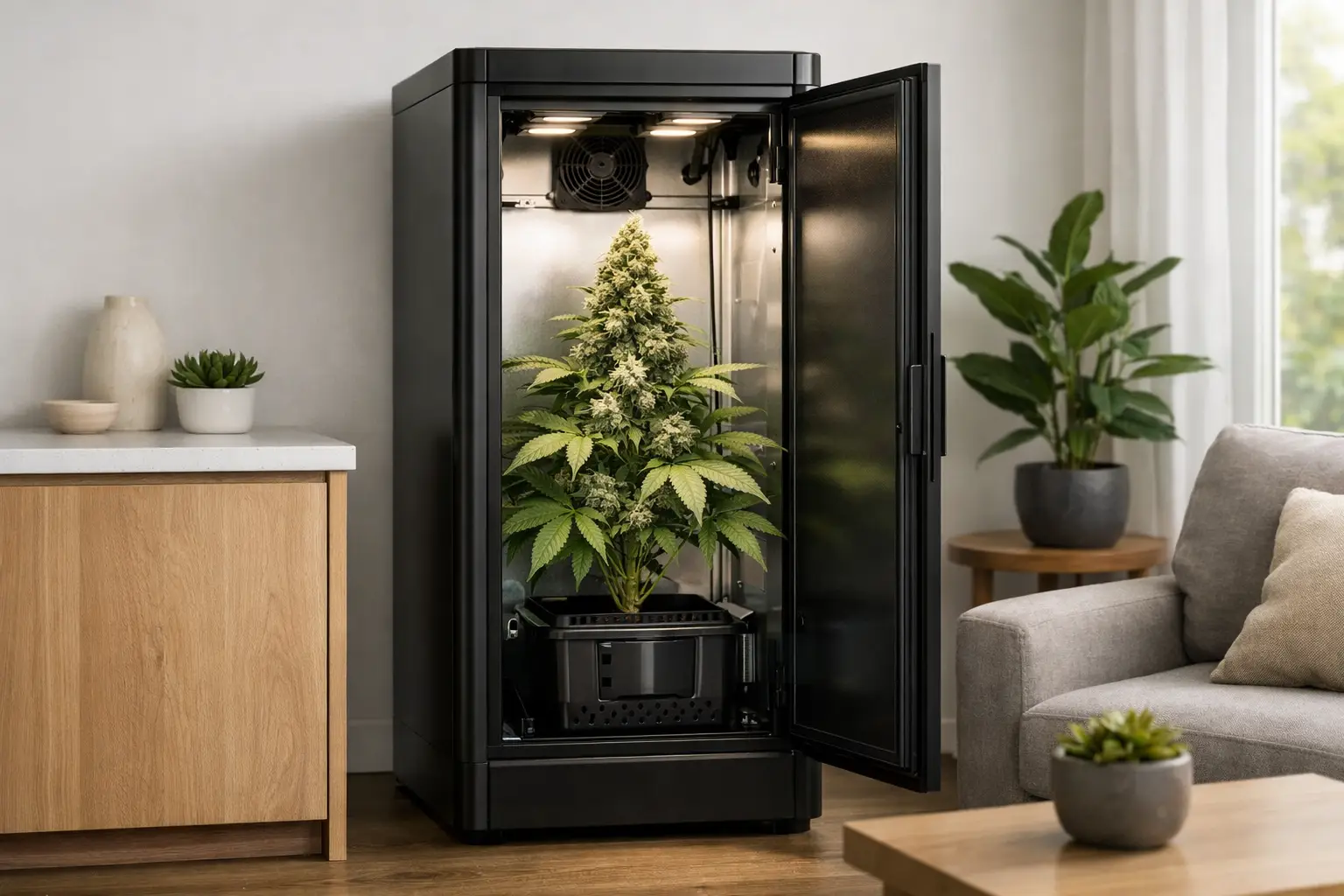
A compact grow cabinet can save a first run from the usual small-space mistake: buying a pile of gear that does not work together. The best compact grow cabinets do more than hide a plant behind a door. They create a readable environment where light, airflow, temperature, humidity, and odor control can be managed without turning a bedroom corner into a science project.
That does not mean every all-in-one box is a good buy. Some are polished appliances built for a single plant and minimal involvement. Others give you real control but still need a disciplined grower. The right choice depends on whether you want to learn the craft, reduce daily decisions, or keep the entire operation as discreet as possible.
For most home growers, the goal should be clarity, not maximum plant weight. A compact cabinet that lets you read the plant and correct problems early is worth more than a larger setup full of unused gadgets.
What Makes a Compact Grow Cabinet Worth Buying?
A real cabinet setup should solve several problems at once: enclosure, lighting, ventilation, odor management, circulation, and a way to monitor conditions. If it leaves you sourcing every critical part separately, it may still be a fine tent, but it is not delivering the simplicity people expect from a cabinet system.
The first question is footprint. A narrow, appliance-style box may fit into a closet, but its root zone and canopy space are usually limited to one plant. A 2-by-2-foot cabinet or enclosed grow box takes more floor space, yet gives you enough room to train a plant, place a small reservoir, and inspect equipment without dismantling the whole grow.
Height matters just as much. Compact cabinets often lose usable vertical space to lights, filters, fans, and the required gap between light and canopy. A tall seedling can become an unmanageable flowering plant quickly. For that reason, short flowering cultivars, early training, and a 12/12-from-seed approach often make more sense than trying to force a long vegetative cycle into a short box.
Also separate automation from environmental control. An app that turns a light on is convenient. A cabinet that manages heat, humidity, airflow, and odor while still letting you inspect and adjust the system is more valuable. Automation should reduce repetitive work, not hide a problem until the leaves tell you it is too late.
Best Compact Grow Cabinets by Growing Style
Best for a structured hands-on grow: Vivosun VGrow
The Vivosun VGrow is the strongest fit for growers who want a compact, integrated setup without surrendering the learning process. Its 2-by-2 footprint is practical for a small room, and its ecosystem is built around coordinated lighting, ventilation, circulation, and controller-based monitoring. That matters because compact grows fail when each component operates in isolation.
The VGrow is not a push-button appliance. You still need to choose a method, manage irrigation or a reservoir, train the plant, and respond to what the canopy tells you. That is a feature, not a flaw, for a grower who wants repeatable skill rather than a mystery box that produces an unpredictable result.
It is especially well suited to a one-plant workflow with a modest deep water culture reservoir or another carefully contained hydro method. Keep the plant small, establish canopy shape early, and run a flowering plan that respects the cabinet's height. The trade-off is that the cabinet is an active workspace. You need to check water level, root health, and environmental trends instead of expecting software to do the growing for you.
For the ColaXpress approach, this is the right kind of compact system: enough control to build craft, enough integration to avoid gear chaos.
Best for minimal daily involvement: Hey abby
Hey abby cabinets are aimed at the grower who wants a contained, furniture-like unit with guided automation. They are attractive for apartments and shared living situations because the design is discrete, the footprint is small, and the workflow is built around one plant.
The benefit is a lower barrier to entry. A beginner can follow the built-in prompts, keep a simpler routine, and avoid assembling fans, ducting, controllers, and lights from scratch. For someone whose main obstacle is getting started, that has real value.
The limitation is control. Appliance-style cabinets tend to use proprietary layouts, fixed reservoir designs, and limited room for upgrades. If you want to run a specific nutrient strategy, improve airflow, use a larger root zone, or troubleshoot a stubborn environmental issue, the cabinet may give you fewer options than a more open system.
Choose this route if discretion and convenience are your top priorities. Do not choose it because you think automation removes the need to learn plant health. It does not. Leaves still read the environment more honestly than an app notification.
A cautionary tale in premium appliances: Grobo
Grobo used to be the premium appliance answer in this category — guided cycles, integrated lighting and irrigation, and a clean design that did not look like grow gear. It no longer is: the company declared bankruptcy in 2022, and its companion app was later shut down, leaving owners with hardware that depended on servers that no longer answer.
That outcome teaches more than any product pick. An appliance-style cabinet is partly a bet on the company behind it: closed platforms mean repairs, modifications, and sometimes day-to-day control can die with the vendor. Prefer cabinets that keep a local, on-device control path — a physical panel that works without the cloud — and weigh lifetime-app promises accordingly.
A cabinet can grow the plant, but it cannot dry and cure your harvest properly by itself. Before spending heavily on a premium box, make a separate plan for dark, stable drying conditions and clean curing jars. Good flower is often lost after harvest, not during veg.
How to Choose Between the Best Compact Grow Cabinets
Start with the finish, not the shopping cart. Ask where the plant will dry, where you will mix water or nutrients, and where you will store basic tools. A cabinet that occupies every available inch of your space can create a problem at harvest when you need a controlled place to hang branches or use a drying rack.
Then choose the growing method that fits the cabinet. Soil or coco is generally more forgiving when you need a simple first run and cannot inspect a reservoir every day. DWC can be excellent in a compact cabinet because it reduces media clutter and supports fast growth, but the reservoir temperature, water level, pH, and nutrient strength must stay readable. A small volume of water changes quickly. That is manageable only with a consistent check routine.
Plant count should stay low. One well-trained plant in a compact enclosure is easier to light evenly, easier to ventilate, and easier to inspect. Two plants may sound more productive, but crowded canopies create humidity pockets, uneven growth, and more chances for pests or mildew. Small-space growing rewards restraint.
Odor control deserves the same seriousness as lighting. Check whether the cabinet includes a real carbon filter and whether the fan has enough power to pull air through it. A filter that is undersized, poorly sealed, or overdue for replacement will not protect privacy just because the product page calls the unit odor controlled.
Finally, consider serviceability. Fans wear out. Sensors drift. Pumps clog. A cabinet that lets you reach, clean, and replace these parts is usually a better long-term tool than one with a perfect exterior and inaccessible internals.
The Compact Cabinet Workflow That Actually Works
Once the cabinet is in place, resist the urge to fill it with accessories. Begin with a clean enclosure, a stable light schedule, verified exhaust, gentle internal circulation, and a reliable temperature and humidity reading. Run the equipment before adding a plant. You want to know how the cabinet behaves with the lights on and off, not discover heat problems during early flower.
Keep the plant architecture simple. Train early, maintain an even canopy, and remove only what blocks airflow or will never receive useful light. Heavy defoliation, constant topping, and aggressive recovery cycles are poor fits for a small cabinet. Every stress event costs time, and time becomes height in a confined space.
During flower, protect airflow and humidity first. Dense buds in a small enclosure can raise local humidity even when the room reading looks acceptable. Inspect the center of the canopy, not just the display screen. If leaves are packed together and air cannot move, the cabinet is telling you to thin the plant or improve circulation.
When harvest approaches, do not let the cabinet purchase distract from the final stage. Plan the dry before you cut. A controlled, unhurried dry and a patient cure will do more for aroma, smoothness, and perceived quality than chasing one more week of swollen flowers.
The best cabinet is not the one with the most buttons. It is the one that fits your space, supports a clean routine, and leaves you enough control to grow better on the next run.
Common mistakes when choosing a compact grow cabinet
Beyond the obvious traps of overbuying gear and shopping for maximum plant weight, two buyer mistakes quietly cost people the most in a compact cabinet. The first is carrying tent advice over without adjusting for scale. Guidance written for a 4-by-4 tent assumes spare volume to absorb heat, humidity, and a wide canopy. A compact cabinet has none of that slack, so airflow, training, and plant-count habits that are harmless in a larger room become real problems in a box. Read cabinet decisions as their own category rather than as a shrunken tent.
The second is treating noise as an afterthought. Odor control gets attention, but a loud fan or pump in a bedroom, office, or shared space changes how you actually run the grow. When a cabinet is disruptive, people quietly start opening it less, running equipment differently, or rushing checks to keep things discreet - and that erosion of routine shows up in the plant. If the grow shares living space, weigh sound and serviceability alongside odor before you buy, not after.
For a structured, hands-on compact grow, the VGrow is the ColaXpress pick.
There is no universal winner here — the right cabinet depends on whether you want to learn the craft, minimize daily involvement, or maximize discretion. If your priority is a contained, integrated cabinet that still lets you build real skill, the Vivosun VGrow is the system this site is built around.
Affiliate disclosure — if a "Check VGrow + DWC availability at VIVOSUN" link appears in this section, it is a paid link: ColaXpress may earn a commission if you buy through it, at no extra cost to you. It never changes the comparison above.