The Best Hydro System for Beginners Is DWC
The best hydro system for beginners is a small DWC setup: fewer moving parts, clearer signals, and a workflow that fits a compact grow space without fuss.
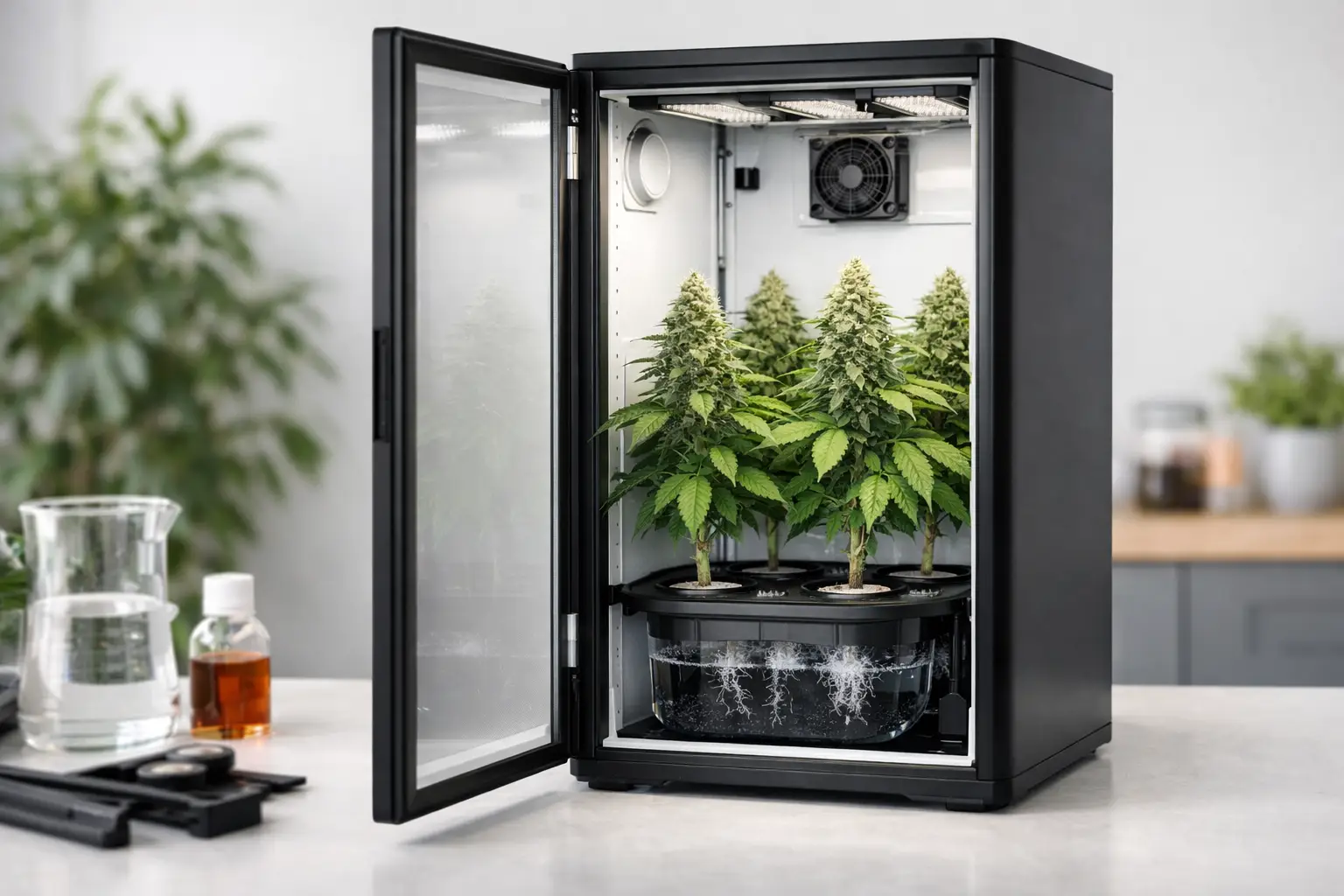
A first hydro grow usually goes sideways for a predictable reason: the grower builds a system that is harder to read than the plant. The best hydro system for beginners is not the one with the most recirculating lines, automated dosing gear, or claimed yield. For a compact indoor cannabis grow, it is usually a simple deep water culture, or DWC, setup.
DWC puts the root zone in one reservoir of aerated nutrient solution. That simplicity matters. You can inspect the water, measure it, correct it, and connect plant behavior to what changed. In a small cabinet or tent, clarity beats complexity every time.
Why DWC Is the Best Hydro System for Beginners
A beginner needs a method that creates readable cause and effect. With DWC, the main variables are the nutrient solution level, water temperature, pH, electrical conductivity or EC, and oxygenation. That is already enough to learn. Adding pumps, return lines, multiple reservoirs, and drip schedules turns a first run into a plumbing project.
A single-bucket or single-reservoir DWC grow has very few failure points. An air pump supplies oxygen through an air stone. A net pot supports the plant. The roots grow into the solution. You monitor the reservoir and maintain the environment above it. Nothing is hidden behind a maze of tubing.
That does not mean DWC is effortless. Water culture reacts quickly when conditions drift. A warm reservoir can encourage root problems. A neglected pH swing can slow uptake. But those risks are visible and manageable when the system is small. The point is not to avoid responsibility. It is to choose a system where responsible habits produce clean results.
For beginners growing one plant in a cabinet, DWC also matches the real constraint: space. You do not need a separate mixing station, a drain line, or a large bank of reservoirs. You need a stable container, good aeration, a light-proof lid, and enough room to access the plant and check the water.
The Systems That Create Too Much First-Run Drama
Hydroponics is not one thing. Different methods fit different rooms, schedules, and experience levels. The mistake is treating every system as equally suitable for a first compact cannabis grow.
Recirculating deep water culture, often called RDWC, can be excellent for growers managing several plants. It gives a shared nutrient solution and can make larger gardens easier to service. It also adds pumps, plumbing connections, water-level balancing, leak risk, and more places for a root mass to interfere with flow. That is useful scale, not beginner simplicity.
Ebb-and-flow systems can grow healthy plants, but they require reliable flood timing, a correctly sized tray, and a clean drainage path. A mistake in level, timer programming, or fitting security can put nutrient water where it does not belong. In a small apartment grow, that is avoidable drama.
Drip systems have a similar trade-off. They offer control, but emitters clog, flow rates vary, and the grower must understand how often the chosen medium should be irrigated. Coco with drip irrigation is productive, but it asks you to manage both feeding and runoff. That is more moving parts than most first runs need.
Aeroponics is even less forgiving. Exposed roots depend on consistent misting, clean nozzles, and dependable equipment. When it runs well, it is impressive. When a pump or sprayer fails, plants can decline fast. Save it for later, after you have learned how healthy roots and stable environmental conditions look.
Build a Small DWC System You Can Actually Manage
For one cannabis plant, use one light-proof reservoir sized to your enclosure and your ability to move it. Bigger water volumes change more slowly, which is helpful, but an oversized reservoir can be awkward to drain and clean in a cabinet. Choose practical access over theoretical capacity.
The essentials are straightforward: a food-safe reservoir with a secure lid, a net pot, an air pump, air stone, airline with a check valve, hydro nutrients, a pH meter, an EC meter, and a thermometer for the solution. You also need a dependable way to remove and replace water. That can be as simple as a small transfer pump or a container you can safely carry.
Do not spend the first budget on automation. Spend it on measurement, light control, and environmental control. A cheap pH pen that drifts, a weak air pump, or light leaking into the reservoir will cost more in frustration than a fancy controller will save.
Keep the reservoir light-proof. Light in nutrient water invites algae, and algae turns a clean root zone into a maintenance problem. Keep the air pump positioned safely above potential spill level or use a check valve correctly. Secure every airline and inspect connections before the plant is large enough to make access difficult.
Match the plant to the enclosure
The hydro system is only one part of the grow. A large, long-vegetative plant can overwhelm a compact cabinet regardless of how clean the roots are. Choose genetics and a plant strategy that respect the height, footprint, and airflow available.
For a small enclosure, a controlled 12/12-from-seed approach can make more sense than trying to grow a large training project. You are not chasing max weight from one oversized plant. You are building a repeatable process that gives the canopy adequate light, keeps humidity manageable, and leaves room to work.
Run the Reservoir Like a Daily Logbook
DWC rewards observation. Check the reservoir at the same time each day, especially during active growth and flowering. You are looking for trends, not isolated numbers.
If water level drops while EC rises, the plant is likely taking more water than nutrients. The solution may be too strong. If water level drops while EC falls, the plant is feeding well relative to its water use. If neither the level nor EC moves much while the plant looks unhappy, look beyond the bottle. Root temperature, low oxygen, poor light distance, airflow, or pH may be the actual issue.
Keep pH in the appropriate hydroponic range and avoid dramatic corrections. A stable range is more useful than chasing a single perfect number. Likewise, feed lightly at first. Young plants need a functional root system before they can use a strong nutrient solution. More nutrients do not fix a slow plant. They often make a slow plant harder to diagnose.
Reservoir temperature deserves serious attention. Cool, well-oxygenated water is friendlier to roots than warm, stale solution. In a cabinet, the grow light and room temperature can push reservoir water upward fast. If the water is consistently too warm, solve the heat source or improve the environment before treating symptoms with additives.
Look at the roots whenever you change water. Healthy roots are generally pale and firm, with no sour smell or slimy coating. Nutrient staining can change their color, so do not panic over appearance alone. Texture and smell tell the more useful story.
Change Water Before Problems Become a Mystery
A small DWC reservoir is easy to reset. Use that advantage. Fresh solution removes accumulated imbalance and gives you a clean baseline for reading the plant. Beginners often stretch a reservoir too long because they want to avoid wasting nutrients. That is false economy when the old solution has become hard to interpret.
During a water change, clean the reservoir walls, lid, air stone, and any equipment that sits in the solution. Do not turn cleaning into a chemical ritual. The goal is simple: remove buildup, prevent light-driven growth, and start the next interval with clean equipment.
Take notes on the date, solution strength, pH, water temperature, and plant response. A basic log turns hydroponics from guesswork into pattern recognition. After one or two runs, you will know how quickly your plant drinks in that cabinet, how your water behaves, and when the reservoir needs attention.
Do Not Let Hydro Distract You From the Finish
A clean DWC grow can still produce disappointing flower if the finish is careless. As flowering progresses, control humidity, keep air moving through the canopy, and avoid crowding the enclosure. The goal is healthy flower that can dry evenly, not a packed cabinet that traps moisture.
Harvest timing, drying conditions, and curing discipline carry as much weight as the root-zone method. A beginner who grows one manageable plant and finishes it properly will learn more than the grower who fills every inch of a tent, rushes the dry, and calls the result a success because the scale looked good.
Start with one plant, one reservoir, and a daily habit of reading what is in front of you. Once the process feels calm and predictable, add complexity only when it solves a real problem.