Is 12/12 From Seed Worth It?
Is 12/12 from seed worth it? Learn when this compact flowering method makes sense, where it falls short, and who should actually use it.
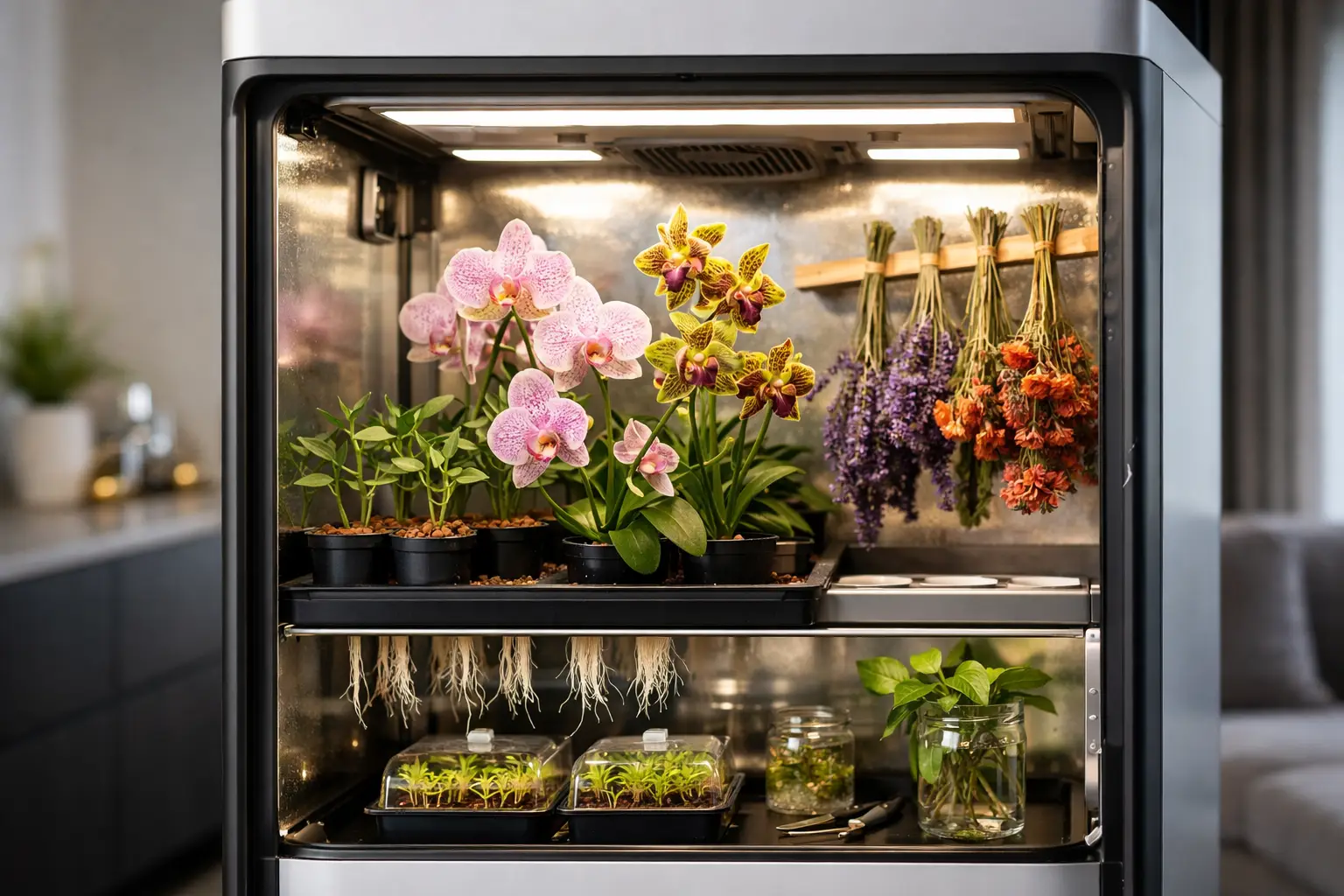
If you grow in a cabinet, a short tent, or any tight indoor space, the question is not whether a plant can get big. It is whether your method fits the enclosure. That is why growers keep asking, is 12/12 from seed worth it? In the right setup, yes. In the wrong setup, it is a shortcut that creates small plants without solving the real problem.
This method puts a seedling under a 12 hours on, 12 hours off light cycle from day one, instead of vegging under 18/6 or 20/4 first. The appeal is obvious. Less height, less training, faster finish, and a simpler workflow for growers who do not want a jungle in a small box. But the trade-off is just as obvious once you strip away forum hype. You are usually giving up plant size and total yield per plant in exchange for control, speed, and space fit.
Is 12/12 from seed worth it in a small grow?
For compact indoor growing, 12/12 from seed can be worth it because it keeps the whole run aligned with the space. That matters more than people admit. A method that looks great on paper but overwhelms your enclosure is not efficient. It is chaos with extra steps.
In a cabinet or small tent, oversized plants create problems fast. They crowd airflow, trap humidity, complicate watering, and force rushed training decisions. Beginners often think more veg time means more success. In practice, more veg time often means more plant than the space can finish cleanly. If your environment is limited, a smaller, easier-to-read plant can produce better flower than a stressed, overgrown one.
That is the strongest case for 12/12 from seed. It is not a max-yield strategy. It is a method-to-space strategy.
What 12/12 from seed actually does well
The biggest advantage is structure. You remove a major decision point - how long to veg - and replace it with a tighter timeline. For new growers, that alone has value. Fewer moving parts means fewer chances to push the plant too far before you understand how it grows.
It also helps with vertical control. Many photoperiod strains will still stretch after they begin flowering, but starting them under 12/12 usually keeps the final plant smaller than a long-veg version of the same cultivar. In a cabinet grow, that matters.
There is also a speed advantage, although people oversell it. You are not turning a long process into a short one. You are trimming off the dedicated veg period. That can save a few weeks, and in a disciplined seed-to-jar workflow, a few weeks matters. Faster turnover means quicker learning cycles and less time stuck in a flawed run.
Another overlooked benefit is canopy simplicity. A smaller plant grown with less training is easier to inspect, easier to defoliate lightly, and easier to finish. If your goal is clean flower in a modest space, complexity is not always your friend.
Where this method falls short
The downside is yield ceiling. A plant that flowers early has less time to build roots, branches, and leaf mass before it starts reproductive growth. That usually means less output per plant. There is no clever wording around that.
You can still get worthwhile harvests, especially if your environment is dialed in and the cultivar responds well, but 12/12 from seed is rarely the best route if your main goal is maximum grams from one plant. If you are chasing heavy canopies, long veg and active training usually win.
There is also more phenotype uncertainty early on. Starting from seed already means variation. Under 12/12, you are asking the plant to declare itself with less runway. Some seedlings handle that pace well. Others stay runty, branch poorly, or never develop the structure you hoped for. Clones are more predictable for strict flowering schedules. Seeds are more variable.
You also need realistic expectations about plant count and fill. If you run one seed under 12/12 and expect a packed-out canopy, you are setting yourself up for disappointment. This method is better for keeping one plant manageable than forcing one plant to act like three.
Is 12/12 from seed worth it for beginners?
For many beginners, yes - if they value control over bragging rights.
That answer depends on the kind of beginner. If you are the type who wants a readable process, a plant that stays within the boundaries of your enclosure, and a shorter path to harvest, this method makes sense. It reduces the temptation to overtrain, overveg, and overcomplicate.
If you are the type who already knows you will obsess over every branch tip and compare your plant to giant social media grows, 12/12 from seed may frustrate you. It asks for discipline. You need to accept smaller plants, moderate expectations, and a cleaner workflow. Not everyone wants that, even if they should.
For a first run in a compact space, smaller is often smarter. A plant you can read is better than a plant that constantly outgrows your skill.
The setup matters more than the theory
This is where growers get lost. They debate the method in the abstract instead of matching it to the room.
In a compact enclosure, 12/12 from seed pairs best with strong environmental control, appropriate light intensity, and a root-zone method you can keep stable. If the temperature swings hard, humidity climbs, or irrigation is sloppy, the benefits of the method disappear. Small plants still need consistency.
This is especially true in hydro or DWC. Early growth under 12/12 does not forgive a bad root zone. If water temperature is off, dissolved oxygen is weak, or nutrient strength is pushed too hard, the plant has less time to recover before it is already shifting into flower behavior. The method is simple, but it is not lazy.
Good growers make 12/12 from seed work because they remove friction from the system. Clean environment. Stable feed. Appropriate cultivar. Realistic plant size. That is the formula.
Who should use 12/12 from seed
This method fits growers who have one of three goals.
First, they need strict height control. If your light distance is limited and the plant cannot be allowed to turn into a tall, unruly bush, 12/12 from seed is a practical answer.
Second, they want repeatable workflow in a small-space system. Some growers do better when the process has fewer branches and fewer choices. That is not a weakness. That is good production sense.
Third, they care more about quality and finish than headline yield. A manageable plant is easier to dry properly, easier to trim without burnout, and easier to cure with attention. Craft often improves when scale comes down.
Who should skip it
If you have plenty of vertical room, enjoy training, and want to maximize each plant, you probably should not start with 12/12 from seed. The method solves a space problem. If you do not have that problem, the trade-off may not be worth it.
It is also a weak fit for growers using expensive seeds while hoping every one becomes a high-performing, fully expressed plant. Since early flowering limits plant development, some genetics will feel underused. You may prefer a short veg instead of no veg at all.
And if your environment is unstable, fix that first. No flowering schedule can rescue poor climate control.
A better question than is 12/12 from seed worth it
The better question is this: does 12/12 from seed fit the size, airflow, lighting, and management style of your grow?
That framing cuts through a lot of bad advice. Too many cannabis growing debates are really mismatches between method and space. A technique that underperforms in a roomy tent can be exactly right in a cabinet. A strategy that looks modest on paper can produce cleaner results in real life because the plant actually fits the environment from start to finish.
That is the lane where this method shines. It rewards growers who want clarity, not chaos.
For the compact home grower, 12/12 from seed is worth it when the goal is a controlled run, a manageable plant, and a cleaner path to finished flower. Not bigger. Better matched. If that sounds like your grow, the method deserves more respect than it usually gets.