Small Grow Room Humidity Control That Works
Small grow room humidity control starts with plant stage, airflow, and dry-back. Learn how to keep RH steady in tents, cabinets, and closets.
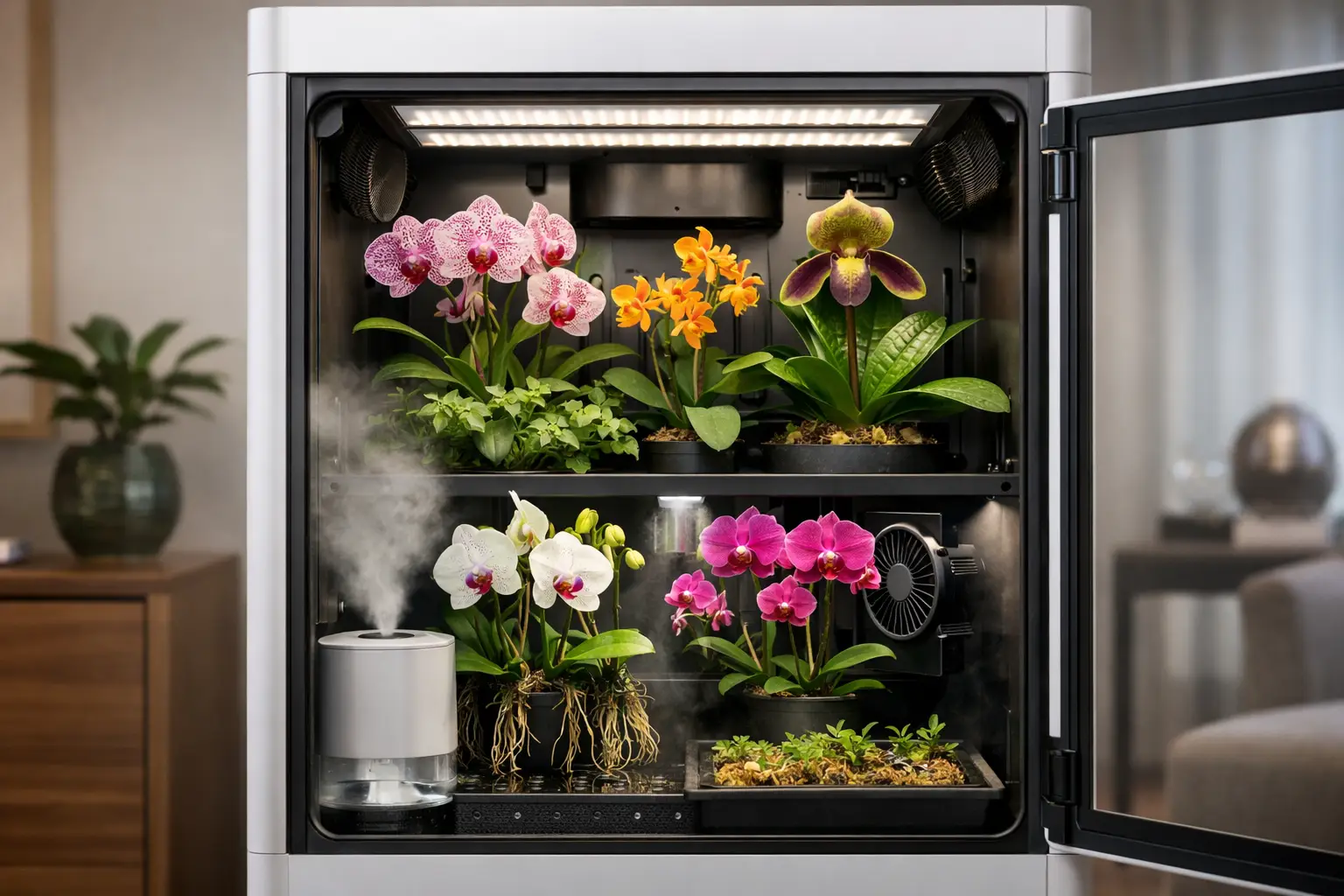
A small grow room goes sideways fast when humidity is off by even a little. In a cabinet, closet, or short tent, moisture does not have much space to disperse, so small grow room humidity control is not a side task. It is core environmental control, right alongside temperature, airflow, and watering discipline.
Most beginners treat humidity like a gadget problem. They buy a humidifier, maybe a dehumidifier, then chase numbers all day. That usually creates more noise than clarity. In compact spaces, humidity behaves like a system response. Plant size, root-zone moisture, leaf temperature, exhaust rate, room conditions outside the tent, and even how dense your canopy gets all push RH up or down.
If you want stable flower quality, clean transpiration, and fewer late-stage problems, you need to stop reacting to the display and start reading the room correctly.
What small grow room humidity control actually means
Humidity control in a small grow is not about holding one magic number forever. It is about keeping relative humidity in a workable range for the plant's stage while avoiding sharp swings that stress growth or invite disease.
Young plants usually tolerate and often prefer higher humidity than mature flowering plants. Early veg can handle a softer environment because the plant is still building roots and leaf mass. Once the canopy thickens and flowers start stacking, high RH becomes more dangerous. Moisture gets trapped between leaves and inside bud sites, and weak airflow turns that into a mold risk.
That is why the target moves as the grow moves. The room should not feel static from seed to harvest. It should feel managed.
The right humidity range by stage
You do not need laboratory precision in a small-space grow. You need control that matches the stage and method.
Seedling and early veg
A relative humidity range around 60% to 70% is usually comfortable for seedlings and very young plants, especially before the root system is fully established. In a compact space, though, do not force high humidity if your airflow is poor or your media stays too wet. A healthy young plant in a clean environment matters more than chasing the upper edge of the range.
Veg
As plants establish and start growing with intent, a range around 55% to 65% is usually easier to manage. This supports transpiration without turning the space damp. If you are running DWC, watch this closely. Hydro setups can add moisture load to a small enclosure faster than many beginners expect.
Flower
Once real flowering starts, bring humidity down. Around 45% to 55% is a solid working range for most compact grows. Late flower often benefits from the lower end of that range, especially if the canopy is dense, the cultivar packs tight buds, or your enclosure has mediocre air exchange.
If your room sits at 58% one day, that is not a crisis. If it sits at 58% every night with poor circulation and crowded flowers, that is a problem.
Why small spaces get humid so fast
In a big room, environmental mistakes have some buffer. In a small room, they show up quickly.
Plants transpire constantly. Water also evaporates from open reservoirs, wet media, runoff trays, and even damp floor surfaces. Add warm lights and limited air volume, and RH rises fast. Then lights-out hits, temperature drops, and relative humidity jumps again even if the actual moisture content in the air barely changed.
This is why many growers think humidity is random. It is not random. It is tied to moisture release, temperature swings, and how efficiently your grow exchanges air with the surrounding room.
Your tent or cabinet is only part of the equation. If the lung room outside it is already humid, the enclosure will struggle too. A small grow cannot outperform the room feeding it forever.
Start with airflow before you buy more gear
The first fix for small grow room humidity control is usually better air movement and better air exchange, not another machine.
Inside the grow, you want leaves gently moving, not getting blasted. Air should circulate under the canopy, across the canopy, and away from dead zones where moisture hangs. This matters even more in compact spaces because leaf stacking is tighter and corners trap stale air.
Exhaust matters just as much. If humid air is not leaving the enclosure consistently, your internal fans are just moving wet air around. A good exhaust setup should steadily replace enclosure air without creating chaos or extreme temperature loss.
If humidity spikes every night, look at your lights-off airflow. Many growers reduce fan speed too aggressively after lights out. That saves noise, but it often creates the exact conditions mold likes.
Watering habits often cause the problem
A lot of humidity trouble starts at the root zone.
Overwatered pots release moisture into the room for hours. Runoff left sitting in saucers keeps evaporating. In DWC, exposed water surfaces and high solution temperatures can increase moisture load. Even hand-watering technique matters. If your floor is wet after irrigation, that moisture is now part of your room climate.
This is where discipline beats gear. Water only when needed. Remove runoff promptly. Keep reservoir lids tight. Avoid unnecessary standing water. In compact growing, sloppy irrigation becomes air quality trouble.
Humidity and dry-back in small grows
If you grow in coco or soil, dry-back is part of environmental control. Media that never gets a proper cycle between irrigations can keep RH elevated while also limiting root performance. That does not mean letting the plant wilt. It means respecting the relationship between plant demand, container size, and watering frequency.
Small spaces reward readable rhythms. If your room gets swampy after every irrigation event, the room is telling you something.
When to use a humidifier or dehumidifier
Sometimes gear is necessary. The mistake is using it before the workflow is clean.
A humidifier makes sense when early-stage plants are struggling in dry winter air or when your enclosure sits far below a workable veg range. A dehumidifier makes sense when flower-stage RH stays elevated despite proper airflow, watering discipline, and adequate exhaust.
But size matters. In a cabinet or small tent, oversized equipment causes hard swings. Humidity jumps up, then crashes down, then repeats. That is not control. That is oscillation.
If you use either device, think in terms of gentle correction. Smaller output, better placement, and stable controller settings usually outperform brute-force equipment in a compact grow.
How to read humidity problems from plant behavior
The meter matters, but the plant matters more.
When humidity is too high for the stage, plants may look lush at first, then drift into weak transpiration, soft growth, slow drinking, and an increased risk of fungal issues. In flower, the biggest danger is not always obvious leaf symptoms. It is moisture staying where you cannot easily see it.
When humidity is too low, especially with high leaf temperature or strong light, plants can transpire too aggressively. You may see leaves praying at first, then stress, higher water demand, edge curl, or stalled growth if the roots cannot keep up.
This is where structured growing helps. Do not judge RH in isolation. Compare it against plant stage, watering rate, canopy density, and temperature trend.
A practical setup for small grow room humidity control
For most beginners, a good compact setup is simple. Use a reliable hygrometer at canopy level, not on the floor. Keep one circulation fan above and one moving air below the canopy if space allows. Run steady exhaust. Keep the surrounding room reasonably conditioned. Clean up water fast.
Then adjust by stage. In veg, allow a bit more moisture. In flower, create more separation between leaves, maintain airflow through the center of the plant, and keep nights from turning damp and stagnant.
If you are using a cabinet system or a small tent, accept the limits of the footprint. Big plants in a tiny space create environmental debt. More biomass means more transpiration, tighter leaf spacing, and more risk. This is one reason ColaXpress pushes method-to-space alignment so hard. A manageable plant is easier to keep healthy than an overgrown one you are trying to rescue with hardware.
The mistake that ruins the finish
Late flower is where bad humidity habits finally collect the bill. Growers spend months getting to harvest, then let RH drift because the plants look almost done. That is backwards. The finish stage demands more discipline, not less.
Dense flowers, fading leaves, cooler nights, and reduced margin for error make late flower unforgiving. If the room gets muggy, quality can slip fast. Even if you avoid outright mold, excess moisture can dull the finish and complicate the transition into drying.
Keep the environment clean and boring at the end. Boring is good. Stable is good. The room should not feel dramatic.
Small grow room humidity control is really about reducing avoidable drama from start to finish. If your airflow is honest, your watering is disciplined, and your plant size fits the enclosure, humidity becomes much easier to manage. That is the goal in a compact grow - clarity, not chaos.