Hydroponic Nutrient Mixing Guide for Small Grows
A hydroponic nutrient mixing guide for compact cannabis growers: build a clean DWC reservoir, set EC and pH, and prevent common early root-zone mistakes.
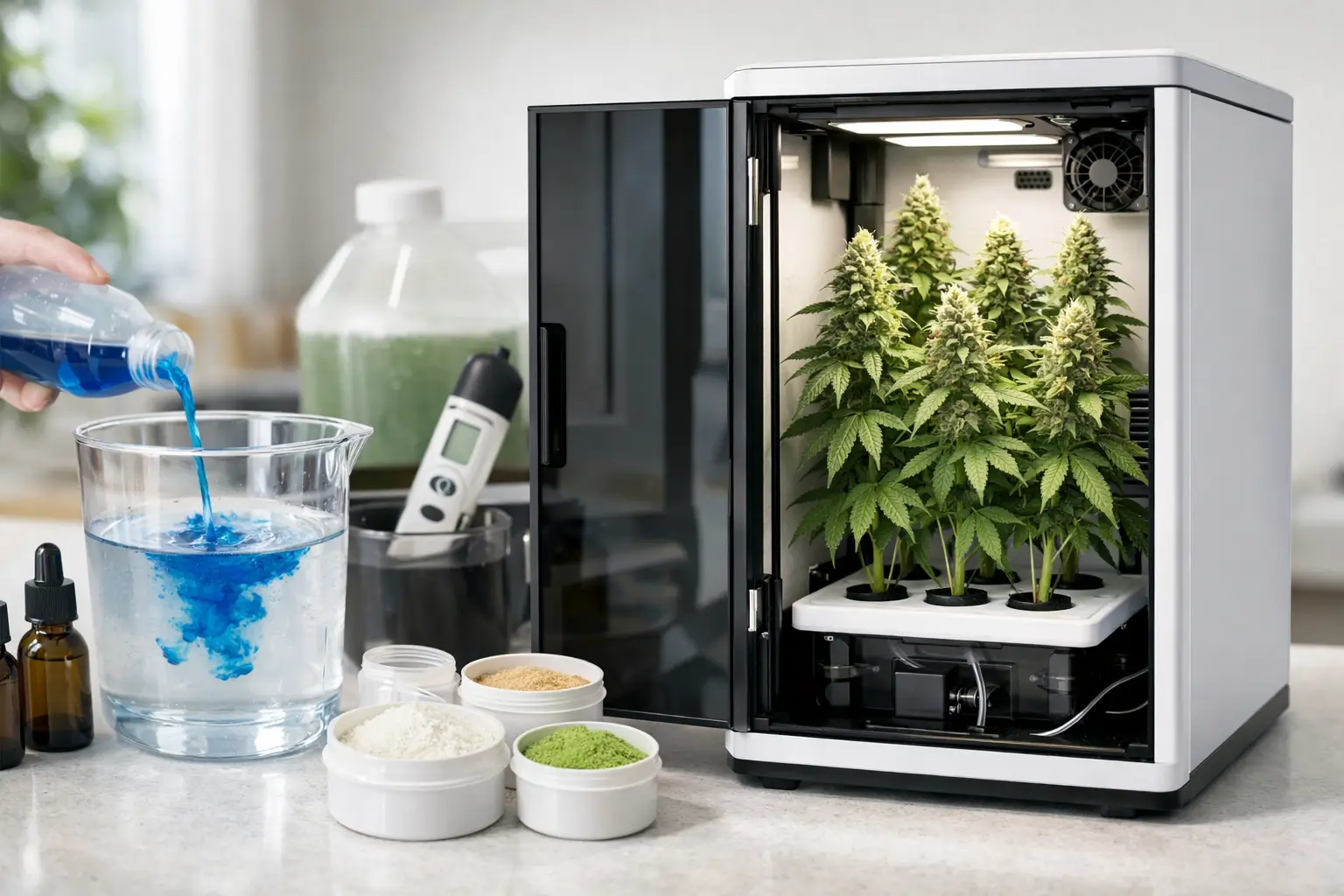
A DWC reservoir can look clean, read the right pH, and still be wrong for the plant. That is what makes nutrient mixing a real grow skill rather than a matter of pouring bottles into water. This hydroponic nutrient mixing guide is built for compact cannabis grows, where a small reservoir changes quickly and sloppy measurements become visible fast.
The goal is not to feed as heavily as possible. It is to give the roots a stable, readable solution that matches the plant's stage, your water, and the temperature inside the cabinet. Clarity, not chaos.
Start With Water, Not Nutrients
Your nutrient schedule begins with the water coming out of the tap. Fill the reservoir with the amount of water you actually intend to run, then let it reach the approximate temperature of the grow space before you measure or mix. In a compact DWC setup, a few extra gallons are not a harmless buffer. They change concentration, water level, and how quickly the reservoir drifts.
Check the starting EC or PPM of your water. EC is the cleaner measurement because PPM scales vary by meter, but either can help if you stay consistent. Very soft water gives you more control over what goes into the reservoir. Hard water already carries dissolved minerals, often including calcium and bicarbonates, which can raise your baseline EC and make pH management less predictable.
If your tap water starts unusually high, do not blindly stack a full nutrient recipe on top of it. That is how a beginner follows the label, sees a respectable number on the meter, and gives the plant a solution that is too concentrated. Use filtered or reverse-osmosis water when your source water is genuinely limiting your control, not because expensive water treatment is a hobby requirement.
Water temperature matters just as much. Aim to keep a DWC reservoir roughly in the 65-70 F range. Warmer water holds less dissolved oxygen and creates friendlier conditions for root disease. In a small cabinet, heat from lighting, pumps, and the room can push a reservoir upward faster than expected. A perfect nutrient ratio cannot compensate for warm, stagnant root-zone conditions.
Hydroponic Nutrient Mixing Guide: The Correct Order
Mix nutrients into water one product at a time. Never combine concentrates together in a measuring cup or pour one directly into another bottle. Concentrated minerals can react, fall out of solution, and create solids the roots cannot use. Once that happens, stirring harder does not restore the formula.
Begin with your full reservoir of water and keep strong aeration running. Add each product, stir or circulate thoroughly, then wait a moment before adding the next. If you use silica, it generally goes in first because it raises pH and needs time to disperse. Follow with any calcium-magnesium supplement if your water and nutrient line call for it, then add the base nutrients in the manufacturer’s stated order. Add bloom additives, beneficials, or other supplements only after the base solution is fully mixed.
That order is not permission to build a bottle collection. In a first compact DWC run, a base nutrient designed for hydroponics, a reliable pH adjuster, and a meter you trust will do more for the crop than a shelf of bloom boosters. Every extra input is another variable to diagnose when leaves start speaking up.
Mix Below Your Final Target
Start weak, especially with seedlings, recently transplanted plants, or genetics you have not grown before. You can always raise EC. Pulling excess salts back out of a small reservoir is harder and usually means diluting or replacing the solution.
For young cannabis plants with a functioning root system, a modest EC around 0.4-0.8 is often plenty. Established vegetative growth commonly lands around 0.8-1.4 EC. During flower, many plants perform well around 1.4-2.0 EC, but that is a working range, not a challenge to hit the highest number. A compact plant under modest light does not need to eat like a large, heavily lit room plant.
The plant and the reservoir get the final vote. If the water level falls while EC rises, the plant is drinking more water than nutrients. The solution is likely too strong. If water level and EC both fall, the plant is taking up nutrients well and may tolerate a small increase. If EC rises and water consumption slows, do not add more feed. Check root health, reservoir temperature, light stress, and pH before blaming the nutrient brand.
Set EC First, Then Set pH
EC tells you how concentrated the solution is. pH tells you whether those dissolved nutrients are available to the roots. They are different readings, and chasing one without checking the other creates avoidable drama.
After all nutrients are mixed, measure EC. Adjust gradually with more water or more diluted nutrient solution until you reach your planned range. Then allow the reservoir to circulate for several minutes and measure pH.
For DWC cannabis, a pH range of about 5.5-6.2 works well, with 5.7-5.9 as a practical starting point. Do not force the number to sit at 5.80 every hour. A gentle drift through the acceptable range can expose the roots to different nutrients at their preferred availability points. What matters is that the drift stays controlled, not that the display looks frozen.
Use pH up or pH down sparingly. Add a small amount, circulate, and retest. Overshooting back and forth is a common beginner error, especially in a small reservoir. It adds unnecessary salts and turns a simple correction into a chemistry experiment.
Calibrate Before You Trust the Numbers
A cheap meter can be useful. An uncalibrated meter is just a confident-looking source of bad decisions. Calibrate pH and EC meters on schedule using the appropriate solutions, rinse probes between readings, and store a pH probe according to its instructions. Do not leave it dry if the manufacturer says it needs storage solution.
Also measure consistently. Take readings after the reservoir has circulated, not immediately after adding nutrients or top-off water. Write down date, reservoir temperature, pH, EC, water level, and any adjustment. This takes less than a minute and turns troubleshooting from guesswork into a pattern you can actually see.
Build a Reservoir Routine That Fits Small Spaces
Small systems reward frequent observation, not constant meddling. Check the reservoir daily during active growth. Look at water level, temperature, pH, EC, root color and smell, and the plant’s posture. A healthy DWC root mass is typically light colored, firm, and free of swampy odor. Nutrients can stain roots, so color alone is not a verdict. Texture and smell matter.
Top off with plain, pH-adjusted water when the reservoir level drops, then reassess EC after circulation. If EC keeps climbing over consecutive days, dilute the solution or reduce the strength at the next change. If it keeps falling quickly and the plant looks healthy, increase only in small increments. Big corrections teach you almost nothing.
Replace the reservoir on a regular cadence, commonly every 7-10 days for a small DWC grow, or sooner if the solution is dirty, smells off, becomes unstable, or has drifted far from target. A full change is not failure. It is a reset that removes accumulated imbalance and lets you re-establish a clean baseline.
Keep the reservoir covered from light, keep air moving, and keep the air stone producing a strong stream of bubbles. Light leaks encourage algae. Weak aeration reduces oxygen. Warm water compounds both problems. This is why method-to-space alignment matters: a compact cabinet can grow excellent cannabis, but it gives you less room to ignore the root zone.
Do Not Diagnose Every Leaf as a Deficiency
Yellow tips, dark leaves, clawing, pale new growth, and rusty spots can all involve nutrition, but they do not automatically mean “add a supplement.” In hydroponics, apparent deficiencies often come from pH being out of range, a reservoir running too hot, excess EC, root damage, or an environmental issue that slows uptake.
Before changing the feed, check the simple chain: reservoir temperature, aeration, water level, EC trend, pH trend, and root condition. Then look at light distance and canopy temperature. If the root zone is healthy and readings are stable, make one measured adjustment and give the plant time to respond.
That discipline protects flower quality later. A clean, stable reservoir supports predictable growth, which makes training, flowering, harvest timing, drying, and curing easier to read. The best hydroponic nutrient program is not the one with the most additives. It is the one you can mix accurately, monitor calmly, and repeat without surprises.
Treat every reservoir change like a short craft routine: clean water, correct order, measured EC, controlled pH, and notes worth reading next week. Your plant does not need hype. It needs a root zone that makes sense.