Why Cannabis Leaves Are Curling Indoors
Learn why cannabis leaves are curling, how curl direction points to the cause, and what to check first in a compact indoor grow without needless fixes.
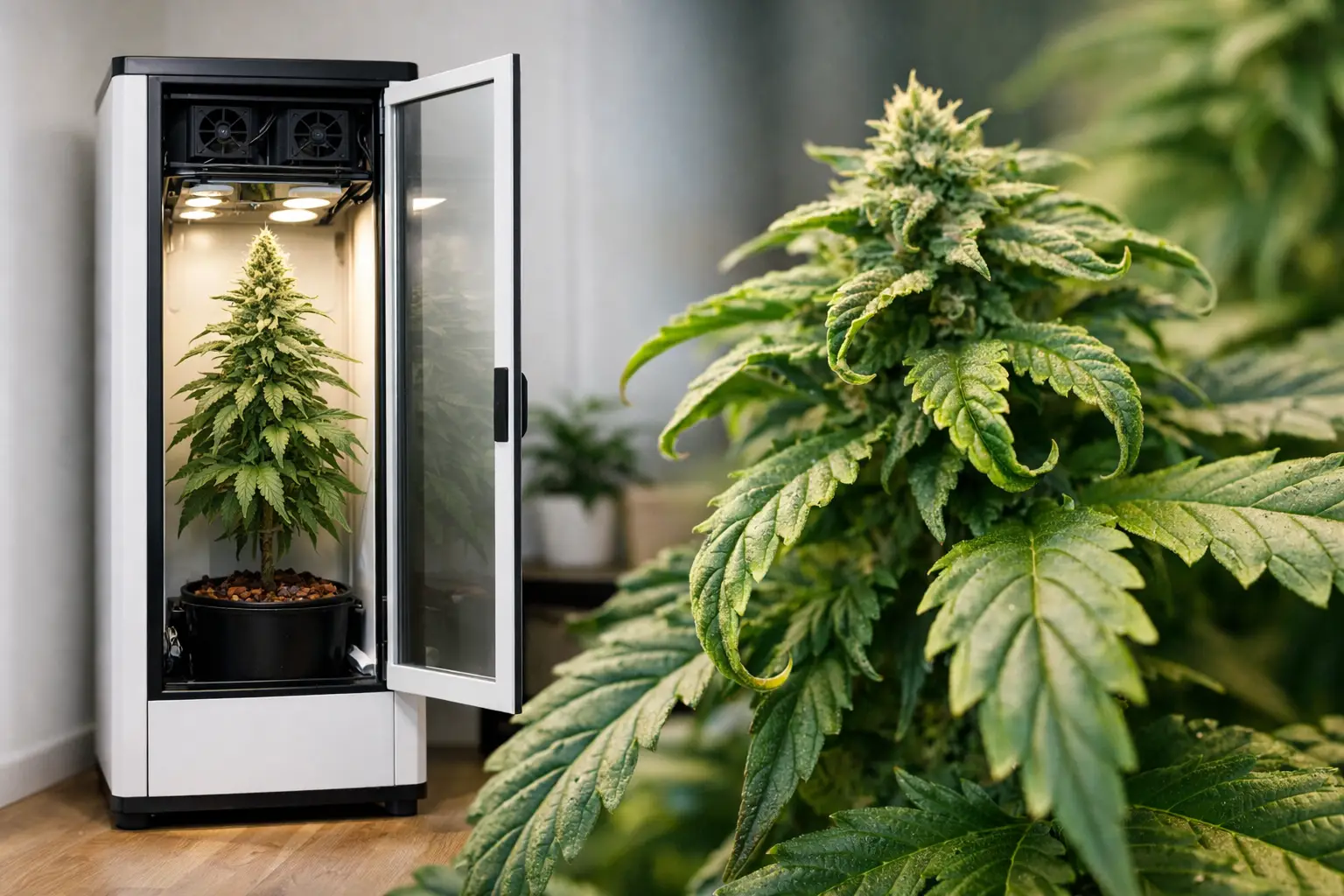
A cannabis leaf does not curl for no reason. In a compact cabinet or tent, it is usually reporting a mismatch between the plant and its environment: too much heat at the canopy, an overfed root zone, poor oxygen in the reservoir, or a dry, hard-working plant that cannot keep up.
The real question behind why cannabis leaves are curling is not, “What product fixes this?” It is, “What changed, and what is the plant trying to tell me?” Read the direction of the curl, inspect the newest growth, then check the root zone and environment in order. Clarity first. Random fixes create more drama than the original problem.
Why Cannabis Leaves Are Curling: Read Direction First
Curl direction narrows the field. It does not diagnose the plant by itself, but it tells you where to look before you start adjusting nutrients, light height, or airflow.
Leaves that curl upward at the edges are often called canoeing or tacoing. They are commonly linked to excess leaf temperature, intense light, low humidity, or a combination of all three. The plant is trying to reduce the surface exposed to stress. In a small enclosure, this can happen fast because the light, upper canopy, and exhaust system all occupy the same tight zone.
Leaves that curl downward, especially when the tips hook like claws, point more often toward a root-zone or feeding issue. Excess nitrogen is a familiar cause, but it is not the only one. Overwatering in soil, low dissolved oxygen in DWC, excessive EC, root disease, or a badly shifted pH can all leave a plant dark, heavy, and curled downward.
A full leaf folding, twisting, or growing misshapen is different from a simple edge curl. That pattern can come from unstable conditions during new growth, spray damage, pests, or genetics. Look closely before blaming the reservoir. A single odd leaf is not a crisis. A pattern spreading across new growth is a signal.
Start With the Timeline, Not the Symptoms
Before changing anything, identify when the curling began. Did it appear the day after raising the light, switching to flower, mixing a stronger reservoir, or running the cabinet with the door closed for longer? The timing often gives you the answer faster than a dozen photos from a grow forum.
New growth is the most useful indicator. If only older fan leaves are curling but the top growth looks normal, you may be seeing residual damage from an earlier problem. Damaged leaves rarely flatten back to perfect. Judge whether the issue is active by watching the leaves that formed after you corrected the environment.
Also separate whole-plant symptoms from localized ones. If the uppermost leaves nearest the fixture are tacoing while lower leaves look relaxed, start with light intensity and canopy temperature. If the entire plant is dark, drooping, and clawed, inspect the roots and nutrient strength before touching the light.
This is why a disciplined grow log matters. Record reservoir changes, water temperature, pH, EC, cabinet temperature, humidity, and light adjustments. Indoor cultivation becomes readable when you stop relying on memory.
Upward Curl: Heat, Light, and Vapor Pressure Stress
In a small grow space, upward curl usually starts at the canopy. The fixture may be too close, the dimmer may be too high for the plant’s stage, or the leaf temperature may be several degrees warmer than the air reading suggests. A thermometer mounted low on a cabinet wall does not tell you what the top leaves are experiencing.
Low humidity can make the same problem worse. When the air is dry and the light is intense, the plant loses water faster than the roots can replace it. The leaf edges rise, and the plant may look thirsty even when the medium or reservoir is full. Adding more water or nutrients does not solve an air-demand problem.
Airflow has a trade-off here. You need circulation to prevent stagnant, humid pockets and weak stems. But a fan aimed directly at one section of foliage can dry and curl leaves, especially in a compact cabinet. The goal is gentle leaf movement, not a constant blast.
Correct this in small steps. Raise or dim the light modestly, verify the canopy temperature, and bring humidity into a sensible range for the plant’s stage. Do not make three major changes at once. If the leaves improve, you want to know which correction worked.
Downward Curl: Feed Strength and Root-Zone Stress
The classic nitrogen claw is dark green, thick-looking foliage with tips bent downward. It often follows a heavy feeding schedule or a nutrient formula that is too nitrogen-forward for the plant’s current stage. In flower, excess nitrogen can keep a plant pushing leafy growth when you want balanced flower development.
But downward curl is not automatically a nutrient problem. In DWC, healthy roots need oxygen, stable water temperature, and a solution that stays within an appropriate pH and EC range. Warm water holds less dissolved oxygen. A clogged air stone, weak pump, slime on roots, or a reservoir that has drifted too concentrated can all make the foliage look overfed and unhappy.
Lift the lid and inspect before you add anything. Healthy DWC roots are generally pale and firm, with a fresh smell. Brown, slimy, foul-smelling roots require immediate attention to cleanliness, temperature, aeration, and reservoir management. Do not try to out-bottle a root problem with supplements.
For a compact 12/12-from-seed run, restraint is usually the better move. These plants have less time and less root mass than a long-vegetated plant. A nutrient schedule designed for maximum biomass can be too aggressive for the space and timeline. Craft growing means feeding the plant you have, not the yield fantasy on the bottle.
Check These Four Systems in Order
When curling appears, work through the grow in the same sequence every time:
- Canopy conditions: Check light distance or intensity, leaf-level temperature, humidity, and whether a fan is hitting the plant directly.
- Root zone: In DWC, inspect roots, water temperature, air stones, and reservoir cleanliness. In soil or coco, assess moisture before watering again.
- Solution strength: Measure pH and EC or PPM. Compare the readings with your last mix, not with guesswork.
- Plant pattern: Inspect new versus old growth, top versus bottom leaves, and both leaf surfaces for pests or residue.
This order prevents a common beginner mistake: treating a climate problem as a feeding problem. If a hot canopy causes tacoing and you lower nutrients first, you may slow the plant while leaving the actual stress untouched.
When Curling Is Not an Emergency
Some curling is temporary. A plant may show mild edge lift after a demanding defoliation session, a reservoir change, transplanting, or a sharp environmental swing. If the new growth remains healthy and the condition does not spread, hold steady and observe.
Genetics also matter. Some cultivars naturally carry slightly rippled, narrow, or cupped leaves. Do not chase perfectly flat foliage at the expense of stable conditions. The standard is healthy growth, not an Instagram leaf photo.
Pest damage deserves a closer look when curling comes with stippling, silvery scrape marks, tiny black dots, distorted new growth, or fine webbing. Check undersides of leaves with a loupe. Spraying blindly inside a flowering cabinet can create residue and humidity problems, so identify the issue before choosing a response.
Avoid the Overcorrection Trap
The fastest way to turn mild curling into a stalled grow is to change light height, nutrient concentration, pH, water temperature, and humidity all on the same day. The plant then has to adapt to a new set of variables, and you lose the evidence needed to understand the original issue.
Make the most likely correction first. If the tops are tacoing directly under a bright fixture, reduce canopy stress before rebuilding the reservoir. If the entire plant is clawed and the EC is high, correct the solution and root-zone conditions before blaming the light. Give the plant time to respond, then evaluate fresh growth.
Leaves are not just decoration around the buds. They are your early-warning display. Learn to read them while the signal is small, keep your environment steady, and your compact grow will stay a controlled craft process instead of a series of expensive guesses.