When to Harvest Cannabis Trichomes
Learn when to harvest cannabis trichomes by reading clear, cloudy, and amber heads correctly so you cut at the right window for quality.
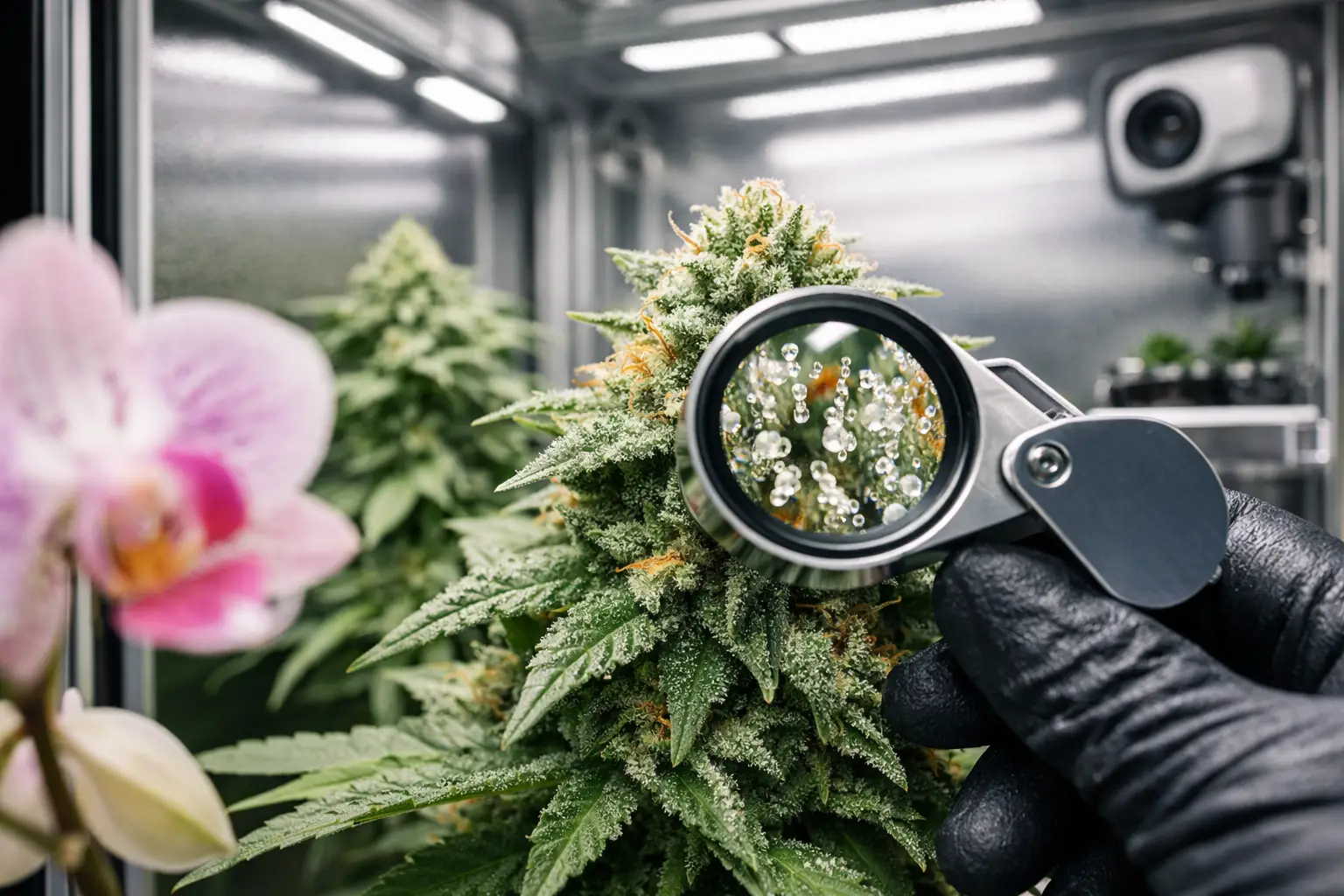
You can lose a strong finish in the last seven days. That is why when to harvest cannabis trichomes matters so much. In a compact indoor grow, where plant count is limited and every run needs to count, harvest timing is not a guess, a breeder estimate, or a calendar date. It is a reading skill.
Most beginner harvest mistakes come from looking at the wrong signals. People watch pistils, count flowering days, or cut because the plant "looks done" from across the room. That is finish-stage chaos. Trichomes tell you far more, but only if you read the right trichomes, on the right part of the plant, at the right time.
When to harvest cannabis trichomes without guessing
The short version is simple. Harvest when most trichome heads on the actual buds are cloudy, with a smaller portion turning amber based on the effect you want. Clear means immature. Cloudy means peak cannabinoid development. Amber means degradation has started, and the effect usually shifts heavier.
That sounds clean on paper, but the real grow-room version has more nuance. Different strains ripen differently. Top buds finish before lowers. Stress can distort the signal. And if you are growing in a small cabinet or tent, your environment may push ripening faster than you expected. So the goal is not to hunt a magic percentage. The goal is to identify your plant's harvest window with enough consistency that you can repeat it next run.
What trichome color actually means
Trichomes are not decoration. They are resin glands, and the bulbous heads are where much of the chemistry you care about is concentrated. As the plant finishes, those heads change appearance.
Clear trichomes usually mean the plant is still building. The heads look glassy and see-through. If you harvest here, the flower often feels underdeveloped. Potency, aroma depth, and overall fullness tend to be lacking.
Cloudy trichomes look milky or opaque. This is the zone most growers are targeting. It usually lines up with more developed potency and a fuller expression of the flower. If you want a more energetic, brighter finish, this is generally the direction to lean.
Amber trichomes show that the resin has moved past peak freshness and into later-stage maturity. A small amount of amber is normal in a proper harvest window. A lot of amber usually points to a later harvest with a heavier, duller effect. Some growers want that. Others wait too long and call it patience.
The mistake is treating amber like a prize. It is not automatically better. More mature is not always more desirable. Craft growers in small spaces should care about quality of finish, not just squeezing extra days out of the plant because internet folklore says longer is stronger.
Where to check trichomes on the plant
This is where many new growers get fooled. Do not judge harvest timing from sugar leaves. Those tiny resin-covered leaves often amber earlier than the trichomes on the calyxes themselves. If you read sugar leaves, you will often cut early.
Check trichomes on the actual bud surface, especially the swollen calyxes. Look at several sites across the plant, not just the ripest top. In a compact indoor setup, canopy variation can be smaller than in a large room, but it still exists. Tops get stronger light and usually mature first. Mid-level buds often give you the most honest average.
If the top cola is mostly cloudy with some amber but the rest of the plant is still loaded with clear heads, you are not looking at a full-plant harvest signal. You are looking at uneven ripening. In that case, you either wait for the plant to come together or stagger harvest if your setup and workflow can handle it.
What to use to inspect trichomes
You need magnification. Naked-eye harvesting is gambler behavior.
A jeweler's loupe, handheld microscope, or digital scope all work if they let you clearly see individual gland heads. The tool matters less than the method. You want stable viewing, decent lighting, and enough magnification to distinguish clear from cloudy without pretending.
If you use a handheld scope, brace your hands or cut a small sample from a lower bud and inspect it on a table. Trying to read trichomes on a moving branch under a fan usually turns into wishful thinking. In a disciplined workflow, accuracy beats convenience.
The best harvest window for different outcomes
There is no universal perfect ratio, but there are practical target zones.
If you want a brighter, more forward effect, harvest when the majority of bud trichomes are cloudy and amber is minimal. If you want a balanced finish, wait until the buds are mostly cloudy with some amber mixed in. If you prefer a heavier, later effect, you can let amber build further, but this is where overripe flower becomes a real risk.
For most home growers, especially on early runs, the safest target is mostly cloudy with a modest amount of amber. That tends to preserve quality while avoiding the classic beginner error of cutting too early. It also keeps you out of the other ditch, which is waiting forever because you are chasing some imaginary 50 percent amber finish.
Why pistils and breeder timelines are secondary signals
Pistils can help, but they are not harvest proof. Darkened or receded pistils often show that the plant is getting close, yet environmental stress, genetics, or accidental pollination can change pistil behavior. You can have lots of orange pistils and still see too many clear trichomes.
Breeder flowering times are even less reliable as a final decision tool. They are rough guidance, not a command. Your root-zone health, light intensity, feeding, and environment all affect finish speed. In a DWC cabinet grow, healthy plants can ripen differently than the same cultivar in soil under weaker light. If your calendar says day 56 but the bud trichomes still look half clear, the calendar loses.
Common signs you are checking too early or too late
If buds have not fully swollen, if aromas still feel thin, and if most trichomes are clear, you are early. A lot of beginners start inspecting obsessively the moment pistils brown up. That is fine, but do not confuse "starting to finish" with "ready to cut."
If the plant looks tired, aromatic sharpness has flattened out, and amber is spreading across bud trichomes instead of appearing lightly here and there, you are moving late. Leaves fading near harvest can be normal. Resin aging past its best window is not some elite technique.
The finish stage rewards daily reading. Once you enter the probable harvest window, check trichomes every day or two. This is not the time to disappear for a long weekend and hope your plant politely holds still.
How compact indoor environments affect trichome timing
Small spaces magnify everything. Heat spikes, dry air, excessive light intensity, and inconsistent watering or reservoir management can all push the plant into a weird finish. Trichomes may amber faster under stress, but that does not always mean true ripeness. It can mean the plant is aging poorly.
That is why harvest timing should never be separated from environment reading. If your canopy has been running too hot, or your root zone has been unstable, interpret amber carefully. Ask whether you are seeing healthy maturation or stress-driven decline.
This is also why a structured system matters. Brands like ColaXpress lean hard into finish-stage discipline because good flower is not won by gadgets. It is protected by readable conditions and clean decisions at the end.
A simple decision rule for beginners
If you are on your first few runs, keep it simple. Inspect trichomes on the buds, not the leaves. Ignore the urge to cut on the first sight of cloudy heads. Wait until most of the bud trichomes are cloudy, then look for a light but visible amber presence across multiple bud sites.
Take notes when you harvest. Then, after drying and curing, judge the result honestly. If the effect feels too sharp or underdeveloped, you probably cut early. If it feels muddy or overly sedative, you probably waited too long. That feedback loop is how you stop borrowing random harvest opinions from the internet and start building your own repeatable timing.
The cleanest harvests come from growers who treat ripeness like plant reading, not fortune-telling. Stay patient, stay observant, and let the buds tell you when they are finished.