How to Lower Humidity in Grow Tent
Learn how to lower humidity in grow tent setups with practical fixes for airflow, heat, watering, and dehumidifiers in small grow spaces.
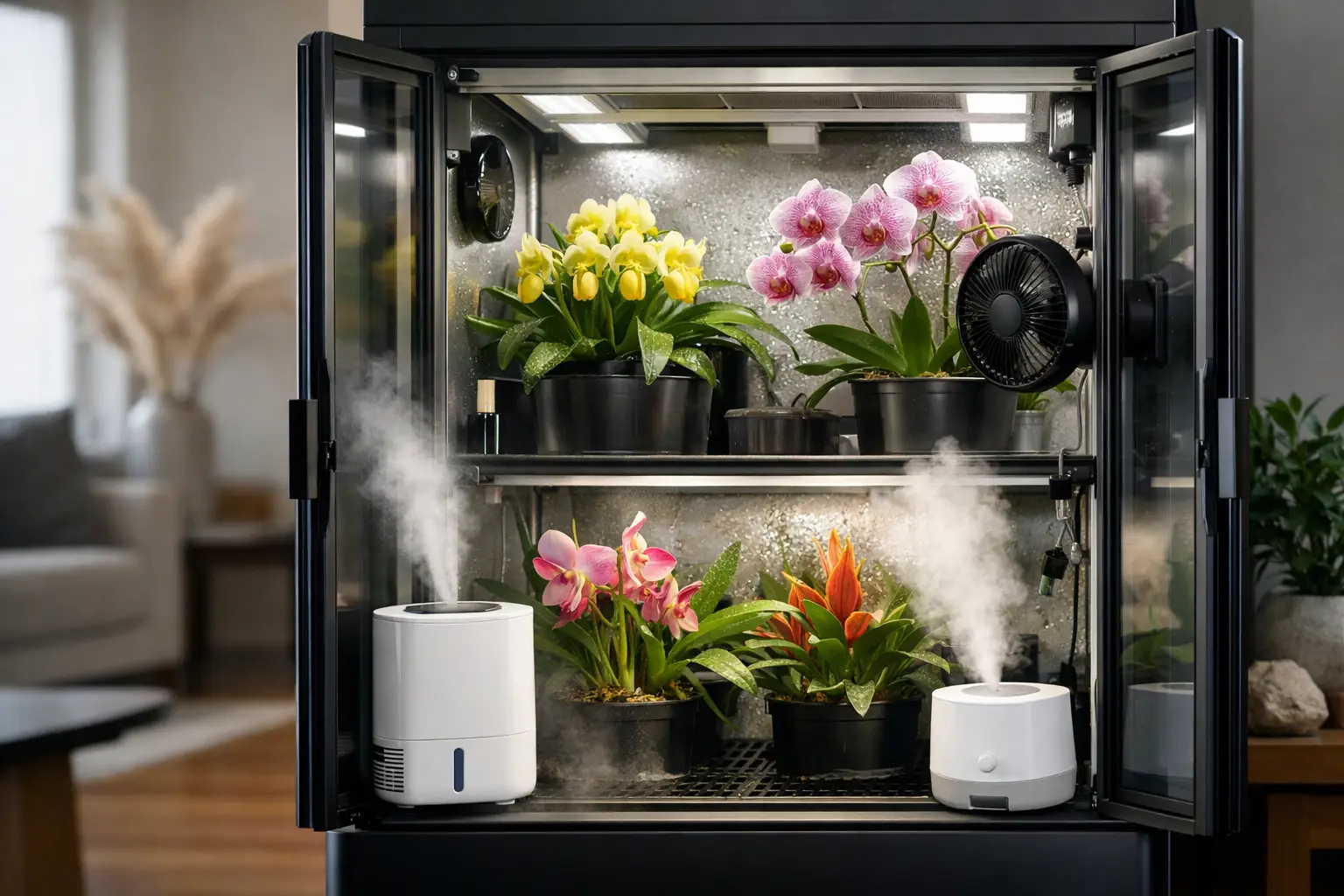
If your tent reads 70% to 80% RH during flower, this is not a small drift. It is a mold invitation. Knowing how to lower humidity in grow tent setups is less about buying more gear and more about controlling where moisture comes from, how it moves, and where it exits.
Most beginners treat humidity like an isolated number. It is not. In a small tent, humidity is tied to plant size, leaf mass, watering habits, lung room conditions, extraction strength, and temperature. If you only attack one part, the problem usually comes back by lights out.
How to lower humidity in grow tent without guessing
Start with the simplest truth: humidity stays high when water enters the tent faster than your system can remove it. That water comes from transpiration, wet media, standing runoff, and sometimes even open reservoirs. Your job is to reduce excess moisture production and improve moisture removal at the same time.
This matters most in compact grows, where small mistakes stack fast. A crowded canopy in a 2x2 or 2x4 tent can overwhelm weak exhaust in a single watering cycle. That does not mean you need a complicated room build. It means the tent, the room around it, and your plant count need to match.
First, make sure your reading is real
Before changing equipment, check the hygrometer. Cheap sensors drift, and bad data creates bad fixes. Use a second meter at canopy height and compare readings with lights on and lights off.
If one device says 58% and another says 72%, stop treating the first number as truth. Put your sensor where the leaves actually are, not on the floor and not pressed against a wall. In small enclosures, placement matters more than people think.
The biggest causes of high tent humidity
High humidity usually comes from one of five issues. The tent is overfilled, exhaust is undersized, the room outside the tent is already humid, watering is too heavy, or airflow inside the canopy is weak. Sometimes it is two or three of those at once.
Beginners often blame the plant, but healthy plants are supposed to transpire. The real question is whether your environment was built to handle that moisture load. If you veg too long, stack too much foliage into a small footprint, and then flower in a muggy room, the tent is not failing. The setup is mismatched.
Your lung room controls the tent more than you think
The tent can only pull in the air available to it. If the room outside the tent sits at 65% RH, your exhaust system is constantly recycling damp air. In that case, adding another clip fan inside the tent will not solve the root problem.
This is why disciplined growers treat the room housing the tent as part of the grow. If the lung room is cool and damp, especially in a basement, you often need to dry that room first. A tent is an enclosure, not a magic weather machine.
Improve exhaust before buying more gadgets
If you want to know how to lower humidity in grow tent setups reliably, look at air exchange first. Exhaust should pull moist air out fast enough to prevent buildup, especially after watering and during lights off.
An underpowered inline fan is a common problem. So is a decent fan choked by a long duct run, sharp bends, dirty filter, or poor speed settings. If your fan and carbon filter are matched badly, real airflow can drop more than expected.
A healthy tent usually has slight negative pressure, with the walls pulling in a bit. That is not a perfect measurement, but it is a useful visual check. If the tent looks slack and stale while RH climbs, extraction is probably too weak.
Internal fans do a different job
Oscillating or clip fans do not remove humidity from the tent. They help prevent wet pockets by moving air across leaf surfaces and through dense canopy zones. That is useful, but it is not the same as exchanging air.
Use internal airflow to eliminate stagnant corners, especially under the canopy and around large colas in flower. Just do not confuse circulation with removal. One mixes the air. The other gets moisture out.
Reduce the moisture load inside the tent
A lot of humidity control comes down to how much water you are putting into the space and how much leaf area is releasing it back out.
If your plants are oversized for the tent, no fan upgrade will feel clean or efficient. This is one reason small-space growers do better with method-to-space discipline. Shorter veg, realistic plant counts, and a manageable canopy beat the usual beginner instinct to cram the tent full and hope airflow saves it.
Defoliation can help when done for airflow rather than ego. Remove leaves that block major channels through the canopy or trap dampness around bud sites. Do not strip plants into stress just because humidity is high. The goal is readable structure, not punishment.
Watch your watering habits
Overwatering drives humidity up fast. In soil or coco, saturated containers release moisture into the tent for hours. In hydro, open water surfaces and high reservoir temperatures can add moisture too, though transpiration still tends to be the bigger factor.
Water close to lights on when possible. That gives the system time to process and remove moisture during the most active part of the day cycle. Watering right before lights out can push nighttime RH into the danger zone.
If you collect runoff, remove it promptly. Standing drain trays are small humidity engines. The same goes for wet towels, spilled nutrient solution, or anything else evaporating inside the tent.
Temperature and humidity move together
A lot of growers try to lower RH while accidentally lowering temperature too far. That can make the RH number look worse, especially at night. Cooler air holds less moisture, so relative humidity rises even if the actual water content has not changed much.
That is why night swings matter. If your lights-off temperature drops hard, RH often spikes. The fix may be better nighttime extraction, a small dehumidifier in the lung room, or keeping the room a bit warmer after lights out.
This is also why chasing one target number without context leads to chaos. You are managing an environment, not a scoreboard.
When to use a dehumidifier
Sometimes the straight answer is yes, you need one. If your local climate is humid, your grow sits in a basement, or your tent is in late flower with dense biomass, a dehumidifier may be the cleanest fix.
But placement matters. In small tents, a large dehumidifier inside the enclosure often adds too much heat and steals space. It is usually better to dry the lung room and let the tent pull in conditioned air.
A tent-sized mini dehumidifier can help in limited cases, but many of them are too weak to keep up with flowering cannabis. This is where beginners waste money - buying cute devices instead of solving the actual moisture load.
Target ranges that make sense
In veg, somewhat higher humidity is generally workable. In flower, especially mid to late flower, you want tighter control because dense buds and trapped moisture are a bad combination.
Exact targets depend on temperature and plant stage, but if you are routinely above 60% in late flower, pay attention. If you are pushing into the upper 60s or 70s, do not call it normal. Call it a correction point.
A practical fix order for high humidity
When RH is too high, work in order. First verify the reading. Then check the lung room. After that, improve exhaust, clean up airflow, and remove standing moisture. Next, look at canopy density and watering timing. Only then decide whether a dehumidifier is required.
This order matters because it keeps you from treating symptoms with expensive gear while the room itself stays damp and the tent stays overcrowded. ColaXpress is built around that kind of discipline - fix the system in sequence, not by panic-buying accessories.
How to lower humidity in grow tent during lights out
Lights-out humidity is usually the real fight. Transpiration changes, temperatures drop, and weak extraction gets exposed fast. If your RH is acceptable during the day but spikes at night, focus on nighttime conditions instead of overcorrecting the daytime environment.
Run exhaust consistently through the dark cycle. In many cases, bumping nighttime fan speed helps more than adding another small circulation fan. If the surrounding room gets damp overnight, dry that room before the tent pulls the moisture back in.
For some growers, shifting irrigation earlier in the light cycle makes a noticeable difference. For others, the real fix is a less crowded canopy before flower gets dense. It depends on what is actually producing the moisture load.
Good growing in a small tent is rarely about hero moves. It is about removing obvious failure points before they cost you flower quality. When the air stays readable, the whole grow gets easier to manage.