How to Dry Cannabis Properly Indoors
Learn how to dry cannabis properly indoors with the right temp, humidity, airflow, and timing so your harvest keeps flavor, potency, and burn.
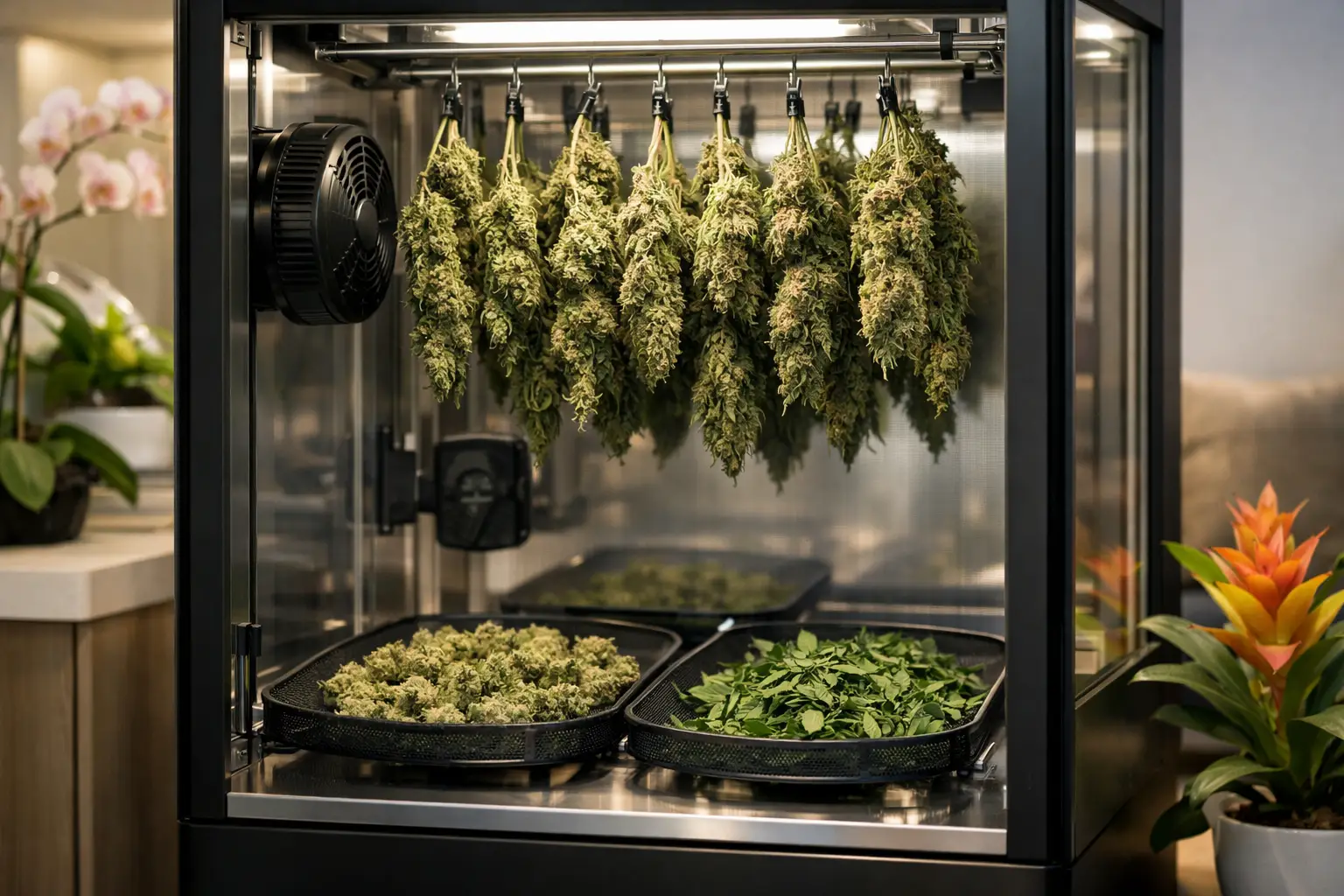
The fastest way to ruin a good harvest is to get impatient after chop. If you want to know how to dry cannabis properly, stop thinking of drying as a waiting period and start treating it like a controlled stage of the grow. This is where smell, burn quality, texture, and a big part of the final smoking experience are either protected or thrown away.
A lot of beginner growers do the hard part well enough, then dry too hot, too fast, or with too much airflow. The result is flower that looks decent in a jar but smokes harsh, loses aroma early, and never really cleans up in cure. Drying is not where you freestyle. It is where structure pays off.
How to dry cannabis properly starts with environment
The goal is simple. You want the plant to lose moisture slowly enough that chlorophyll and other unwanted green characteristics fade out, but not so slowly that you invite mold. In small indoor spaces, that balance is mostly about temperature, relative humidity, and air movement.
For most home growers, the sweet spot is around 60 to 65 degrees Fahrenheit with 55 to 60 percent relative humidity. Cooler is usually better than warmer, as long as humidity stays in range and the room does not stagnate. If your dry space sits at 72 to 75 degrees, you can still finish the job, but terpenes will take a hit and the outer flower will crisp too quickly.
This is why compact-space growers need to respect finish-stage planning. If your cabinet, tent, or spare closet cannot hold a stable dry environment, the quality ceiling of the entire run drops. Fancy genetics will not fix a sloppy dry.
What good drying conditions actually feel like
A proper dry room is dim or dark, smells active but not swampy, and has gentle air exchange without direct fan blast on the flowers. You want the room breathing, not the buds being force-dried. Constant air whipping across hanging branches creates dry exteriors and wet interiors. That is the exact opposite of an even finish.
If you are using a small tent or cabinet, keep airflow indirect. Exhaust can run, but fan placement matters. Point circulation away from the hanging plant material. Think movement in the room, not wind on the buds.
Trim style changes the drying speed
One reason growers give conflicting drying advice is that they are not starting from the same trim method. Whole-plant hanging dries slower than individual branches. Heavy wet trimming dries faster than leaving more leaf on. Dense flower in a tight room behaves differently from airy flower in a larger space.
For beginners, partial wet trim or a simple branch hang is usually easier to control than stripping everything down aggressively. Leaving some plant material attached slows the dry and gives you a little buffer against overdoing it. In compact indoor setups, that buffer matters.
If your environment already runs humid, you may need smaller branch sections and a cleaner wet trim to avoid moisture pockets. If your space runs dry, more leaf and larger branches can help prevent a crash-dry. This is where discipline beats dogma. There is no single trim style that wins in every room.
The first 72 hours matter more than most growers think
The opening stretch sets the pace. Right after harvest, the flowers are loaded with internal moisture, and the room can swing fast. Humidity often climbs hard in the first day as water leaves the plant. If you do not have enough dehumidification or air exchange, your dry space can drift into mold territory before you realize it.
Check the environment several times a day early on. Not because you should keep adjusting everything every hour, but because you need to see how the room behaves under load. A dry room that looked fine when empty may not hold once a full plant is hanging inside.
If humidity jumps above the low 60s and stays there, correct it. If temperature rises because your equipment is fighting itself, correct that too. A calm, readable room is the target.
How long should cannabis dry?
For most small-scale indoor growers, a proper dry takes about 7 to 14 days. That is a range, not a promise. The right answer depends on room conditions, branch size, trim style, and flower density.
A dry that finishes in 4 or 5 days is usually too fast unless conditions were unusually damp at harvest. A dry that drags far past two weeks can still work, but extended high humidity raises risk and can flatten the process if the room is not clean and stable.
Forget rigid calendar thinking. Read the flower. The outside should feel dry but not brittle. Small stems should begin to snap rather than fully bend, while larger stems may still have some flex. Buds should feel lighter and less cool to the touch than they did at the start.
The mistake is jarring too early because the outside feels done. The center of the flower often still holds more moisture than new growers expect. That moisture equalizes in the jar, and if you rushed the move, you trap too much water inside the cure stage.
How to tell when drying is done enough for jars
You are not looking for bone dryness. You are looking for the point where the flower can move into cure without sweating itself into a problem. That means the exterior is dry, the bud still has a little give, and stem behavior suggests moisture has mostly left the branch structure.
The best habit is to test a few representative buds from different parts of the plant. Tops often dry differently than lowers. Dense colas can lag behind small side branches. In compact grows, this difference can be more pronounced because the plant often matured under highly directional light.
If you jar everything based on the driest material, the denser flower can end up too wet. This is one reason careful sorting at harvest helps. Uniform batches are easier to dry and easier to cure.
Common mistakes when learning how to dry cannabis properly
The biggest mistake is treating airflow like a substitute for environmental control. A stronger fan does not fix bad temperature or humidity. It just removes moisture from the surface faster.
The second mistake is drying in the same warm lung room where the plant flowered, without adjusting expectations. Flowering conditions are not ideal drying conditions. Good VPD for growth is not the same thing as a clean post-harvest finish.
The third mistake is overhandling. Every time you squeeze buds, shuffle branches, or keep opening the space to inspect them, you disturb the process and knock off resin. Check enough to stay informed, not so much that you create avoidable wear.
Another common failure is trying to save time with paper bags, racks, heaters, or direct vent blasts before understanding what problem you are actually solving. Those tools have niche uses, but beginners often use them to compensate for a room that was never set up for a proper dry in the first place.
Drying in small spaces takes more planning
If you grow in a cabinet, closet, or small tent, your margin for error is tighter. Small spaces react fast. Temperature climbs faster, humidity swings faster, and direct airflow is harder to avoid. That does not mean quality is out of reach. It means your process needs to be cleaner.
A compact dry works best when the space is dedicated, light is controlled, and your exhaust and humidity management are sized for the actual moisture load. If the grow and dry need to happen in the same footprint, think through that transition before harvest day. ColaXpress is built around that kind of workflow thinking for a reason. Finish-stage quality does not come from last-minute improvisation.
You also need to be realistic about plant size. Oversized plants create oversized drying problems in small rooms. Craft quality usually comes from matching method to space, not from chasing the biggest possible plant and hoping the finish works itself out.
After the dry, slow cure does the cleanup work
Drying gets you to stable flower. Curing refines it. Once jarred, moisture redistributes through the bud over the next several days. If the dry was done correctly, cure becomes controlled and boring, which is exactly what you want. If the jars suddenly feel damp, smell grassy, or spike in humidity, the flower likely needed more hang time.
A disciplined dry makes cure easier, not magical. Curing cannot fully repair flower that was flash-dried in a hot room. It can improve good flower. It does not resurrect mishandled flower.
Treat the dry as part of the grow, not as the messy hour after harvest. That mindset shift is what separates flower that merely looks finished from flower that actually smokes finished.