Vivosun VGrow: A Buyer's Analysis for Small-Space Growers
This Vivosun VGrow buyer's analysis explains what the compact cabinet does well, where it falls short, and how to build a disciplined indoor grow around it at home.
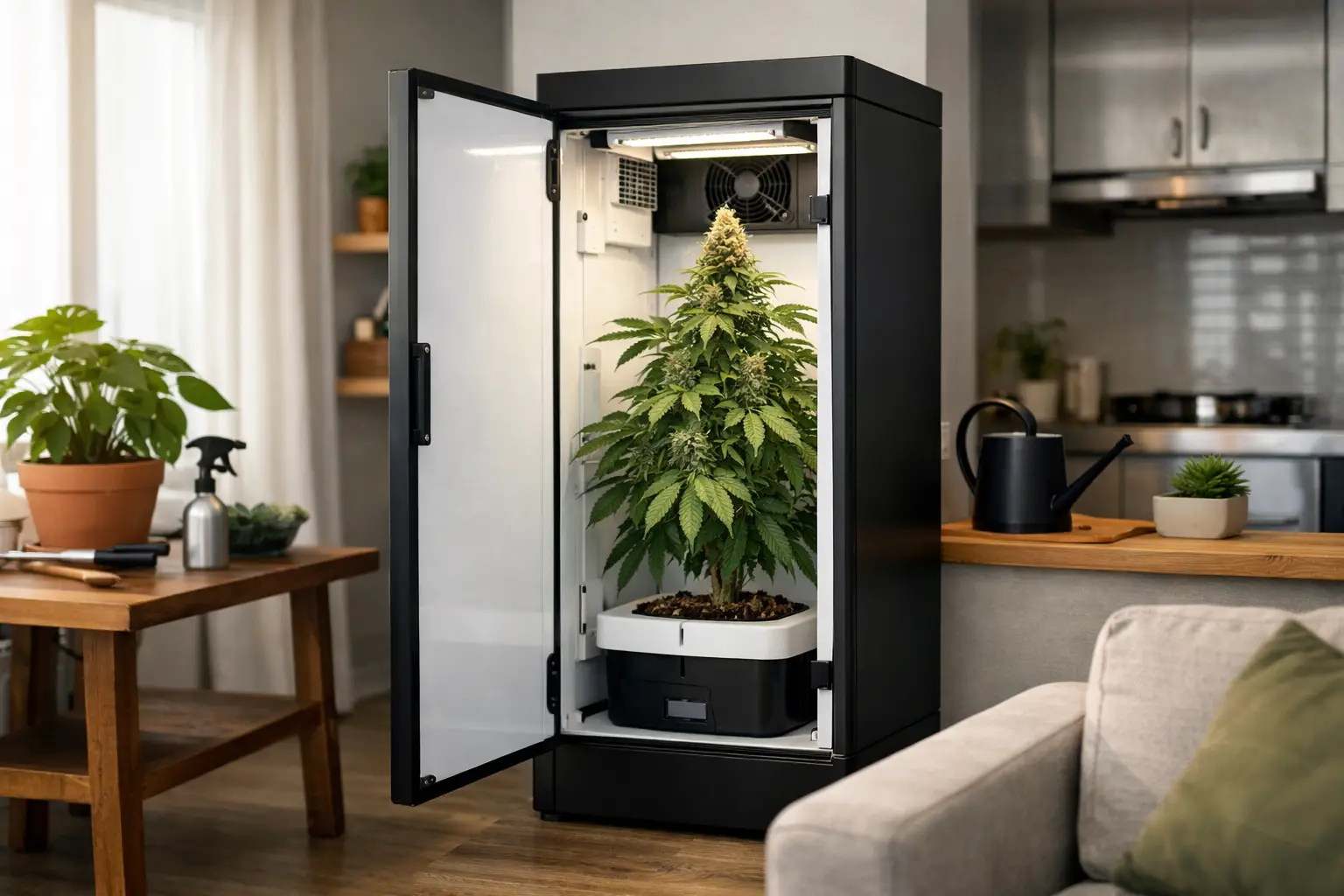
A cabinet grow can either reduce decisions or hide problems behind a door. That is the real question behind this Vivosun VGrow buyer's analysis. The VGrow is not interesting because it promises a futuristic grow experience. It is interesting because it gives a small-space grower a defined enclosure with much of the basic infrastructure already organized.
For the right grower, that structure matters. For the wrong grower, it can become an expensive way to avoid learning the few environmental signals that actually determine flower quality. This is a compact grow system, not a shortcut to oversized harvests.
What the Vivosun VGrow Gets Right
The strongest argument for the VGrow is containment. Indoor cannabis gets complicated when equipment is scattered across a bedroom, closet, or corner of a garage: a light here, fan controls there, dangling cords, improvised ducting, and no clean answer for where temperature and humidity are actually being measured. A cabinet gives the grow a physical boundary.
That boundary is useful for beginners because it forces method-to-space alignment. You are working with a known plant footprint, a limited vertical zone, an installed light and ventilation path, and a contained place to manage odor. Instead of building a grow area piece by piece and discovering compatibility problems later, you start with a system designed to operate together.
The VGrow also makes sense for growers who value a tidy workflow. Its integrated approach can reduce the gear-shopping spiral that traps first-time growers. You do not need a separate shopping list for every basic component before you can begin. That does not make every included component perfect, but it can remove a lot of avoidable setup drama.
The connected controls are another practical advantage when used correctly. Being able to view conditions, set schedules, and receive alerts can help a new grower stay engaged with the enclosure. A light schedule left running, a failed fan, or a humidity swing is easier to catch when the cabinet gives you a prompt.
But automation should support observation, not replace it. A dashboard can report a number. It cannot tell you whether leaves are praying from a hard light load, whether the reservoir smells off, or whether dense flowers are retaining moisture late in bloom. The cabinet gives you a cleaner cockpit. You still have to fly the plant.
The VGrow's Limits Matter
The VGrow is compact by design. That is its strength and its constraint. A small enclosure does not forgive oversized genetics, prolonged vegetative growth, or last-minute changes in technique. If your plan is to grow tall, heavily trained plants with multiple large phenotypes, this is not the right platform.
A cabinet is better suited to one controlled plant, a restrained canopy, and a short, repeatable workflow. For growers using photoperiod seeds, 12/12 from seed is a sensible fit. It limits stretch-related surprises, keeps the plant moving toward flower, and respects the cabinet's finite headroom. A compact cultivar matters more here than hype around potential yield.
Environmental control also has a ceiling. The cabinet can move air and manage its internal equipment, but it cannot fully defeat the conditions in the room around it. Put it in a hot garage during summer, a cold basement during winter, or a sealed room with poor air exchange, and the cabinet will inherit that burden. A cabinet is an enclosure, not a climate-control miracle.
That matters most during late flower and drying. High room humidity can make it difficult to hold a safe finish environment inside the cabinet. Conversely, dry heated air can push flowers toward a fast, harsh dry. If the room is consistently hostile, solve the room condition first or use a separate drying plan. Do not assume the grow cabinet automatically handles the post-harvest stage.
There is also the question of serviceability. An all-in-one system is convenient because components are coordinated. It can be less convenient when you want to replace, upgrade, or troubleshoot one part of that system. Independent tent setups are messier at the beginning, but they often make component-by-component changes easier later.
That trade-off is not a reason to reject the VGrow. It is a reason to buy it for the right reason: disciplined simplicity, not endless customization.
The Best VGrow Method Is a Small One
The fastest way to make a compact cabinet difficult is to run a large plant with a large-personality technique. Long veg times, aggressive topping, sprawling nets, and constant plant handling create complexity that the space does not reward.
A cleaner approach is to start with one plant and choose a method with a readable root zone. Deep water culture can work well in a cabinet because the root zone is accessible and fast to inspect. You can check water level, solution temperature, pH, and electrical conductivity without guessing what is happening inside a pot.
DWC is not effortless, however. Small reservoirs change quickly. Plants drink, nutrient concentration shifts, water warms, and an air-pump failure becomes urgent. The answer is not to avoid hydroponics. The answer is to treat the reservoir as a daily instrument panel. Check it at a consistent time, record what changed, and correct the cause before chasing symptoms with extra bottles.
For soil growers, the same discipline applies. Use a container size that fits the cabinet and leaves room for airflow. Water based on plant demand and medium weight, not a rigid calendar. Avoid turning a compact enclosure into a crowded jungle where lower foliage stays wet and the center of the canopy never sees moving air.
Training should have one goal: an even, manageable canopy. A little low-stress training can help. Repeated high-stress moves often do not. The grower who keeps the canopy modest usually has an easier time controlling light distance, airflow, and humidity than the grower trying to force a cabinet plant to perform like a tent plant.
Set It Up for Readability, Not Maximum Weight
Before germinating a seed, run the cabinet empty with the light, fan, and schedule operating. Learn how room temperature affects the enclosure through day and night. Confirm that the door seals correctly, cords are routed cleanly, drainage is understood, and airflow is not blocked by containers or accessories.
Then establish a simple operating routine. Check temperature and relative humidity at least once during lights-on and once during lights-off. Inspect leaves and water or media every day. Keep notes on feed changes, training, visible plant responses, and environmental spikes. This is not busywork. It gives you a record when a plant starts communicating through color, posture, or growth rate.
Keep the cabinet clean. Remove dead leaves, prevent standing water, and do not store unnecessary tools inside the grow area. Small spaces amplify small messes. A spilled nutrient solution, wet floor tray, or blocked intake can become a bigger issue than it would in a larger tent.
Odor management deserves the same straightforward thinking. A carbon filter and proper airflow can help, but no small cabinet offers a guarantee of zero smell at every stage, especially when handling flowers at harvest. Consider placement, household expectations, and local rules before choosing the location. Good equipment does not eliminate the need for discretion.
Who Should Buy the VGrow?
The VGrow fits the beginner or early-stage hobbyist who wants a contained first system and is willing to follow a process. It is especially useful for apartment-friendly spaces, spare rooms, and growers who do not want a tent, loose ducting, and a pile of separate controllers taking over their home.
It is less compelling for growers who already own a tuned tent setup, want to run several plants, or enjoy selecting every component themselves. It is also a poor match for anyone expecting a cabinet to compensate for neglected plant care. If you do not want to monitor water, climate, and plant structure, a smarter box will not create a better harvest.
The practical value is clarity. The VGrow gives a beginner a defined place to learn light, air, roots, and finish without starting from a scattered pile of gear. That is worth more than another speculative yield claim.
Treat the cabinet as a disciplined workspace, keep the plant appropriately small, and give drying and curing the same attention you gave the grow. The flower in the jar will reflect that restraint.
Buyer's verdict: the VGrow suits a disciplined beginner who wants a contained first system.
Affiliate disclosure — if a "Check the current VGrow offer at VIVOSUN" link appears in this section, it is a paid link: ColaXpress may earn a commission if you buy through it, at no extra cost to you. It never changes the analysis above.