Cannabis Leaves Drooping: Find the Cause Fast
Cannabis leaves drooping can signal watering, root, heat, or light trouble. Learn to read the pattern and correct it without creating new stress indoors.
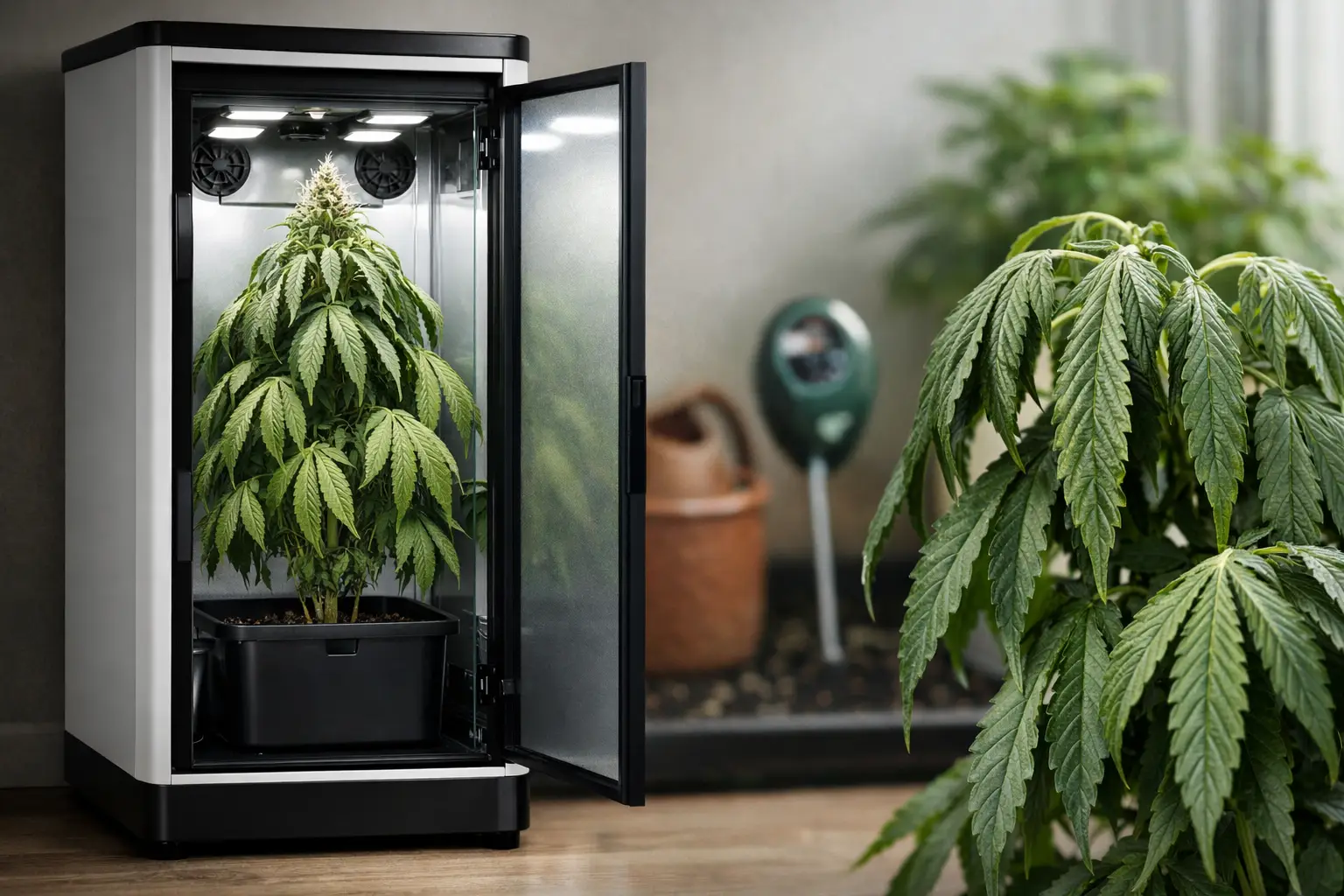
A healthy cannabis plant does not need to stand rigidly at attention every hour of the day. But when cannabis leaves drooping becomes the dominant look of the plant - especially when growth slows, leaf color shifts, or the medium stays wet - treat it as a signal, not a cosmetic issue.
The common mistake is reaching for a fix before reading the pattern. More water, more nutrients, a stronger fan, and a new light setting can turn one manageable problem into four. In a compact cabinet or tent, conditions change quickly. The right move is usually simpler: identify whether the plant is thirsty, waterlogged, overheated, root-bound, or being pushed too hard by light.
First, Read the Shape of the Droop
Drooping is not one symptom. Look at the leaf blades, the petioles, the substrate or reservoir, and the time of day. A plant that is limp from the stem outward tells a different story than a leaf with a firm stem and heavy, downward-curled blade.
A thirsty plant usually looks soft and deflated. Leaves and petioles lose their lift together, and the growing medium is noticeably light and dry. In coco or soil, the pot weight is one of the most reliable signals you have. Do not judge moisture by the top half-inch alone. Lift the container. Learn its weight after a proper watering and again when it is ready for another one.
An overwatered plant often looks heavier than thirsty. The leaves may be dark green, thick, and curved downward at the tips, sometimes called clawing. The pot remains wet, the plant looks slow despite having plenty of water available, and new growth may appear small or pale. The problem is not lack of water. It is lack of oxygen around the roots.
Heat and light stress create another version of droop. Leaves can hang during the hottest part of the light cycle, then recover after lights-off. Upper leaves near the fixture may show upward-curled edges, bleaching, or a dry texture. That is not a cue to water more. It is a cue to check canopy temperature, leaf distance from the light, and airflow across the plant.
Cannabis Leaves Drooping: Start With the Root Zone
For small-space growers, the root zone is where most droop problems begin. A cabinet gives you control, but it also gives you less room for error. A saturated fabric pot, a warm DWC reservoir, or a container with weak drainage can affect the whole plant fast.
In Soil or Coco: Stop Watering on a Calendar
A fixed watering schedule is convenient, but plants do not drink on a schedule. They drink according to plant size, root mass, temperature, humidity, light intensity, and airflow. A small plant in a large pot is especially easy to overwater because much of the medium remains wet long after the young root zone has used what it needs.
Water thoroughly enough to moisten the active root zone, then allow the container to dry back appropriately before the next irrigation. Soil needs more dry-back than coco. Coco can be watered more frequently once the plant has established roots, but it still needs oxygen and proper runoff management. If your plant is drooping and the pot is still heavy, do not add water because the calendar says it is time.
Check drainage, too. A saucer full of runoff keeps the bottom of the pot saturated. Dense soil mixes, undersized drainage holes, and decorative cachepots can all create the same problem. Clean workflow beats clever fixes: use a suitable container, let it drain fully, and remove standing runoff.
In DWC: Check Water Temperature and Aeration First
DWC offers fast growth when the roots have cool, oxygen-rich nutrient solution. It also makes root-zone mistakes show up quickly. If leaves are drooping while the reservoir level is fine, inspect the system before adjusting nutrients.
Start with water temperature. A warm reservoir holds less dissolved oxygen and creates friendlier conditions for root pathogens. Keep the solution in a stable, cool range, generally around 65-70 F. Then confirm that the air pump is running properly, the airstone is producing a vigorous stream of bubbles, and tubing is not kinked or leaking.
Lift the net pot and inspect the roots if the plant is declining. Healthy roots are generally light colored and smell clean. Slimy, brown, foul-smelling roots are a root-health problem, not a reason to raise the nutrient strength. Correct temperature and aeration, clean the system when needed, and avoid stacking products into a reservoir you have not stabilized.
Check the Environment Before Blaming Nutrients
Drooping is frequently blamed on nutrient deficiencies because growers see a sad plant and assume it needs feeding. That guess can be expensive. Overfeeding a stressed plant raises root-zone EC, makes water uptake harder, and adds burned tips or clawing to the original symptom.
Before changing your feed, check the environmental basics. Confirm the actual canopy temperature with the lights on, not just the room temperature outside the cabinet. Check relative humidity. Make sure the exhaust system is moving stale air out and fresh air in. Then look at leaf movement. A gentle, indirect flutter is enough. A fan blasting one section of the canopy can cause wind stress that resembles heat stress.
Light intensity matters more than many first-run growers expect. A powerful LED in a short cabinet can put the upper canopy under more pressure than the plant can process, especially after a recent transplant, topping, defoliation, or reservoir change. If only the top leaves are drooping or canoeing, raise or dim the fixture before you rewrite the nutrient program.
The goal is a readable environment. Stable temperature, stable humidity, appropriate light distance, and consistent airflow make the plant easier to interpret. When every variable swings, every diagnosis becomes a guess.
Timing Matters: Daytime Droop vs. Constant Droop
A mild droop late in the light cycle can be normal, particularly in a warm enclosure or under intense lighting. If the plant recovers after the dark period and otherwise grows well, do not panic over a single afternoon photograph. Watch the trend over two or three cycles.
Constant drooping that continues through the cool period is more concerning. It points more strongly toward root-zone saturation, underwatering, nutrient excess, root disease, or an environmental problem that never resets. Compare the plant at the same time each day. This is how you separate a temporary response from a developing issue.
Also consider recent changes. Did you increase light output, move the plant, transplant it, replace the reservoir, or feed more heavily? Symptoms that appear within a day or two of a change deserve a hard look at that change. Do not assume coincidence when the plant was healthy before you intervened.
A Controlled Recovery Plan
When leaves are drooping, resist the urge to perform a full rescue operation. Make one correction based on the strongest evidence, then give the plant time to respond. A plant cannot show you whether a change worked if you alter water, feed, light, temperature, and pruning all at once.
If the medium is dry and the plant is limp, water correctly and monitor recovery. If the medium is wet and the plant is heavy-looking, improve dry-back and airflow rather than adding more water. In DWC, stabilize water temperature and oxygen before touching nutrient concentration. If heat or light is the obvious trigger, reduce intensity or improve canopy conditions first.
Avoid aggressive defoliation while the plant is stressed. Leaves are not just visual clutter. They are the plant's energy system and a useful record of what is happening. Remove only clearly damaged material when necessary, and leave the plant enough time to resume normal posture and fresh growth.
A simple grow log helps more than another gadget. Record watering or reservoir changes, temperature, humidity, light setting, and the plant's response. In a compact grow, that small record turns recurring drama into a pattern you can actually solve.
The best growers do not react to every drooping leaf. They learn what the plant is saying, correct the root cause, and keep the system calm enough for the next signal to be clear.