DWC Water Changes for Clean, Stable Roots
DWC water changes keep nutrient strength, pH, and root health readable. Use this compact-grow routine to prevent reservoir drift and avoidable drama fast.
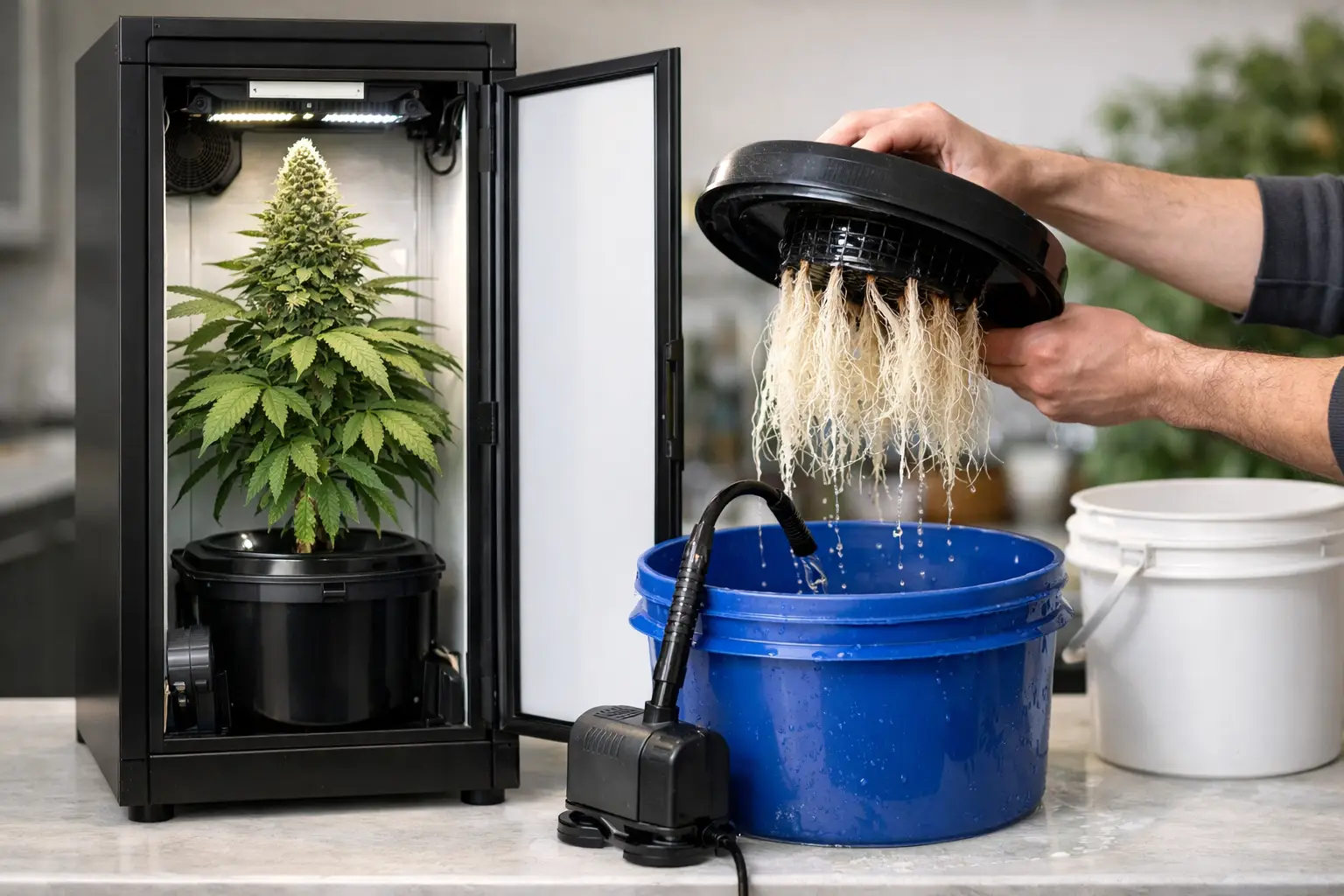
A DWC reservoir can look clean while the root zone is already getting less readable. Nutrient ratios drift, pH starts requiring more correction, water temperature rises, and a small amount of root debris becomes a biological problem. That is why DWC water changes are not busywork. In a compact cabinet grow, they are the reset that keeps you growing from measurements instead of guesses.
The goal is not to replace water on a rigid schedule because a chart says so. The goal is to maintain a stable, oxygen-rich, correctly fed reservoir that matches the plant's stage and your small-space environment. Clean workflow beats rescue work every time.
Why DWC Water Changes Matter
Plants do not consume every nutrient in the same proportion. They may take up more water than minerals during a warm, bright stretch, pushing EC upward. In another period, they may feed harder than they drink, pulling EC down. Topping off with plain water or nutrients can correct a number temporarily, but it does not restore the original balance of the solution.
Over time, the reservoir also collects the things you do not want building up around cannabis roots: plant exudates, fine root material, mineral residue, and microbes. Some microbial activity is normal. The problem is that in a small reservoir, changes happen quickly. A five-gallon bucket has far less buffer than a large commercial system.
A full change gives you three things that top-offs cannot reliably provide: a known nutrient profile, a chance to inspect the root zone, and a clean baseline for reading the plant. That clarity matters more than squeezing another day out of old solution.
How Often Should You Change DWC Water?
For most small DWC grows, change the reservoir every 7 to 10 days. That is the dependable default for a single plant in a compact cabinet or small tent. It is frequent enough to prevent significant drift and infrequent enough that you are not constantly disturbing a working system.
Use a shorter interval, around every 5 to 7 days, if water temperatures are difficult to control, the plant is drinking heavily, roots are shedding material, or you are in mid-to-late flower with a strong feeding schedule. Warm reservoirs and heavy feeding narrow your margin for error.
You can sometimes stretch to 10 to 14 days during early seedling growth, when the reservoir is lightly fed and the plant barely drinks. But do not confuse low water use with a reason to ignore the reservoir. Check pH, EC, temperature, water level, smell, and roots daily. A tiny plant can still sit in a reservoir that is going sideways.
The schedule changes when the evidence changes. If pH is stable, EC behaves predictably, the water smells neutral, and roots are white to cream-colored with no slime, your routine is working. If you are correcting pH every day, chasing EC, or seeing temperature swings, change the water sooner and identify the underlying cause.
Do Not Wait for a Problem
A bad smell, brown slime, foaming water, or suddenly drooping leaves are not cues for a normal water change. They are warning signs that the root zone needs immediate attention. Treating a compromised reservoir as routine maintenance is how a small issue becomes a lost plant.
Healthy roots often have a clean, earthy-neutral smell and a firm appearance. Nutrient staining can tint roots tan, especially with darker additives, so color alone is not the diagnosis. Texture, smell, and plant behavior tell the fuller story.
The Compact-Grow DWC Water Change Routine
Set up the new solution before you drain the old one. Leaving roots exposed while you hunt for a meter, mix nutrients, or wait for cold tap water to warm up is avoidable drama. In a cabinet setup, preparation is part of environmental control.
- Record the old reservoir. Check and write down water temperature, pH, EC, and water level. Compare them with your previous reading. This tells you whether the plant has been drinking more water than nutrients or the reverse.
- Mix replacement water in a clean container. Start with water close to the reservoir's temperature. Add nutrients in the manufacturer’s recommended order, mixing thoroughly between additions. Then set EC for the plant's current stage. Do not feed by ego. A healthy, readable plant at a sensible EC is better than a dark, clawed plant pushed for imaginary yield.
- Adjust pH after nutrients are fully mixed. For DWC cannabis, a working range around 5.6 to 6.1 is practical, with many growers setting fresh solution near 5.7 or 5.8. The exact starting point matters less than avoiding wild swings and maintaining reliable meter habits.
- Drain the reservoir and inspect it. Remove the plant lid carefully if needed and keep roots shaded from strong light. Look for sediment, dead root matter, algae, loose airline connections, and any residue around the waterline. Check that the air stone is producing vigorous, even bubbles.
- Clean what needs cleaning. Rinse the bucket, lid, net pot exterior, air stone, and tubing connections with warm water. If there is visible buildup, use a grow-safe cleaning approach, rinse thoroughly, and never leave cleaner residue behind. Do not sterilize a healthy system out of anxiety, but do not pour fresh solution into a dirty bucket because you are in a hurry.
- Refill, reconnect, and verify. Add the prepared solution, restore aeration, and confirm the final water level, temperature, pH, and EC. Keep the water level high enough to support young roots, then lower it slightly once a mature root mass is established so the upper roots have access to humid air.
This process should become boring. That is a compliment. A clean water-change routine turns reservoir management into a short, repeatable maintenance block rather than a late-night troubleshooting session.
Reading EC and pH Before the Change
The old solution tells a story. If water level falls and EC rises, the plant is likely taking up water faster than nutrients. Your feed may be a little strong, the environment may be driving high transpiration, or both. Refill with appropriately adjusted water and consider lowering the next batch slightly.
If water level falls and EC drops, the plant is taking nutrients faster than water. That can indicate a mild feed that the plant is handling well, but context matters. Do not automatically raise EC just because the number fell. Check leaf color, tip condition, growth rate, and the plant's stage first.
If pH rises or falls sharply day after day, do not respond with endless drops of pH adjuster. Confirm your meter calibration, reservoir temperature, air pump operation, and water source. Then inspect the roots. Frequent correction can mask an unstable system rather than fix it.
For compact grows, consistency beats precision theater. You do not need to chase every tenth of an EC point or pH movement. You do need dependable instruments, clean water, and records that let you see a trend before the plant pays for it.
Water Temperature Is Part of the Change
Fresh solution that is much colder or warmer than the reservoir can stress roots. Aim for the mid-to-upper 60s Fahrenheit when possible, roughly 65 to 70 F. Cooler water holds more dissolved oxygen, while warm water reduces oxygen availability and gives root pathogens a better opening.
A cabinet can trap heat from lighting, pumps, and summer room conditions. If reservoir temperatures repeatedly climb above the low 70s, changing water more often is only a partial answer. Address the room temperature, light schedule, airflow, reservoir insulation, or cooling strategy. Maintenance cannot compensate for a bad environment forever.
Also block light from reaching the nutrient solution. Light leaks through a lid gap, net pot opening, or clear tubing encourage algae. Algae is not merely ugly. It competes for resources, makes readings less clean, and adds another variable to a system that works best when simple.
Top-Offs Are Not Water Changes
Between scheduled changes, top off as the plant drinks. In many cases, plain pH-adjusted water is the right top-off when EC is creeping upward. If EC has fallen meaningfully and the plant looks hungry, a lightly fed top-off may fit better. The correct choice depends on your recorded trend, not a universal rule.
What top-offs should not become is a way to postpone a full reservoir reset indefinitely. Repeated additions alter the nutrient profile and accumulate whatever was already in the bucket. You can keep the numbers looking acceptable while the solution becomes less predictable.
The disciplined approach is simple: top off to maintain stability, then replace the full reservoir on schedule. That keeps your root zone readable and your decisions calm.
A good DWC grow is not the one with the most additives, the highest EC, or the longest list of tricks. It is the one where the plant, reservoir, and environment make sense together. Keep the water change clean, record what it tells you, and let that routine protect the flower you will eventually dry and cure.