How to Manage DWC Reservoir Topoffs Right
Learn to manage DWC reservoir topoffs with a disciplined small-space routine for water level, EC, pH drift, root health, and reservoir changes on schedule.
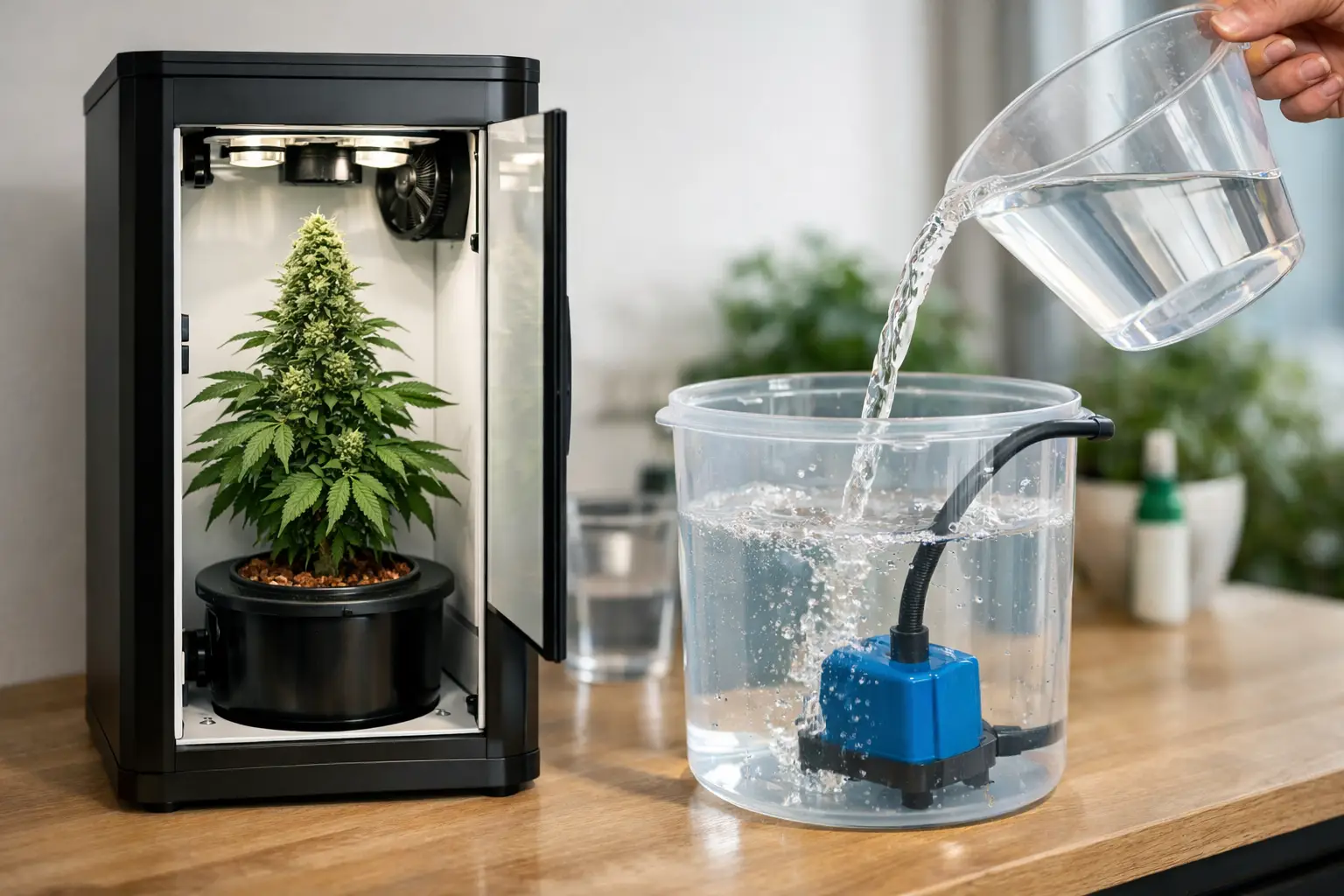
A DWC plant can drink a surprising amount of water in a compact cabinet. Ignore that fact for two days, then try to correct a low reservoir with a heavy nutrient mix, and you have created the kind of avoidable drama that makes hydro seem harder than it is. To manage DWC reservoir topoffs well, treat the reservoir as a readable system: watch the water level, compare it with EC behavior, and make small corrections before the plant is forced to react.
This is not about chasing perfect numbers every hour. It is about building a routine that keeps the root zone stable enough for the plant to spend its energy growing flower instead of recovering from swings.
Start With a Defined Reservoir Baseline
Before you can interpret a topoff, you need a known starting point. Mix a fresh reservoir to your intended volume, record the water level, EC, pH, and water temperature, then let the plant show you what it does over the next 24 hours.
For a small DWC bucket in a cabinet, the usable fill line should leave enough air space for roots and splashing while still keeping the active root mass submerged. Do not run the bucket so full that nutrient solution reaches the net pot or constantly wets the stem base. That is not extra safety. It is an invitation to stem trouble and poor oxygen exchange.
Your baseline is not a number copied from someone else's grow journal. It is the starting EC and pH your specific plant handles under your cabinet's temperature, light level, and stage of growth. A young plant may barely move the water line. A healthy flowering plant under a strong light can make that line drop daily.
Check at the Same Time Each Day
A daily check works because it turns vague impressions into a pattern. Check water level first, then temperature, EC, and pH. If possible, do it around the same time each day, before adding anything.
One reading is a snapshot. Three days of readings tell you whether the plant is drinking, feeding, or struggling. In a small reservoir, that distinction matters more than chasing a decimal point on a meter.
Build Topoff Water Before the Reservoir Needs It
The cleanest topoff is prepared water, not a panic mix made beside an empty bucket. Keep a covered container of water ready when your plant enters a high-demand phase. If you use tap water, account for its starting EC and whether it needs time to dissipate chlorine. If your local water is very hard, its mineral content can quietly push reservoir EC higher over repeated topoffs.
For most routine topoffs, use plain pH-adjusted water rather than full-strength nutrient solution. The reason is simple: plants usually remove water faster than dissolved salts. Replacing every missing gallon with the same nutrient strength can gradually concentrate the reservoir.
That said, plain water is not a permanent rule. If the water level falls while EC also falls, the plant is taking nutrients faster than water. In that case, a very light nutrient topoff may be more appropriate. The reservoir tells you what to add.
Let topoff water come close to reservoir temperature before adding it. Pouring cold water into a small bucket can create a sharp temperature change around the roots. It may not ruin a grow in one shot, but it is needless instability in an already tight environment.
Read Water Level and EC Together
Water level alone does not tell you whether the mix is right. EC alone does not tell you whether the plant is drinking enough. Read them as a pair.
When water drops and EC rises, the plant is drinking more water than nutrients. This is common when the solution is a little too strong, when heat is high, or when the plant is transpiring hard under intense light. Top off with plain pH-adjusted water and watch the next day's trend. Do not immediately dump the reservoir because EC moved slightly upward.
When water drops and EC falls, the plant is taking nutrients aggressively. This can happen during healthy vegetative growth or early flower, assuming the roots look and smell clean and the environment is in range. Top off with a mild nutrient solution, not a blind jump to full strength. The goal is to bring the reservoir back toward its working baseline without overshooting it.
When water drops and EC stays roughly stable, your mix is close to the plant's current demand. Use plain water or a very light solution depending on how much volume you are replacing. This is the easy pattern. Do not complicate it.
When water barely drops but EC rises, stop treating it as a topoff issue. The plant may be stressed by excess heat, root-zone temperature, overfeeding, weak oxygenation, disease pressure, or a sudden environmental change. Adding more nutrients to a plant that is not drinking is how a small problem becomes root-zone chaos.
pH Drift Is a Signal, Not a Daily Emergency
A DWC reservoir will drift. Small movement is normal as roots feed and the solution changes. For cannabis in hydro, a working pH range around 5.5 to 6.2 gives the plant room to access different elements without forcing you to constantly correct the bucket.
Do not force pH back to one exact number several times a day. That creates more swing, not more control. Correct when the solution moves outside your chosen operating range or when the trend is clearly accelerating. If pH climbs hard every day, look beyond the pH meter. High water temperature, weak aeration, dirty equipment, and declining roots can all show up as persistent drift.
Know When Topoffs Are No Longer Enough
Topoffs maintain a reservoir. They do not replace reservoir changes.
In a compact DWC grow, salts and imbalances accumulate faster because there is less water buffering each plant. Even if your EC looks acceptable, the ratio of individual nutrients can drift after several days of feeding and topping off. That is why a regular reservoir-change schedule is disciplined maintenance, not wasted nutrient solution.
A full change is usually the right move when the reservoir has been repeatedly topped off, the solution smells off, water temperature has run too warm, EC and pH are behaving unpredictably, or you are transitioning into a new feeding stage. For many small-reservoir growers, a weekly change is a sensible starting rhythm. A large, stable reservoir may go longer. A stressed bucket may need attention sooner.
During a change, inspect the roots. Healthy roots are generally light colored, firm, and free of swampy odor. Nutrient staining can darken roots, so color alone is not a diagnosis. Texture and smell matter. Slimy roots, brown mush, or a foul smell are not a cue to add another bottle. They are a cue to clean up the root-zone conditions.
Use a Cabinet-Sized Topoff Routine
The best routine is short enough that you will actually follow it. Each day, open the cabinet and check the water line, solution temperature, EC, pH, root appearance, and air pump output. Then write down the readings. A cheap notebook works. Consistency beats an elaborate tracking system you abandon after a week.
Keep the reservoir covered from light. Light leaks feed algae, and algae turns a clean bucket into maintenance work. Make sure airline connections are secure and the air stone is producing a vigorous, even stream of bubbles. Oxygen is not an accessory in DWC. It is part of the root environment.
Also keep the cabinet environment from pushing the reservoir into trouble. Warm cabinet air, an overworked light, and weak exhaust can raise solution temperature fast. In a small space, the reservoir does not have much thermal mass. You cannot separate nutrient management from environmental control.
Avoid the Topoff Mistakes That Create Chaos
The most common mistake is adding nutrients every time the water level falls. It feels proactive, but it often drives EC upward until the plant slows down. Another is waiting until the bucket is severely low before adding water. Large volume corrections cause larger pH, EC, and temperature shifts.
Do not mix concentrates directly into the live reservoir. Dilute nutrients in your topoff water first, mix thoroughly, then verify EC and pH before adding. Never assume two nutrient lines, additives, or supplements behave the same way in a small DWC system. More bottles rarely mean more control.
Avoid overreacting to one bad reading. If the plant looks healthy, roots are clean, and the reservoir trend is only slightly off, make a measured correction and recheck tomorrow. If the readings are erratic and the plant is visibly unhappy, change the reservoir and investigate the cause. Clarity, not chaos.
Adjust the Routine as Flowering Changes
A plant's water demand can climb quickly during early and mid-flower. This is where daily topoffs become non-negotiable in a small bucket. Letting the reservoir run low can expose roots, concentrate nutrients, and turn a stable feed plan into a guessing game.
Later in flower, drinking may slow as the plant finishes. Do not keep feeding the old schedule simply because it worked two weeks ago. Read the reservoir again. Reduced water use, rising EC, and slowing growth often call for a gentler approach and timely solution changes, not more force.
The goal is not to keep the reservoir busy. The goal is to keep it boring. A stable water line, predictable EC movement, clean roots, and a simple daily record give you something better than hydroponic hype: a grow you can read before it becomes a problem.