DWC vs Soil Cannabis for Small-Space Growers
DWC vs soil cannabis for compact indoor grows: compare control, workload, cost, and failure points before choosing a method for your first run at home.
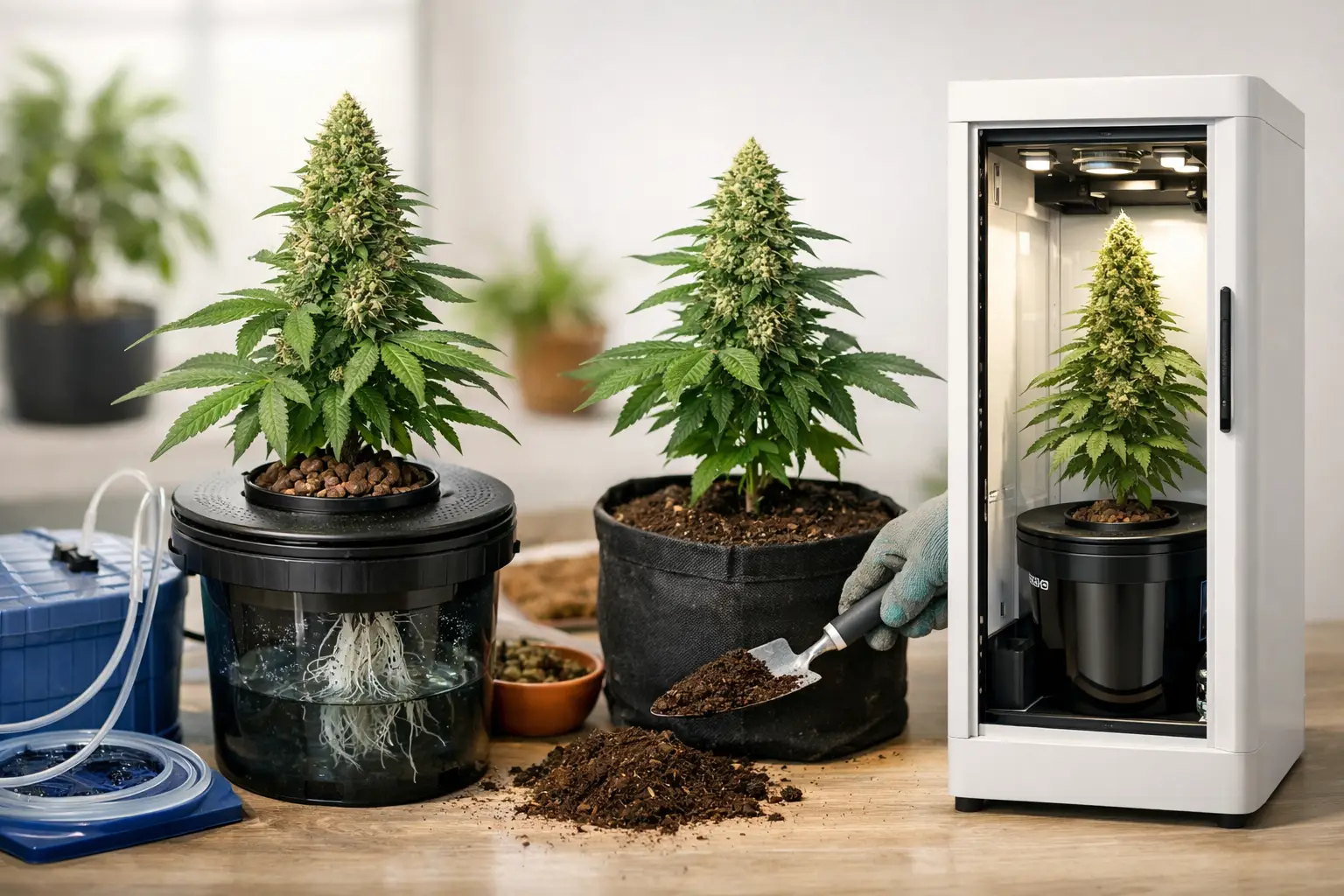
DWC vs soil cannabis is not a contest between a modern method and an old-school one. It is a decision about how much daily control your space, schedule, and experience can support. In a compact cabinet or tent, the wrong method can turn a simple first run into constant correction. The right one gives you readable plant signals, a manageable routine, and enough room to learn the finish instead of fighting the root zone.
For a small-space grower, Deep Water Culture can be extremely efficient. Soil can be far more forgiving. Neither automatically produces better cannabis. Plant health, environment, genetics, harvest timing, drying, and curing still decide the quality of the jar. Choose the root-zone method that fits the way you actually grow, not the one that looks most impressive online.
DWC vs Soil Cannabis: The Real Difference
The core difference is buffering. Soil holds water, nutrients, and biological activity around the roots. That buffer slows down mistakes. If you water a little heavily, feed a little lightly, or miss the ideal timing by a day, soil often gives you time to correct course.
DWC places roots directly in an oxygenated nutrient solution. The plant has immediate access to water and minerals, which can drive fast growth. It also means the plant feels a pH drift, nutrient imbalance, reservoir-temperature problem, or equipment failure much sooner. DWC is direct by design. That is its strength and its responsibility.
This does not mean hydro is only for advanced growers. A well-built, simple DWC setup can be easier to read than a collection of soil amendments, bottled supplements, and watering theories. But it demands a disciplined baseline: clean water, reliable aeration, regular reservoir checks, and an environment that does not cook the nutrient solution.
Why DWC Fits Some Compact Grows
In a small enclosure, DWC has a practical advantage: it keeps the root zone contained and measurable. You know what is in the reservoir. You can track pH, electrical conductivity or PPM, water temperature, and water level. When the plant changes its drinking behavior, you have a signal worth reading.
That clarity matters in a cabinet-based grow. A vigorous plant can drink heavily during flower, and DWC lets you respond with a controlled top-off rather than guessing whether the bottom of a fabric pot is still wet. It also avoids the runoff management that can make soil cultivation messy inside a tight enclosure.
DWC can pair especially well with a compact, structured flowering run, including 12/12 from seed. You are not trying to build a giant plant with a long vegetative period. You are growing a plant sized for the enclosure, steering it through a consistent root-zone routine, and preserving quality through the finish.
The catch is that the reservoir becomes another piece of environmental equipment. In a warm cabinet, nutrient solution can rise above the comfortable range quickly. Warm water holds less dissolved oxygen and creates conditions where root problems become more likely. If your grow space routinely runs hot, DWC needs a real temperature plan, not wishful thinking.
What DWC asks from you
DWC rewards growers who can check their plants and reservoir regularly. Early in a run, that may be a quick look at water level, root color, air pump performance, and pH. During vigorous flower, a small reservoir may need attention every day.
The work is not necessarily difficult. It is repetitive. That is a feature if you value a clean workflow. It is a liability if you travel often, work irregular shifts, or tend to ignore a grow for several days at a time.
A DWC plant can also outgrow a small space faster than expected. Fast growth is not automatically a win. In a cabinet, excess stretch can crowd lights, airflow, and dehumidification capacity. Use training, flowering timing, and cultivar selection to keep the plant proportional to the enclosure. Max weight is not the goal. A healthy canopy you can finish correctly is.
Why Soil Still Makes Sense
Soil is often the better first-run choice when the grower needs more margin for error. A properly sized container of quality soil gives roots a stable medium and gives the grower time to learn the basics: plant posture, watering weight, leaf response, airflow, and humidity management.
The biggest soil mistake is treating it as a no-maintenance method. Soil is forgiving, not magic. Overwatering is one of the most common beginner errors because a wet pot can look harmless from the surface while roots are starved of oxygen below. In a compact enclosure with limited airflow, that mistake can linger.
Instead of watering on a calendar, learn the container. Lift it after a full watering. Lift it again as it dries. Watch how the plant responds. In time, the weight of the pot becomes more useful than an internet schedule. This is the kind of basic plant reading that prevents avoidable drama.
Soil also adds physical bulk. A fabric pot, saucer, runoff tray, and watering space can consume more of a small cabinet than expected. If you have to remove the plant to water it properly, your workflow is already compromised. Build around access before the plant is large.
What soil asks from you
Soil asks for consistency in watering and restraint in feeding. Many growers create deficiencies by adding too much rather than by failing to add enough. If the medium is already nutrient-rich, do not stack products on top of products because one lower leaf looks imperfect.
For a compact cannabis grow, simple soil with a simple feed plan is usually more readable than a heavily amended mix combined with multiple boosters. Keep the variables low. When the plant has a problem, you want to identify the cause, not sort through six recent inputs.
Soil is also a sensible choice when reservoir temperature, power reliability, or daily access are weak points. A brief power interruption can become a serious DWC issue if aeration stops. Soil does not depend on an air pump to keep roots functioning. That resilience is worth more than theoretical growth speed for many home growers.
Cost, Cleanup, and Failure Points
DWC often has a higher setup burden. You need a lightproof reservoir, net pot, air pump, air stone, tubing, nutrients, pH management tools, and a way to measure nutrient strength. Those tools create control, but only if you use them.
Soil can be started with fewer specialized pieces, though costs still add up when you include containers, medium, nutrients, pH tools, and runoff handling. Soil is not free or automatically simpler. It simply places more of the work into watering technique and medium management rather than reservoir management.
Cleanup is a meaningful difference. After harvest, a DWC system should be emptied, scrubbed, and sanitized before the next run. This is non-negotiable. A neglected reservoir is how problems carry forward. Soil is easier to break down physically, but spent medium must be handled and the grow area still needs a full reset.
The major DWC failure points are warm water, pH drift, poor aeration, light leaks into the reservoir, and letting the water level fall too far. The major soil failure points are overwatering, poor drainage, inconsistent feeding, fungus gnats, and letting runoff or spilled water sit in the enclosure. Both methods punish neglect. They just announce it differently.
Choose the Method That Matches Your Routine
Choose DWC when you want direct control, can monitor the system frequently, have dependable power, and can keep reservoir temperatures in range. It is a strong fit for growers who like measurements, clean root-zone feedback, and a repeatable routine.
Choose soil when you need a wider safety margin, cannot inspect the grow every day, or are still learning how plants respond to water and environment. It is a strong fit for growers who want to build observation skills without every small error showing up immediately in the root zone.
There is no prize for choosing the more technical method. A well-managed soil plant dried slowly and cured with discipline will beat a stressed hydro plant every time. Likewise, a clean, stable DWC run can be more predictable than a soil setup loaded with random amendments and inconsistent watering.
Do Not Let the Medium Distract From the Finish
Root-zone choice matters most during the grow, but the finish is where much of the work becomes visible. Do not chase late-flower weight by overfeeding either method. Do not let humidity spike because the plant looks close enough. Do not rush the dry because the next run is waiting.
The better choice is the one that leaves you enough attention for harvest timing, a controlled dry, and a patient cure. In a compact grow, discipline is the yield multiplier that matters most. Pick the system you can run cleanly, read calmly, and finish with care.