Cannabis Environmental Stress Atlas
Not every sick-looking plant has a nutrient problem. Heat, light, cold, wind and water all leave marks that get misread as deficiencies — and the fix is the room, not the feed. The tell is almost always direction and location: heat cups the leaves up, light bleaches only the very tops nearest the lamp, wind claws the leaves sitting in the airflow, and water droops the whole plant. Read where the damage sits and which way it bends, and an "unknown deficiency" becomes an environment you can adjust.
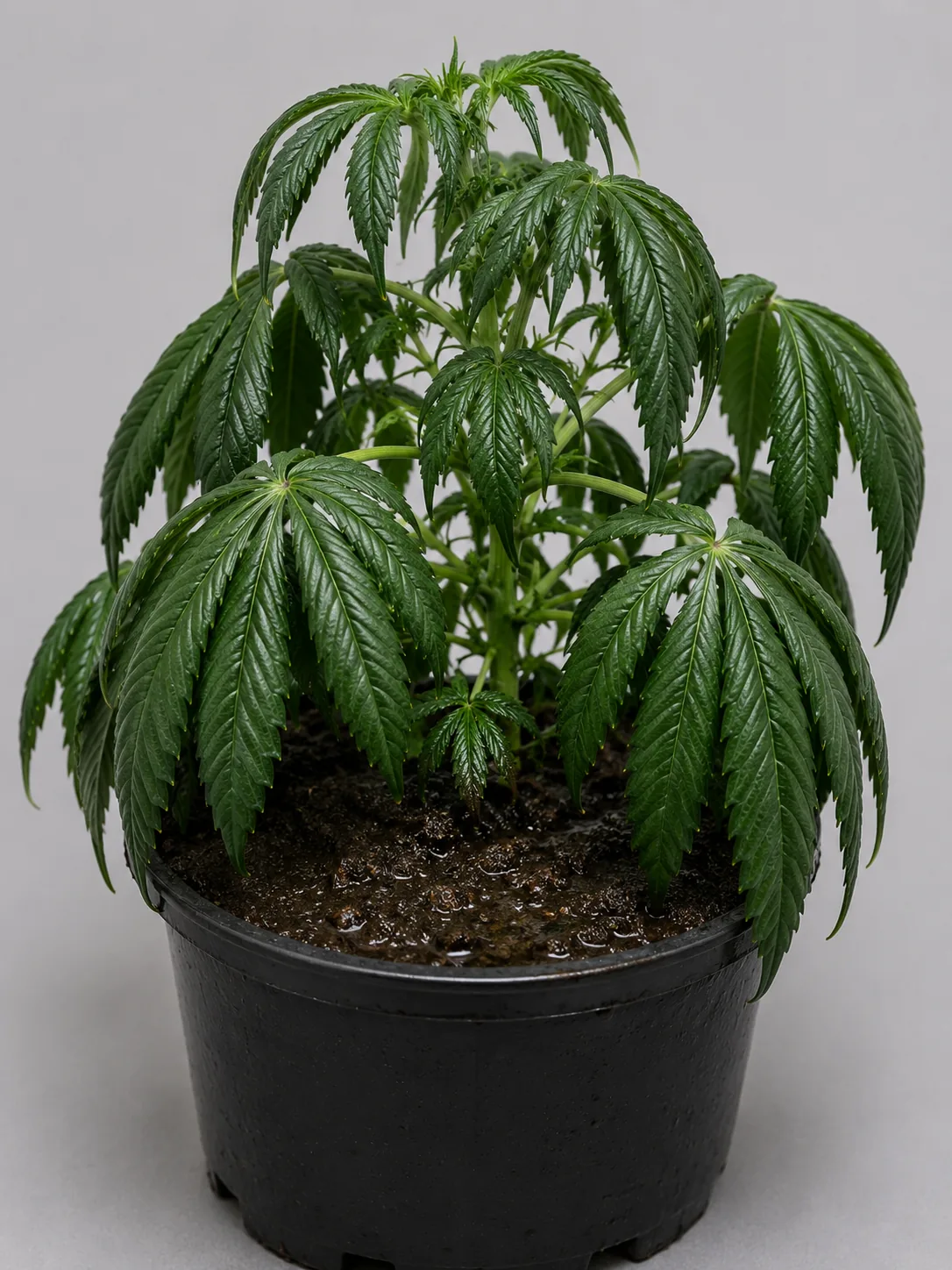
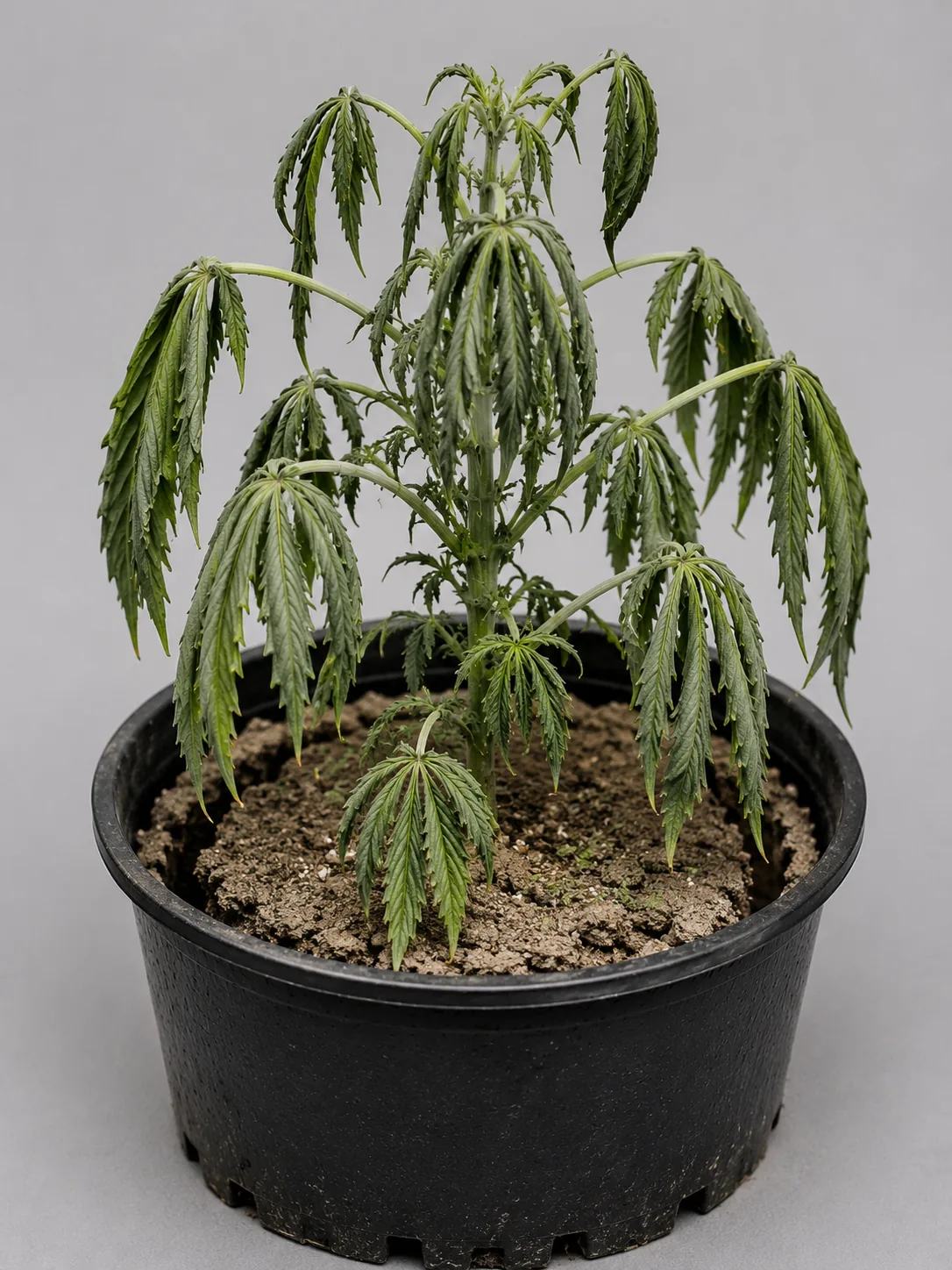
The single most confused pair is overwatering versus underwatering — both droop the plant, and panic sends people the wrong way. The difference is texture: overwatered leaves droop firm, full and heavy; underwatered leaves hang thin, limp and papery. One droop is turgid, the other is weightless.
Water stress — the same droop, opposite causes.
When a plant droops, the instinct is to water it — which is exactly wrong half the time. Overwatering suffocates the roots, so the leaves droop firm, full and dark green, folding down heavily from the petiole over wet media. Underwatering leaves them thin, limp and papery, hanging weakly over media that has gone dry and pulled from the pot edges. Feel and look before you pour: one droop is turgid and heavy, the other is weightless.
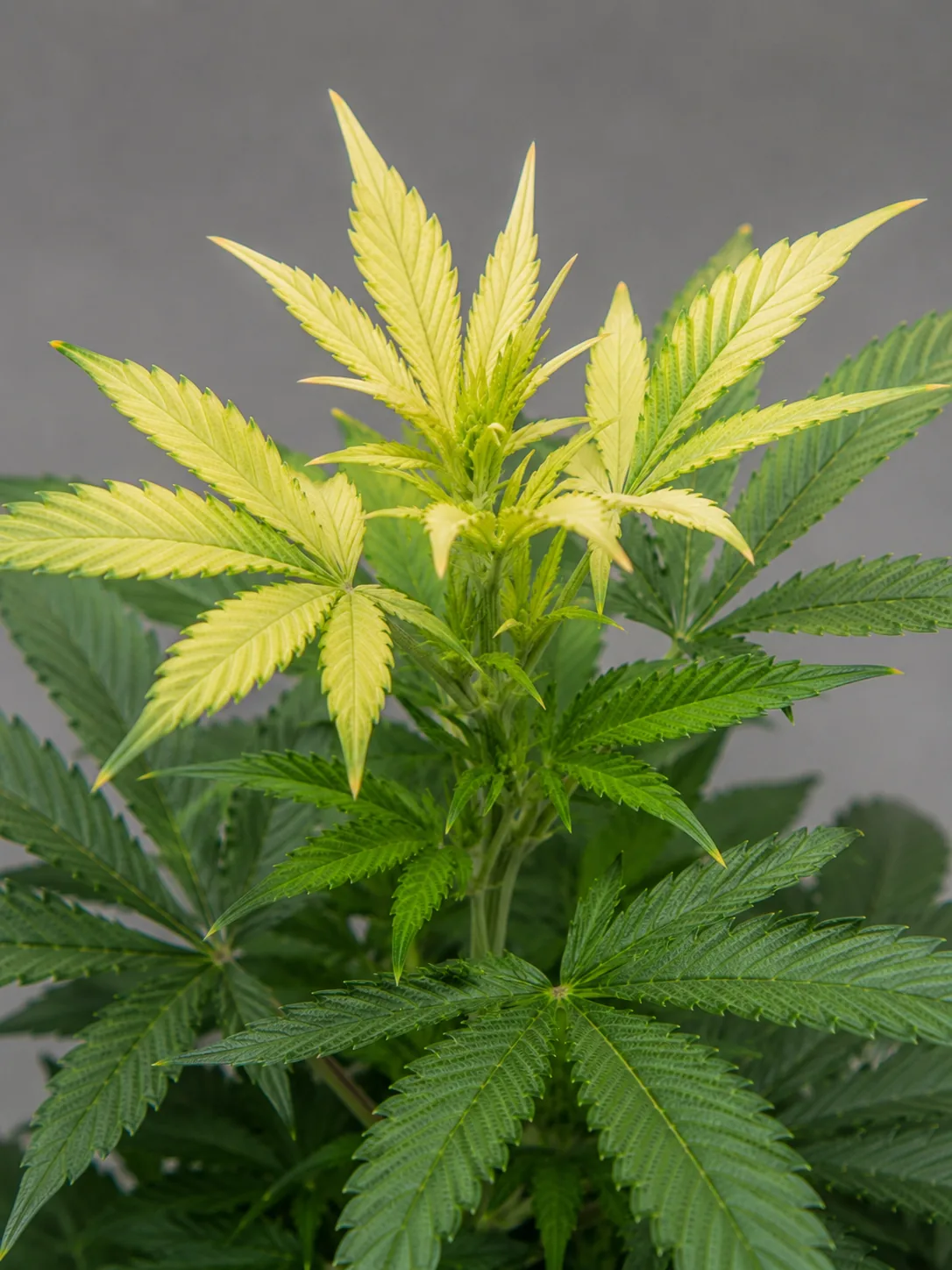
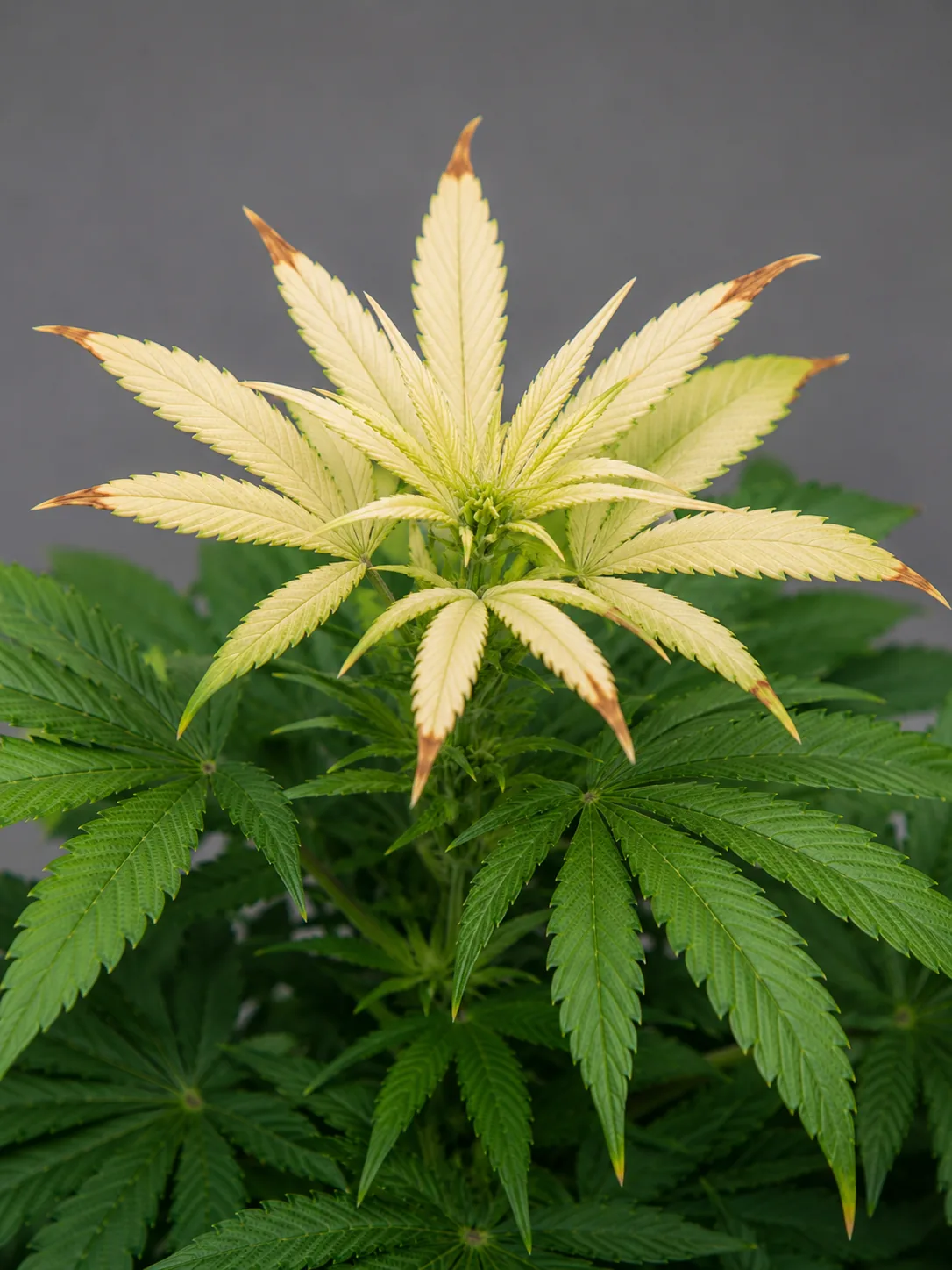
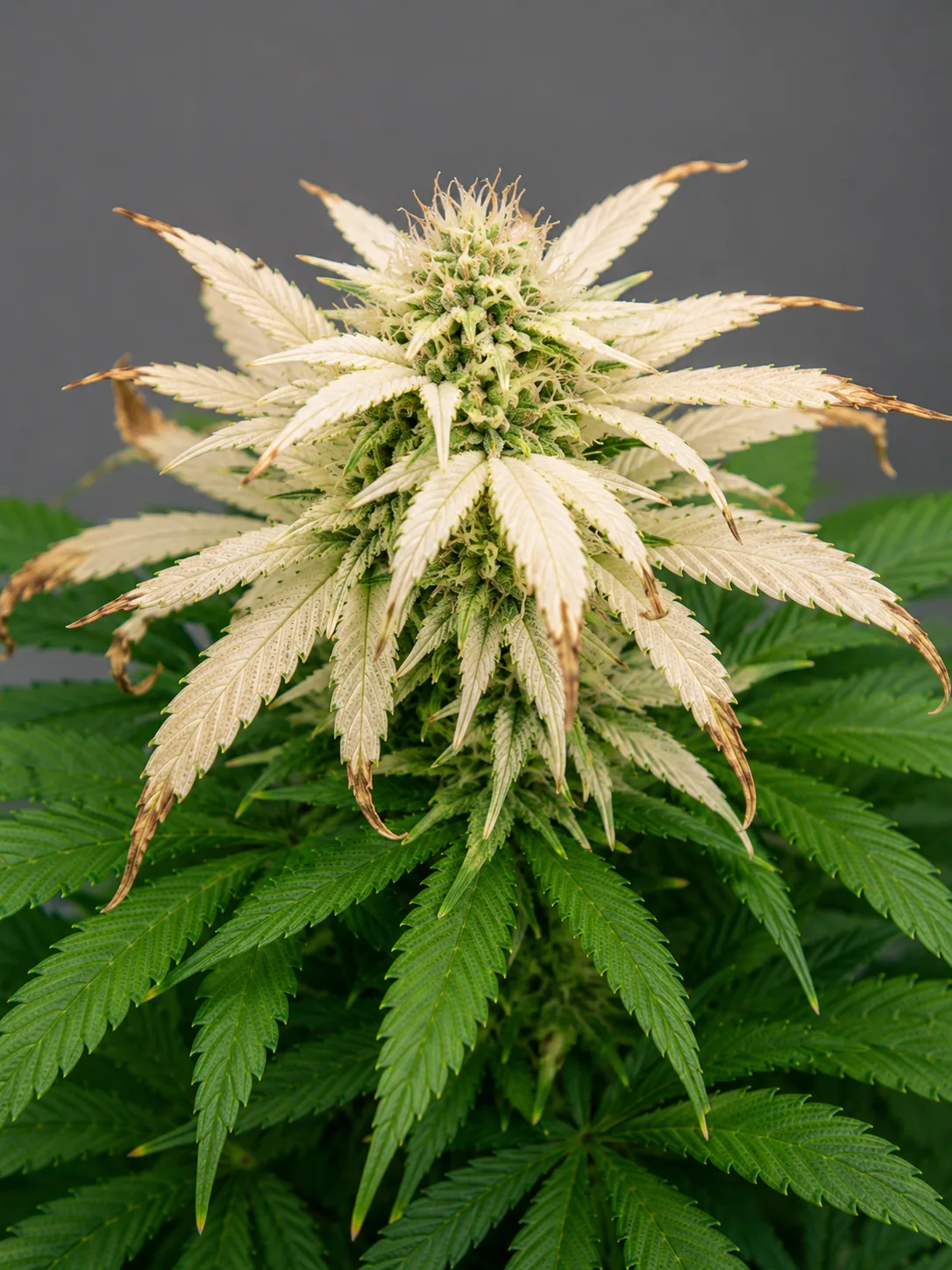
Light burn — bleaching that follows the light, not the veins.
Light burn is location damage: too much intensity bleaches the leaves closest to the lamp while everything lower stays green. The signature is a sharp gradient — pale, near-white tops with healthy green just below — with no interveinal pattern and no leaf-age logic. Early it is a soft pale on the top-facing leaves; as it worsens the tips crisp brown and the top cola bleaches near-white. That top-only boundary is what separates it from a nutrient problem, which moves by mobility through the plant.
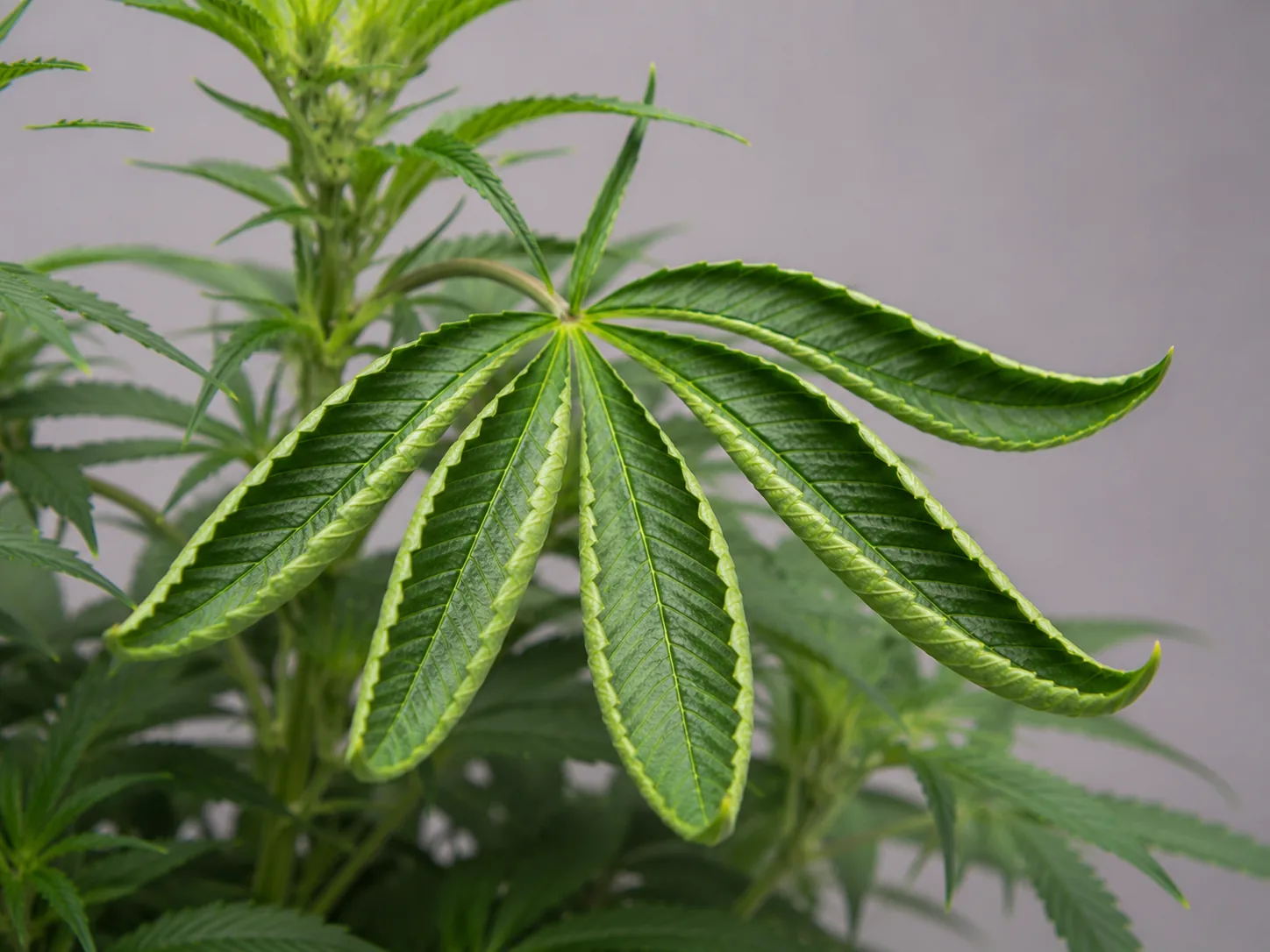
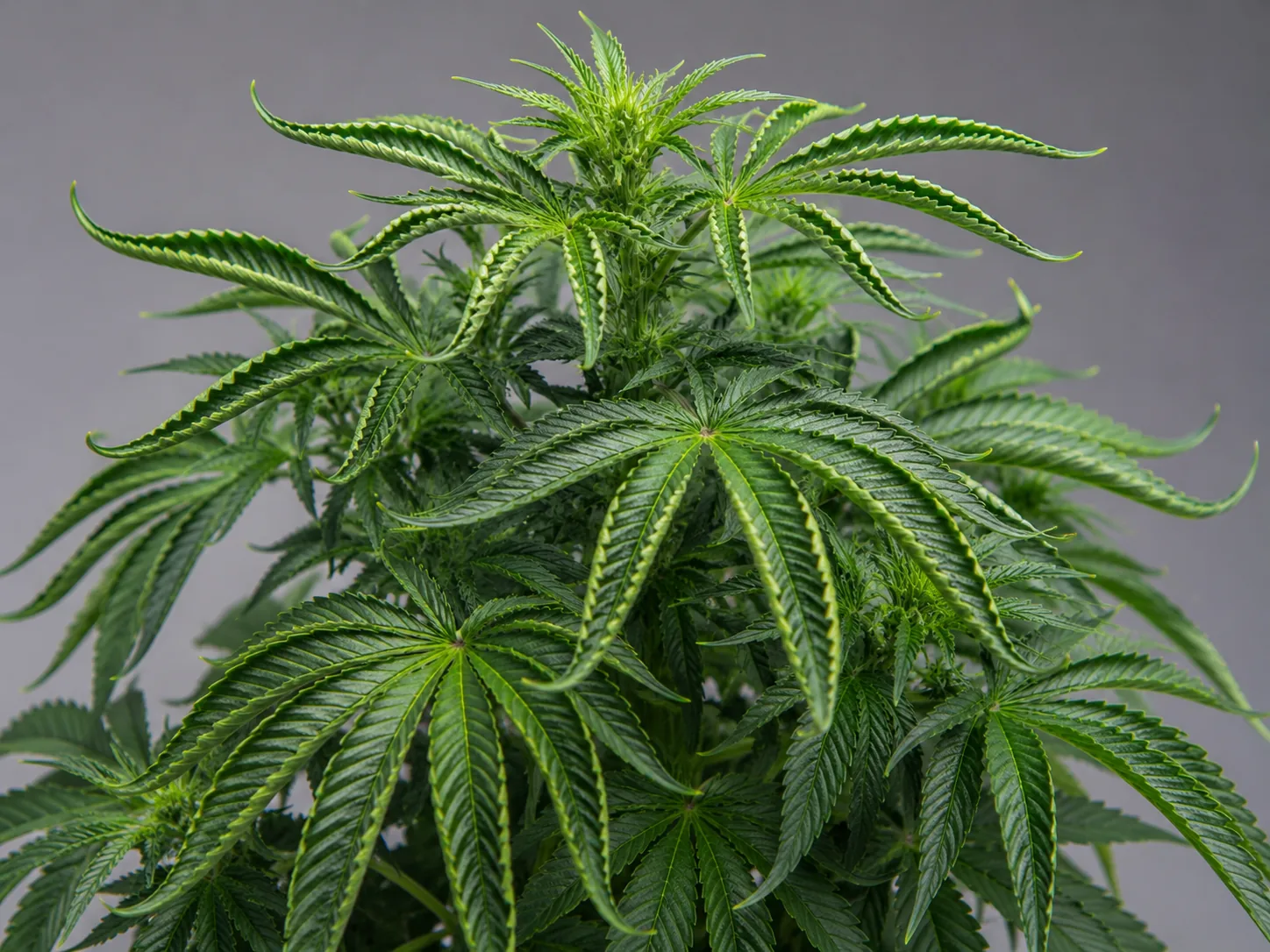
Heat stress — leaves taco upward at the hottest zone.
When the canopy runs too hot, the leaves cup upward into a taco or canoe, edges lifting and tips pointing up — the plant folding itself to shed heat. Early it is a clean upward curl on still-green upper leaves; as it worsens the curl deepens and the margins dry and crisp brown at the hottest top zone, sometimes with a little bleaching where a lamp sits close. The direction is the whole diagnosis: heat cups up, while nitrogen toxicity claws the tips down. Cool the room and move the light back before you touch the feed.
Cold stress — purpling on a plant that is otherwise thriving.
Cold nights can flush the leaves and stems purple or red, and it gets blamed on a phosphorus deficiency. The tell is the rest of the plant: with cold stress the growth is vigorous and healthy, leaves firm and full, and the purpling is the only thing wrong. Phosphorus deficiency instead leaves the foliage dull, dark and sickly. If it is purpling but plainly growing well — and the temperatures have dropped — suspect the room, not the feed.
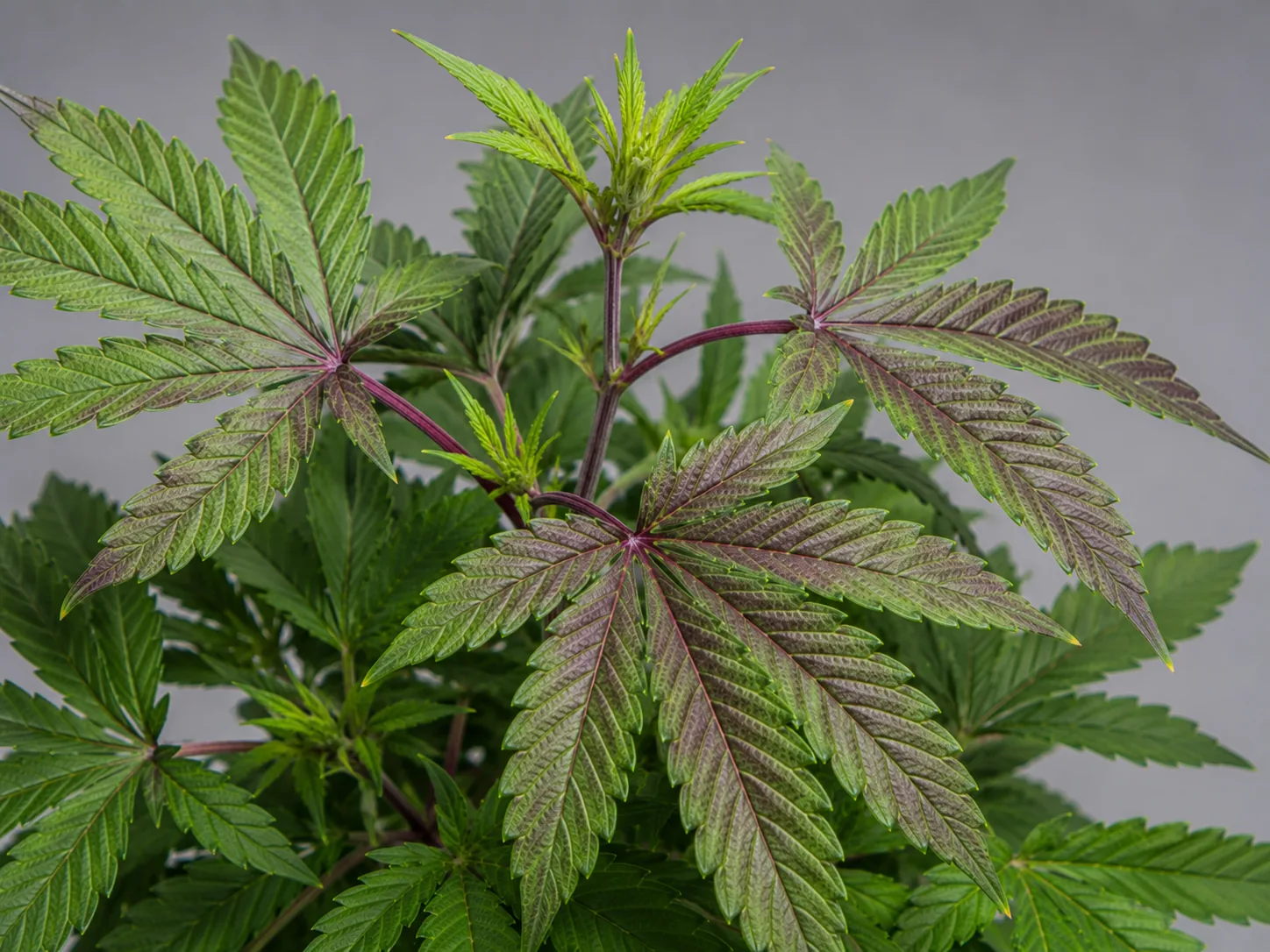
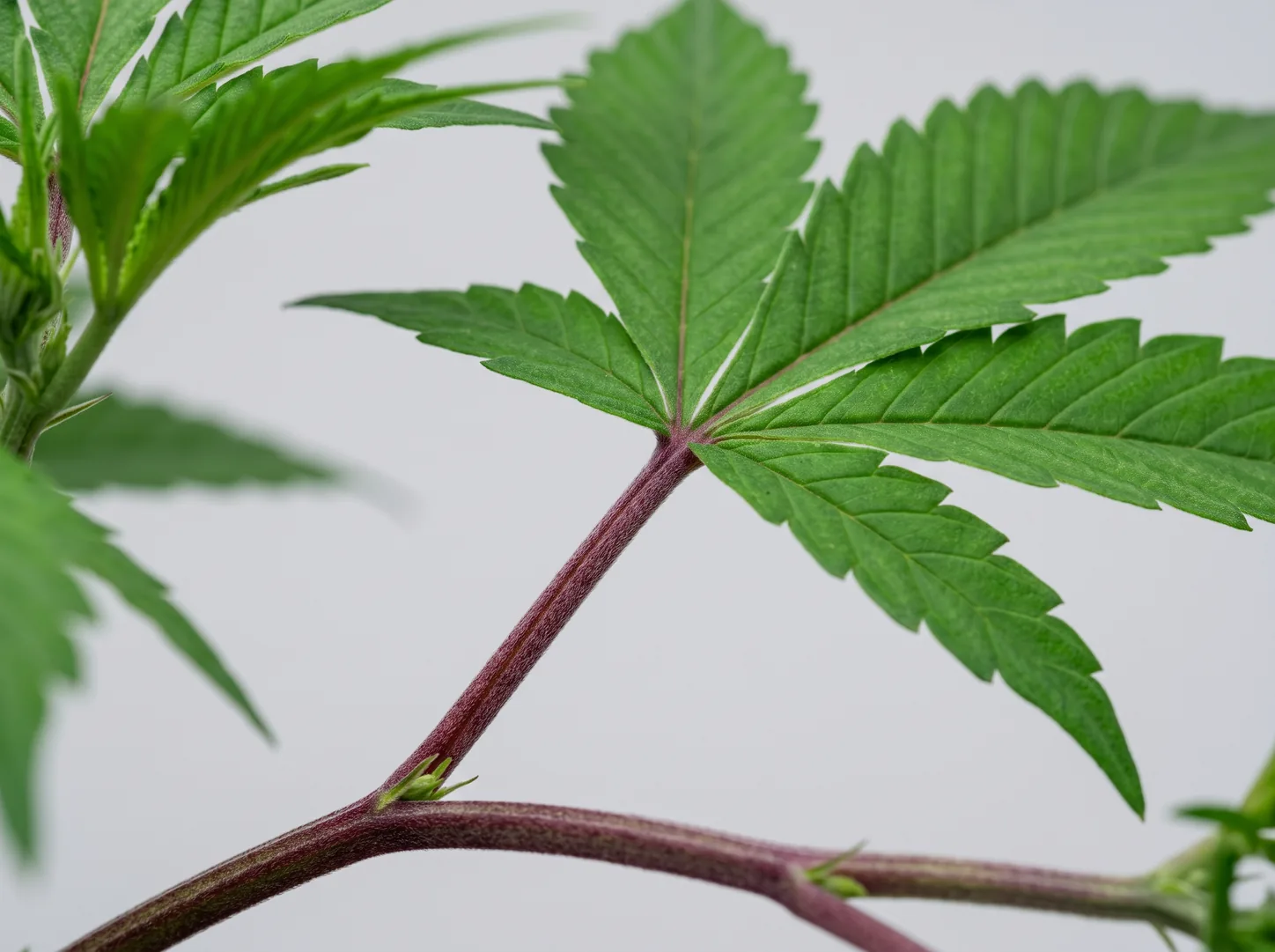
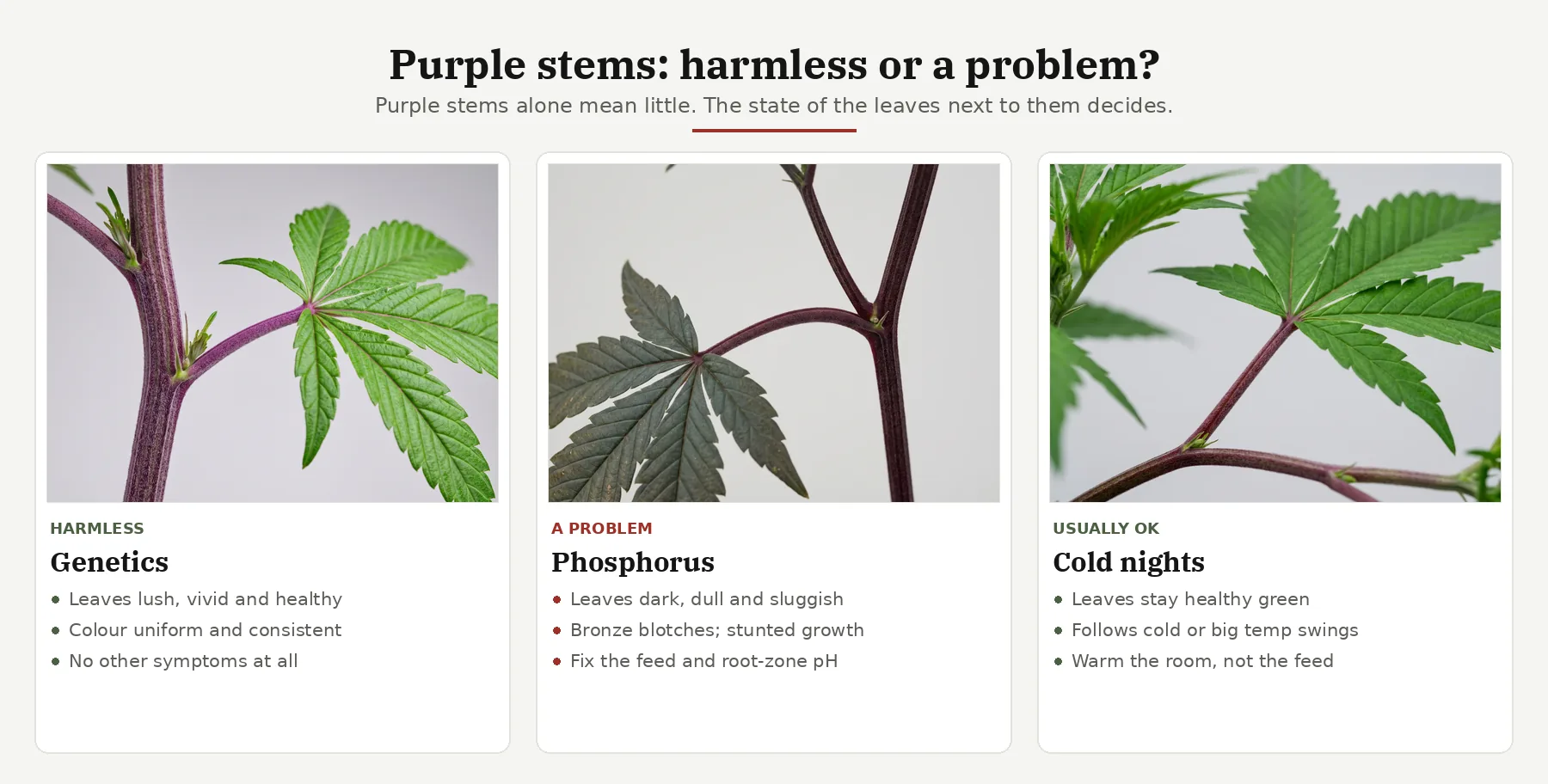
Purple stems have three usual causes, and the leaves beside them tell you which. Genetics and cold both leave the plant healthy; only phosphorus dulls and darkens the foliage. If the leaves are lush and green, relax; if they are dark, dull and sluggish, fix the feed.
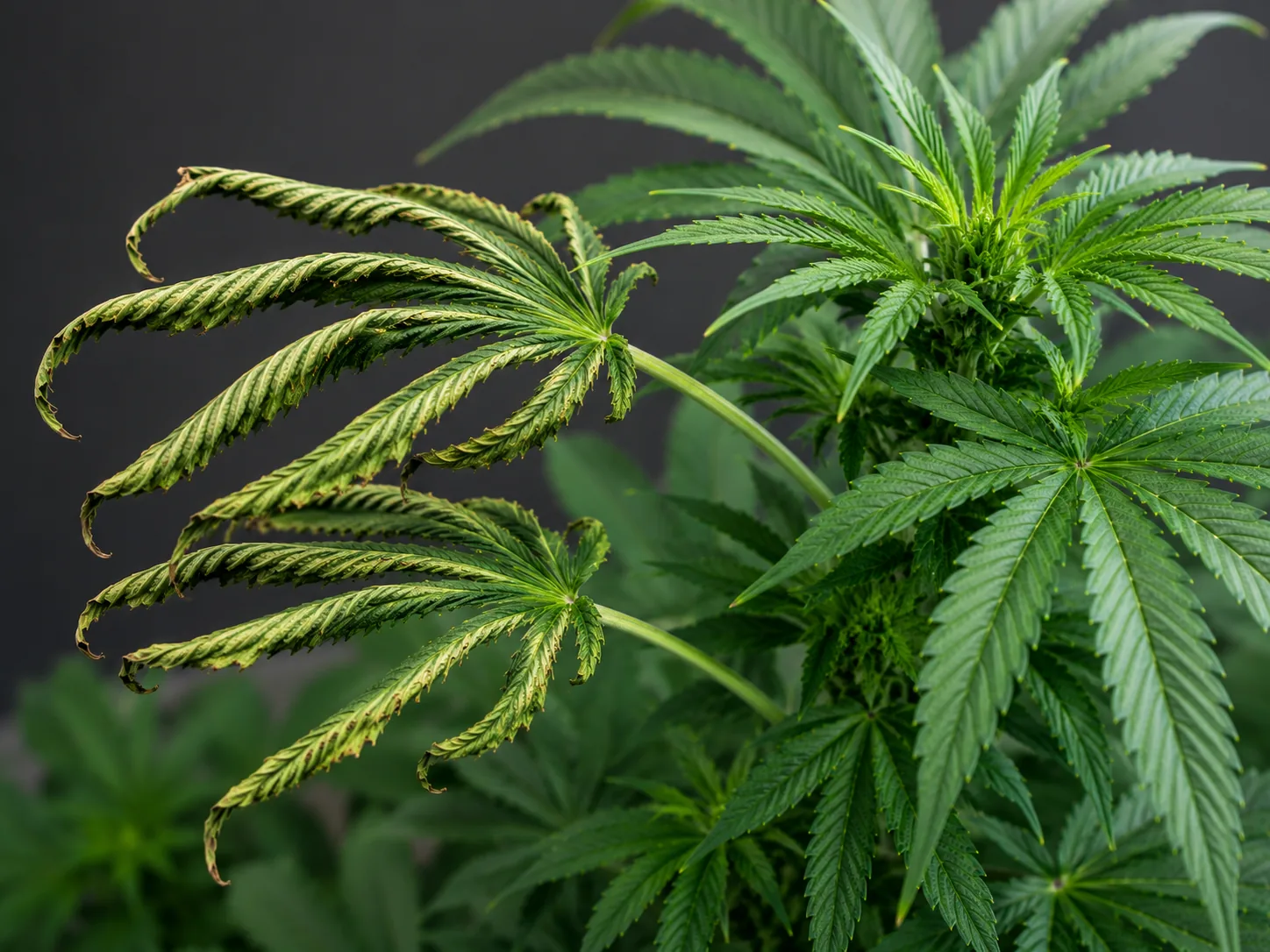
Wind burn — clawing in the airflow, normal everywhere else.
A fan aimed too hard at the canopy stresses only the leaves in its path. Those leaves claw, twist and go slightly tattered while the rest of the plant looks fine — a localized, directional pattern no nutrient problem produces. If the damage traces the airflow and stops where the breeze does, ease the fan or point it at the wall, not the plants.
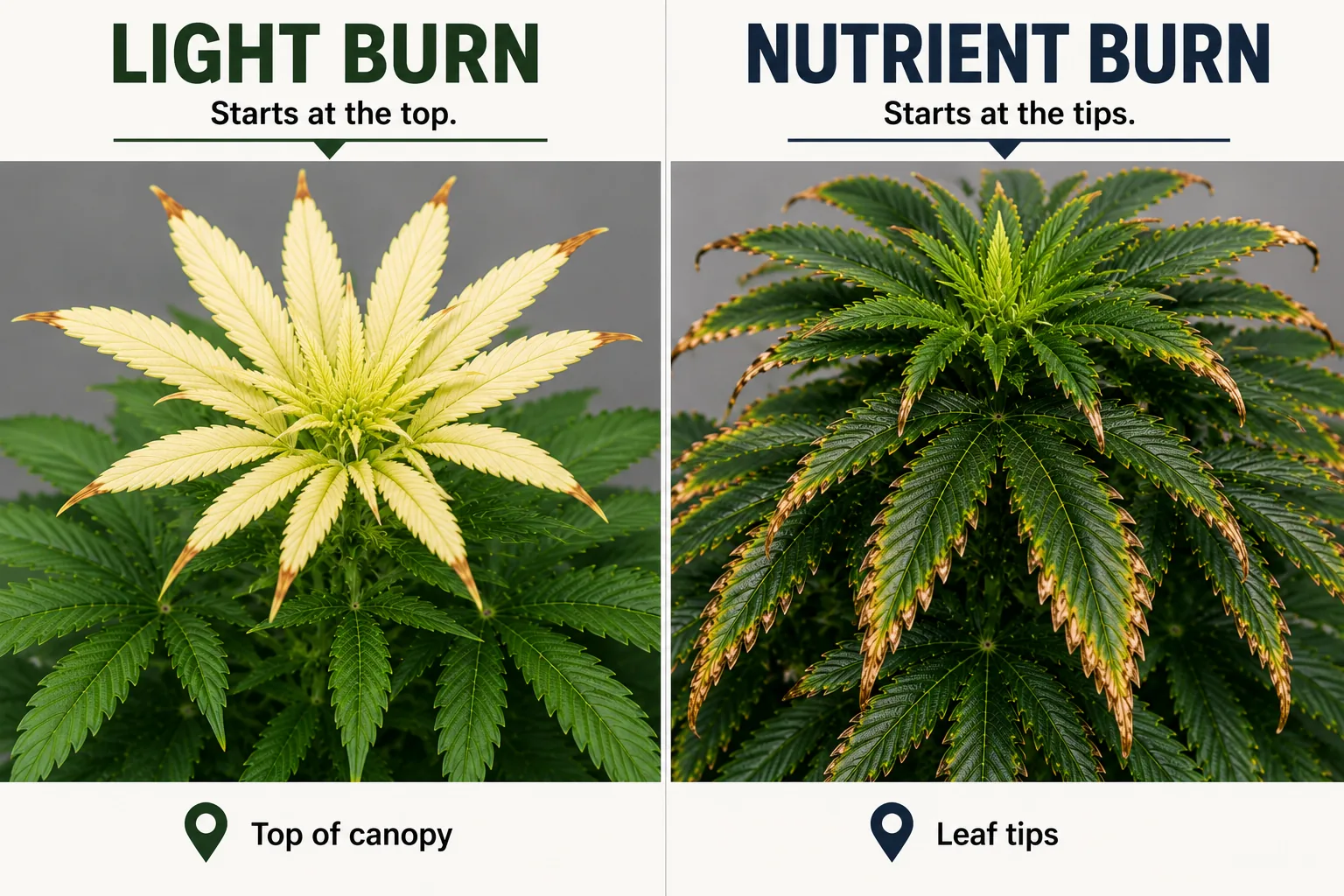
The comparison board — same-looking damage, different rooms.
Bleached, crisping tops get called "nutrient burn" and fed less, when the real cause is a lamp too close. Read the location: light burn bleaches the leaves nearest the lamp pale from the top down, while nutrient burn scorches the tips brown on otherwise deep-green leaves across the feeding canopy. One is a lighting fix, the other a feeding fix.
A drooping plant has four usual causes — read the texture.
Drooping is the most over-watered symptom on the board, literally: the reflex is to add water, which is wrong half the time. The feel of the droop and the state of the media sort it — firm and wet is overwatering, thin and dry is underwatering, an upward taco is heat, and a whole-plant collapse over slimy roots is root rot.
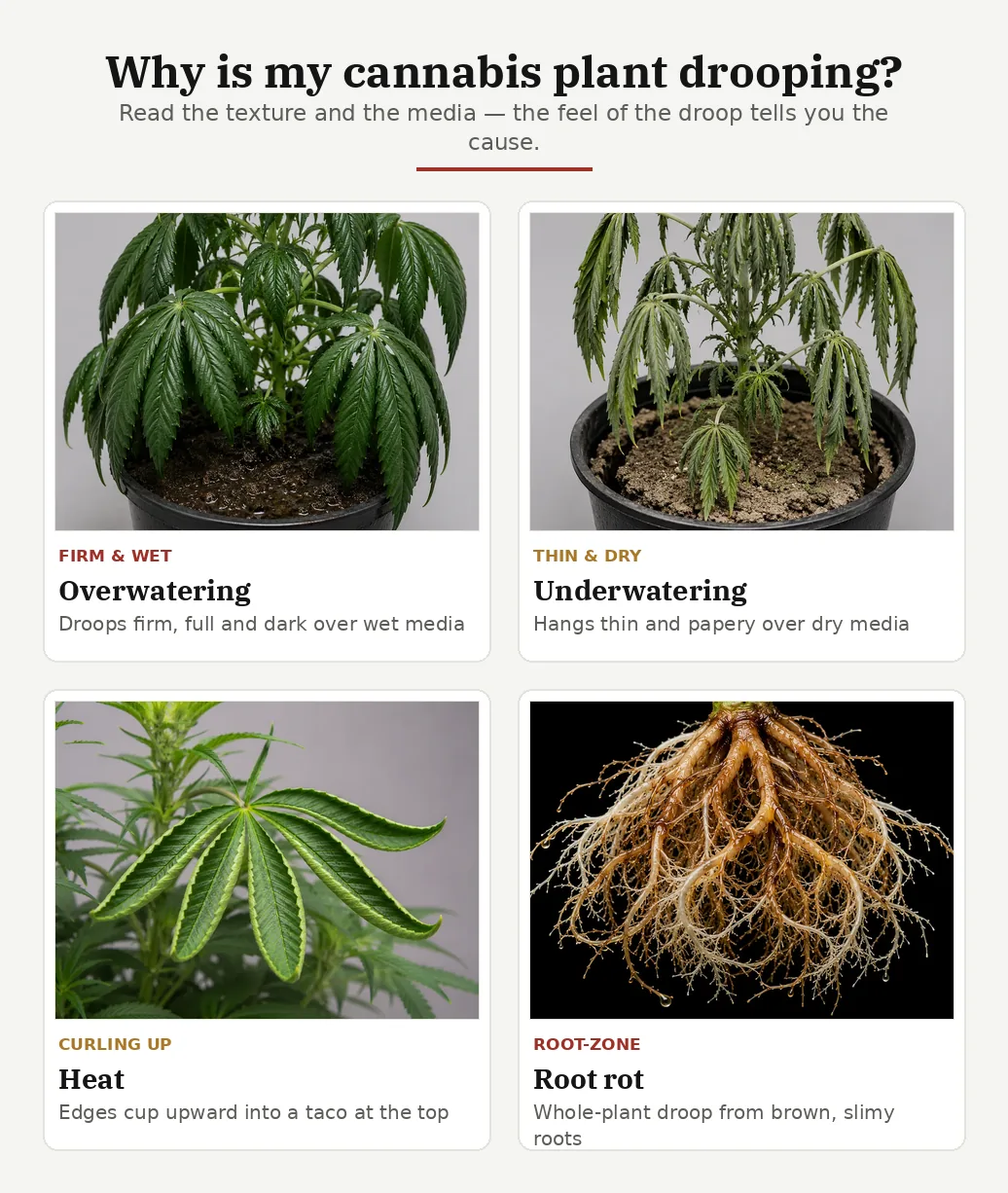
What the direction and location tell you to suspect.
| What you see | Direction & location | Most likely cause |
|---|---|---|
| Whole plant droops, firm and heavy | Turgid fold-down over wet media | Overwatering |
| Whole plant droops, thin and papery | Weightless wilt over dry media | Underwatering |
| Clean pale/white on the top canopy | Only the leaves nearest the lamp, sharp gradient below | Light burn |
| Leaves cupping UP into a taco | Edges curl upward at the hottest top zone | Heat stress |
| Clawing, tattered leaves in one spot | Only along the fan's airflow path | Wind burn |
| Purpling on healthy, vigorous growth | Blades and stems flush, plant otherwise fine | Cold stress |
| Yellowing or spots by vein and leaf age | Follows mobility through the plant, not a location | Nutrient problem, not stress |
The rule that sorts most of these: environmental stress sits where the heat, light, wind or water reached the plant, while a nutrient problem moves by mobility — tied to the veins and the age of the leaf. When the damage maps to a spot in the room instead of a spot on the leaf, fix the room. For the deficiency side of that fork, see cannabis nutrient deficiencies; when a pest is the culprit, see the cannabis pest damage atlas.
Cannabis environmental stress questions
Is my plant overwatered or underwatered?
Both droop the plant, so read the texture, not the posture. Overwatering leaves the leaves firm, full and heavy, folding down over wet media — the roots are suffocating, so watering more makes it worse. Underwatering leaves them thin, limp and papery over media that has dried and pulled from the pot edges. Firm and dark means back off water; thin and papery means water it.
How do I tell light burn from a nutrient problem?
Location. Light burn bleaches only the leaves nearest the lamp, with a sharp gradient to healthy green just below — it does not care about veins or leaf age. A nutrient problem moves by mobility through the plant and follows the vein pattern or the age of the leaf. Top-only and clean is light burn; interveinal or bottom-up is a feeding issue.
My leaves turned purple — is that a deficiency?
Not necessarily. Cold nights flush the blades and stems purple, but with cold stress the plant is otherwise vigorous and growing well — the purpling is the only issue. A phosphorus deficiency leaves the foliage dull, dark and sickly, often with dying lower leaves. Purple on healthy growth after temperatures dropped points to cold, not phosphorus. Some genetics also purple naturally.