7 Best pH Meters for DWC in Small Spaces
Find the best pH meters for DWC, from simple daily pens to bench-style testers, and learn what matters for more repeatable grows in a compact cannabis grow room.
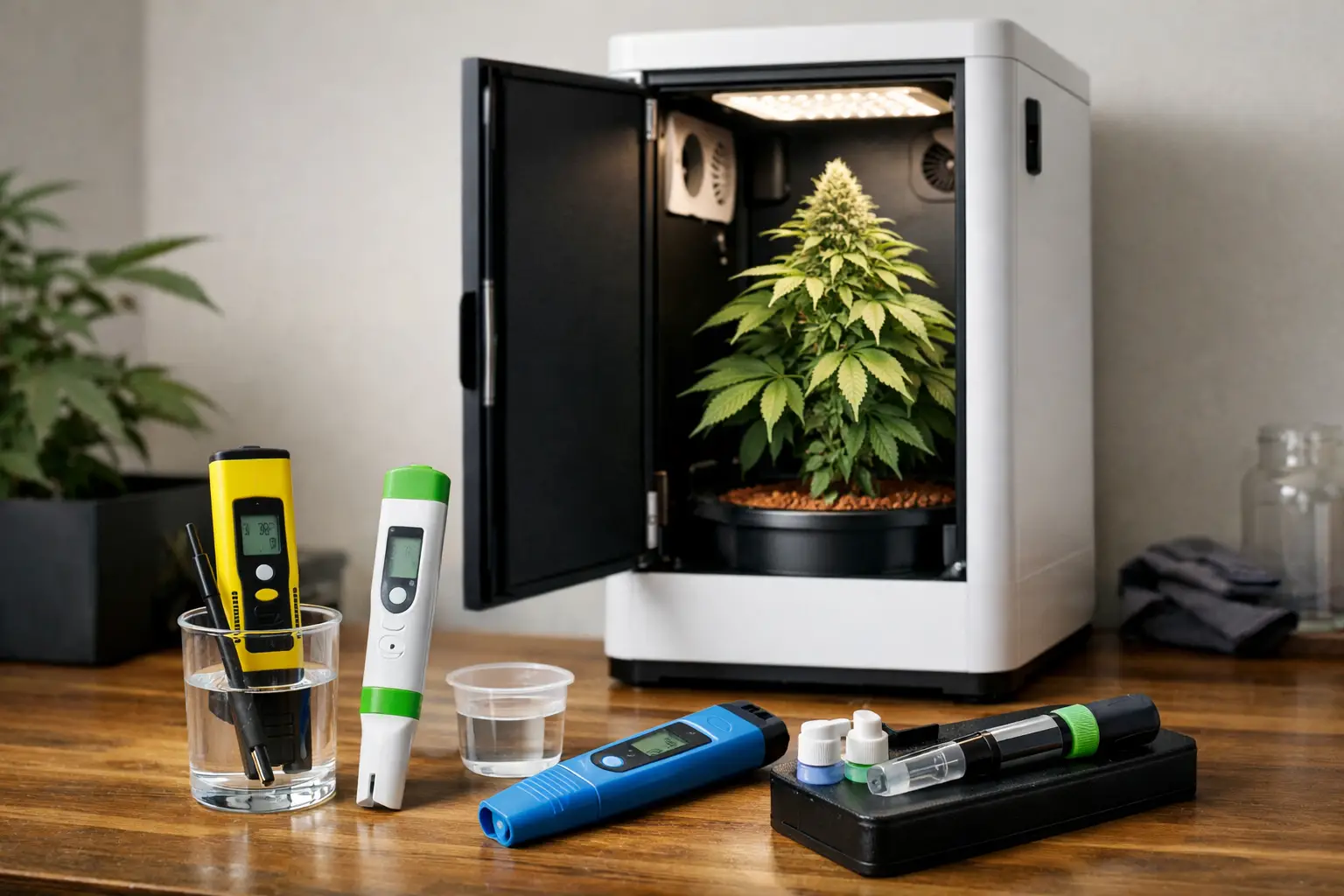
A DWC reservoir can look clean, smell fine, and still be drifting outside the range where roots can reliably feed. That is why the best pH meters for DWC are not necessarily the ones with the most buttons. They are the meters you will calibrate, use every day, and trust when the plant starts giving you a signal.
In a compact cabinet or small tent, there is little room for sloppy root-zone management. A small reservoir changes faster than a large one. Nutrient uptake moves pH. Top-offs move pH. Warm water and neglected probes create bad readings, then growers make bad corrections based on them. That is avoidable drama.
For a craft-focused DWC grow, buy a meter that matches your workflow. You need a readable display, dependable calibration, a probe that can survive regular use, and enough accuracy to keep the reservoir in range. You do not need laboratory theater for a single plant in a cabinet.
What a DWC pH Meter Must Do
DWC cannabis generally performs well when the reservoir stays around pH 5.5 to 6.1. Letting the solution gently drift within that range can expose roots to a broader spread of available nutrients. The goal is not to force the display to read one perfect number all day. The goal is to see the trend clearly and make measured adjustments.
A good meter should read to 0.01 pH, calibrate with at least two points, and include temperature compensation or function reliably in normal room temperatures. The real dividing line is maintenance. Cheap pens can work, but they often become frustrating when calibration will not hold or the probe dries out. Premium meters cost more, but their probes tend to be more stable and easier to replace.
Also separate pH from EC or PPM. A pH meter tells you whether the nutrient solution is chemically positioned for uptake. An EC meter tells you how concentrated that solution is. In DWC, both matter. Neither replaces the other.
Best pH Meters for DWC Growers
Apera PH60: Best Balance for Most Home Growers
The Apera PH60 is the sensible middle ground for a serious home grower. It is portable, accurate enough for DWC work, and built around a replaceable probe rather than a disposable-pen mindset. Its floating design is a minor convenience, but the more meaningful advantage is consistent daily usability.
This is a strong fit for a VGrow cabinet, a small tent, or any grow where you are checking one reservoir regularly. The display is easy to read, calibration is straightforward, and the meter does not force you into a large bench setup. It costs more than a bargain pen, but avoiding a failed probe halfway through flower is usually worth that difference.
Bluelab pH Pen: Best for a Simple Daily Routine
The Bluelab pH Pen has long been a common choice in hydroponic gardens because it is direct and purpose-built. It gives you a clear reading, supports calibration, and fits naturally into a daily reservoir check. There is no mystery to it, which is part of the appeal.
The trade-off is value. You are paying for a recognized hydro brand and a reliable basic tool, not a long list of advanced features. For growers who want a simple pen from a company familiar with nutrient solutions, it remains a good choice. Keep it clean and stored properly, and it can serve a compact DWC system well.
Milwaukee MW102: Best for Accuracy and Stability
The Milwaukee MW102 is more meter than many first-time growers need, but it earns its place for anyone tired of questionable pen readings. It uses a separate, replaceable electrode and delivers the kind of stable performance that makes diagnosing a reservoir easier.
This is a good option if you run multiple buckets, keep records, or want to remove measurement doubt from your process. It is less convenient than a pocket pen and takes up more space, so it is not the obvious choice for a minimalist cabinet grow. But if your workflow includes mixing nutrients at a table before filling the reservoir, the larger format is an advantage rather than a burden.
Hanna GroLine HI98118: Best Premium Pen
Hanna’s GroLine HI98118 is designed for hydroponic use and brings a more refined experience than most basic pens. It offers a stable probe, automatic temperature compensation, and a display that makes routine readings less annoying. That matters when discipline depends on repeating the same small task every day.
Its price is the obstacle. A beginner with one small DWC bucket does not need to buy the premium option just to feel prepared. But if you value a better-built pen, want reliable support around calibration and probe care, and plan to grow for years, it is a defensible investment.
HM Digital PH-200: Best Budget Step-Up
The HM Digital PH-200 is worth considering when a no-name budget pen feels like false economy but a premium hydroponic meter feels excessive. It offers better usability and calibration support than many entry-level models, while staying in a more approachable price range.
It is not the tool to buy if you want the longest service life or the most polished hydro-specific design. It is a practical bridge: good enough to establish a disciplined DWC routine without spending money that should be going toward environmental control, nutrient quality, or drying equipment.
Generic Yellow pH Pens: Only as a Backup
The inexpensive yellow pH pens sold under dozens of names can give a usable reading when properly calibrated. Some growers get decent results from them. The problem is inconsistency between units, short probe life, and poor calibration stability.
Use one as a backup, a temporary solution, or a way to learn the basic process. Do not build your entire DWC grow around a tool you do not trust. A false reading can send you chasing deficiencies that are really just measurement error.
How to Choose Between the Best pH Meters for DWC
Start with the size and seriousness of your system. For one plant in a small reservoir, a quality pen such as the Apera PH60 or Bluelab pH Pen is usually the right call. It is fast, compact, and easy to use during daily checks.
Choose the Milwaukee MW102 if you want higher confidence, grow more than one reservoir, or naturally prefer a station-style mixing workflow. Choose the Hanna GroLine if you want a premium pen and are willing to maintain it properly. The wrong move is buying a laboratory-grade meter for a simple bucket, then skipping calibration because the process feels inconvenient.
Do not choose based on claimed accuracy alone. A meter advertised at plus or minus 0.01 pH is only useful when it is calibrated and its probe is healthy. Probe replacement availability, calibration simplicity, and storage requirements matter more than a flashy specification sheet.
The Daily pH Workflow That Keeps DWC Readable
Check pH at roughly the same point each day, preferably after the reservoir has circulated and stabilized. Record the reading with water temperature, EC, and how much water the plant drank. A single number is noise. Three days of numbers show a pattern.
If pH rises gradually while EC falls, the plant may be feeding aggressively. If pH drops while EC rises, the solution may be too strong for current uptake. These are not universal laws, but they are useful signals when read alongside plant posture, root color, reservoir temperature, and water level.
Make corrections slowly. Add a small amount of pH adjuster, circulate the reservoir, and retest. Dumping in a large correction because the number looks wrong is classic small-reservoir chaos. You are managing a living root zone, not trying to win a speed contest.
Meter Care Is Part of Growing
Calibrate before a new run, after long storage, and whenever readings start looking suspicious. For active DWC, checking calibration weekly is a sound habit. Use fresh pH 7.0 and 4.0 calibration solutions, not packets that have been open and contaminated for months.
Rinse the probe with clean water after measuring nutrient solution. Never store a pH probe dry, and do not store it in distilled water. Use the manufacturer’s recommended storage solution. A dry probe is not a small maintenance mistake. It can permanently shorten the probe’s useful life.
Keep the cap on, avoid knocking the meter around in the grow room, and replace the probe when calibration becomes unstable. This is not gadget obsession. It is basic instrument care, the same as keeping your hygrometer honest and your drying space clean.
The right pH meter is the one that turns reservoir management into a calm, repeatable check instead of a daily argument with your tools. Buy once for your actual scale, protect the probe, and let the data keep your DWC grow readable from seedling through finish.