12/12 From Seed Guide for Small Grow Spaces
A practical 12 12 from seed guide for small indoor grows. Learn when it works, what to expect, and how to avoid common mistakes in tight spaces.
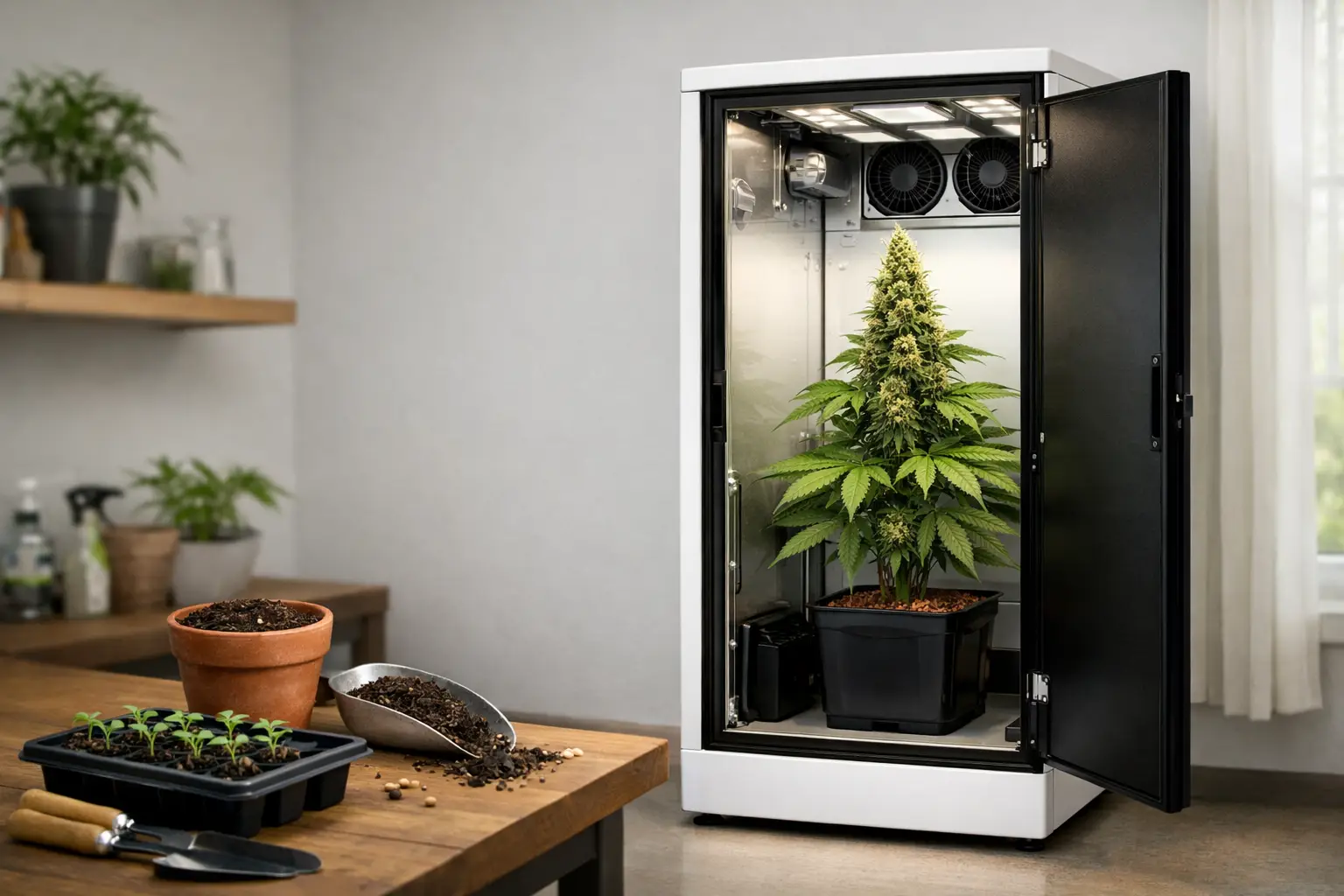
A lot of first growers get sold the wrong goal. They think success means bigger plants, longer veg, more training, and a pile of gear. In a compact setup, that mindset creates crowding, weak airflow, and finish-stage problems. A solid 12 12 from seed guide starts from a different premise: fit the method to the space, not the fantasy.
Running 12 hours of light and 12 hours of darkness from day one is a legitimate strategy for small indoor cannabis grows. It is not a magic trick, and it is not the best choice for every cultivar. But in cabinets, tight tents, and other restricted environments, it can be one of the cleanest ways to keep plant size under control while still producing quality flower.
What a 12 12 from seed guide really means
The phrase is simple. As soon as the seedling is established, you run a flowering light schedule instead of giving the plant a traditional vegetative period under 18/6 or 20/4. The plant still goes through its juvenile phase, so it does not flower instantly, but it will transition much earlier than a plant given weeks of veg.
That early transition is the whole point. You are not trying to build a huge frame and then wrestle it back into a small enclosure. You are choosing structure over excess from the start. For small-space growers, that often means fewer training demands, less canopy management, and a lower chance of turning a neat grow into an overgrown cleanup job.
This is where a lot of bad advice creeps in. People compare 12/12 from seed to full-size vegged plants and call it inefficient because raw yield is lower. That misses the real question. In your actual space, with your actual height limit, airflow, and dry room constraints, which method gives you the best flower with the least drama? Sometimes the answer is not the biggest plant. Sometimes the answer is the one you can actually finish well.
When 12/12 from seed works best
This method makes the most sense when vertical space is limited, when you want a faster path to flower, or when you are growing in a cabinet where plant count and structure matter more than chasing canopy size. It also fits growers who want a disciplined, repeatable workflow rather than a training-heavy project.
It tends to pair well with compact environments and systems that reward consistency. In a small DWC setup, for example, root-zone control and canopy restraint matter more than aggressive expansion. A shorter plant is easier to light evenly, easier to ventilate, and easier to inspect.
It is less ideal if your main goal is maximum yield per plant, or if you are running genetics that need more time to build structure before they flower properly. Some cultivars respond beautifully under 12/12 from seed. Others stay too small, stretch awkwardly, or never develop the kind of canopy you want. That is not failure. It is method-to-genetics mismatch.
What to expect from plant size and timing
Most growers choose 12/12 from seed to control height, so let us be direct: yes, plants usually stay smaller. Internode spacing, stretch behavior, and final structure still depend on genetics and environment, but the plant will generally commit to reproduction before it builds a large frame.
That can shorten the total timeline, though not as much as people assume. You are not skipping biology. Seedlings still need time to establish roots, develop early leaves, and mature enough to flower. In practice, you often save time by removing a long veg period, not by forcing instant buds.
Yield per plant is usually lower than a properly vegged plant under the same conditions. Yield per square foot is where the conversation gets more interesting. In a tiny enclosure, a clean run with controlled structure can outperform an overgrown run that suffers from shading, humidity pockets, or poor finish quality. Craft beats chaos.
How to run 12/12 from seed without sabotaging the grow
The biggest mistake is treating the plant like a full vegging plant while expecting small-space behavior. If you pick this method, commit to it. Keep the environment stable, do not overfeed early, and avoid turning a simple approach into a rescue mission.
Start with a healthy germination and get the seedling established under gentle but adequate light. Do not blast a tiny plant with unnecessary intensity just because the timer says 12/12. Seedlings still need a sane light level, proper root-zone temperature, and stable moisture or water chemistry.
If you are in soil or coco, avoid the common beginner habit of saturating the entire container too early. In DWC, resist the urge to chase growth with strong nutrient strength before the roots are ready. A 12/12 schedule does not excuse sloppy early-stage management. In fact, because the plant has less time to recover from mistakes, early discipline matters more.
Keep your canopy simple. This is not usually the method for topping three times, weaving a net for weeks, and trying to build a wide bush. Low-stress shaping can still help if a plant leans or stretches unevenly, but the overall strategy is restraint. The cleaner your structure, the easier your flowering environment is to control.
12/12 from seed guide to lighting and environment
If this method fails, environment is often the real reason. Small plants still need strong flowering conditions once they are established, and compact spaces punish bad air management quickly.
Your priorities are straightforward: maintain even canopy light, control leaf-surface stress, and keep humidity from creeping up as flower sets in. Because plants are smaller, it is easy to assume they are forgiving. They are not. A cramped cabinet with weak airflow can still create mold risk, stalled growth, or airy flower.
Temperature needs to stay in a range the plant can actually use. If your enclosure runs hot with lights on and cold with lights off, the 12/12 schedule will not save you. It will simply deliver smaller stressed plants. The same goes for humidity. Tight spaces need active management, not wishful thinking.
This is one reason a structured cabinet workflow can make sense. A readable environment beats a gear pile every time. If you can understand what the enclosure is doing hour to hour, you can make better calls before the plant starts showing damage.
Common mistakes beginners make with 12/12 from seed
The first is choosing the method for speed alone. Yes, it can shorten the path to harvest. No, it does not erase the need for solid plant health. If the grower rushes germination, stunts the seedling, or mismanages nutrition, the reduced veg window gives less room to recover.
The second is expecting normal veg-plant yield from a flower-first schedule. That expectation creates disappointment and often pushes people into overfeeding, excessive pruning, or unnecessary training. Small-space growing works better when the target is quality and repeatability, not ego.
The third is running unsuitable genetics. Some plants remain pleasantly compact and stack well under 12/12 from seed. Others become thin, stretchy, or underbuilt. Keep notes. If a cultivar does not match the method, that is useful information for the next run.
The fourth is neglecting the finish. A smaller plant is not a free pass to rush harvest, drying, or curing. Many growers finally get to chop day and then lose quality in the last two weeks because they treat drying like an afterthought. That is backwards. The finish is where all your restraint either pays off or gets wasted.
Is 12/12 from seed better than a short veg?
Sometimes. A short veg under 18/6 or 20/4 can give the plant more early momentum, a bit more structure, and better recovery capacity. In some small grows, that extra week or two is worth it. You get more branching, a stronger root system, and a little more flexibility before flower.
But that only helps if your space can support it. If a short veg pushes the plant into the lights, chokes airflow, or creates more trimming and humidity problems later, it was not really an upgrade. It was just a larger problem in a smaller box.
That is the right way to compare methods. Not which one sounds more serious. Which one fits your enclosure, your discipline level, and your ability to finish the crop cleanly.
For a lot of first-time indoor growers, especially in tight spaces, 12/12 from seed is not a shortcut. It is a control strategy. And control is usually what separates a clean first harvest from a messy one. If you can keep the plant healthy, keep the environment readable, and respect the finish, small can still be very good.